
Solar-Powered Signs
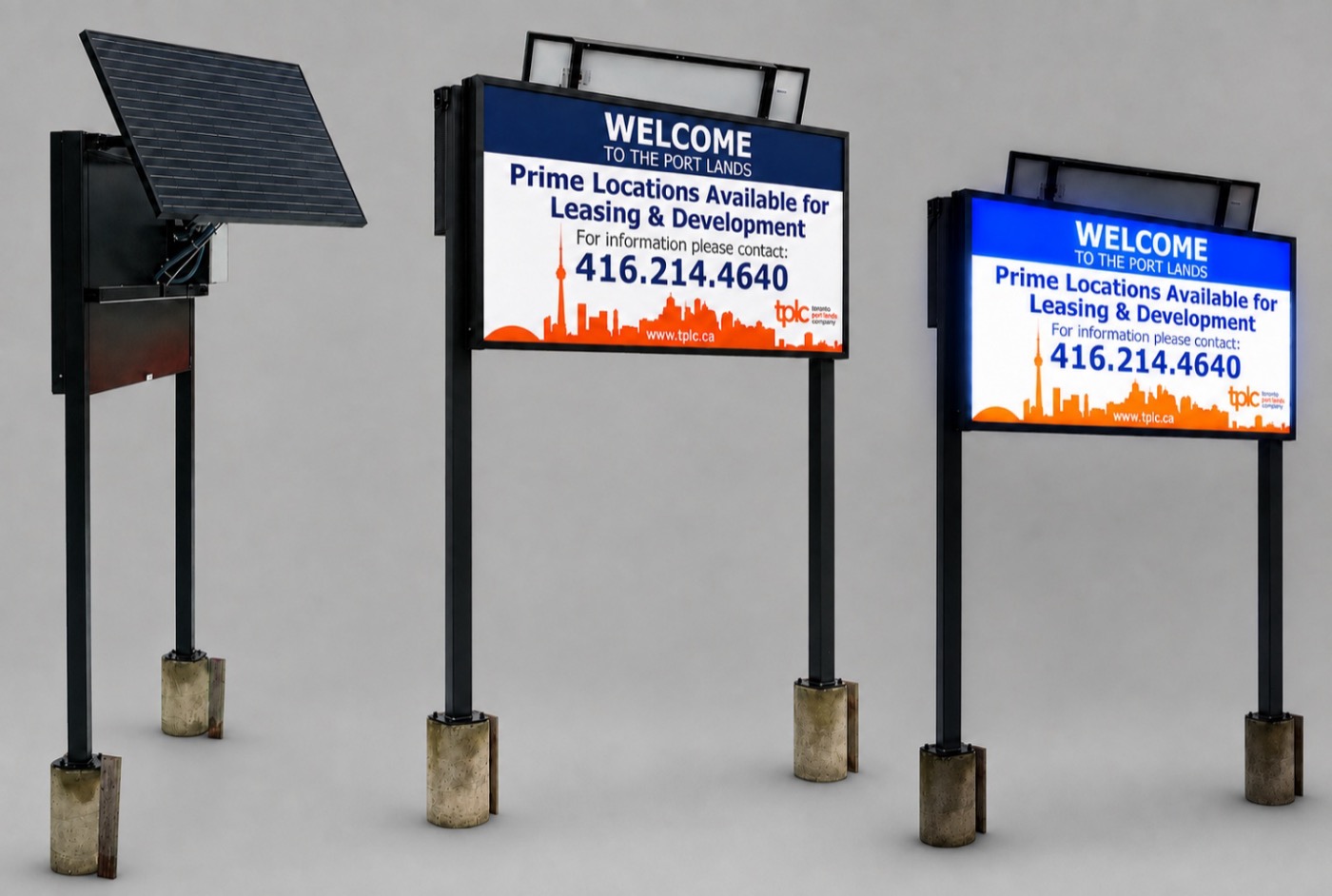
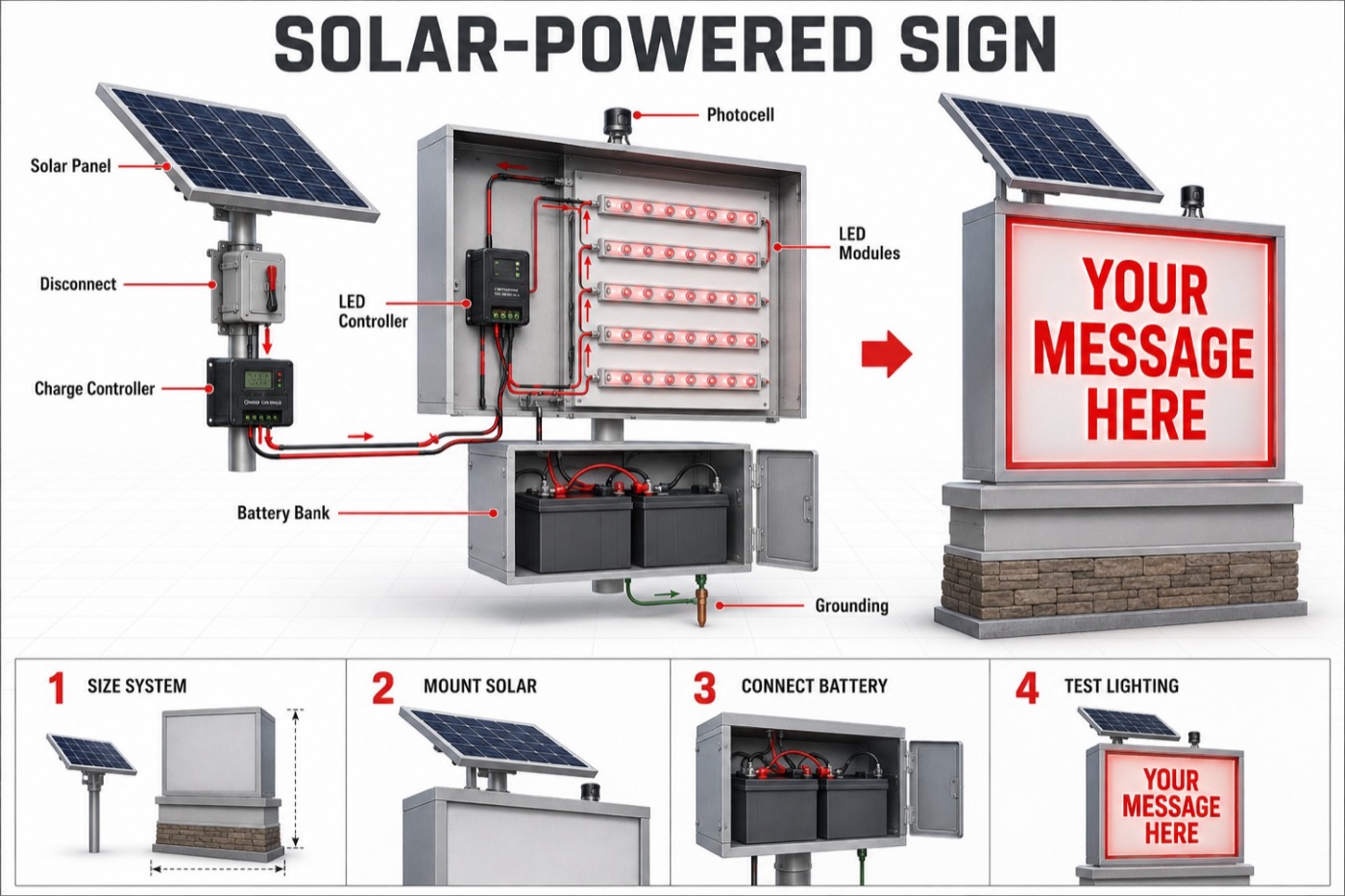
Solar-powered signs use photovoltaic panels to charge batteries during the day, then run LED illumination after dusk. A complete system includes the panels, batteries, charge controller, LED modules, wiring, and timer or photocell. Solar makes the most sense where bringing conventional electrical service to the sign would require long trenching runs or difficult site work.
Solar sign system capacity is determined by the sign's power consumption, required operating hours, geographic location, panel orientation, and seasonal sunlight. Ample battery storage is essential for continuous operation during cloudy weather and shorter winter days. Panels must be strategically positioned to avoid excessive shading from surrounding buildings, trees, and sign structures. Solar-powered signs are particularly beneficial for remote properties, entrance signs, and locations where grid connection is challenging or costly. For wind and hybrid solar/wind options, see Renewable Energy for the Sign Industry.
Solar-Powered Signs FAQ
Can any sign type be converted to solar power?
Monument signs, pylon signs, and illuminated cabinets are the most common candidates, provided there's enough panel surface area and sun exposure to meet the sign's power and operating-hours requirements.
What happens during extended cloudy weather?
Ample battery storage is sized into the system for continuous operation during cloudy weather and shorter winter days. System capacity is determined by power consumption, required operating hours, and geographic location.