
Aluminum trim cap and F-trim can look similar in a finished photo, which is why the terms sometimes get used as though they mean the same thing. They do not. The profiles are different, the required face material is different, and so is the price. Those details need to be correct before the job reaches production. (If you're deciding whether to move off plastic trim cap in the first place, see Aluminum Trim vs. Plastic Trim Cap Channel Letters.)
The Core Difference
| Feature | Aluminum Trim Cap | F-Trim Profile |
|---|---|---|
| Face material required | Acrylic | 1/8" polycarbonate |
| Relative cost | Standard | More expensive |
| Stocked colors | Black, white, red (custom on request) | Confirm at quotation |
| Weather resistance | Highly resistant to fading, cracking, and loosening | Determined by the specific profile and face pairing |
| Typical use case | Default metal-trim alternative to plastic trim cap | Project-specific requirement or specification |
Aluminum Trim Cap: The Standard Metal Border
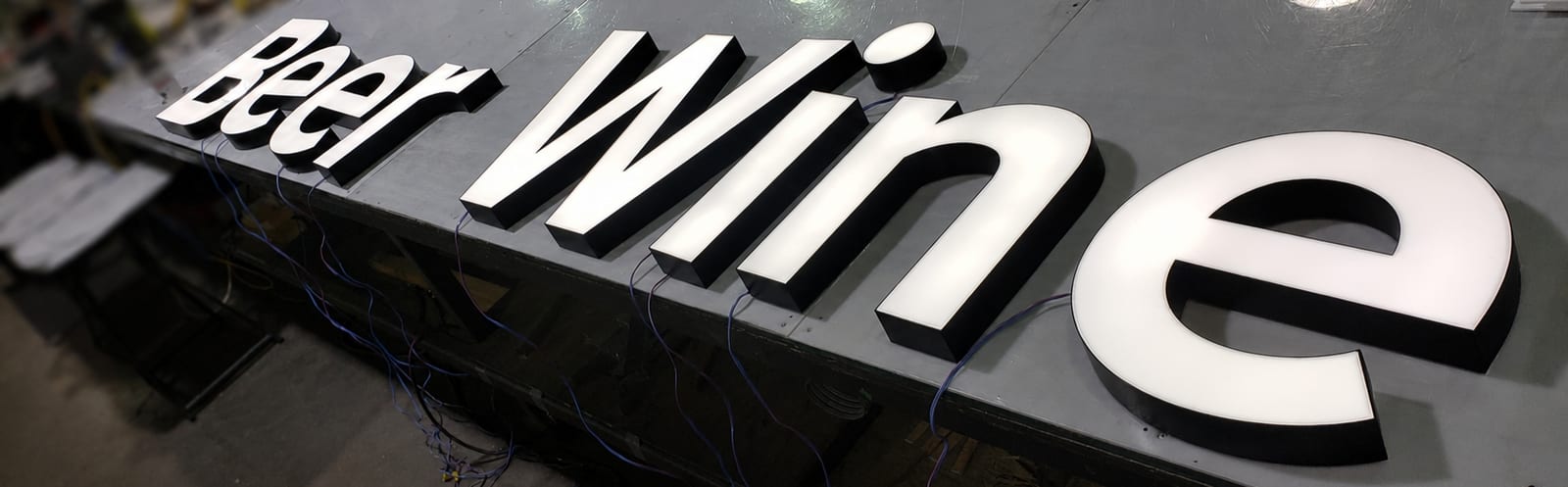
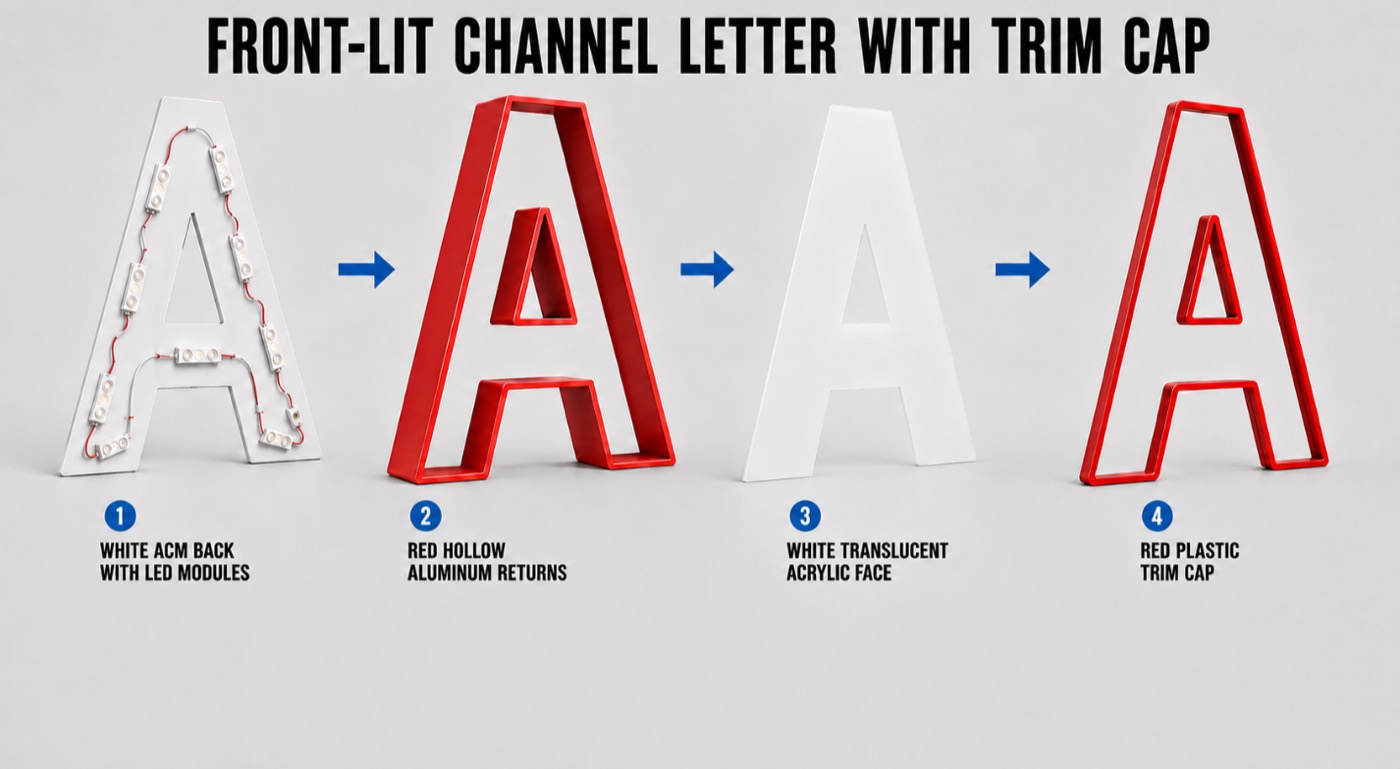
Aluminum trim cap replaces standard plastic trim with formed aluminum edging, secured around an acrylic face. It's a direct upgrade from plastic trim cap — same overall letter construction, but with a metal border that's highly resistant to fading, cracking, or loosening from the letter face, even under harsh weather conditions. The trim can be painted to match the letter returns or finished in a contrasting color to highlight the outline, and it's stocked in black, white, and red, with custom colors available on request. For most projects moving off plastic trim cap, this is the default choice.
F-Trim: A Different Profile, a Different Face Requirement
F-trim is a separate aluminum trim profile — and the key difference isn't just the shape of the extrusion. F-trim requires a 1/8" polycarbonate face instead of acrylic, and the profiles themselves cost more than standard aluminum trim. That combination makes F-trim a project-specific choice rather than a general-purpose upgrade: it's worth specifying when the job calls for that particular profile or when polycarbonate is already the required face material (for example, on higher-impact installations), but it's not typically the first recommendation when a customer is simply moving off plastic trim cap.
Which One Should You Quote?
If the customer wants a metal trim upgrade and acrylic is an acceptable face material, aluminum trim cap is the more economical, straightforward path. If the project already requires a polycarbonate face — for impact resistance near ground level, for instance — or the specification calls for the F-trim profile specifically, confirm that requirement at the quotation stage so the correct face material and trim combination are built from the start. For the broader question of metal trim versus no trim at all, see our trim-cap vs. trimless comparison.
F-Trim vs. Aluminum Trim Channel Letters FAQ
What is the difference between aluminum trim and F-trim?
Aluminum trim cap uses formed aluminum edging with an acrylic face, in the same overall construction as standard plastic trim cap letters. F-trim is a different profile that requires a 1/8" polycarbonate face instead of acrylic, and the profiles themselves cost more.
Why would I choose F-trim over standard aluminum trim?
F-trim is a project-specific alternative when the design or specification calls for that particular profile. For most jobs, standard aluminum trim cap with an acrylic face is the more economical route to the same fading- and crack-resistant metal border.
What colors are available for aluminum trim?
Black, white, and red aluminum trim are stocked, with other custom colors available upon request to match your customer's branding requirements.