Electrical approval is one of those subjects that seems straightforward until a label, component, or field modification is questioned by an inspector. For illuminated signs in the United States, the practical starting points are the finished sign, the applicable certification program, and the requirements of the local authority—not simply whether individual parts carry marks.
NRTL, UL 48, and CSA Certification for Electrical Signs
In the United States, illuminated signs and channel letters are generally evaluated to UL 48, the Standard for Electric Signs, which addresses electrical, fire, and mechanical safety requirements for indoor and outdoor electric signs, including channel letters, sign cabinets, and LED signs. The sections below cover what that certification actually requires — starting with who is authorized to issue it.
What Is an NRTL?
A Nationally Recognized Testing Laboratory (NRTL) is an independent testing and certification organization recognized by OSHA. An NRTL is authorized to:
- Evaluate electrical signs against UL 48
- Inspect the sign manufacturer's production facility
- Establish an ongoing follow-up inspection program
- Authorize the manufacturer to apply its certification label to compliant signs
UL Solutions is an NRTL, but it is not the only one — CSA Group, Intertek/ETL, and other OSHA-recognized laboratories can also hold UL 48 within their recognized scope (see the full list under "Is a UL Label Legally Required?" below).
Does UL 48 Require a UL Label?
Not necessarily. This is an important distinction:
- UL 48 is the US safety standard for electric signs.
- UL Solutions is one certification organization that tests signs to UL 48.
- CSA Group is also authorized by OSHA to test and certify electrical signs to UL 48.
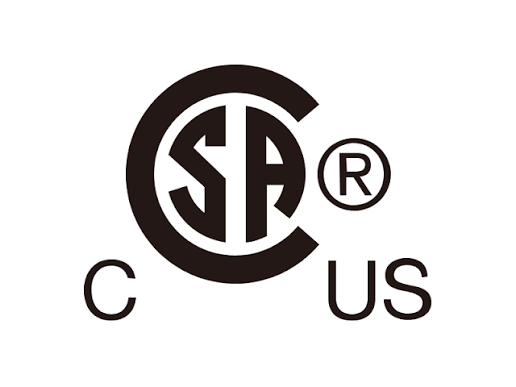
A sign can therefore be certified to UL 48 by CSA Group and carry the appropriate CSA US certification mark instead of a UL label. Both certifications demonstrate compliance with the same US electrical-sign safety standard, provided the certification falls within the laboratory's recognized scope — OSHA specifically includes UL 48, Electric Signs, within CSA Group's NRTL scope (OSHA's recognized-standards directory).
| Certification Mark | Standard Generally Used | Intended Market |
|---|---|---|
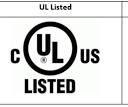
| UL Listed mark | UL 48 | United States |
| CSA mark with "US" | UL 48 | United States |
| CSA mark with "C" | CSA C22.2 No. 207 | Canada |
| CSA mark with "C" and "US" | UL 48 and CSA C22.2 No. 207 | United States and Canada |
The certification applies to the completed electrical sign, not simply to the individual LEDs or power supplies — see "UL-Listed Components Do Not Make a UL-Listed Sign" below for what that means in practice, and "Manufacturer Responsibilities" for what a shop operating under a UL 48 program must generally do.
Illuminated channel letters and other electric signs installed in the United States generally must be listed by an approved testing laboratory and installed in accordance with the electrical code adopted by the local jurisdiction. (For Canadian requirements, see our companion guide: CSA Requirements for Illuminated Signs in Canada.)
For most electric signs, the two principal requirements are:
- UL 48, the product-safety standard for electric signs
- NFPA 70, National Electrical Code, Article 600, which governs installation
UL 48 evaluates how the sign is designed and manufactured. The NEC governs how the completed sign is supplied, connected, grounded, disconnected and installed.
Requirements vary by state and municipality, so every project should be confirmed with the local Authority Having Jurisdiction, or AHJ.
Quick Summary
| Subject | Typical US Requirement |
|---|---|
| Product standard | UL 48, Electric Signs |
| Installation code | NFPA 70, particularly NEC Article 600 |
| Certification organization | UL or another OSHA-recognized NRTL like CSA |
| Products commonly covered | Channel letters, sign cabinets, section signs, illuminated logos and outline lighting |
| Outdoor construction | Certified for the applicable damp or wet location |
| Components | Suitable certified or recognized components used within their conditions of acceptability |
| Completed sign | Properly listed and labeled — not merely constructed from listed components |
| Installation | Performed under applicable state and local licensing, permit and inspection rules |
| Unlisted sign | May require field evaluation and AHJ approval |
| Final acceptance | Local electrical inspector or AHJ |
What Is UL 48?
UL 48 is the principal US product-safety standard for electric signs. It applies to many types of electrically illuminated signage, including:
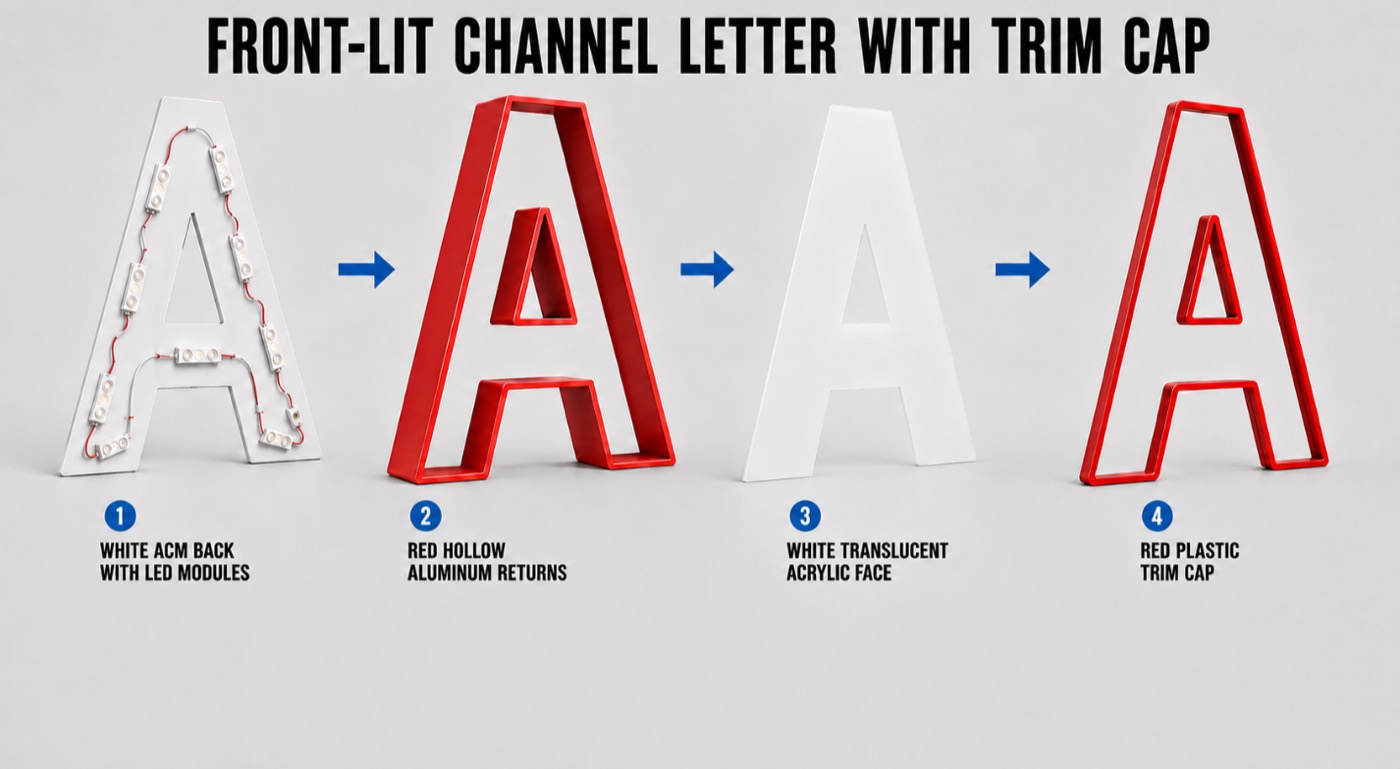
- Front-lit channel letters
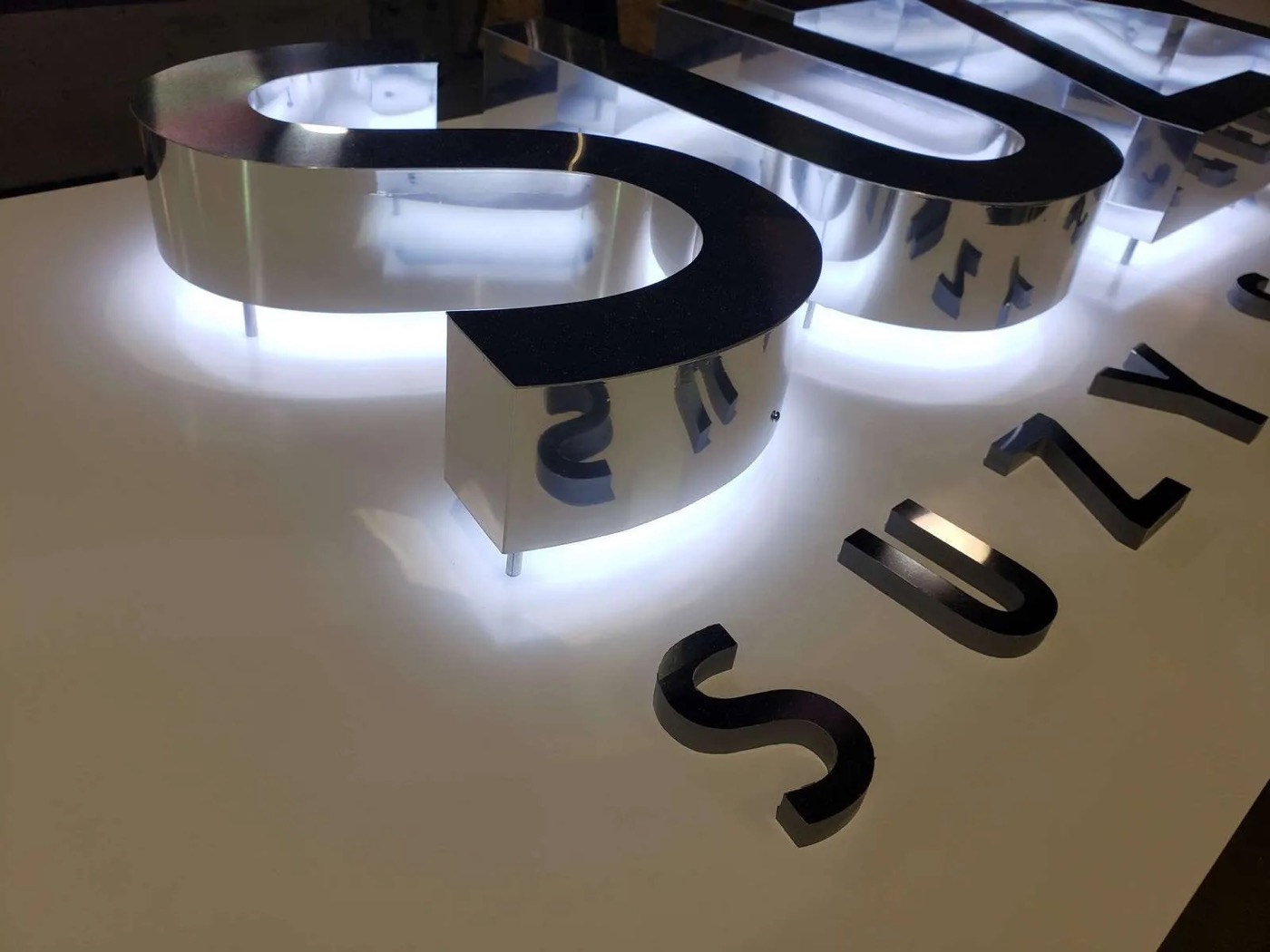
- Reverse or halo-lit channel letters
- Front-and-back-lit channel letters
- Illuminated contour logos
- Raceway-mounted letter sets
- Sign cabinets and light boxes
- Section signs
- Changing-message signs
- Portable electric signs
- Electric outline lighting
UL Solutions offers programs for custom-built channel letters, box signs, awning signs, changing-message signs and other sign types. Signs can be evaluated for dry, damp or wet locations.
UL 48 focuses on safety rather than appearance, brightness or branding. Its purpose is to reduce risks such as:
- Electric shock
- Fire
- Overheating
- Damage to electrical conductors
- Improper grounding or bonding
- Exposure to live components
- Water entry into outdoor electrical assemblies
- Failure of enclosures or supports affecting electrical safety
Is a UL Label Legally Required?
A sign does not necessarily need a label issued specifically by UL Solutions. It generally needs an appropriate listing or certification, from an NRTL with UL 48 in its recognized scope, that's accepted by the local AHJ.
Organizations recognized for UL 48 can include:
- UL Solutions
- Intertek, which commonly issues the ETL mark
- CSA Group
- TÜV Rheinland
- Other OSHA-recognized laboratories with UL 48 in their scope
OSHA identifies UL 48 as an appropriate standard under its NRTL program (OSHA's recognized-standards directory).
Therefore, an inspector may accept an ETL or other qualified NRTL mark instead of a UL mark when:
- The laboratory is recognized for UL 48
- The certification applies to the completed sign
- The mark is valid for the United States
- The sign is used within its certified conditions
- The local AHJ accepts the listing
"UL listed" is often used as a general industry expression, but technically it describes certification by UL Solutions. Other NRTL listings may demonstrate compliance with the same standard.
UL 48 vs. NEC Article 600
UL 48 and NEC Article 600 serve different purposes.
UL 48: Product Construction
UL 48 addresses how the sign is manufactured, including matters such as:
- Component selection
- Internal wiring
- Grounding and bonding provisions
- Electrical spacings
- Protection of conductors
- Power supplies and transformers
- Enclosures
- Polymeric materials
- Access to live parts
- Outdoor environmental exposure
- Drainage
- Markings
- Installation instructions
NEC Article 600: Field Installation
NEC Article 600 covers the installation of electric signs and outline lighting. Depending on the sign, installation and adopted code edition, it can address:
- Listing requirements
- Branch circuits
- Disconnecting means
- Grounding and bonding
- Field wiring
- Wiring methods
- Accessibility
- Power supplies
- Class 2 circuits
- Markings
- Service access
- Installation of sign lighting systems
The 2026 NEC continues to include electric signs and outline lighting within Article 600. However, states and municipalities adopt the NEC on different schedules, frequently with local amendments (NFPA 70 development information).
A project designed using the newest NEC edition could still be inspected under an earlier locally adopted edition.
Does Every Illuminated Sign Have to Be Listed?
NEC Article 600 generally requires electric signs and section signs to be listed, subject to the locally adopted edition and amendments.
This commonly includes:
- Complete channel-letter sets
- Individual section signs
- Illuminated logos
- Sign cabinets
- Raceway assemblies containing electrical equipment
- LED-illuminated sign systems
- Retrofit systems
Some installations or component arrangements may be treated differently by the applicable code, listing and AHJ. Never assume that a low-voltage or custom sign is exempt without written confirmation from the AHJ.
Low-Voltage LED Signs Are Not Automatically Exempt
Modern channel letters commonly operate from a Class 2 LED power supply. Although the secondary LED circuits are low voltage, the overall sign system can still include:
- A 120- or 277-volt branch circuit
- A line-voltage disconnect
- LED drivers or power supplies
- Primary wiring
- Grounding and bonding
- Metal enclosures
- Field-installed wiring
- Outdoor electrical connections
The power supply, LED system, sign construction, and installation must all be used in accordance with their certifications and the adopted code.
"Only 12 or 24 volts inside the letter" does not automatically mean that the completed sign requires no listing, permit or inspection.
UL-Listed Components Do Not Make a UL-Listed Sign
This is one of the most important requirements for sign manufacturers.
A completed electric sign is an end-use product. Installing certified LEDs, drivers, wire and switches does not automatically certify the complete sign.
The assembled sign must also be evaluated for:
- How the components are combined
- Power-supply loading
- Wiring methods
- Wire protection
- Grounding and bonding
- Component spacing
- Heat dissipation
- Environmental exposure
- Drainage
- Accessibility
- Installation configuration
- Required labels and instructions
For example, an LED driver may be certified only when:
- Installed inside a suitable enclosure
- Operated below a stated maximum load
- Mounted with specified clearances
- Protected from water
- Used within an approved ambient-temperature range
- Connected using particular wire sizes or methods
Using the driver outside those conditions can make the sign noncompliant even though the driver itself carries a certification mark.
Listed vs. Recognized Components
The difference between "Listed" and "Recognized" is important in sign construction — see our companion guide, UL Listed vs. UL Recognized: What Sign Shops Need to Know, for a fuller breakdown.
UL Listed
A listed product has been evaluated as a complete product for a defined use. Examples may include:
- A complete LED power supply
- A disconnect switch
- A complete electric sign
- A sign retrofit kit
UL Recognized Component
A recognized component is intended to be incorporated into another certified product. It normally has specific conditions controlling how it may be used.
Examples can include:
- LED modules
- Internal connectors
- Power supplies intended for integration
- Insulating materials
- Component wiring
- Certain polymeric parts
A recognized component mark does not mean that the component is approved for independent field installation in every application.
Common Components Reviewed in a UL 48 Sign
A compliant sign-construction program can control the selection and use of:
- LED modules
- LED drivers and power supplies
- Transformers
- Disconnect switches
- Wire and cable
- Connectors
- Bushings and grommets
- Strain-relief devices
- Electrode receptacles
- Enclosures
- Raceways
- Grounding hardware
- Insulation
- Acrylic and polycarbonate materials
- Flexible lighting
- Retrofit systems
Related standards can include:
- UL 879: Electric Sign Components
- UL 879A: LED Sign and Sign Retrofit Kits
- UL 8750: LED Equipment for Use in Lighting Products
- UL 50 or UL 50E: Electrical enclosures and environmental considerations
UL identifies UL 48, UL 879, UL 879A and NEC Article 600 among the common standards and requirements used for electric signs and sign components.
Dry, Damp, and Wet-Location Signs
The sign must be suitable for its intended environment.
Dry Location
A dry-location sign is generally intended for indoor use and is not normally subject to moisture.
Damp Location
A damp-location sign may be suitable for partially protected areas where moisture or condensation can occur, but it is not intended for direct exposure to weather unless specifically rated for it.
Wet Location
Outdoor building signs normally require construction suitable for the applicable wet-location exposure.
Wet-location construction can involve:
- Outdoor-rated electrical components
- Suitable wire and insulation
- Protected primary connections
- Proper drainage
- Corrosion-resistant materials
- Water-management provisions
- Suitable power-supply enclosures
- Properly protected conductor openings
- Installation instructions maintaining the environmental rating
Completely sealing every opening is not necessarily the correct solution. Outdoor sign construction often needs controlled drainage and ventilation while still protecting electrical components.
Grounding and Bonding
Metallic sign parts that can become energized must be grounded or bonded as required by the listing and adopted electrical code.
These parts can include:
- Metal letter returns
- Aluminum backs
- Sign cabinets
- Raceways
- Wireways
- Power-supply enclosures
- Metal mounting structures
- Accessible metal covers
Common problems include:
- Paint preventing electrical continuity
- Loose bonding connections
- Reliance on mechanical mounting screws not intended for bonding
- Missing bonding jumpers between sign sections
- Incorrect grounding conductor size
- Grounding conductors damaged during installation
The manufacturer's instructions should clearly identify field grounding and bonding connections.
Disconnecting Means
Electric signs generally require a disconnecting means as specified by NEC Article 600.
The exact requirements depend on the sign configuration and adopted code edition, but the disconnect must generally:
- Disconnect applicable ungrounded supply conductors
- Be suitably located
- Be accessible as required
- Be identified where necessary
- Permit safe servicing
- Be appropriate for the electrical rating
A disconnect built into a remote power-supply cabinet does not automatically satisfy every installation. Its location, visibility and ability to disconnect the complete sign system must be evaluated.
Markings and Labels
A listed electric sign normally carries identification and electrical information required by its certification.
The label or nameplate may identify:
- Manufacturer
- Model, order or identification number
- Input voltage
- Frequency
- Current or wattage
- Dry-, damp- or wet-location suitability
- Certification organization
- Certification control or file information
- Field-wiring information
- Required warnings
- Installation limitations
The certification label should remain visible or accessible for inspection as required. It should not be:
- Painted over
- Removed during installation
- Hidden permanently behind construction
- Transferred to another sign
- Reproduced without authorization
The certification mark must be applied only by a manufacturer authorized under the applicable certification program.
Section Signs and Remote Power Supplies
A channel-letter sign can consist of multiple separately constructed letters or sections connected to one or more remote power supplies.
Important considerations include:
- Which parts constitute the listed sign
- Identification of individual sign sections
- Maximum permitted number of sections
- Power-supply loading
- Secondary-wire lengths and sizes
- Connector types
- Remote enclosure construction
- Separation of primary and secondary wiring
- Field-wiring instructions
- Identification of the related sections and power-supply cabinet
The sign shop should not assume that separately listed components can be combined in unlimited configurations.
UL's General Coverage Program for Custom Sign Shops
Because most signs are custom manufactured, UL offers a General Coverage program for qualified sign manufacturers.
The program provides controlled flexibility for products such as:
- Channel letters
- Box signs
- Awning signs
- Changing-message signs
- Portable signs
- Custom illuminated logos
A participating shop generally works within documented construction requirements, uses acceptable components, maintains required records and undergoes production surveillance.
UL also provides Manufacturer's Technical Representative training covering:
- Basic sign-safety principles
- Component selection
- UL 48 technical requirements
- Manufacturer responsibilities
- Interaction with UL field representatives
Participation does not give a manufacturer unlimited authority to place a UL label on any electrical product. Each sign must fall within the program's permitted construction and labeling rules.
Field Evaluation of an Unlisted Sign
A field evaluation may be required when:
- A custom sign was built without an acceptable listing
- An imported sign lacks a recognized US certification
- A listed sign has been materially modified
- A sign is too large or unusual for the manufacturer's regular program
- The inspector questions the sign's construction or label
- Components were replaced with unapproved alternatives
During a field evaluation, an approved organization examines a particular sign or installation. The evaluator may review:
- Wiring
- Components
- Grounding and bonding
- Overcurrent protection
- Electrical spacings
- Enclosures
- Environmental protection
- Labels and ratings
- Installation conditions
- Available technical documentation
Corrections may be required before an evaluation label is applied.
A field-evaluation label usually applies only to the specific unit examined. It is not permission to manufacture additional copies.
UL notes that unusually large signs may require preliminary investigation or on-site evaluation as a path toward certification.
Modifying a Listed Sign in the Field
Material modifications can affect or invalidate the original listing.
Examples include:
- Replacing the specified LED driver with a different model
- Increasing the number of LED modules
- Changing primary wiring
- Moving the disconnect
- Drilling new openings in electrical enclosures
- Replacing an approved sign face with an unsuitable material
- Changing the sign from indoor to outdoor use
- Combining separately listed systems
- Altering the raceway or remote power-supply enclosure
- Converting neon or fluorescent illumination to LED without an approved method
A properly certified LED retrofit kit can provide a controlled method for converting an existing sign. UL notes that retrofit permit, installer-qualification and AHJ requirements vary by jurisdiction.
Before modification, contact the original manufacturer, certification body, and local AHJ.
Manufacturer Responsibilities
The sign manufacturer should:
- Confirm the installation location and intended environment.
- Determine the applicable listing program.
- Use components permitted by the certification procedure.
- Follow component conditions of acceptability.
- Control wiring, grounding, and enclosure construction.
- Verify electrical loading.
- Inspect the completed sign.
- Apply only authorized labels.
- Maintain required production and label records.
- Supply accurate installation instructions.
- Document remote power supplies and sign sections.
- Prevent unauthorized substitution of controlled components.
Installer Responsibilities
The installer should:
- Verify that the sign carries an acceptable listing mark.
- Confirm that its voltage and rating match the site.
- Follow the manufacturer's installation instructions.
- Obtain required electrical and sign permits.
- Use approved field-wiring methods.
- Install the required disconnect.
- Complete grounding and bonding.
- Protect wiring from sharp edges and physical damage.
- Maintain wet-location construction.
- Avoid unauthorized modifications.
- Keep identification labels accessible.
- Arrange the required inspection before energizing the sign.
Product certification does not replace proper installation.
UL Inspection Checklist for Illuminated Signs
Before shipping, the manufacturer should verify:
- Correct certification label
- Correct input voltage and current rating
- Correct location rating
- Approved LED modules and drivers
- Power supplies within permitted loading
- Correct primary and secondary wiring
- Conductors protected at metal openings
- Secure electrical connections
- Proper strain relief
- Grounding and bonding completed
- Required disconnect provisions documented
- Outdoor drainage openings unobstructed
- No exposed live parts
- Covers and access panels secured
- Required warnings and markings installed
- Installation pattern and wiring diagram included
- Remote power supplies clearly matched to sign sections
- Final illumination and operational test completed
Common Compliance Mistakes
- Believing that UL-recognized LEDs make the whole sign UL Listed
- Applying a label to construction outside the approved program
- Using indoor drivers in an outdoor sign
- Loading power supplies above permitted limits
- Missing grounding or bonding connections
- Using nonapproved wire or connectors
- Hiding or removing the certification label
- Changing components after the final factory inspection
- Shipping a sign with incomplete installation instructions
- Modifying a listed sign without authorization
- Treating a CE mark as a substitute for a US NRTL listing
- Assuming low-voltage LED letters are automatically exempt
- Failing to verify the NEC edition adopted at the installation site
UL Requirements FAQ
What standard applies to illuminated channel letters?
Illuminated channel letters are commonly evaluated under UL 48, the Standard for Electric Signs. Their field installation is generally governed by NEC Article 600 and applicable local codes.
Must an illuminated sign carry the UL logo?
Not necessarily. It must generally carry an appropriate mark from an NRTL recognized for the applicable standard and accepted by the local AHJ — for example, a sign certified to UL 48 by CSA Group may carry the CSA US mark instead of a UL label. ETL, CSA, or another qualified NRTL mark may be acceptable for use in the US.
Can a Canadian manufacturer build UL-listed signs for the US?
Yes. A Canadian manufacturer can participate in an appropriate US certification program and apply authorized US certification marks when the signs comply with that program.
Are non-illuminated letters subject to UL 48?
Non-electrical letters, by definition, do not require an electrical product listing. Electrical lighting, power supplies, or wiring added to them may change the applicable requirements.
Do raceway-mounted letters need certification?
The electrical sign assembly — including the letters, raceway, internal wiring, power supplies, and disconnect arrangements — must be evaluated based on its configuration and listing program.
Does a listed sign still need an electrical permit?
Usually, yes. Listing and permitting are separate. Local rules determine the permits, licensed trades and inspections required.
Can an installer replace a failed LED driver with any of the listed drivers?
Not automatically. The replacement must have appropriate electrical, environmental, and installation ratings and be permitted by the sign's listing, instructions, or an approved retrofit procedure.
Who has final authority?
The local Authority Having Jurisdiction has final authority over acceptance of the product and installation.
The Practical Takeaway
Compliance for an illuminated sign in the United States depends on three connected elements:
- The sign is manufactured under an appropriate product-certification program, commonly UL 48.
- The sign is installed according to NEC Article 600 and applicable local requirements.
- The completed product and installation are accepted by the local AHJ.
Using listed components is only the beginning. The complete channel-letter set, sign cabinet, illuminated logo or raceway assembly must be constructed, labeled and installed as an approved system.
Wholesale Sign Pro manufactures wholesale channel letters and custom illuminated signs for sign companies, designers, installers and multi-location programs across the United States, built to UL 48 or CSA C22.2 No. 207 certification requirements as specified at quote time — see our Manufacturing page for more on our quality-control process, or Q&A for answers to other common wholesale-manufacturing questions. Project information — including installation location, voltage, mounting method and required certification — should be confirmed before fabrication begins.
This article provides general industry information and is not a substitute for the applicable code, certification requirements or professional advice. Always confirm the locally adopted NEC edition and project requirements with the certification body, the licensed electrical contractor, and the Authority Having Jurisdiction.