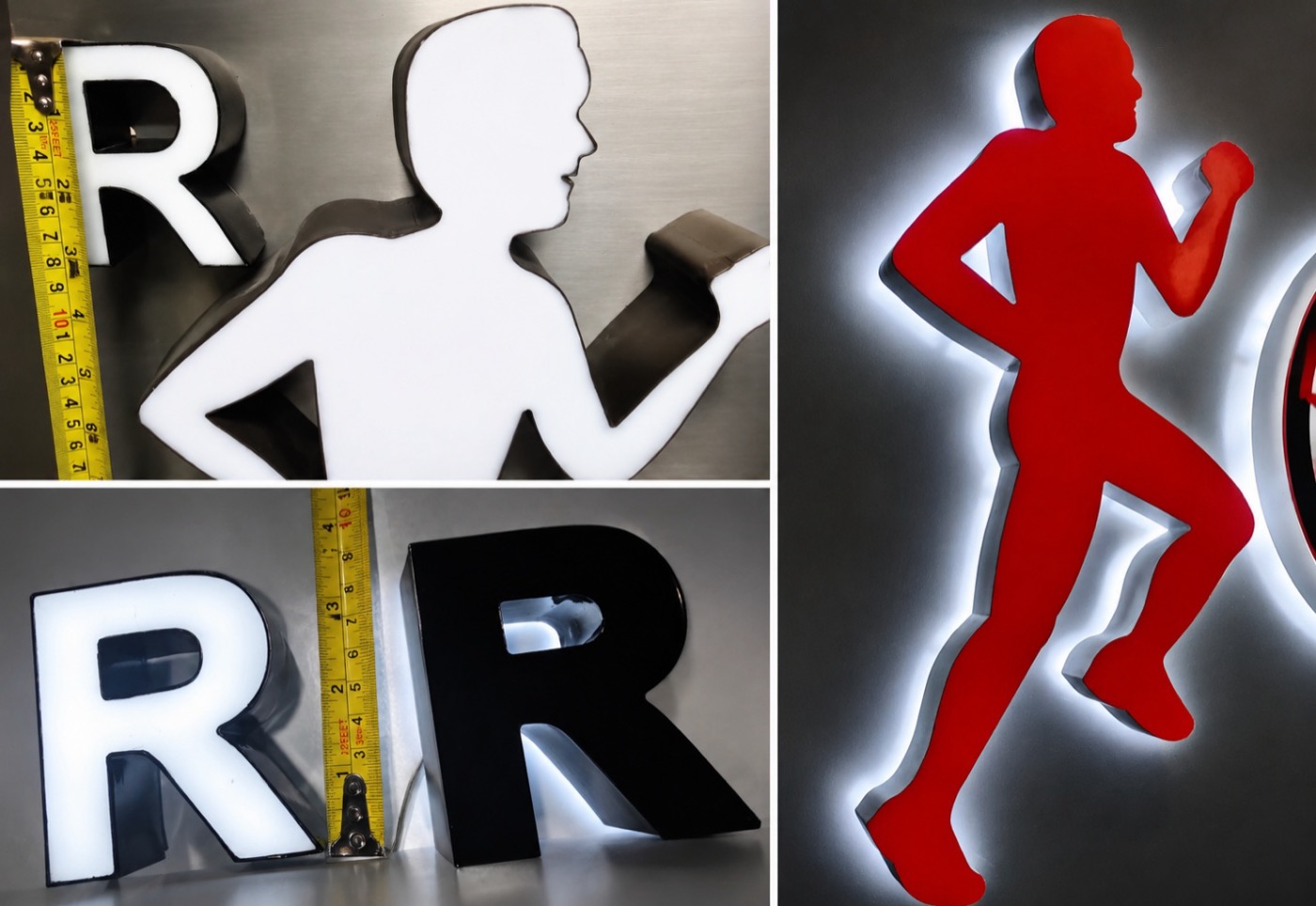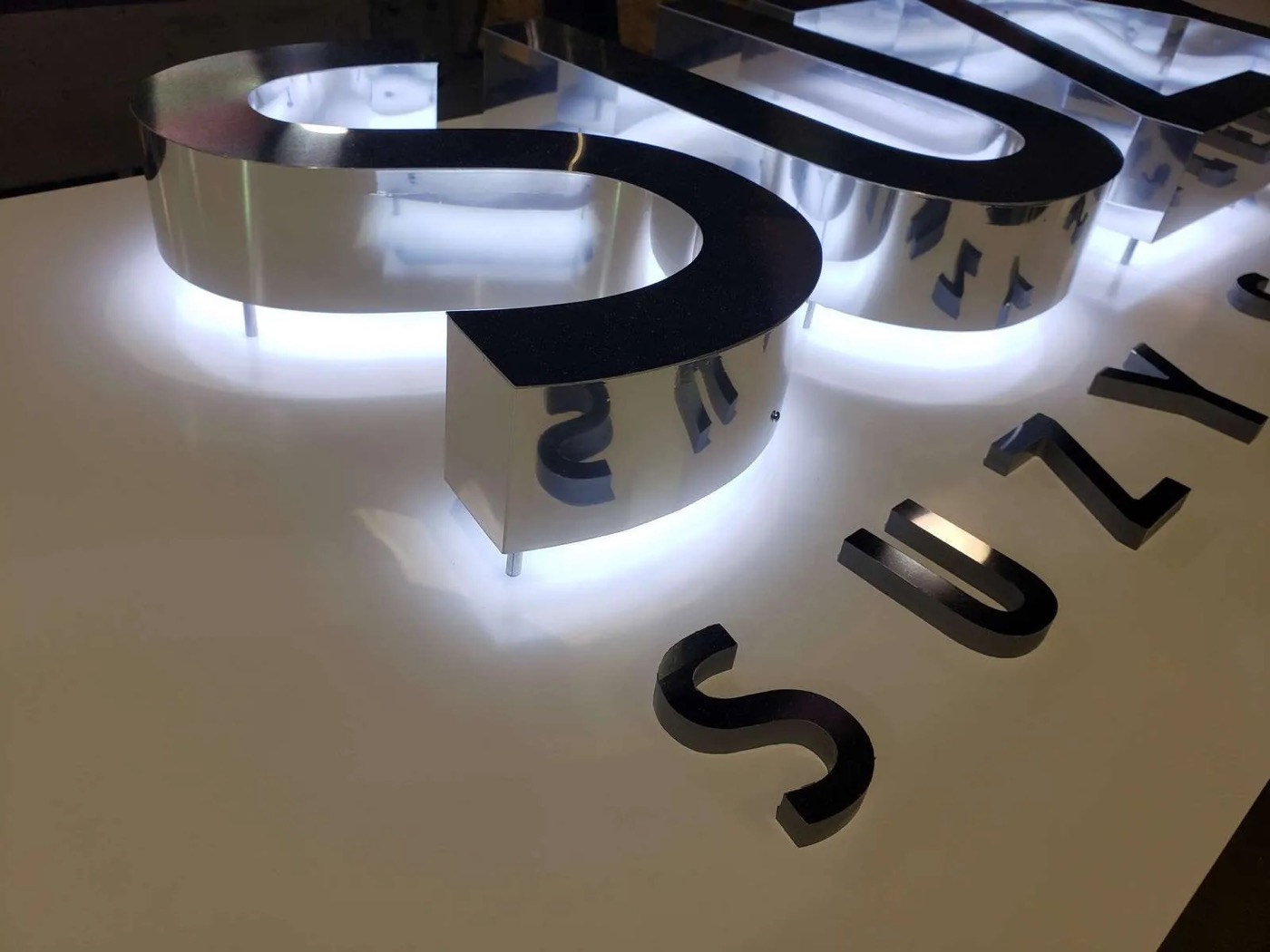

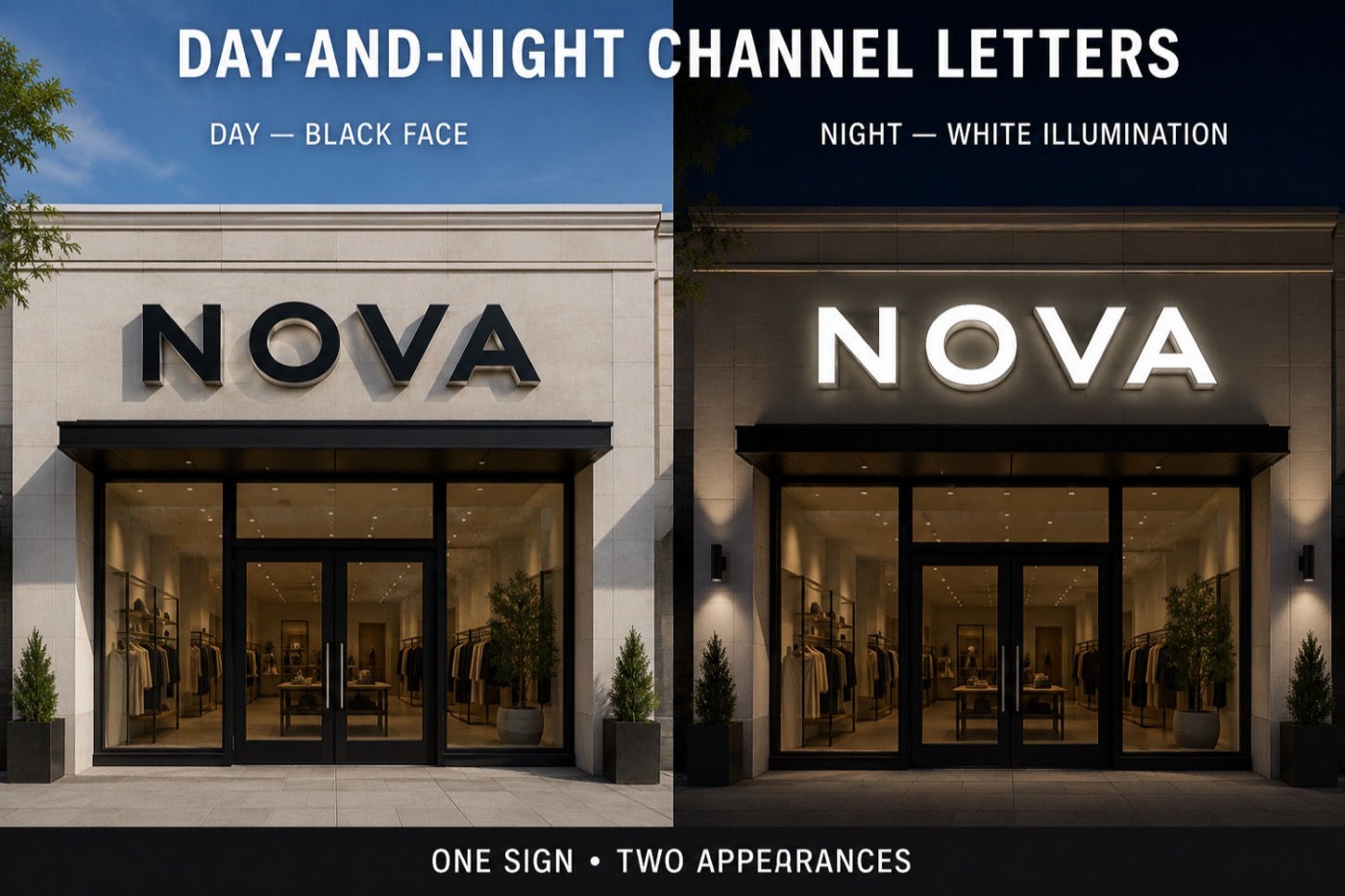
Black lettering looks clean and bold against a light-colored building. The trouble starts after sunset. An ordinary opaque black face can't pass the light that front illumination needs, so the letters go dark just when the sign should be working hardest.
Day-and-night channel letters solve that. They look black or dark in daylight and light up white when the LEDs come on. For you, that means a way to keep a customer's daytime branding and still give them nighttime visibility.
How the Effect Works
The face doesn't change color. What changes is the light source that dominates what people see.
In daylight, ambient light hits the outside of the sign, and the dark face treatment sets the look. At night, the LEDs inside shine through the parts of the face that transmit light. With a suitable white diffuser and white LEDs, the letters read as lit white.
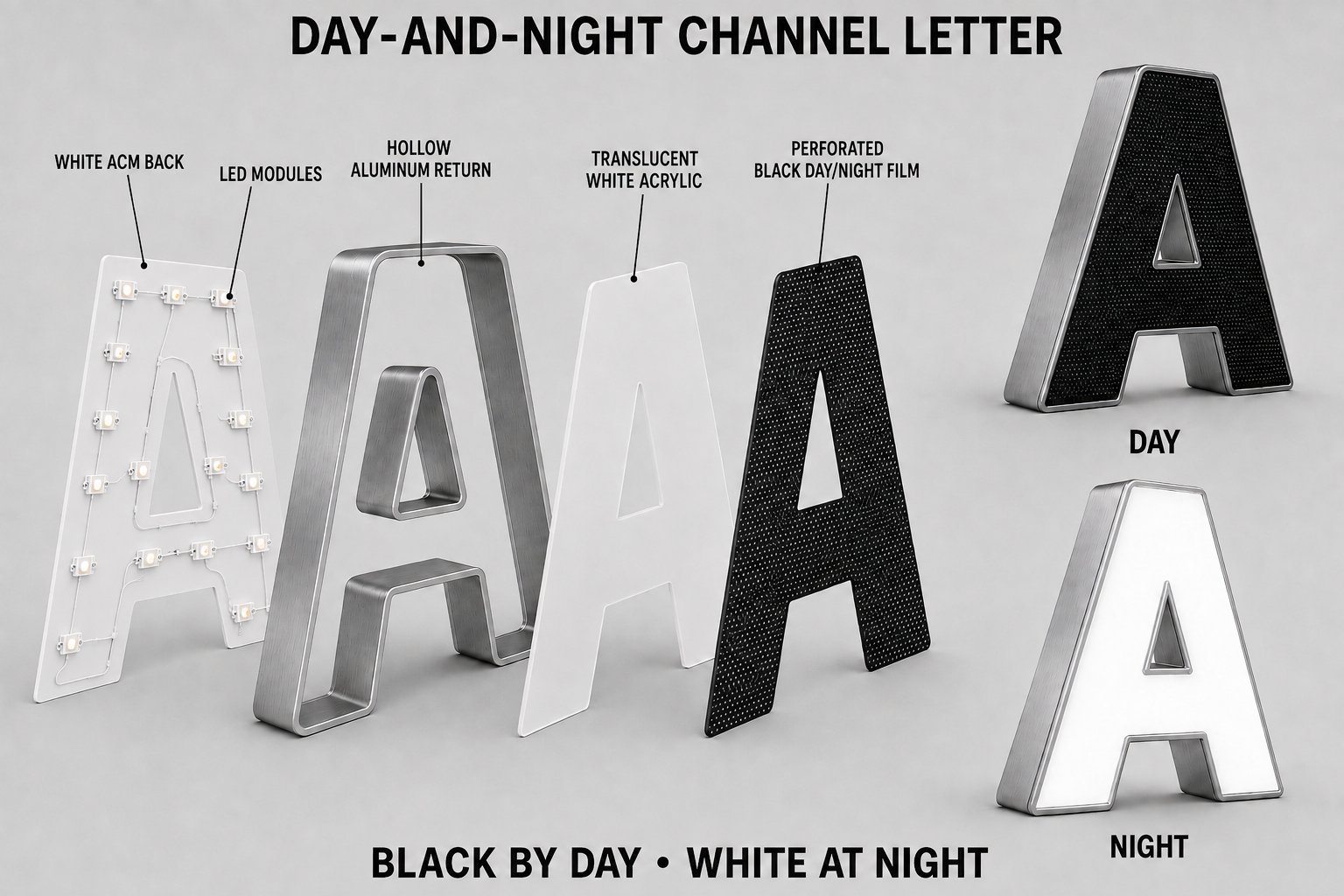
The result depends on the whole assembly, not on any one part. The face material, the film, the diffusion, the LED layout, and the letter depth all have to work together.
Two Common Ways to Build It
Perforated Black Film Over a Translucent Face
One approach puts a perforated black film over a suitable translucent face. The black surface gives the daytime look. At night, light from inside the letter passes through the small openings, and from the intended viewing distance the lit openings blend into a single white glow.
Up close, the perforations can be noticeable. If the sign will be seen by people walking past, a material sample is worth the time.
Purpose-Made Day-and-Night Face Materials
The other approach uses a face material or film system made to look dark when unlit and brighter when lit from behind. Depending on the product, the daytime color can be black, charcoal, or smoke gray.
Don't assume every day-and-night product looks the same. Confirm the actual material and approve how it looks before production.
Why Ordinary Black Vinyl Doesn't Work
Standard opaque black vinyl blocks light. Put it over a white acrylic face and that area generally won't light up from the front. A working day-and-night sign needs a face system that transmits light and still looks dark during the day.
This is why the wording of a quote request matters. Ask for "black during the day and white when illuminated," not simply "black channel letters." Those two descriptions can lead to very different constructions.
What Determines Nighttime Brightness
A dark face treatment lets less light through than a plain white face, so the lighting has to be designed around that limit. These are the factors we look at:
| Factor | What It Changes |
|---|---|
| Face transmission | Different materials and films let different amounts of light through |
| Letter depth | The available space affects LED placement and how light spreads |
| Stroke width | Narrow strokes and small details can limit lighting options |
| LED layout | Module choice, spacing, and position affect evenness |
| Diffusion | The face assembly has to spread the light evenly |
| Surrounding light | A bright shopping plaza can make a sign look less prominent than the same sign on a darker street |
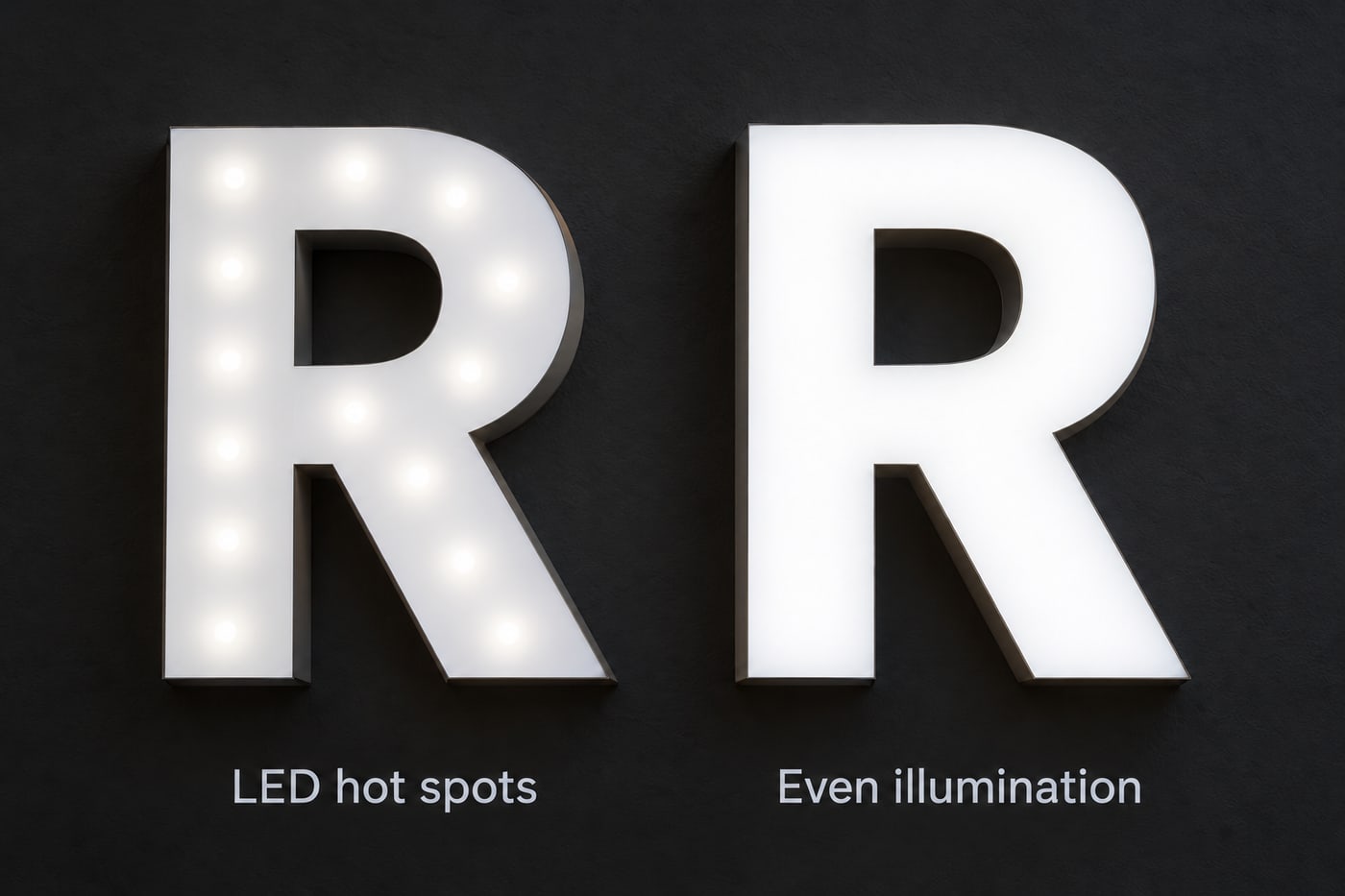
Adding more LEDs alone doesn't guarantee a better result. The aim is balanced, even light across the whole letter. Our guides to return depth, choosing the right LEDs, and eliminating LED hot spots cover those pieces in more detail.
Set Realistic Color Expectations
"Black by day and white by night" describes the effect you're after. It doesn't promise an exact match to a printed black swatch in daylight, or one particular white after dark.
The surface finish, the viewing angle, the ambient light, and the materials all shape what people see. White LEDs also come in different color temperatures, so the result can lean warmer or cooler.
On projects with strict brand standards, approve a physical lit sample made with the proposed face construction. Look at it unlit and lit, ideally from the distance where the sign will really be viewed.
Where These Letters Work Well
Day-and-night letters make sense when a customer wants dark lettering on a light facade and clear front illumination after dark. Retail storefronts, automotive dealerships, restaurants, hotels, and corporate buildings are all common examples.
The building still matters. Dark letters can lose contrast against dark cladding, and in that case a different face color or a different lighting approach, such as reverse halo letters, may suit the job better.
What to Include in Your Wholesale Quote Request
Send the artwork, letter heights, stroke widths, the depth you want, the mounting method, and the installation location. Then add:
- The daytime black or dark finish you want
- The nighttime white appearance you want
- The typical viewing distance
- Photographs of the building and the lighting around it
- Any brand standards or sample approval requirements
Those details let us look at the face construction and the lighting before anything goes into production. Our wholesale channel letter ordering checklist covers the rest of what to specify.
Day-and-Night Channel Letters From Wholesale Sign Pro
Wholesale Sign Pro manufactures day-and-night channel letters for sign companies serving customers across the United States and Canada. Send your artwork, dimensions, building photographs, and the daytime and nighttime look you want. We'll review the construction options with you and talk through whether a lit sample makes sense for your project.
Day-and-Night Channel Letters FAQ
Can I use regular black vinyl on a white acrylic face for a day-and-night effect?
No. Standard opaque black vinyl blocks light, so that area won't light up through the front. A day-and-night sign needs a face system designed to transmit light while keeping a dark daytime look.
Will the letters match my customer's black swatch by day and a specific white at night?
Black by day and white by night describes the intended effect, not an exact color match. Surface finish, viewing angle, ambient light, the materials, and LED color temperature all change the result, so approve a physical lit sample when the brand standards are strict.
Are the perforations visible on a day-and-night face?
They can be at close range. From the intended viewing distance the lit openings blend together, but a sample is especially worth reviewing for signs that pedestrians see up close.
Will adding more LEDs make the letters brighter?
Not by itself. The goal is balanced, even light across the whole letter, which depends on the face transmission, depth, stroke width, LED layout, and diffusion working together.