
Most delays on a channel-letter order start with a missing detail: no installation address, an unclear face color, artwork without dimensions, or a mounting method that has not been decided. None of those issues is difficult to fix, but each one can stop a quote or drawing until somebody gets an answer.
Sending a complete package gives the fabricator enough information to price the same job you intend to install—and gives the installer a much better chance of opening the crate without surprises.
Use this checklist when requesting a quote or placing an order for custom channel letters.
1. Customer and Project Information
Provide the basic information your fabricator needs to identify and manage the project:
- Company and contact name
- Telephone number and email address
- Project or customer name
- Installation address
- Billing and shipping addresses
- Requested completion or delivery date
- Preferred shipping or pickup method
- Tax-exemption or resale certificate, when applicable
- Purchase-order number, if required
The installation address is especially important — local electrical, structural, wind-load, and signage requirements vary by jurisdiction and directly affect what certifications, engineering, and permit documentation the sign must carry.
2. Production-Ready Artwork
Send clean vector artwork. Preferred file formats:
- Adobe Illustrator (.AI)
- Encapsulated PostScript (.EPS)
- Vector PDF
- Scalable Vector Graphics (.SVG)
- CorelDRAW (.CDR)
Convert all fonts to outlines and identify all colors before submitting the file. Screenshots, photographs, low-resolution JPEGs, and artwork exported from a website are not production ready.
If vector artwork is unavailable, ask whether the fabricator can recreate the logo. Artwork reconstruction may involve an additional charge and a separate approval step before production begins.
3. Exact Sign Dimensions
Clearly specify:
- Overall sign width and height
- Individual letter or logo height
- Maximum available installation area
- Required letter depth (return height)
- Spacing between letters
- Number of identical sign sets
- Scale of the supplied drawing
- Whether dimensions include logos, taglines, or secondary copy
Do not rely solely on artwork proportions. Include at least one confirmed physical dimension so the fabricator can scale the design accurately. Artwork files are frequently submitted at incorrect scales.
4. Channel-Letter Style
Identify the exact construction required:
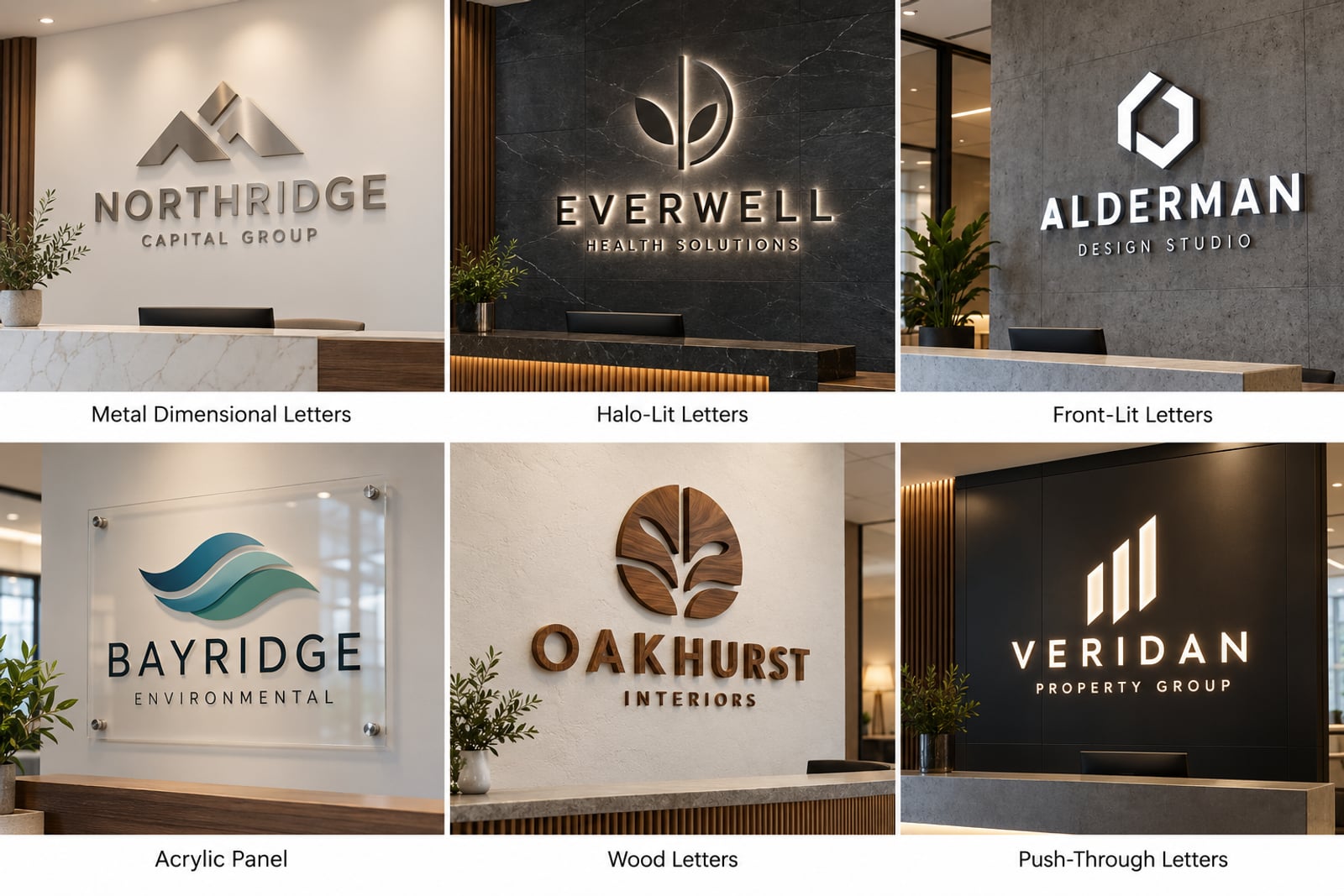
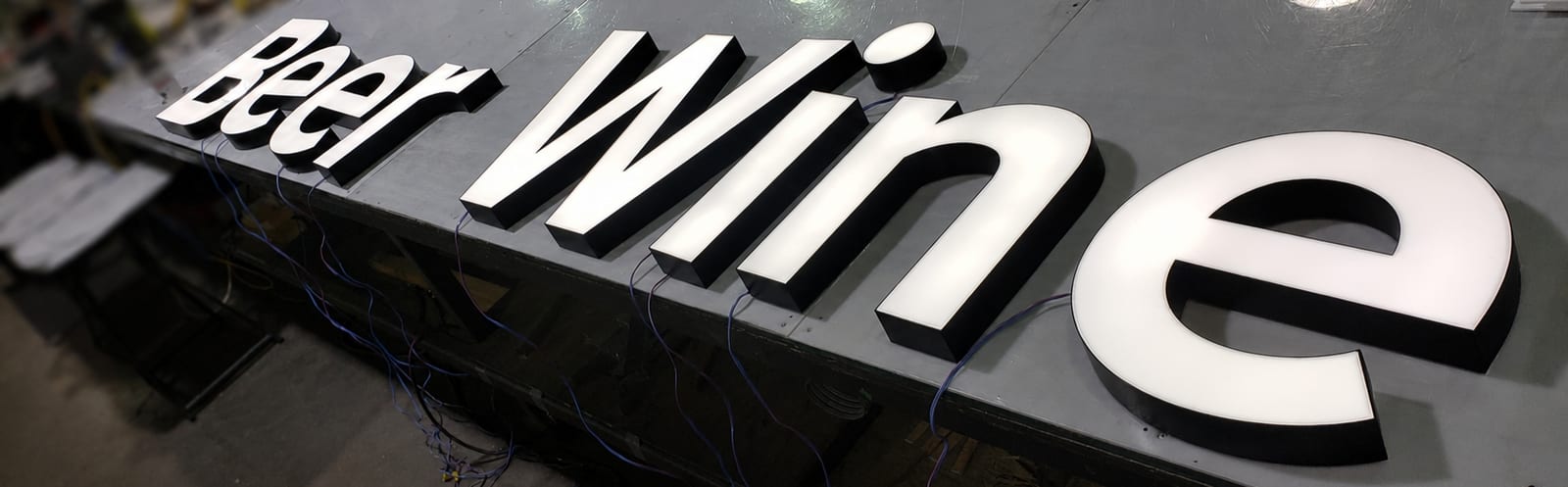
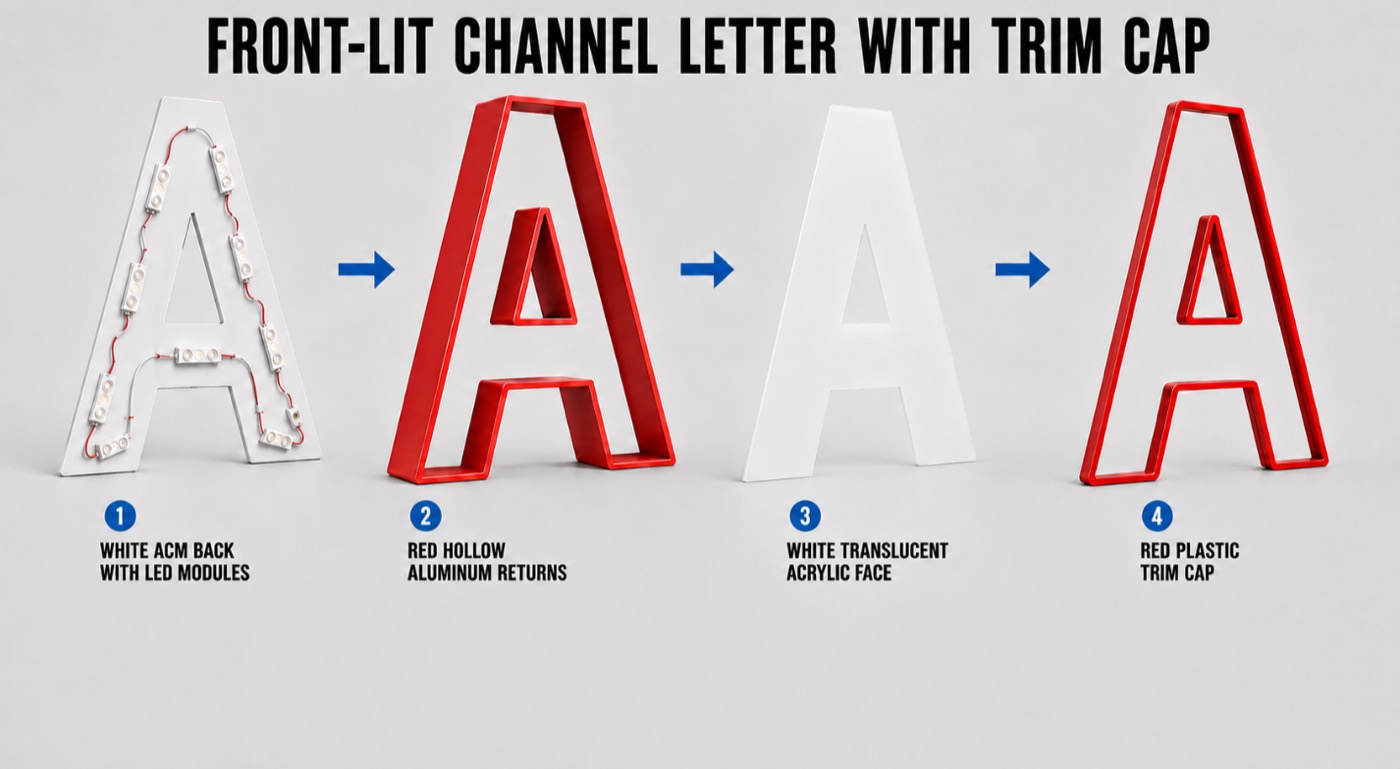
- Front-lit channel letters
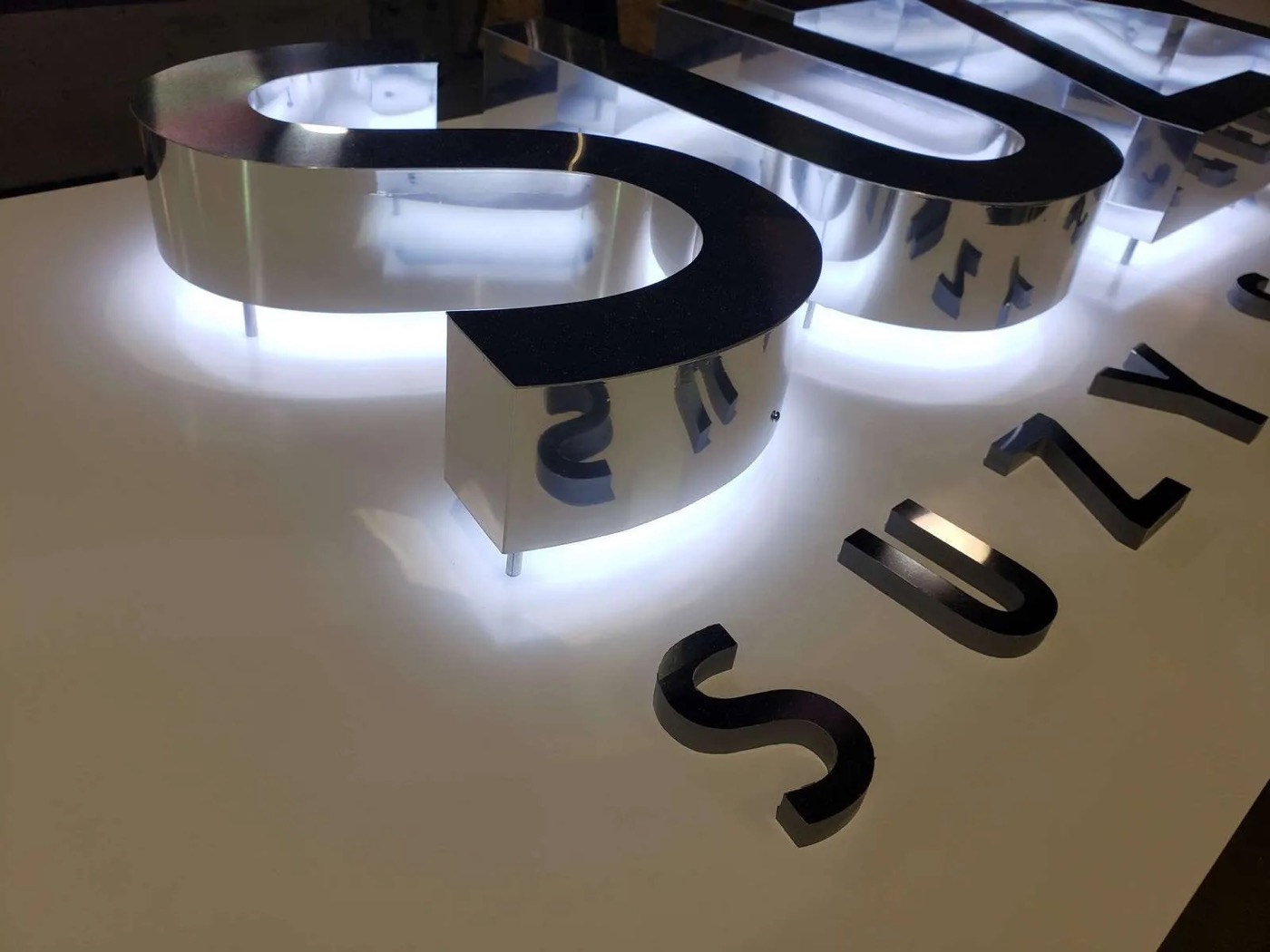
- Reverse- or halo-lit letters
- Front-and-back-lit letters
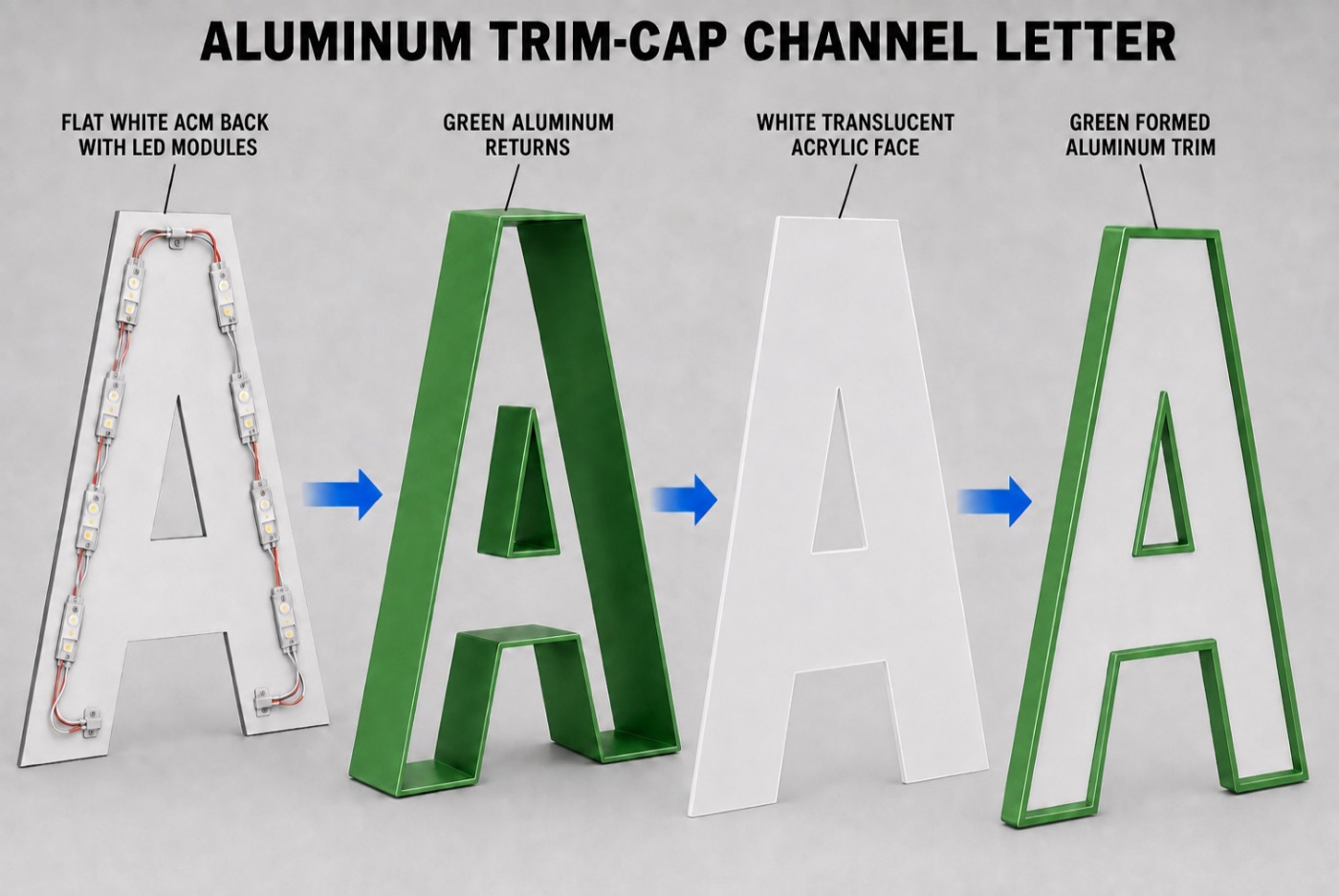
- Trim-cap channel letters
- Trimless channel letters
- Open-face channel letters
- Fabricated metal letters
- Fabricated acrylic letters
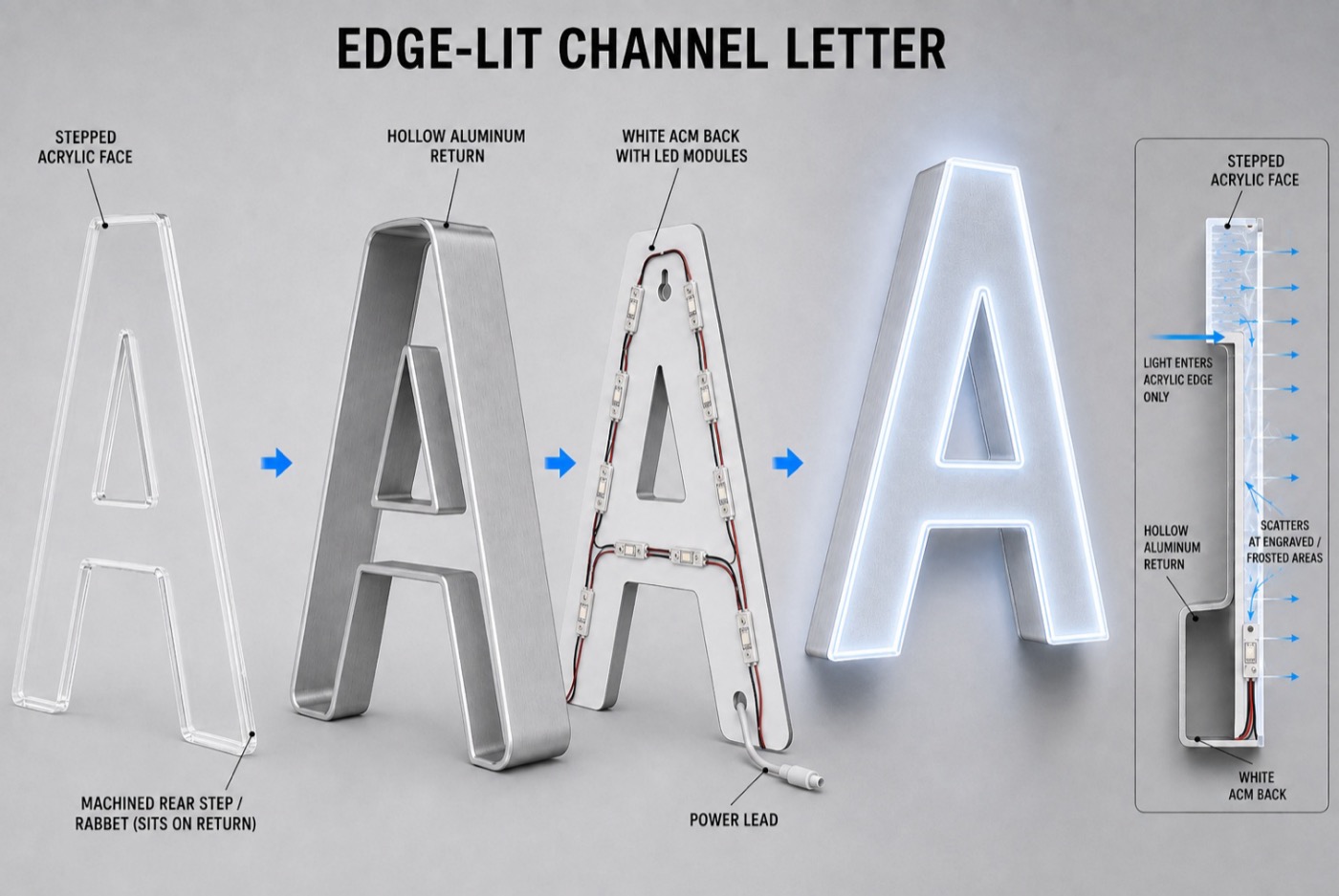
- Edge-lit letters
- Non-illuminated dimensional letters
- Custom contour logos
If you are unsure which construction is appropriate, provide reference photographs or architectural renderings showing the desired installed appearance. Construction type affects return depth, LED layout, face material, back panel, wiring, and certification method.
5. Face Specifications
For letters with illuminated or decorative faces, provide:
- Acrylic or polycarbonate face material
- Material thickness
- Manufacturer and color number
- Standard or custom face color
- Applied translucent vinyl color
- First-surface or second-surface vinyl application
- Printed graphic requirements
- Daytime and nighttime color expectations
- Trim-cap color and size, when used
- Trim-less extrusion or retention-system requirements
Color descriptions such as "red" or "blue" are not precise enough for brand-critical projects. Supply a recognized material number, vinyl code, paint code, or approved physical sample. Face color and backlit color can appear significantly different from the same acrylic sheet depending on LED brightness and color temperature.
6. Return and Back Specifications
Specify the required:
- Letter-return depth
- Aluminum or stainless-steel construction
- Metal thickness (typically 0.040″ or 0.063″ aluminum; 0.040″ stainless steel for smaller letters)
- Return color
- Interior finish
- Back material and thickness
- Sealed or drainable construction
- Weep-hole requirements
- Seam location preferences
- Welding, stapling, clinching, or adhesive assembly requirements
For halo-lit (reverse-lit) letters, also identify the required standoff distance from the wall and the desired appearance of the rear illumination — both affect return depth and back-panel design.
7. Paint and Finish Information
Provide an exact paint or finish reference:
- PMS (Pantone Matching System) color number
- RAL color number
- Manufacturer's paint code
- Matthews Paint formula
- AkzoNobel color code
- Brushed stainless steel
- Polished stainless steel
- Satin, matte, semi-gloss, or gloss finish
- Anodized or specialty architectural finish
When color matching is critical — franchise programs, automotive branding, or national brand standards — send a physical sample and request a painted approval sample before full production begins.
8. LED and Illumination Requirements
Clearly identify the required lighting specifications:
- LED manufacturer or approved equivalent
- LED color
- White color temperature in Kelvin (e.g., 3000K warm white, 4000K neutral, 5000K cool white, 6500K daylight)
- Required brightness level
- Single-color or RGB illumination
- Front-lit, halo-lit, edge-lit, or combination lighting method
- Power-supply manufacturer
- Power-supply input voltage (120V or 277V for US; 120V or 347V for Canada)
- Dimming or control requirements
- Remote or letter-mounted power supplies
- Desired lead-wire length and exit location
- Nighttime appearance requirements
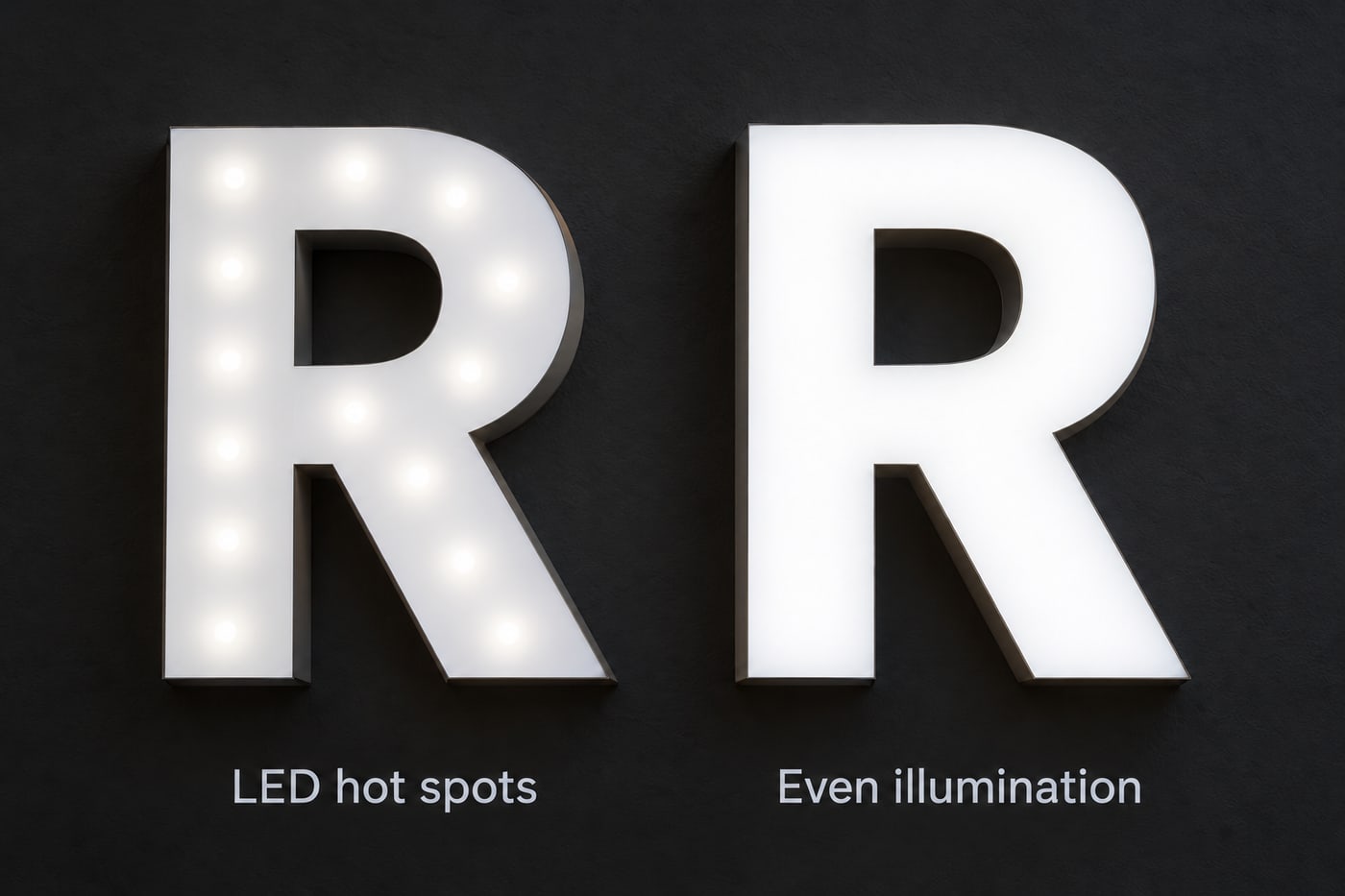
Kelvin color temperature must be consistent across every letter in the set. Even a 500K difference between letters in the same sign produces a visible color inconsistency when viewed at night. Specify a single Kelvin target for the entire order.
9. Electrical and Certification Requirements
Tell the fabricator where the sign will be installed and which electrical certification is required. This must be confirmed at the quotation stage — certification cannot be added after the sign is manufactured.
- Installation country (USA or Canada)
- Installation state or province
- Required input voltage
- UL 48 certification for United States installations
- CSA C22.2 No. 207 certification for Canadian installations
- Disconnect-switch requirements
- Power-supply enclosure requirements
- Electrical-access requirements
- Raceway or remote power-supply specifications
- Local electrical-inspection requirements
UL 48 is the standard for electric signs installed in the United States. CSA C22.2 No. 207 is the standard for electric signs installed in Canada. Both require listed electrical components and a certification label on the finished sign. Confirm the required certification with the Authority Having Jurisdiction (AHJ) before placing the order. A sign that does not carry the required certification will fail electrical inspection.
10. Mounting Method
Identify how the letters will be installed:
- Direct or flush mounting
- Raceway mounting
- Wireway mounting
- Backer-panel mounting
- Standoff mounting
- Stud mounting
- Through-bolt installation
- Adhesive mounting for non-illuminated letters
- Custom structural framing
Also provide:
- Wall or façade material
- Wall thickness, if known
- Interior access conditions
- Required stud length
- Fastener preferences
- Raceway dimensions and color
- Wire-exit location
- Power-supply location
- Installation-pattern requirements
Common wall materials include brick, concrete block, stucco, metal panel, aluminum composite material (ACM), glass, wood framing, and exterior insulation finishing systems (EIFS). Each material requires a different fastening approach and affects stud length, installation pattern, and sealing method.
11. Installation Pattern and Shop Drawings
Confirm which documentation is required with the order:
- Full-size paper installation pattern
- Sectioned paper pattern for large signs
- Rigid pattern
- Electronic pattern file
- Drill-point pattern
- Raceway mounting template
- Scaled shop drawings
- Electrical layout drawing
- Cross-section details
- Mounting details
- Engineering drawings
- Permit drawings
Shop drawings must be reviewed carefully before approval. Verify spelling, overall dimensions, individual letter heights, colors, materials, illumination type, mounting method, electrical details, and quantities. Errors discovered after production approval may result in remake charges.
12. Site Photographs and Field Measurements
Send clear photographs showing:
- The complete building elevation
- The proposed sign location
- Close-up views of the mounting surface
- Existing electrical connections
- Interior access behind the wall
- Nearby architectural obstructions
- Existing signs that will be matched or replaced
Field measurements should include the usable installation area, wall features, electrical locations, access limitations, and any site conditions that could affect mounting, wiring, or installation. Incorrect site measurements are the most common source of field problems on channel-letter installations.
13. Quantity and Packaging Requirements
Clearly state:
- Number of complete sign sets
- Quantity of each letter or logo element
- Spare letters or replacement components required
- Whether sets should be packaged and labeled separately
- Required crate or pallet dimensions
- Maximum package weight or size restrictions
- Jobsite, branch, or store identification on packaging
- Special handling instructions
- International shipping requirements
For multi-location programs, provide a location schedule identifying the sign type, quantity, dimensions, colors, shipping address, and required delivery date for every location. A single reference number per location simplifies receiving and installation coordination across multiple sites.
14. Delivery and Logistics Information
Provide the fabricator with:
- Complete delivery address
- Receiving-contact name and telephone number
- Commercial or residential delivery status
- Loading-dock availability
- Forklift availability
- Liftgate requirement
- Delivery-hour restrictions
- Appointment requirements
- Limited-access conditions
- Inside-delivery requirements
- Border or customs documentation for cross-border shipments
- Preferred freight carrier, if applicable
Oversized signs may require custom crates, dedicated freight vehicles, special transport permits, or advance delivery appointments. Identify any restrictions before the order is placed so they can be factored into the shipment plan and freight cost.
15. Schedule and Approval Deadlines
Identify all critical dates:
- Quote deadline
- Shop-drawing submission deadline
- Shop-drawing approval deadline
- Permit-submission date
- Required production-completion date
- Requested ship date
- Installation date
- Store-opening or project-completion date
Production lead time begins after all of the following have been received: confirmed order, production-ready artwork, complete specifications, deposit payment, and approved shop drawings. A missing approval or incomplete specification at any stage resets the production clock.
Final Pre-Order Checklist
Before sending the order, confirm your package includes:
- Customer and project information
- Installation and shipping addresses
- Vector artwork with all fonts outlined
- Confirmed overall sign dimensions
- Individual letter heights and return depths
- Channel-letter construction type
- Face material, color number, and thickness
- Return and back material, thickness, and color
- Trim-cap or trimless extrusion specification
- Exact paint or finish reference (PMS, RAL, paint code, or approved sample)
- LED color and Kelvin temperature
- Power-supply manufacturer, voltage, and mounting location
- UL 48 certification (USA) or CSA C22.2 No. 207 (Canada) — confirmed at quotation stage
- Wall construction and mounting method
- Raceway, wireway, or direct-mount details
- Lead-wire exit location
- Installation-pattern and shop-drawing requirements
- Site photographs and field measurements
- Approved quantity per letter and per set
- Packaging, labeling, and handling instructions
- Complete delivery requirements
- Requested completion and installation dates
- Purchase-order number and payment terms
A Complete Package Produces a Better Sign
Wholesale channel-letter projects run smoothly when the fabricator receives accurate, complete information from the first submission. A detailed project package reduces revision rounds, prevents unexpected charges, shortens production time, and delivers letters that are ready to install without field modifications.
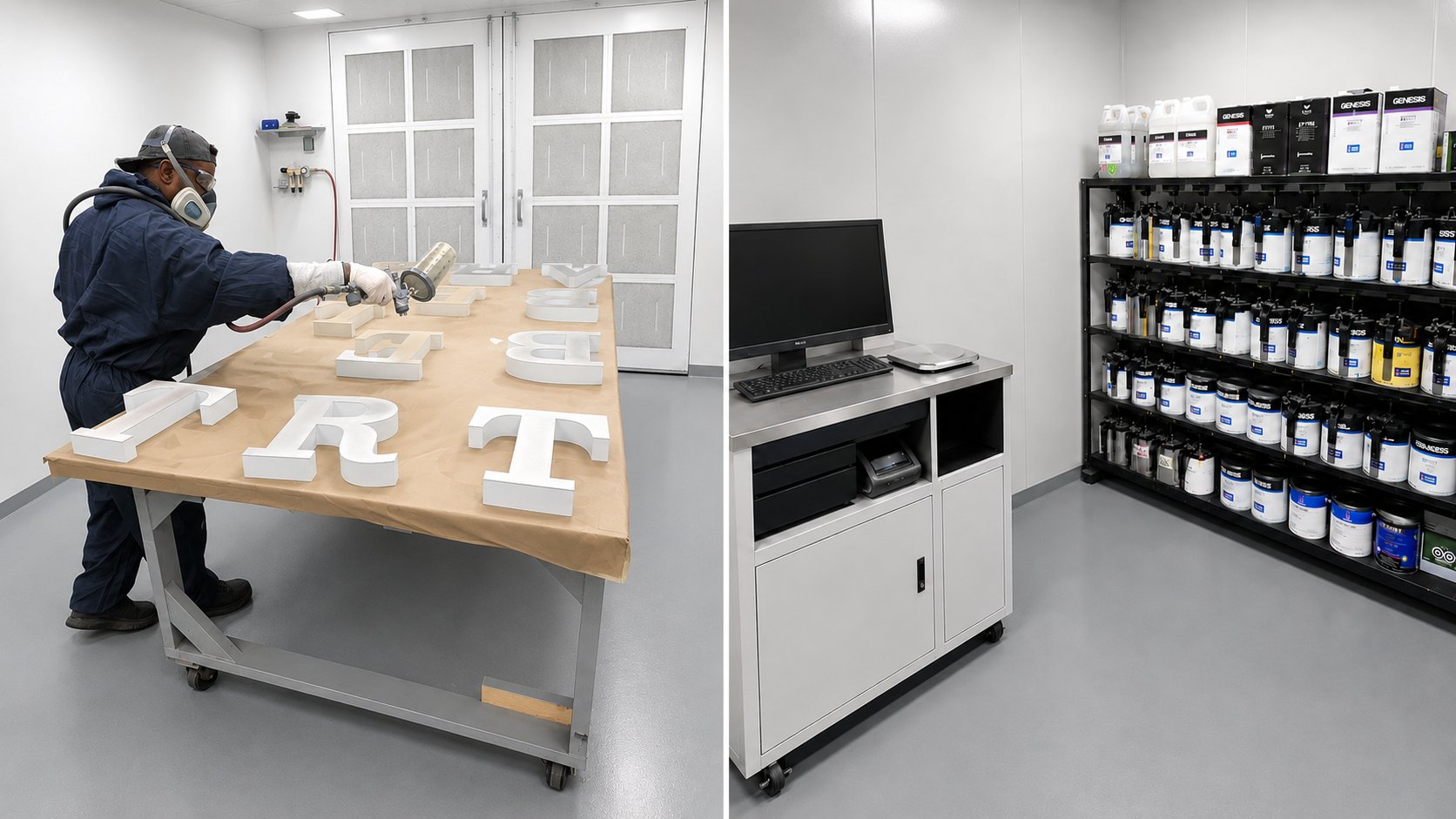
Wholesale Sign Pro manufactures custom channel letters and illuminated signs to UL 48 (USA) and CSA C22.2 No. 207 (Canada) certification standards for sign companies, installers, designers, contractors, and multi-location brand programs across the United States and Canada. All fabrication is performed in-house on CNC channel letter bending machines, dual-gantry CO₂ and fiber laser cutters, fiber laser welders, CNC routers, industrial 3D printers, and a professional spray booth. Every illuminated sign is tested for LED illumination uniformity with calibrated light meters before packaging. No fabrication is subcontracted.
Send your vector artwork, confirmed dimensions, construction type, material specifications, LED and certification requirements, mounting method, quantity, delivery address, and required completion date to receive a detailed project quotation.
Not sure which fabricator is right for the job? See How to Choose a Wholesale Sign Manufacturer in the USA or Canada for the full evaluation criteria.