
The fabric is what customers see, but the retention system is what keeps it flat. For an LED light box, the usual choice is an SEG profile or a mechanical clamp profile. They handle graphics differently, and the best option depends on who will change the face and how often.
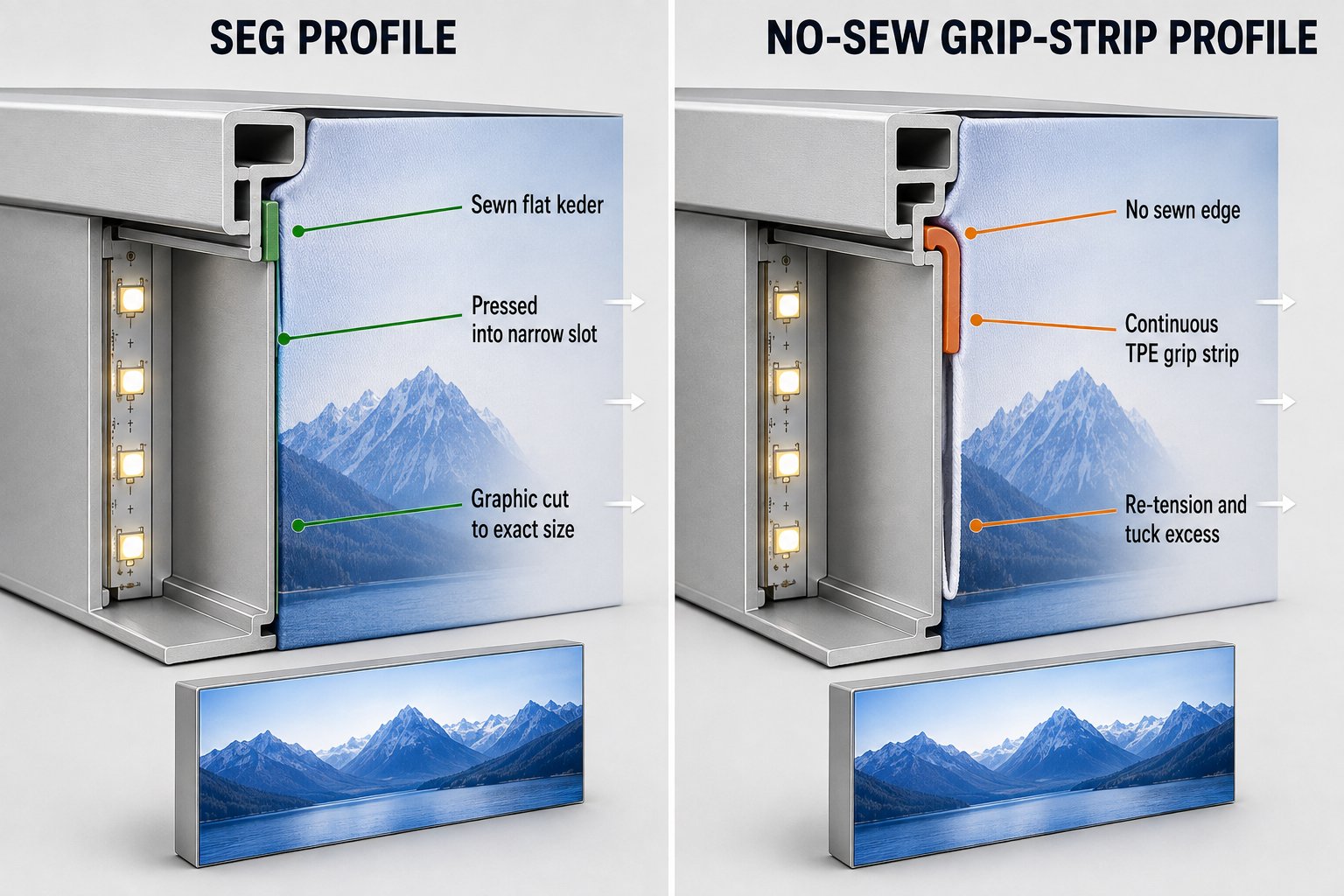
SEG — short for Silicone Edge Graphic — uses a flexible strip sewn around the perimeter of the printed fabric. This strip is pressed into a narrow channel in the aluminum frame. A clamp profile instead grips an unfinished or folded fabric edge using a hinged jaw, wedge, spring, or locking insert.
Terminology note: "Flange profile" can also describe an extrusion with a mounting flange rather than a fabric-clamping mechanism. Always confirm how the specific profile retains the graphic.
SEG Profiles
- Appearance: Creates a clean, nearly frameless, edge-to-edge graphic. The fabric conceals most or all of the front-facing aluminum.
- Graphic preparation: Requires a flexible silicone, PVC, or TPE edge strip to be accurately sewn around the fabric perimeter.
- Installation: Normally tool-free. Insert the four corners first, secure the centers of each side, and then work toward the corners.
- Tension: The graphic is produced slightly smaller than the frame's opening. When installed, the controlled stretch creates a smooth, wrinkle-free surface.
- Graphic replacement: Very fast. A pull tab allows the old face to be removed before the replacement graphic is pressed into the same channel.
- Best applications: Retail light boxes, exhibition displays, corporate interiors, menu boards, and other premium installations requiring frequent, professional graphic changes.
SEG is generally the preferred option when consistent appearance, repeatable graphic production, and fast replacement are the main priorities. Industry references such as SEG Solution and DSA Signage document the sewn-edge construction and recommended installation sequence.
Mechanical Clamp or Gripper Profiles
- Appearance: Can create a nearly frameless presentation, although some systems leave a narrow extrusion edge or closure visible.
- Graphic preparation: Usually does not require a sewn perimeter strip. The fabric is supplied oversized, tensioned during installation, and trimmed after it is secured.
- Installation: The fabric is pushed, rolled, or pulled into the profile and retained by a wedge, jaw, spring insert, or hinged clamp.
- Tension: Installers can adjust tension manually before completing the final lock and trimming.
- Graphic replacement: Does not require sewing, but achieving even tension can take longer and may depend more heavily on installer skill.
- Best applications: One-off installations, locally finished graphics, projects without access to SEG sewing equipment, and systems specifically designed for heavier or specialty fabrics.
Not every architectural fabric gripper is suitable for an illuminated sign. For a light box, the complete profile must be designed to handle the fabric's tension, LED placement, heat dissipation, frame depth, and required light diffusion.
Direct Comparison
| Feature | SEG Profile | Clamp or Gripper Profile |
|---|---|---|
| Edge preparation | Sewn flexible edge strip | Usually raw or folded oversized fabric |
| Installation method | Strip pressed into extrusion channel | Fabric mechanically gripped or wedged |
| Sewing required | Yes | Usually no |
| Dimensional accuracy | High | More forgiving during installation |
| Tension control | Predetermined by graphic size | Adjusted manually on site |
| Graphic change speed | Very fast and repeatable | Varies by clamping mechanism |
| Installer skill | Relatively easy after correct fabrication | More skill needed for uniform tension |
| On-site trimming | Normally unnecessary | Frequently required |
| Finished appearance | Consistently clean and frameless | Depends on the profile design |
| Best for repeat graphics | Excellent | Less standardized |
| Best for one-off fabrication | Good, if sewing is available | Often more practical |
Which System Is Better?
For most professional retail and commercial fabric light boxes, SEG is the better overall choice. It provides a cleaner finish, predictable tension, and faster graphic replacement. Once a supplier has the correct frame dimensions and sewing specifications, replacement faces can be produced consistently.
A clamp or gripper profile is more suitable when sewing equipment is unavailable, the graphic must be fabricated or adjusted on site, or the project uses a specialty material designed for mechanical retention.
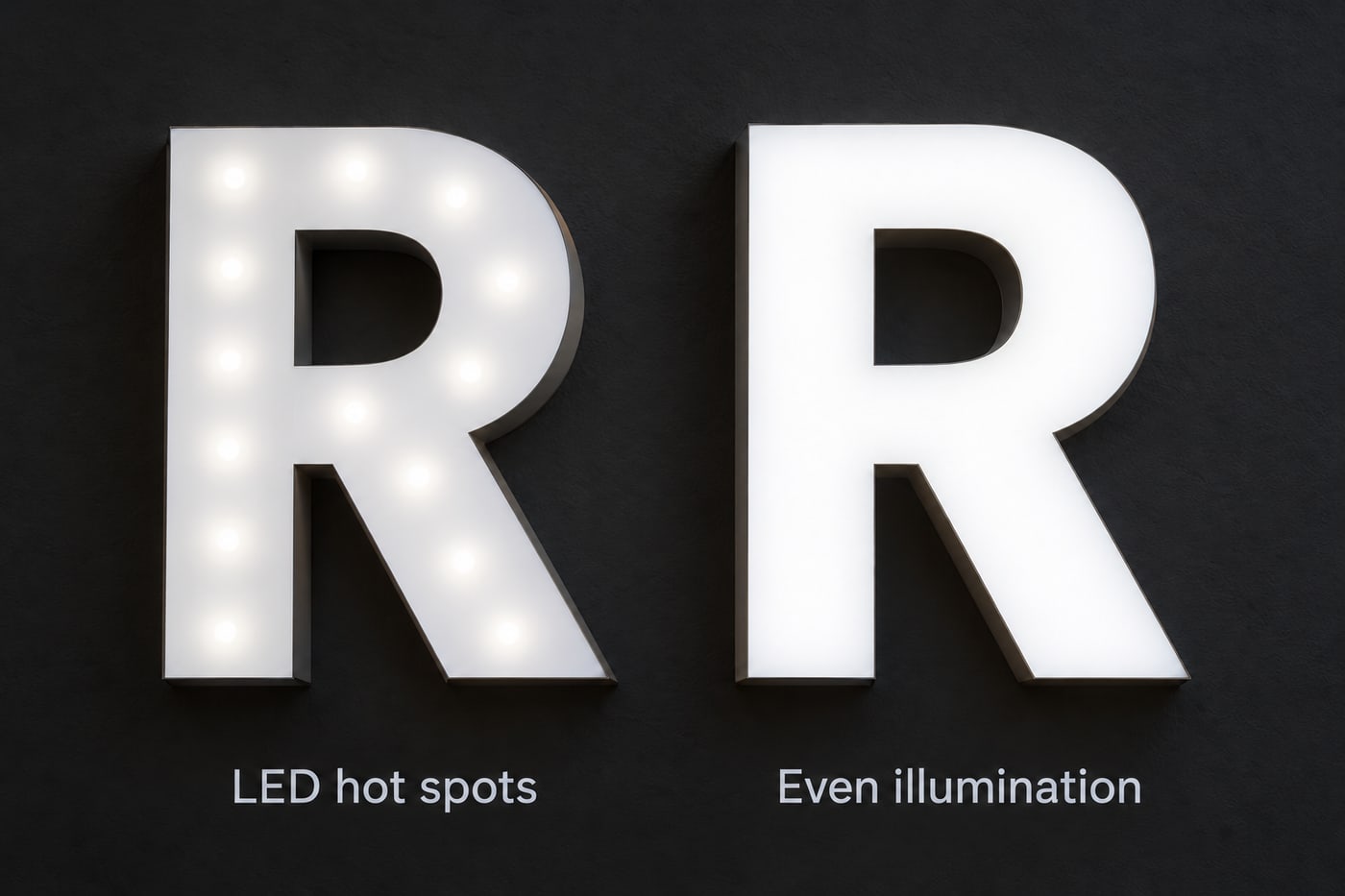
For either system, test the selected backlit fabric with the LED layout before production. Fabric stretch, white point, coating, print density, and distance from the LEDs all affect brightness, color accuracy, and the visibility of hotspots.