
A single sign forgives a lot. A slow answer to an email, a color that's a shade off, a shop drawing that needed two rounds of corrections — none of it is fun, but it's absorbable. Run the same weak points across a 30- or 100-location program and they compound into missed store openings and a client asking why every location looks slightly different. Here's what actually separates a wholesale manufacturer built for that scale from one that just happens to be willing to take the order.
Capacity Is Where Rollouts Actually Break
Most single-project problems are quality problems. Most rollout problems are capacity problems — a manufacturer that builds a beautiful first location and then can't sustain the pace once ten more orders land on top of it. Before committing a program, it's worth asking plainly where the signs are actually built, how much of that capacity is already spoken for, and what happens if the schedule moves up mid-program rather than holds steady. Our case study on a national supermarket chain's store-department expansion is a useful reference point for what that actually looks like when the volume shows up all at once and the manufacturer holds the line anyway.
Consistency Has to Be Documented, Not Promised
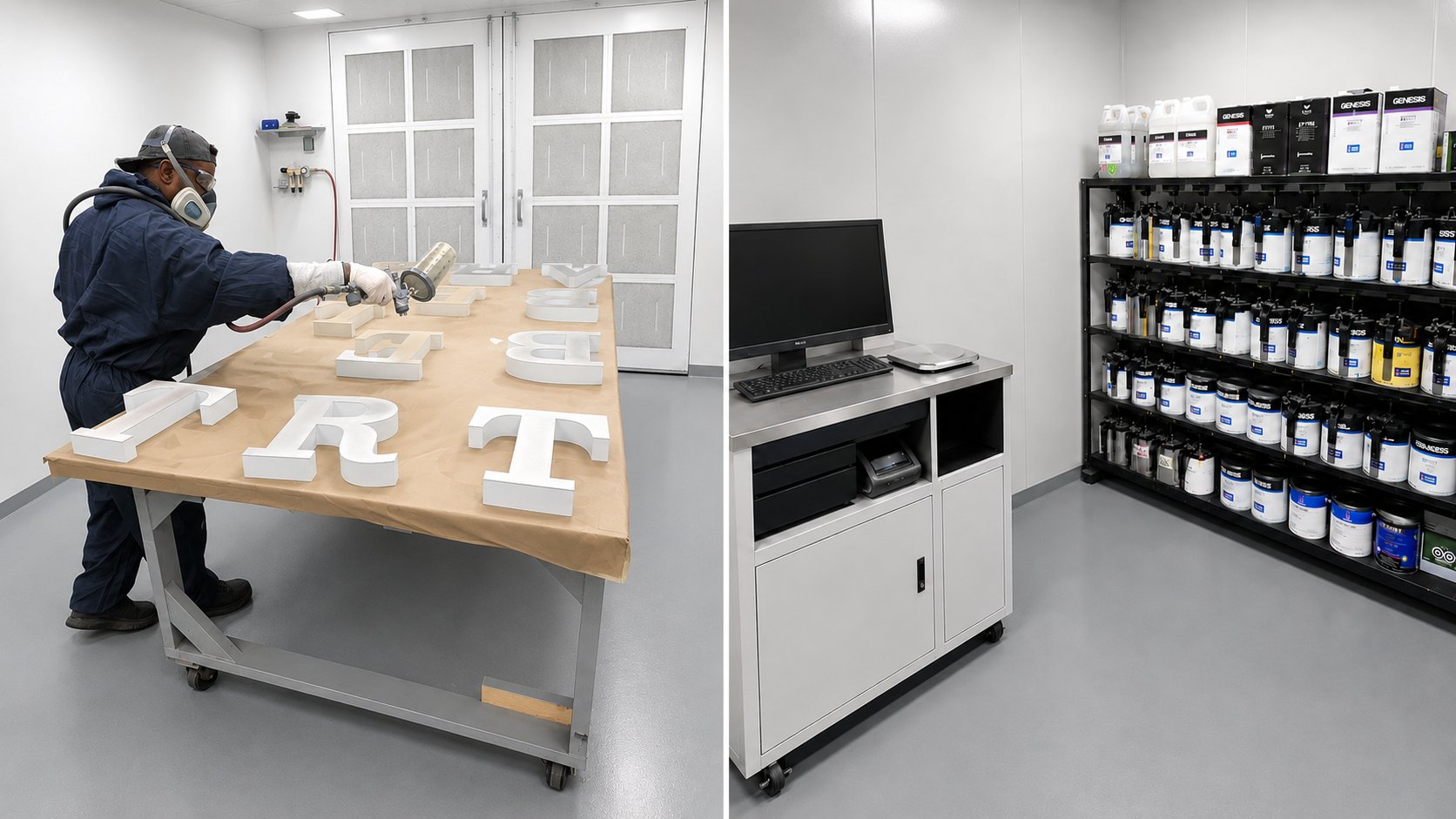
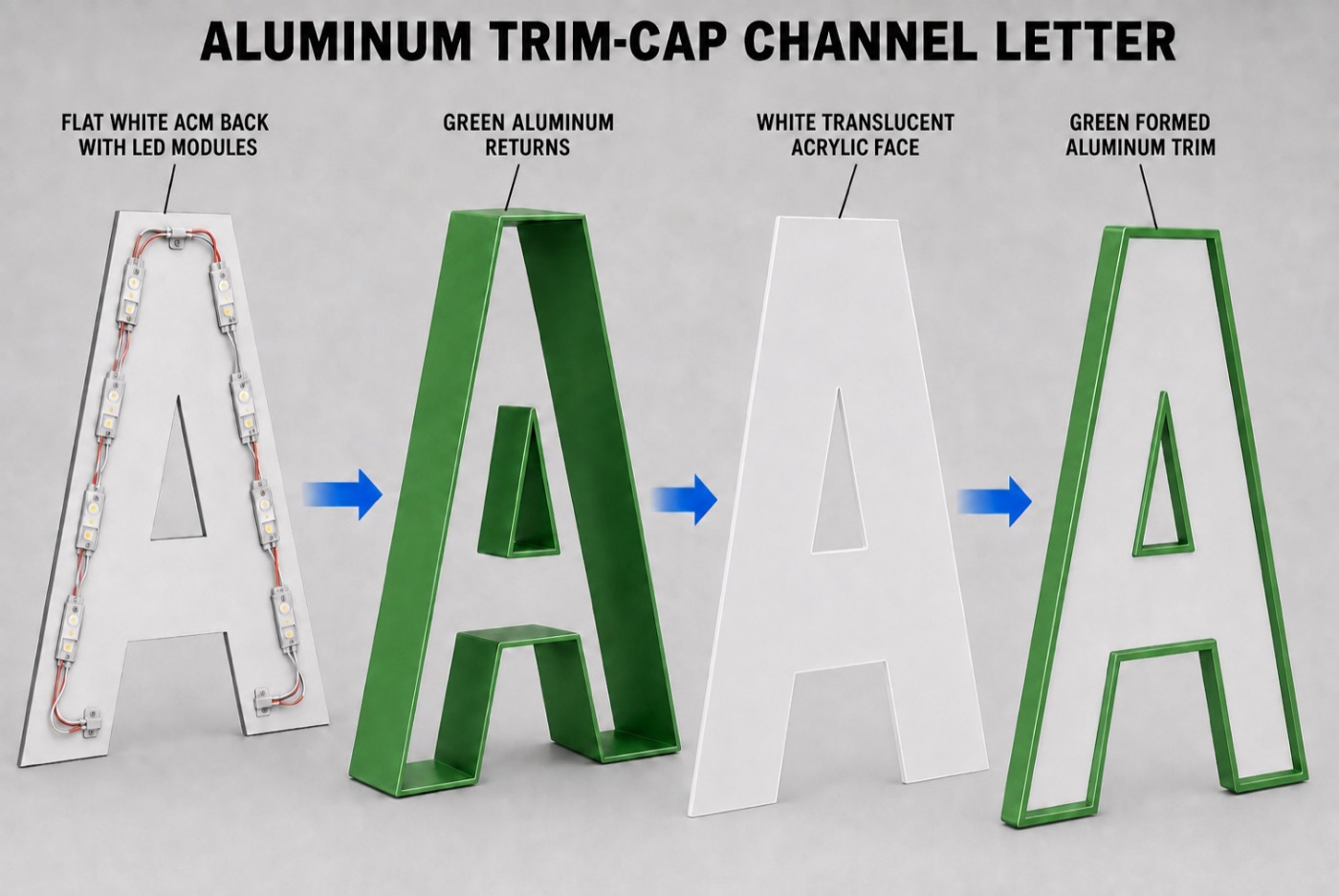
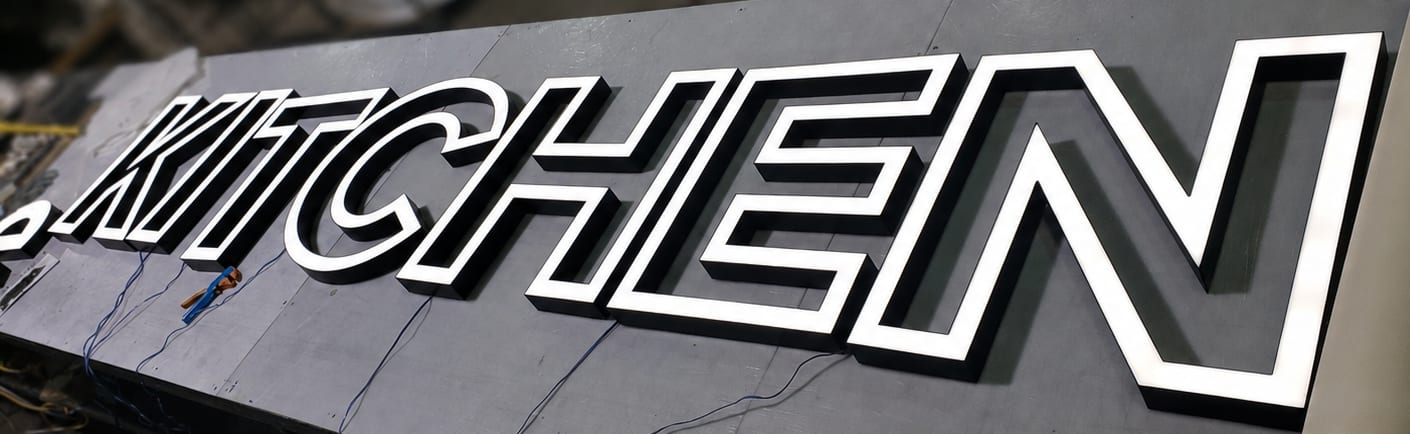
Every manufacturer will say the fifth location matches the first. The ones worth trusting can explain how — a documented, repeatable process for color, letter depth, materials, and illumination that doesn't rely on someone's memory of what the first order looked like. That's part of why color matching that pulls the same formula on demand matters more on a rollout than almost anywhere else: it's the difference between a sign that's "close enough" and one that's actually identical, order fifty to order one. That includes the aluminum trim itself — beyond the stocked black, white, and red, it can be custom color-matched to a client's brand, and that match needs to hold across every location the same way the face color does.
Where the Manufacturer's Job Ends and Yours Begins
A wholesale manufacturer isn't the one submitting permits or negotiating landlord approvals — that stays with the sign company or its installer, and any partner who implies otherwise is overselling their role. What a manufacturer should own is everything upstream of that: code research done at the quoting stage rather than discovered after production starts, UL 48 or CSA C22.2 No. 207 certification built to the applicable standard, and engineering documents and shop drawings accurate enough to submit without rework. A manufacturer that can't produce that paperwork consistently turns into extra work on your desk, usually the week a permit is due.
Reporting and Quoting Should Both Be Boring
Two things should never require chasing: knowing where each location actually stands, and knowing what you're actually paying for. On a single sign, an occasional update is fine. On a program with dozens of locations moving at once, you need to be able to tell your client which sites are approved, which are in production, and which are stuck — without compiling that yourself from a dozen emails. The quote should be just as legible: itemized by fabrication, materials, packaging and freight, certification work, and warranty coverage, not a single number that hides what happens if something changes. A lump sum with no breakdown, and a manufacturer who can't tell you today which locations are moving, are the two clearest signs a partner isn't actually built for this kind of program.
Built to Last Past the Installation
A rollout doesn't end when the last sign goes up. Locations get added, a logo gets refreshed, a face gets damaged two years in, and eventually an older site needs to match a newer one exactly. That's only possible if the original order was documented well enough to reproduce — the same color, the same letter depth, the same construction — long after the first installation. It's also where a real warranty matters: ours covers fabrication, materials, LEDs, and electrical components for five years, with two years of labor coverage, precisely because a program built to last should be backed the same way.
References From an Actual Program
A manufacturer that's built one striking local sign well isn't automatically equipped to run a rollout. Ask for references from other multi-location programs specifically, and ask those references about the parts that don't show up in a portfolio photo — communication, schedule accuracy, and how change orders got handled, not just whether the finished signs looked good.
How Wholesale Sign Pro Supports Multi-Location Programs
We manufacture wholesale for sign companies running programs of every size, from a single storefront to a multi-location rollout across the United States and Canada. Our capabilities include:
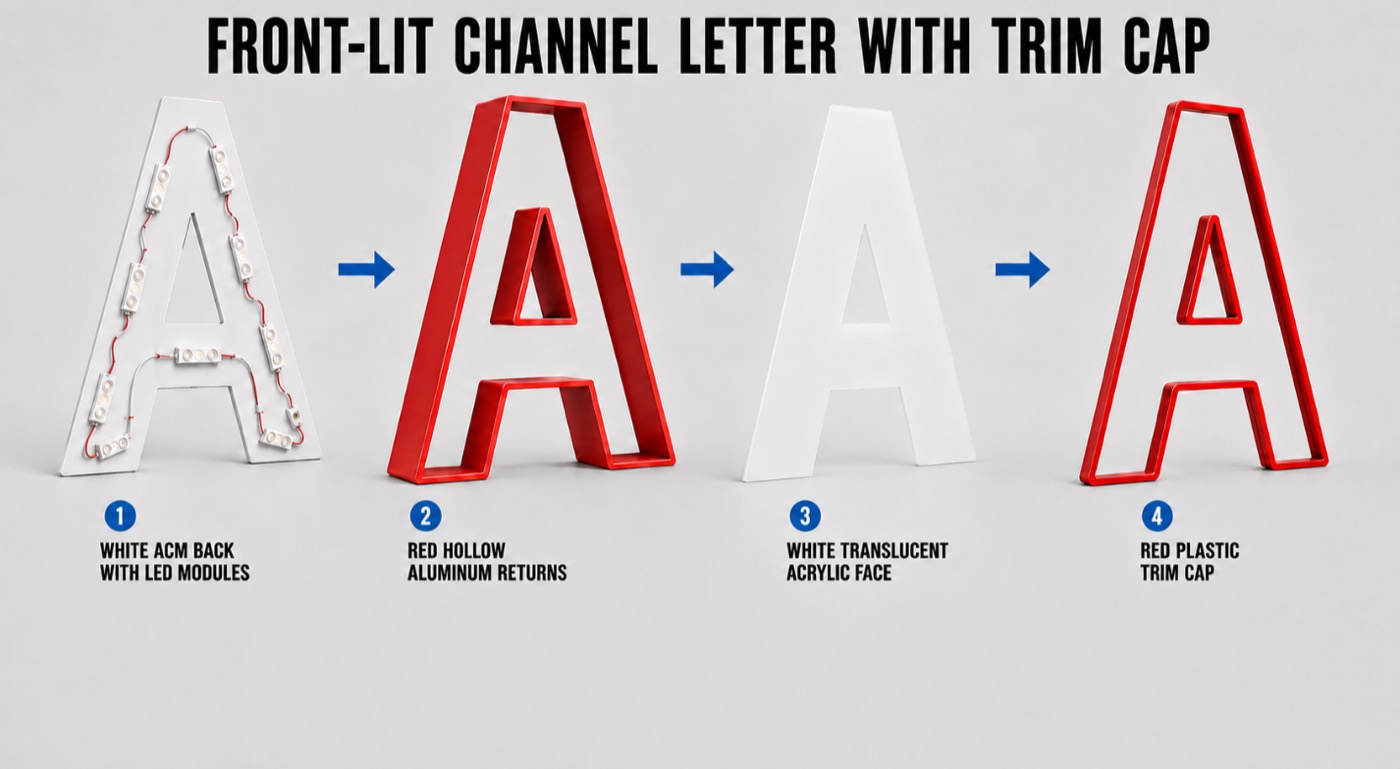
- Front-lit channel letters
- Reverse and halo-lit letters
- Front-and-back-lit letters
- Trimless channel letters
- Stainless-steel and aluminum trim-cap letters
- Fabricated acrylic letters
- Sign cabinets and light boxes
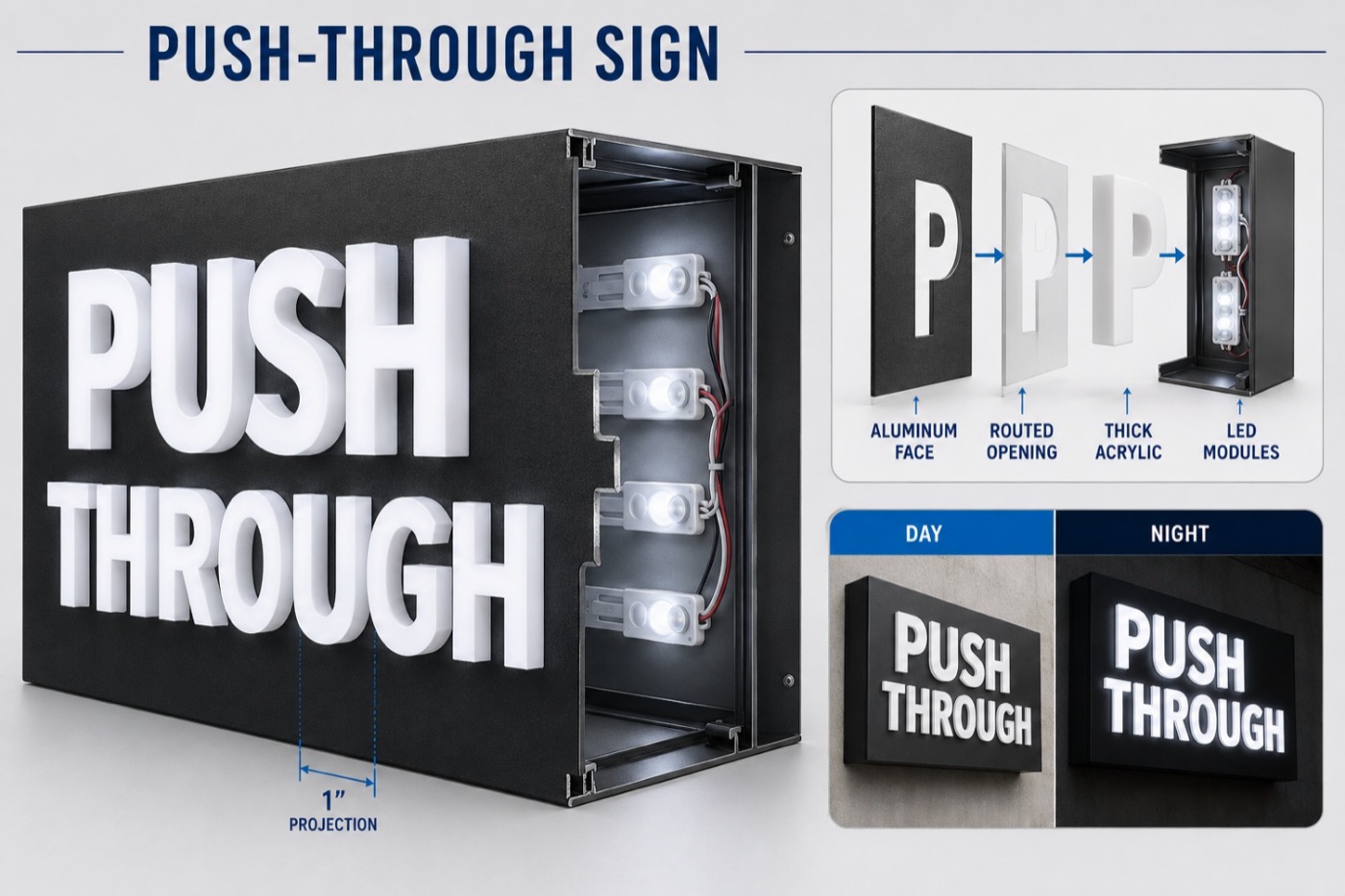
- Push-through signs
- Pylon and monument sign components
- Digital LED signs
- UL 48 and CSA C22.2 No. 207 certification options
We provide confidential wholesale service, detailed shop drawings, consistent manufacturing, careful inspection, professional packaging, and shipping throughout the United States and Canada. Preparing for a multi-location rollout, a rebrand, or a large production order? Request a quote to discuss wholesale manufacturing support.
We work exclusively with sign companies, sign professionals, and other qualified trade partners — never directly with your customers, so your client relationship stays yours.
Multi-Location Wholesale Partner FAQ
What's different about vetting a wholesale manufacturer for a multi-location program versus a single sign?
Production capacity, documented consistency across locations, status reporting you can pass on to your client, and the ability to reproduce a matching sign years later all matter far more at scale than they do on a one-off order, where a manufacturer's shortcomings are easier to absorb.
Does Wholesale Sign Pro handle permits for multi-location programs?
No. Permit submission and landlord approvals stay with the sign company or its installer. We support that work with code research during quoting, UL 48 or CSA C22.2 No. 207 certification labeling, and engineering documentation suitable for permit submission.
Can a wholesale manufacturer reproduce matching signs for a location added years after the original rollout?
It depends on how well the original order was documented. A manufacturer with detailed production records and a repeatable color-matching process should be able to reproduce the same color, letter depth, and construction well after the initial installation — worth confirming before the program starts, not after a location needs a repair.