
On a street full of bright face-lit signs, a controlled glow around the edge of a letter can get more attention than simply adding brightness. That is where edge-lit channel letters work well. They suit clients who want a clean, contemporary sign that looks deliberate both day and night.
Below, we explain how they are built, when we would recommend them, and which details need to be settled before fabrication.
What Are Edge-Lit Channel Letters?
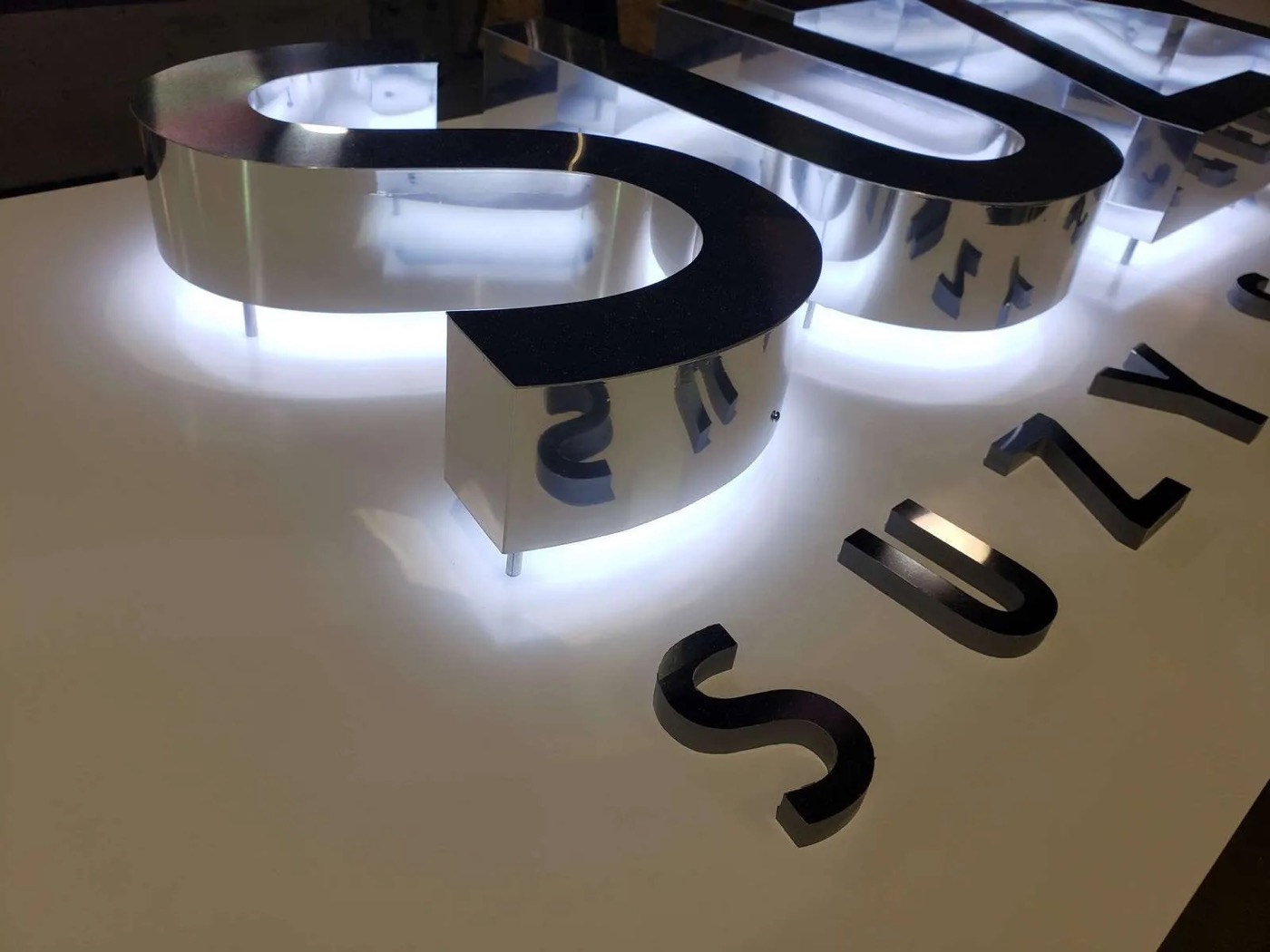
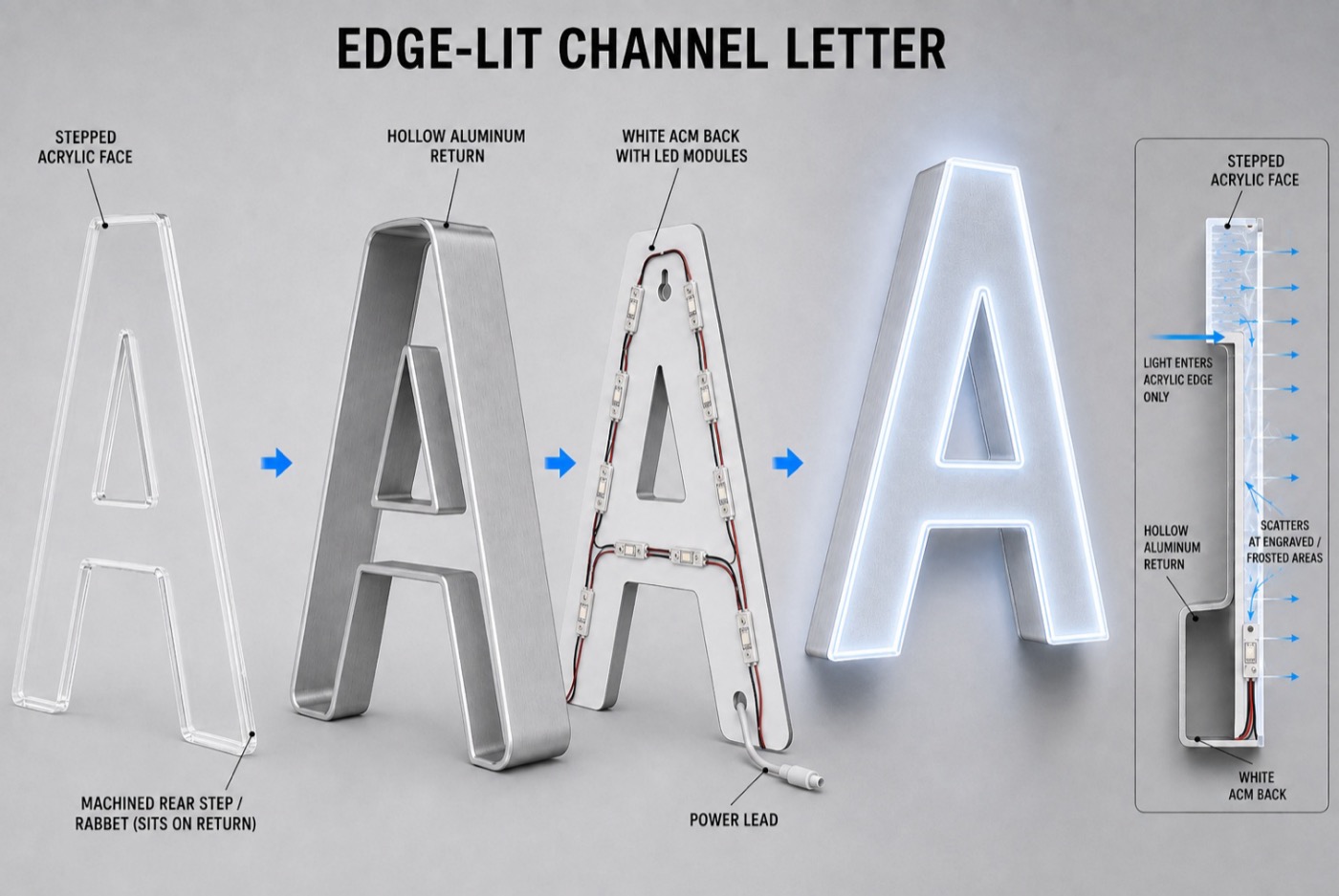
Most illuminated channel letters are face-lit — light shines directly out through the front face. With edge-lit construction, the LEDs sit inside the letter but are directed sideways, so the light glows around the letter's perimeter instead of through its face. The result is a subtle halo effect that reads as if the letters are floating slightly off the wall — a cleaner, more architectural look than a straightforward lit face.
- A different visual register: a softer, more elegant glow instead of a bright, direct one — reads as higher-end and more contemporary
- Dimensional presence: the edge light emphasizes the letters' depth, adding visual impact even at a distance
- Strong legibility: the illuminated outline stays easy to read at night or in low light without washing out the face
When to Recommend Edge-Lit Over the Alternatives
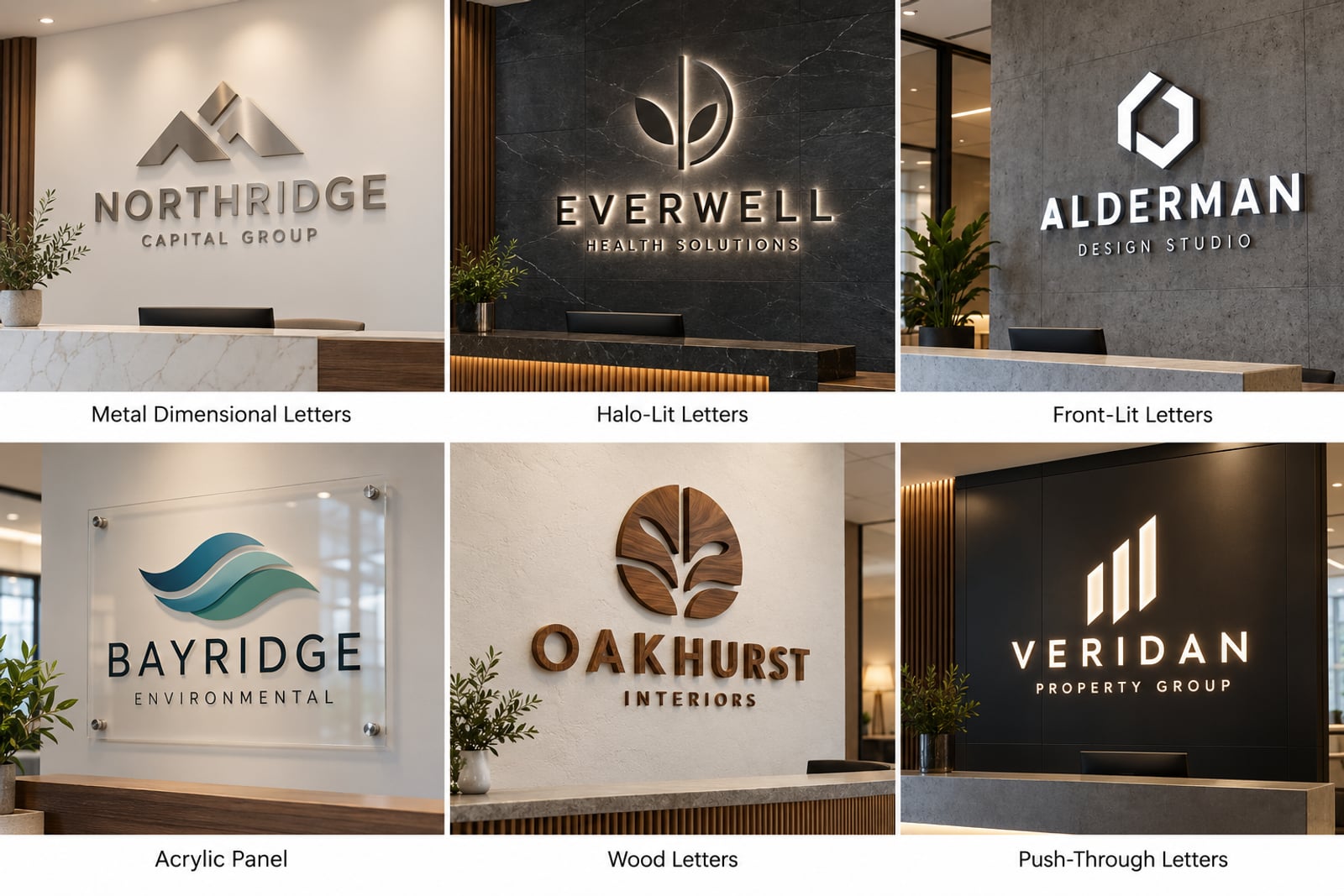
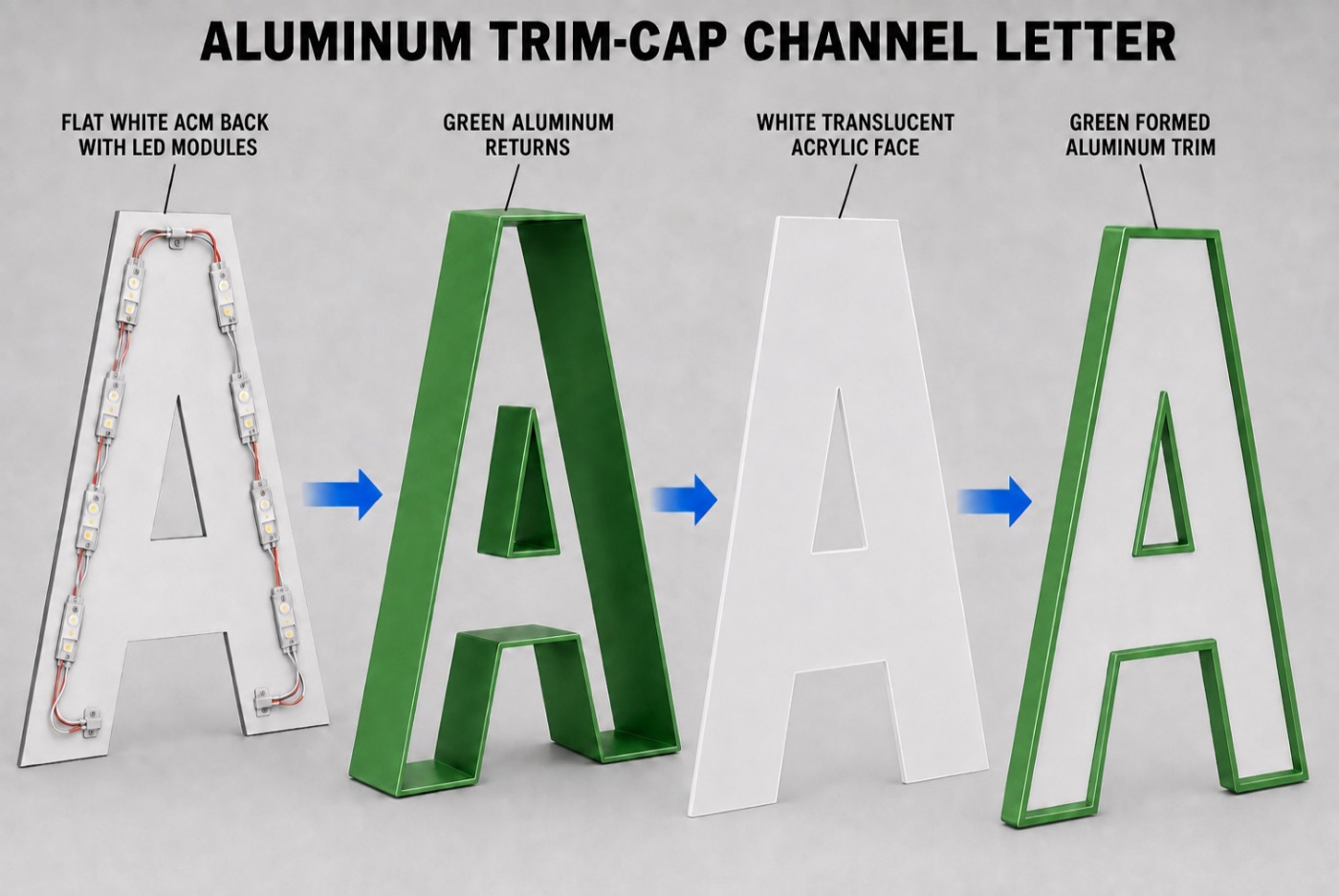
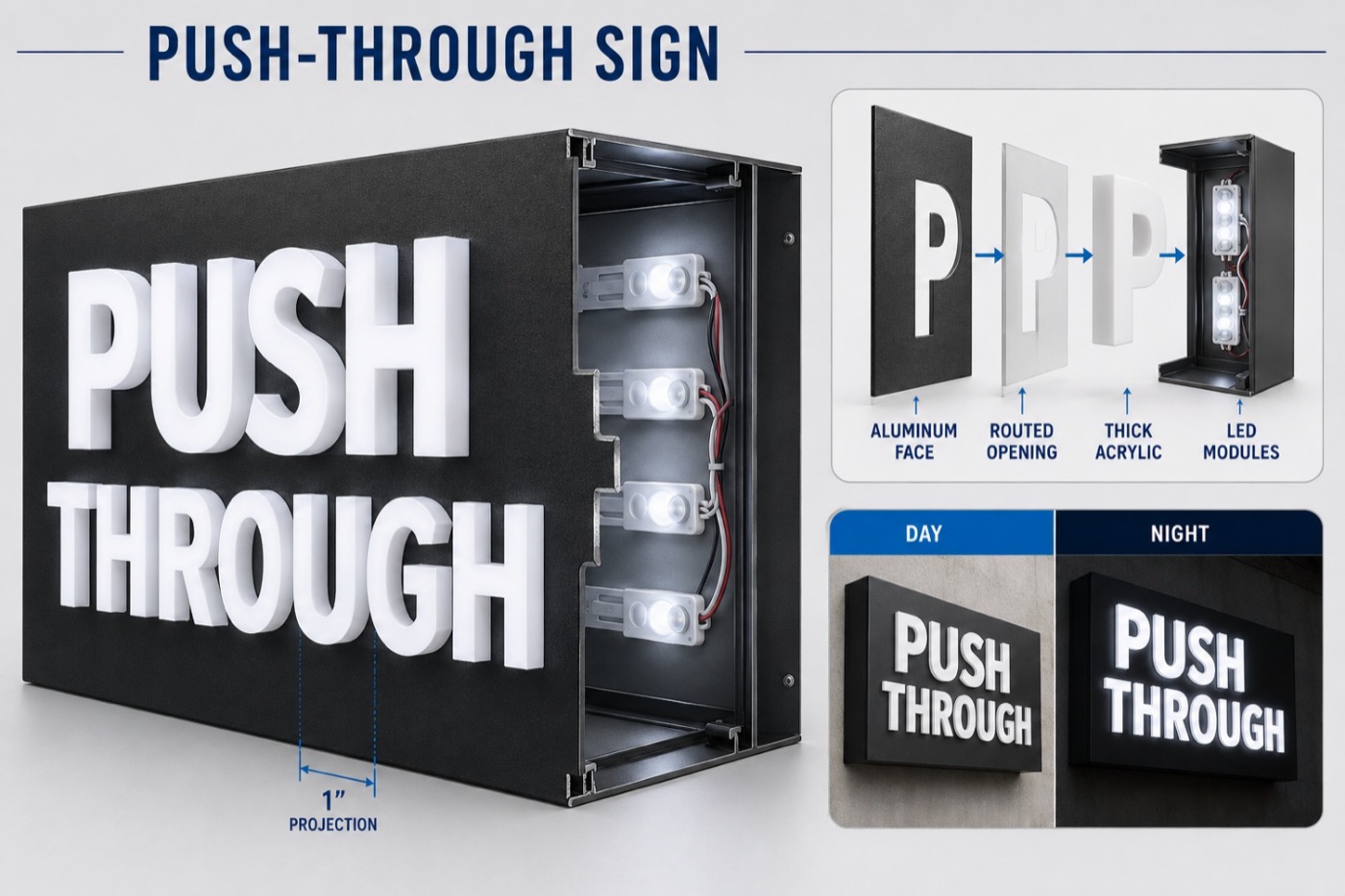
Edge-lit isn't the right call for every project — it competes with face-lit, halo-lit (reverse), and front-and-back-lit construction, and each solves a different problem.
- Choose edge-lit when the client wants a refined, architectural look and the letters will be viewed at a moderate distance where the outline effect reads clearly
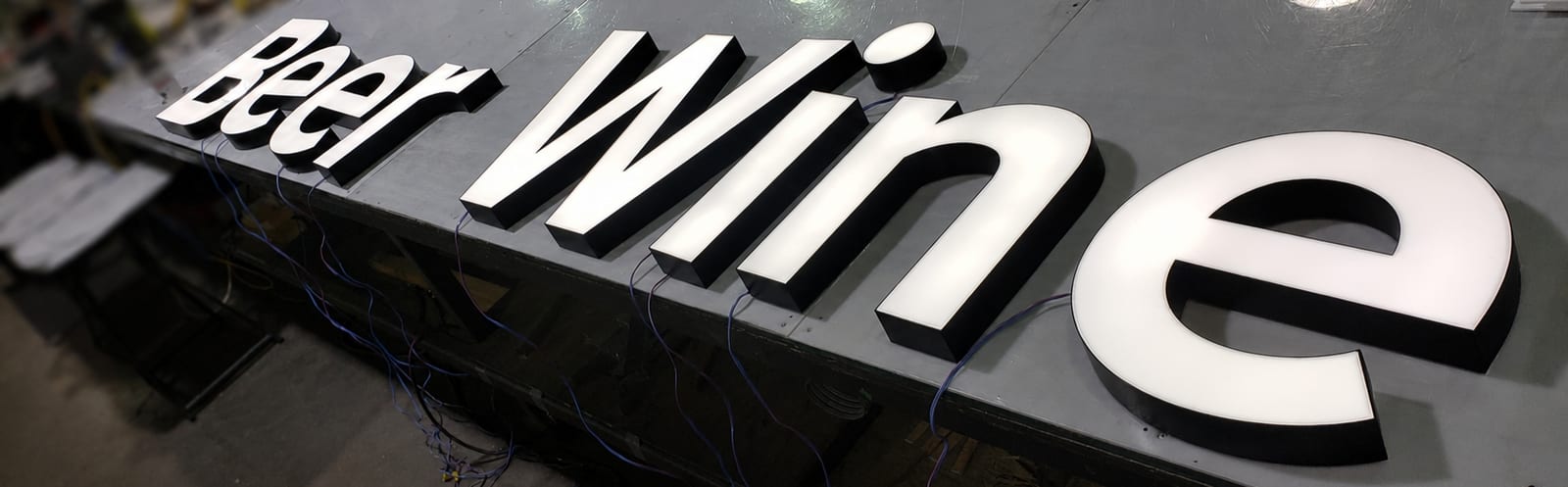
- Choose face-lit when maximum brightness and read-distance matter more than subtlety — highway frontage, larger format retail
- Choose reverse/halo-lit when the brief calls for a wall-wash glow behind opaque metal letters rather than an illuminated outline
- Combine methods when a client wants edge-lit letters paired with a halo-lit logo, or a mixed treatment across a multi-element sign
Design and Fabrication Considerations
A handful of choices determine whether an edge-lit set looks crisp or looks cheap.
- Font choice: clean, strong letterforms hold the edge glow well. Very thin strokes or heavily scripted fonts can lose definition, since there's less edge surface for the light to travel along.
- LED color temperature: warm white (2700–3000K) reads inviting; cooler white (4000K+) reads modern and clinical; saturated colors work but should be confirmed against the brand's actual palette, not a generic swatch.
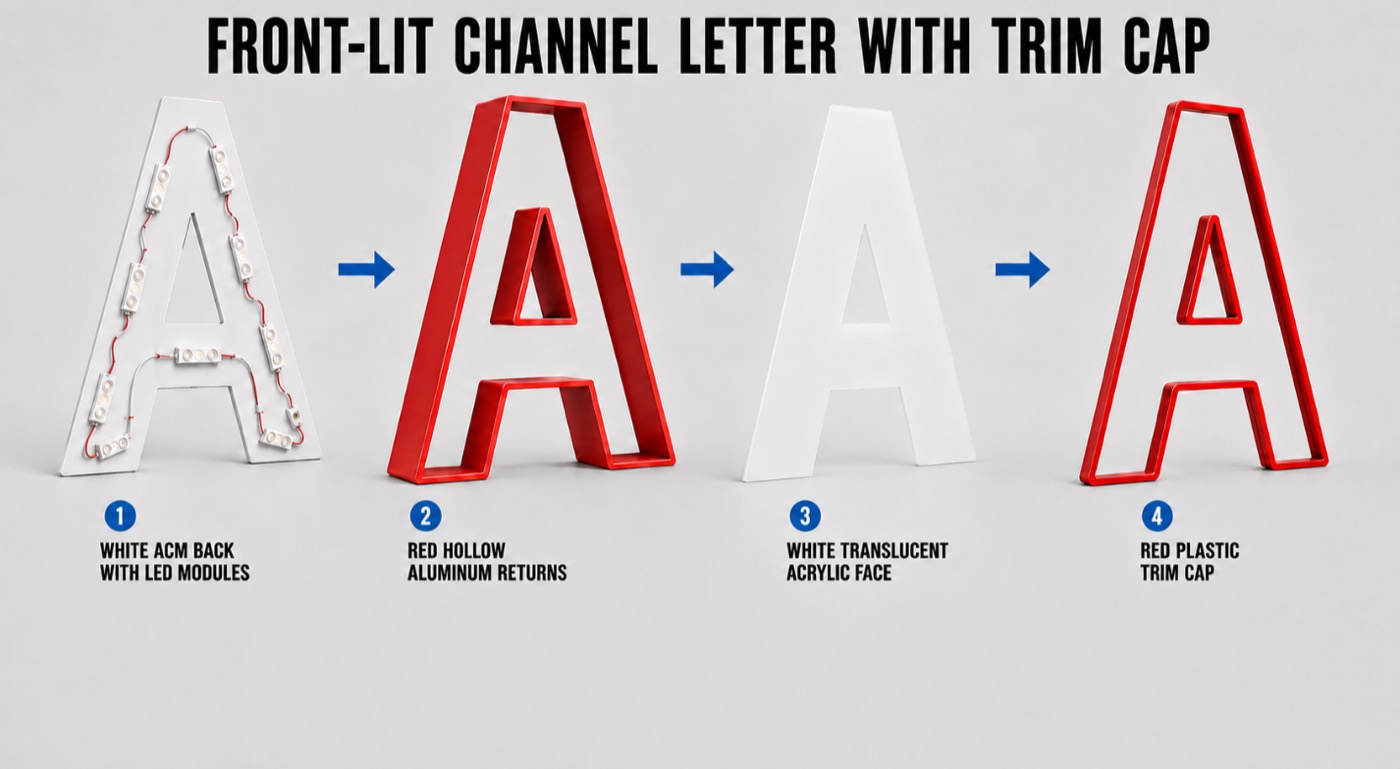
- Face and return color: the sides (returns) carry the light, so their finish and color affect how the glow presents — matte versus polished metal returns behave differently under LED edge lighting.
- Substrate and wall color: a dark background makes the glow read more distinctly; a busy or light-colored substrate can wash it out. Worth flagging to the client during design, not after installation.
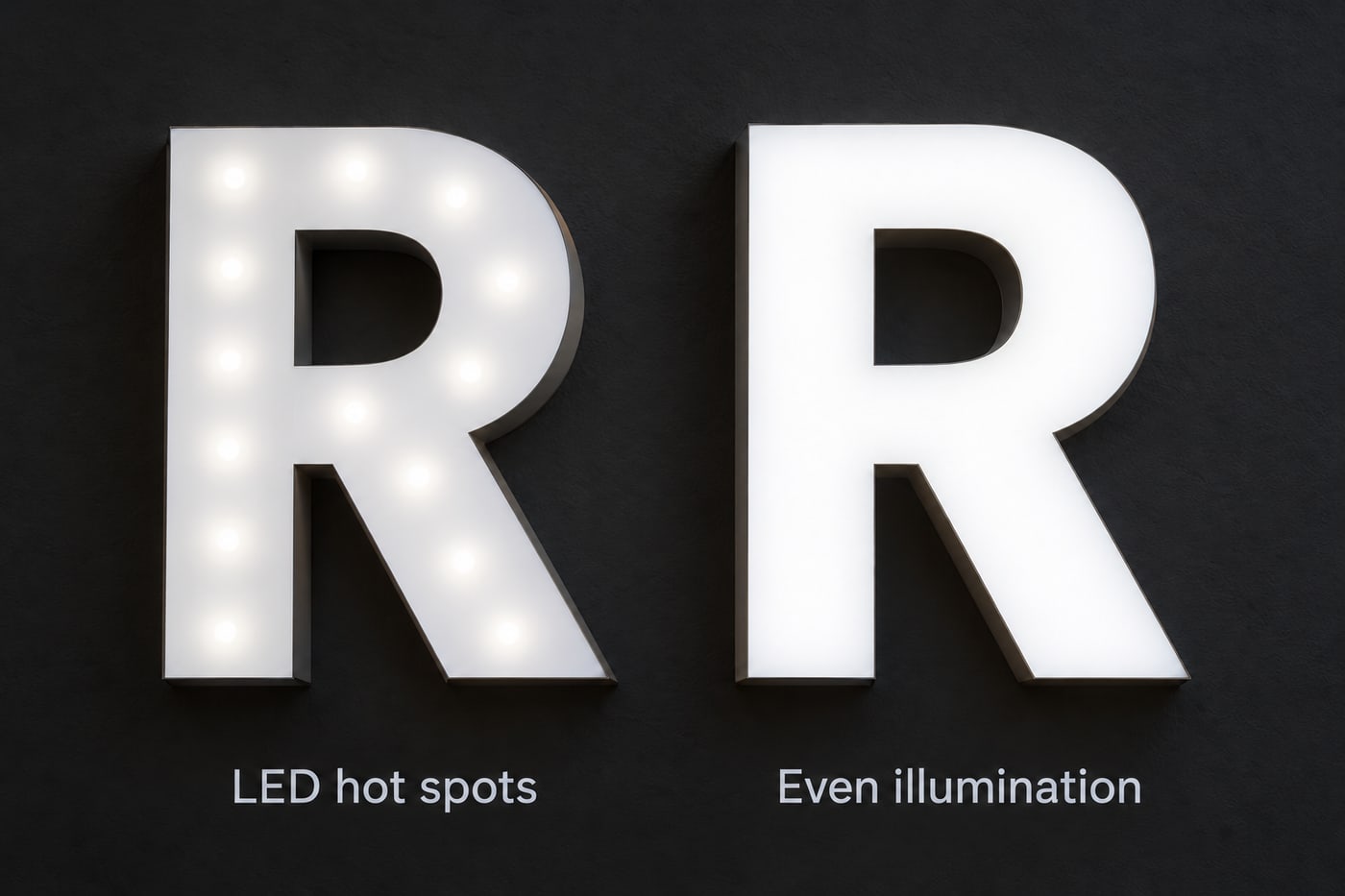
- Depth: letter depth needs to be sufficient to house the LED modules along the return without hot-spotting — thinner returns generally mean tighter LED spacing.
Sourcing Edge-Lit Letters Wholesale
Before placing the order, confirm the same specifics that apply to any illuminated channel-letter set:
- Return depth and metal thickness (typically 0.040″–0.063″ aluminum)
- LED brand, color, and Kelvin temperature — consistent across every letter in the set
- Power supply specifications, voltage, and mounting location
- Face and return finish, with an exact paint or PMS reference rather than a color name
- UL 48 (US) or CSA C22.2 No. 207 (Canada) certification requirements for the installation jurisdiction
- Mounting method — direct, raceway, or standoff — and wall substrate
Wholesale Sign Pro fabricates edge-lit channel letters in-house alongside face-lit, reverse/halo-lit, and front-and-back-lit construction, so a shop can spec whichever lighting method suits the project without splitting the order across suppliers.
FAQ
Are edge-lit channel letters more expensive than face-lit?
Generally yes, by a modest margin — the LED layout and return finish require more attention than a straightforward face-lit set. The difference is usually smaller than the gap between face-lit and reverse/halo-lit construction.
Can edge-lit letters work outdoors?
Yes, with outdoor-rated LED modules, drivers, and weather-resistant construction — the same environmental considerations that apply to any illuminated exterior sign.
Do edge-lit letters need a different certification than face-lit letters?
No — the same UL 48 (US) or CSA C22.2 No. 207 (Canada) requirements apply to the completed sign regardless of lighting method.