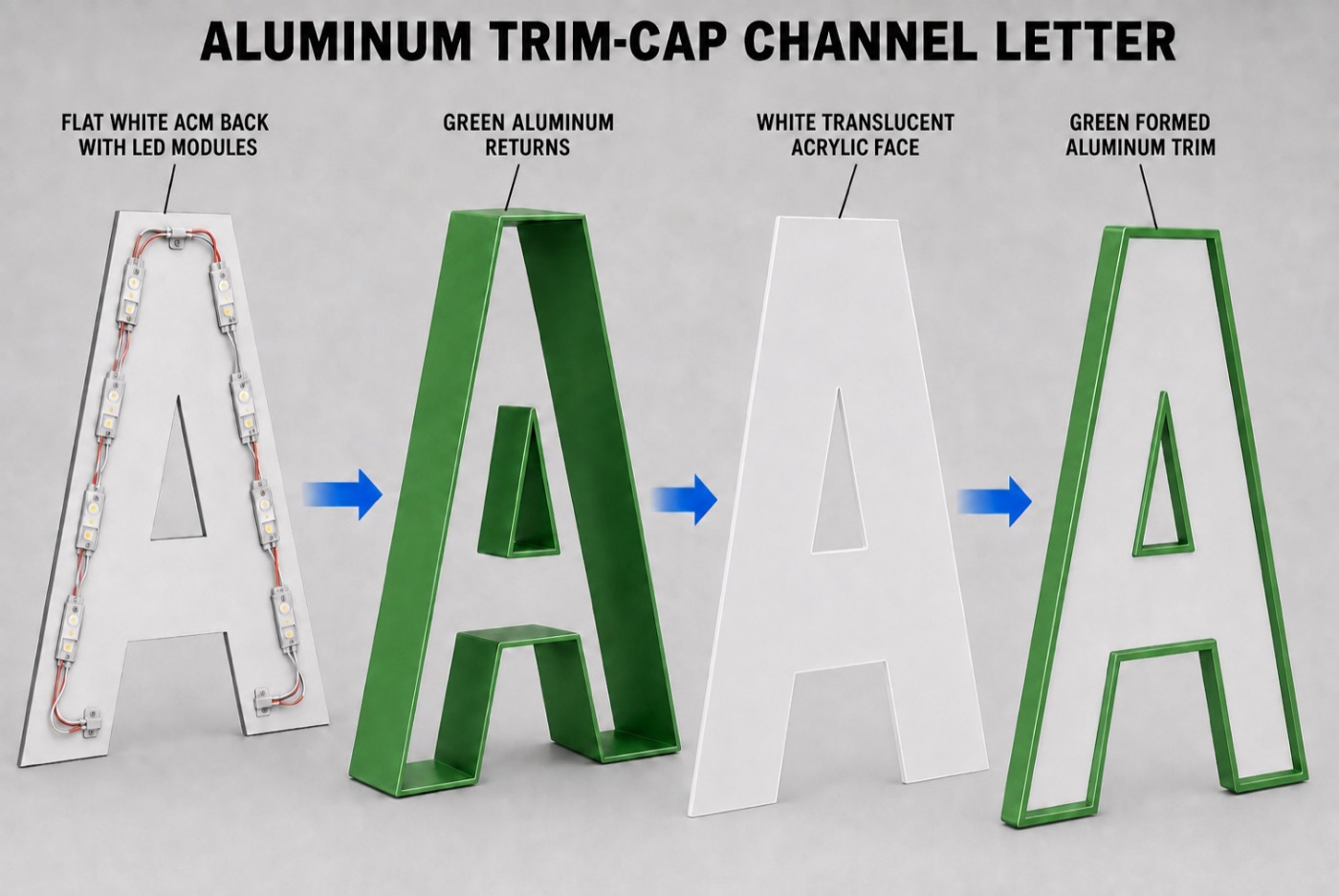

A blade sign solves a different problem than a channel-letter set. Flat, building-mounted letters read well to someone already facing the storefront — but on a busy street, in a mall corridor, or downtown where foot traffic approaches from either direction, a sign that only reads from straight ahead can get missed entirely. That's when we'd point you toward a blade sign instead of, or alongside, channel letters.
Where a Blade Sign Solves a Problem Channel Letters Can't
Mounted at a 90-degree angle from the building face, a blade sign reads from both directions along the sidewalk or street rather than only head-on. That's most valuable in exactly the settings where a flat sign underperforms: narrow storefronts on a busy commercial strip, mall and plaza corridors, downtown blocks where pedestrians and drivers approach from either side, and professional office buildings where a tenant's suite is set back from the street or up a level from the entrance. If a client's location fits any of that description, it's worth bringing up even if they only asked about channel letters.
A Blade Sign Is Often an Add-On, Not a Replacement
Most of the blade sign orders we build come alongside a primary channel-letter package, not instead of it. The channel letters handle brand identification on the building; the blade sign handles the separate problem of helping someone actually find the door once they're on the sidewalk, especially in a multi-tenant building or a set-back retail suite. Framing it that way to a client — as solving the "can they find you" problem the primary sign doesn't — is usually an easier conversation than pitching it as a second sign they didn't ask for.
Construction and Mounting Options We Build
We manufacture blade signs wall-, pole-, or canopy-mounted, and which one you'll want to quote depends on the building more than the design. Wall mounting works for most storefronts with a suitable structural point near the entrance. Pole mounting suits a freestanding location or a setback entrance. Canopy mounting fits a building with an awning or covered walkway already in place. All three use an aluminum cabinet and a decorative mounting bracket we size to the sign's projection and weight, so the bracket reads as part of the design rather than an obvious afterthought.
Illuminated or Not, and What Goes on the Face
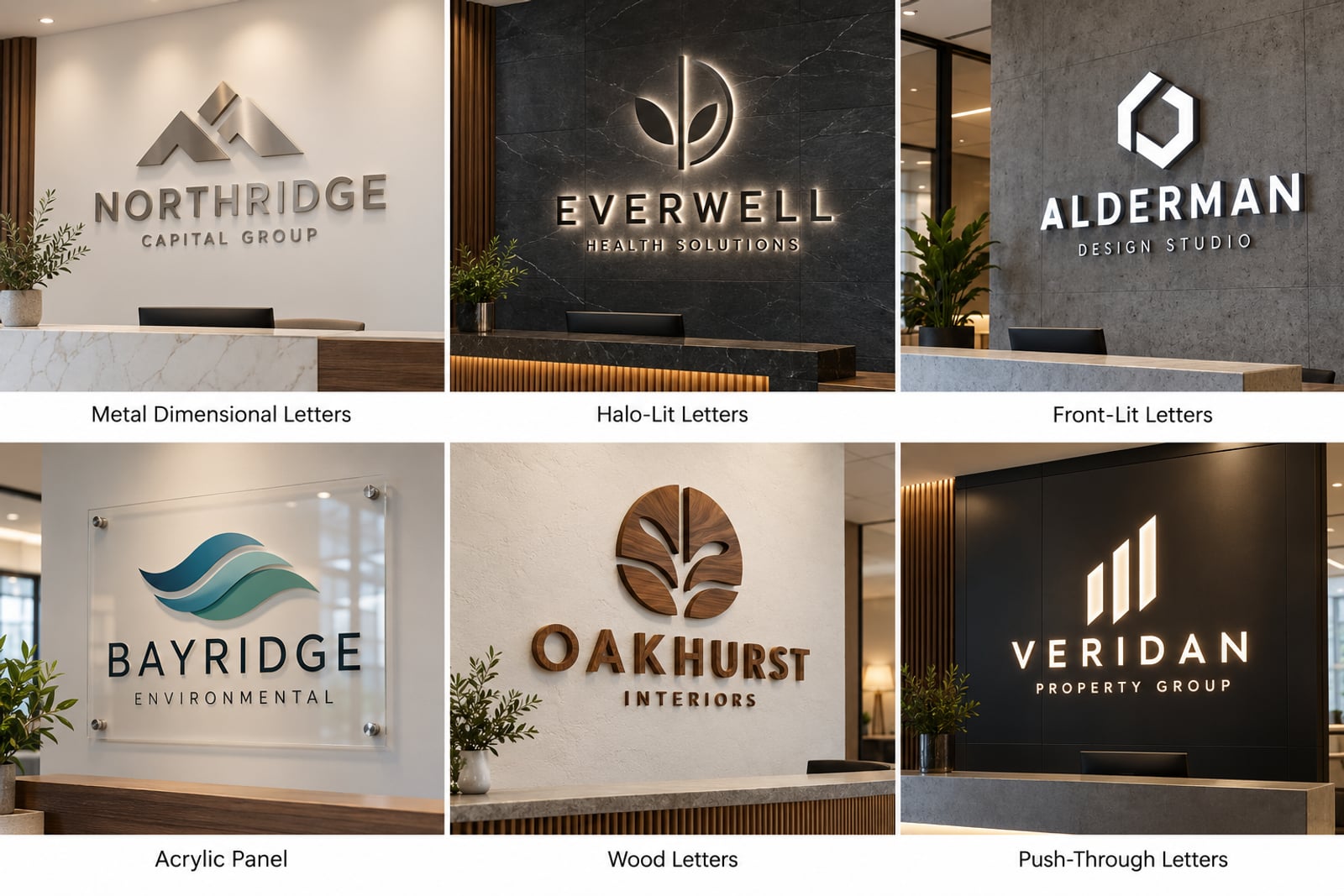
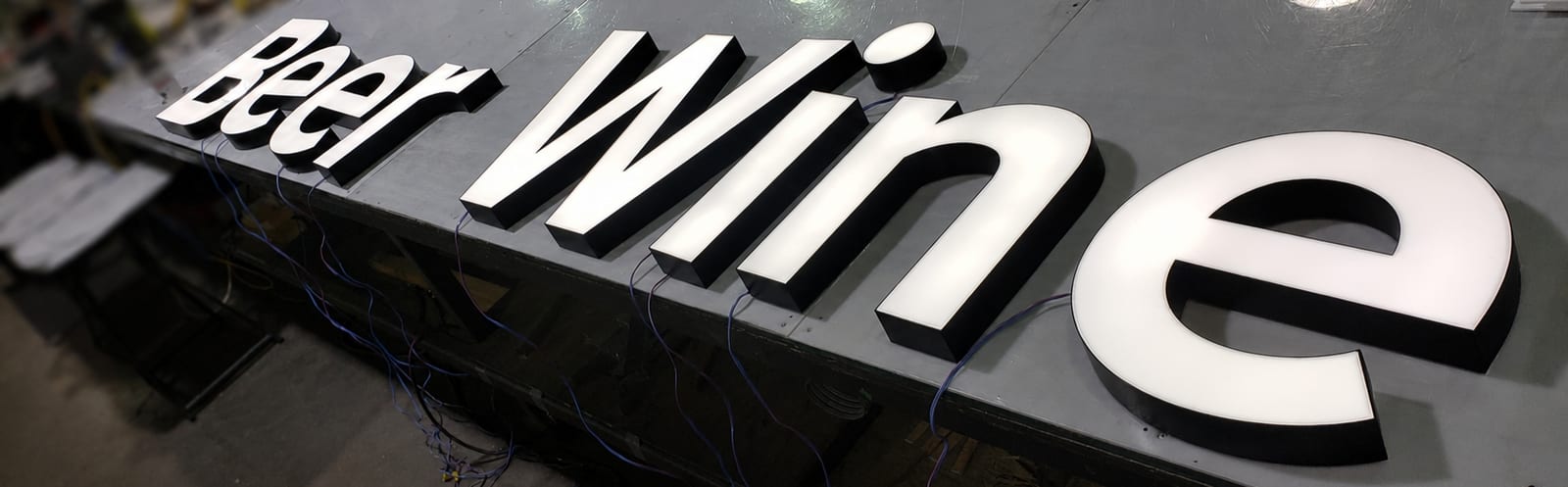
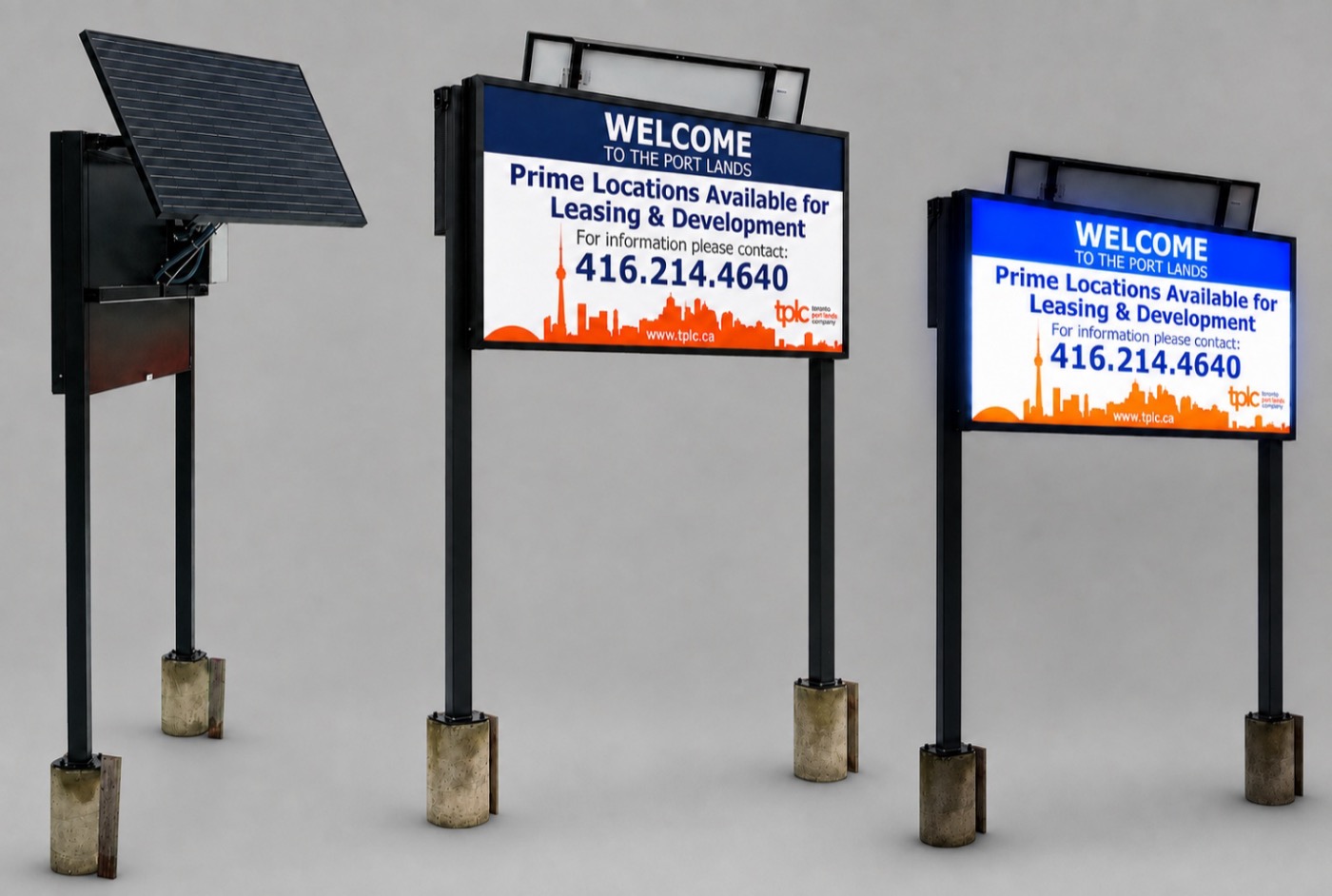
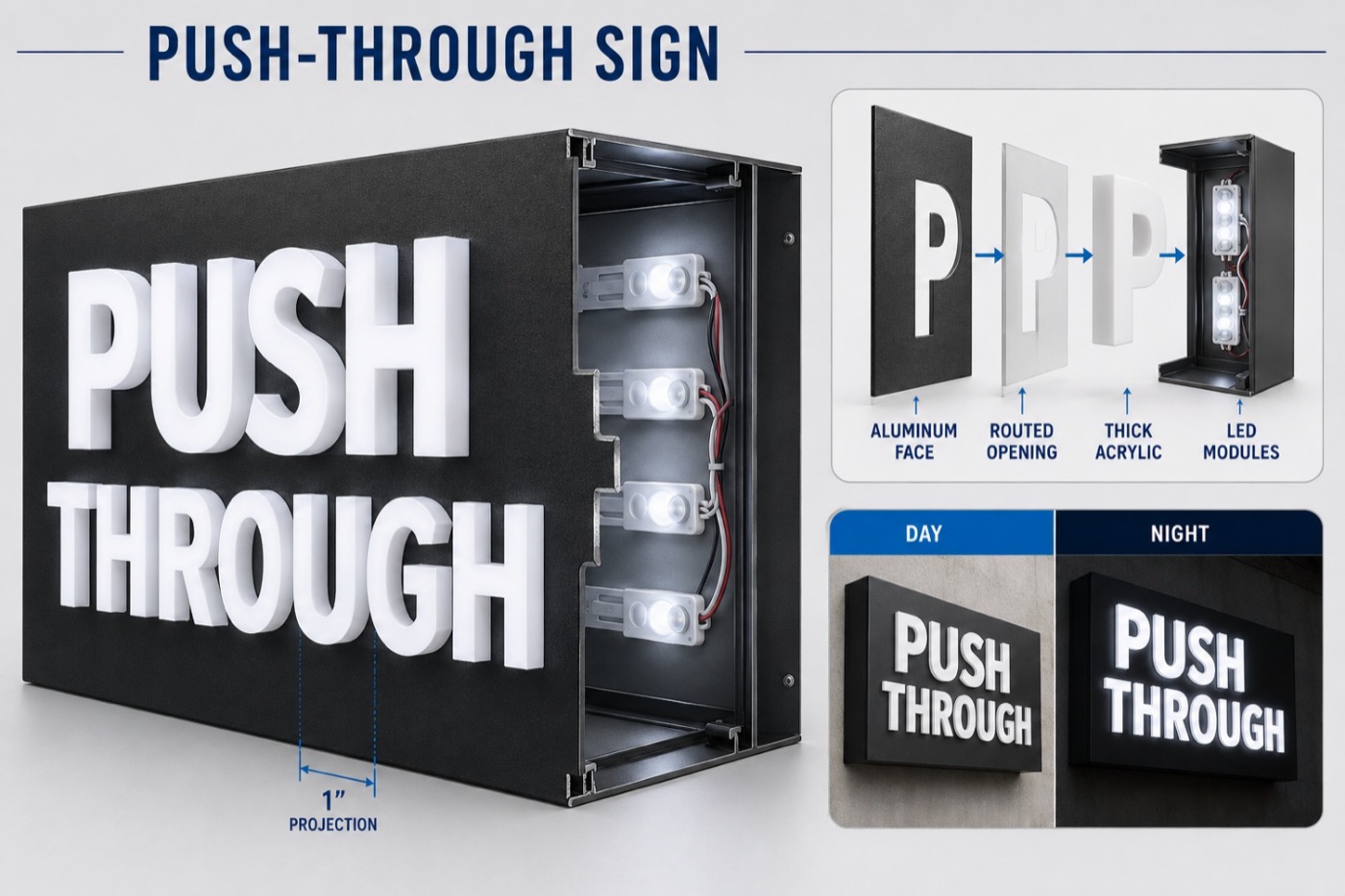
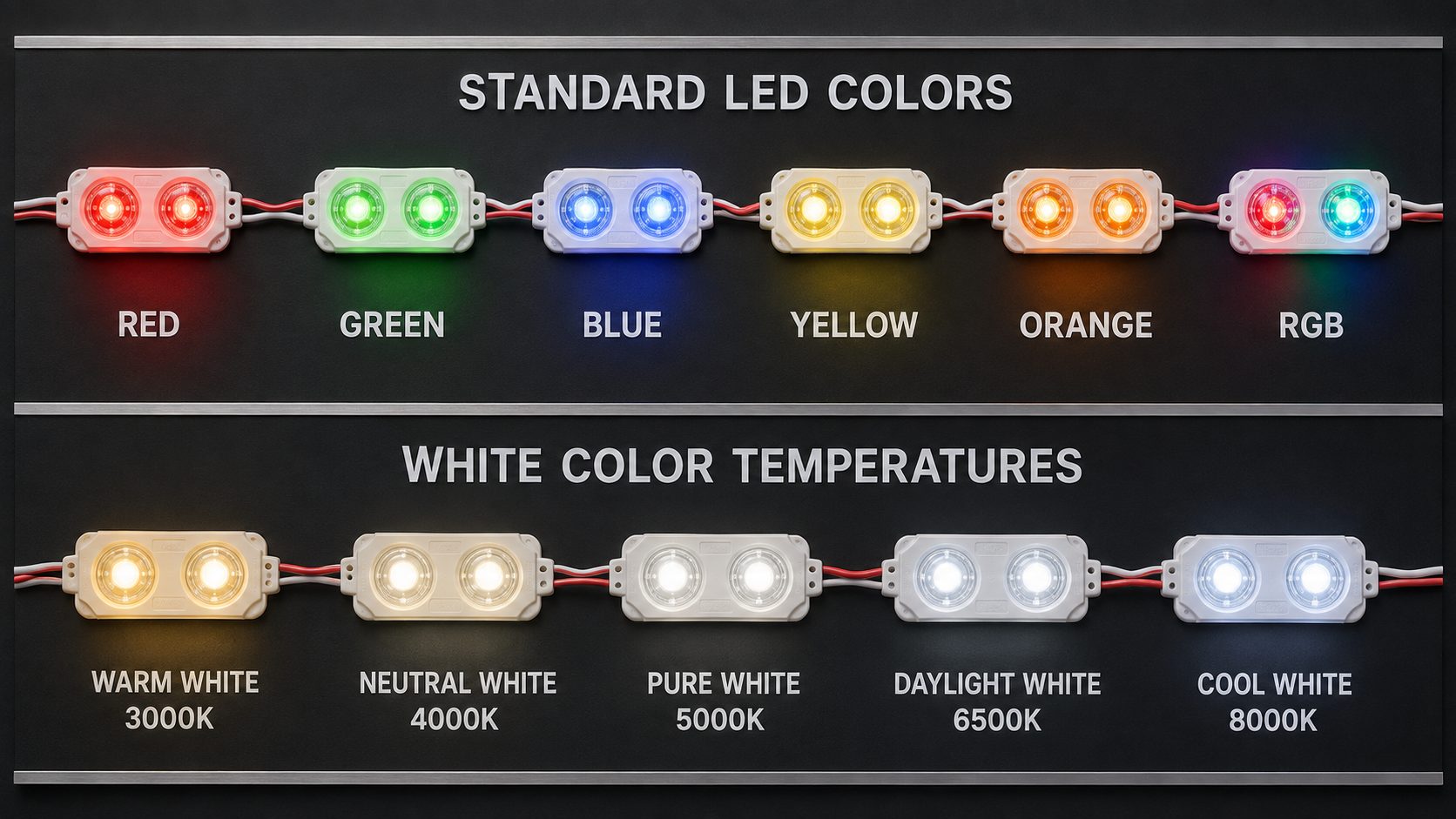
Illumination is a real decision, not a default, so it's worth asking your client rather than assuming. A non-illuminated blade sign works fine for daytime-only visibility or where local code limits illumination on a projecting sign. An illuminated version extends visibility after dark, and we build it with either internally illuminated LED graphics or push-through letters and logos for a more dimensional look. The face is acrylic or polycarbonate, in custom shapes, colors, and finishes to match your client's brand — the same considerations you already work through on a channel-letter face.
Sizing It So It Actually Gets Noticed
A blade sign that's undersized for its mounting height and viewing distance gets missed just as easily as no sign at all, and one that's oversized reads as an eyesore on a building that hasn't asked for that kind of scale. The right size depends on how far away someone typically is when they first need to notice it — a sidewalk-level entrance on a narrow street calls for a more modest sign than one meant to be seen from across a parking lot or a wider commercial corridor. This is worth walking through with your client rather than defaulting to whatever size fit the last project.
What We'll Need From You Before Quoting
- The mounting substrate — masonry, EIFS, or a metal panel wall each call for different hardware
- Local rules on projecting-sign clearance height and how far the sign can extend from the building face, which vary by jurisdiction and should be confirmed with the local Authority Having Jurisdiction before we go into production
- Whether the sign needs to be double-sided with matching graphics, since that affects both the cabinet depth and the illumination layout
- The typical viewing distance and approach angle, so the sign is sized to actually be noticed rather than guessed at
Common Oversights That Delay a Blade Sign Order
A few things come up often enough that they're worth checking before the order goes in rather than after: whether the local code allows a projecting sign to extend as far over the sidewalk or right-of-way as the design calls for, whether the client actually wants matching graphics on both faces or was assuming that by default, and whether anyone has actually confirmed what's behind the wall where the bracket needs to mount. Catching these at the quoting stage is a lot cheaper than catching them on install day.
We manufacture blade signs — illuminated or non-illuminated, wall-, pole-, or canopy-mounted — for sign companies across the United States and Canada.
Blade Signs FAQ
When does a blade sign make more sense than channel letters?
When the storefront is narrow, on a busy corridor, or approached from more than one direction — a blade sign's double-sided, perpendicular mounting reads from angles a flat channel-letter set can't.
Does a blade sign need to be illuminated?
No. Non-illuminated works for daytime visibility or where local code restricts illumination on a projecting sign; illuminated versions use LED graphics or push-through letters for after-dark visibility.
Can a blade sign be added to a storefront that already has channel letters?
Yes — most of the blade signs we build are ordered alongside an existing or new channel-letter package to help with wayfinding at street level, rather than as a replacement for the primary sign.
What should I confirm before quoting a blade sign?
The wall's mounting substrate, local rules on projecting-sign clearance and projection distance from the local Authority Having Jurisdiction, and whether the sign needs to be double-sided.