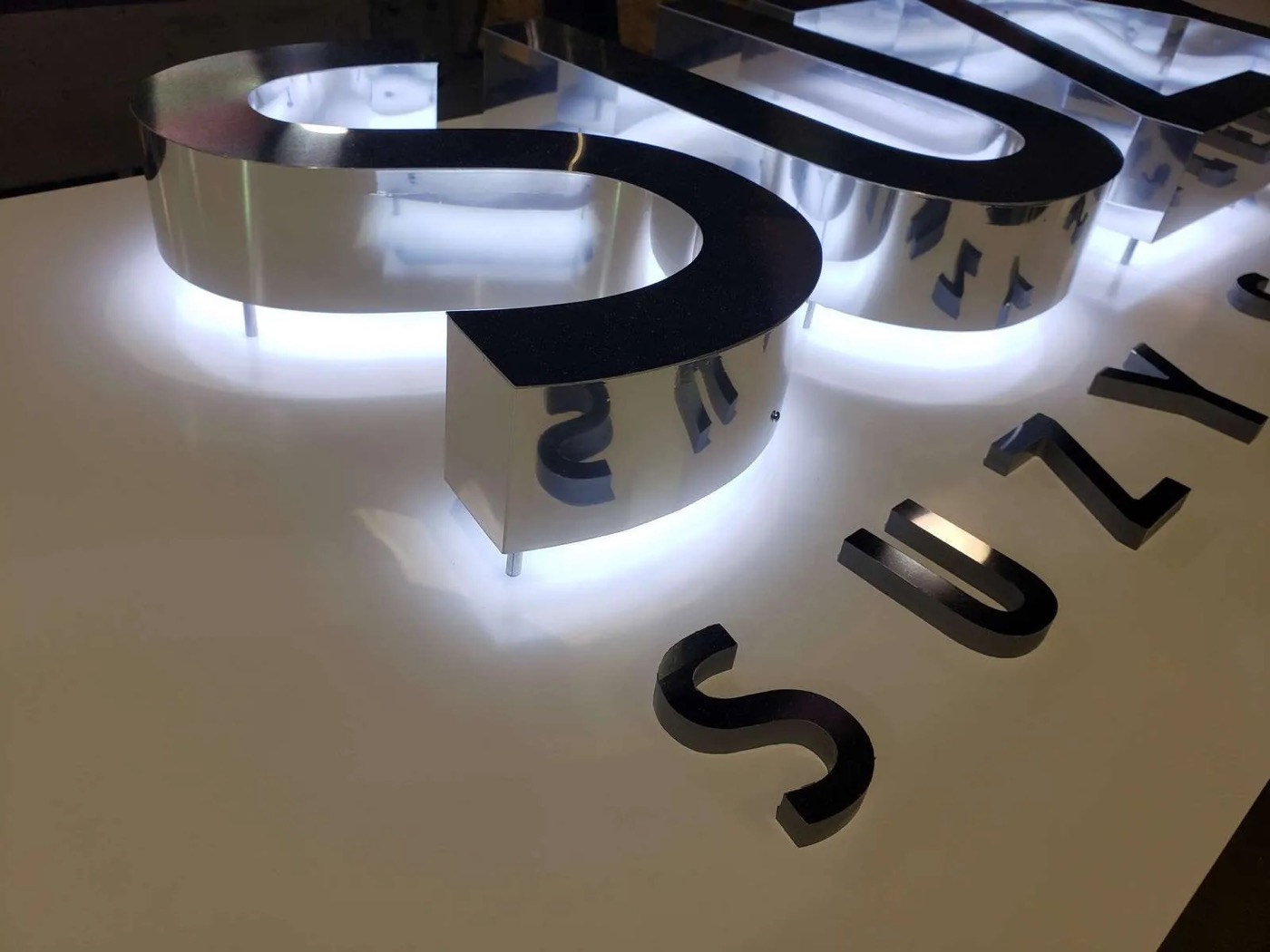

The depth of a channel letter changes much more than its side profile. It affects how light spreads across the face, how the sign looks from an angle, how the letter is built, and how far it sits off the building. Picking a familiar depth before looking at those details is how avoidable compromises creep in.
The right return height comes from matching the design, the illumination system, and the installation conditions. Here is how we'd work through it with you.
What Return Height Means
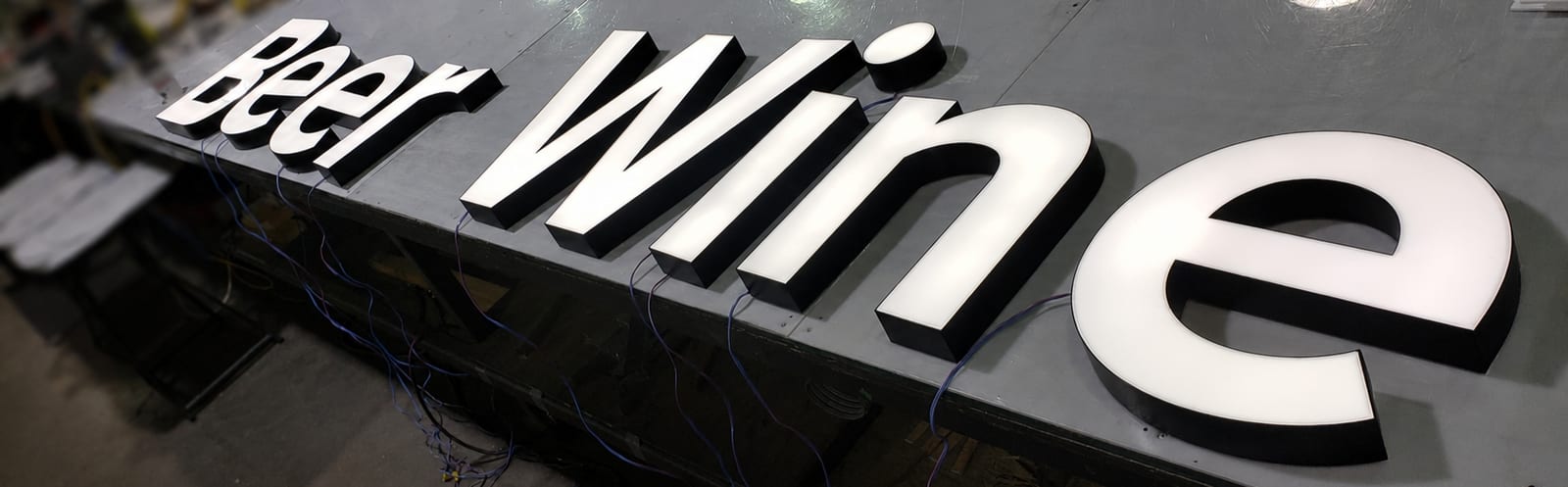
The return is the sidewall that gives a channel letter its three-dimensional form, and return height is that wall's front-to-back dimension. It isn't the same as letter height, which measures the character from top to bottom. A 24-inch-tall letter can have a 3-inch return or a 5-inch one, and those numbers describe two different parts of the same letter.
When you send a quote request, say whether the depth you're giving us is the return itself or the overall assembled letter. Trim, face-retention profiles, backs, and mounting hardware all add to the finished projection.
Start With the Illumination Method
How the letter is lit usually sets the minimum depth before anything else does.
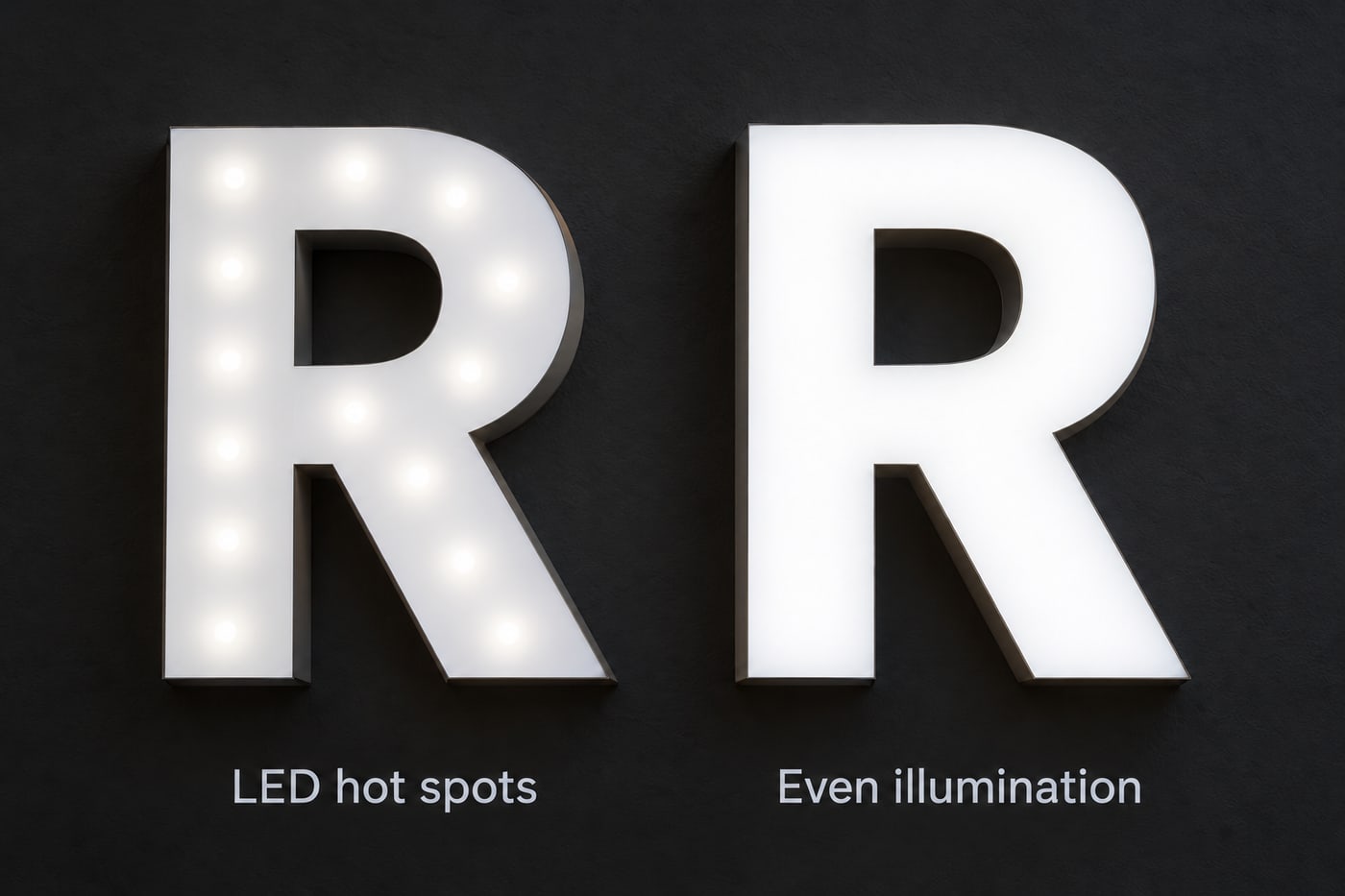
Front-lit letters need enough distance between the LEDs and the inside of the face for the light from neighboring modules to overlap. If the distance is too short for the chosen layout, you'll see bright spots, stripes, or dark areas. Shallow letters can work with the right modules and face material, but they need a lighting design made for that space. A module chosen for a deep letter shouldn't just be dropped into a shallow one. If you're already seeing the problem, how to eliminate LED hot spots in channel letters walks through the fixes.
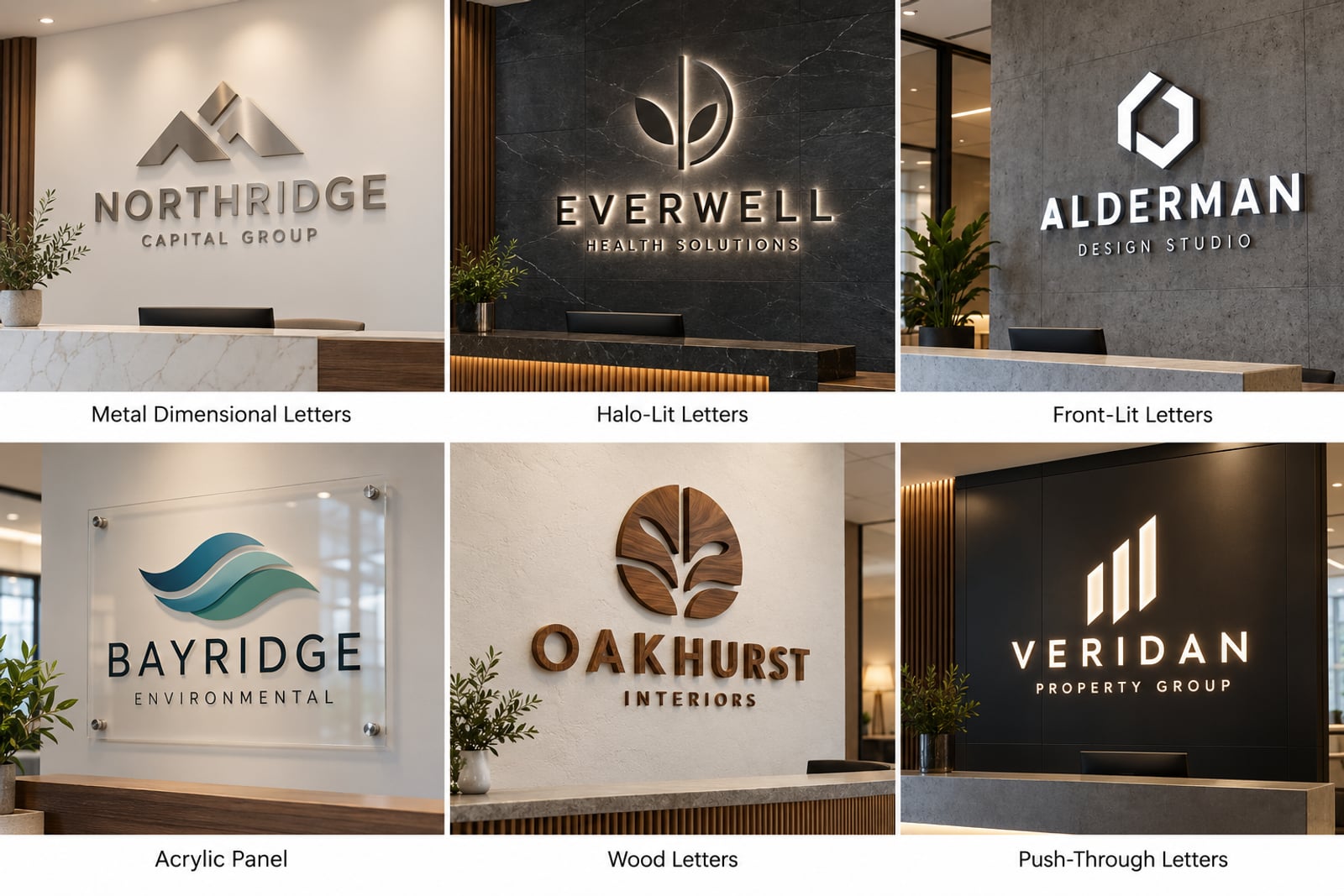
Halo-lit letters have two depth questions: the return and the standoff, which is the gap between the back of the letter and the wall. Both shape the result, but a taller return doesn't automatically give a wider halo. Our guide to reverse halo letters covers the standoff side.
Front-and-back-lit letters need the face lighting and the rear lighting designed together. Review the depth against the internal construction so both effects work without light leaking where it shouldn't.
Use Depth Ranges as a Starting Point
These ranges are conversation starters, not fabrication limits or LED specifications. Final suitability depends on the exact letter construction and lighting system.
| Approximate Return Height | Where It Often Fits | What to Confirm |
|---|---|---|
| 1 to 2 inches | Small letters, interior signs, specialty constructions | Module clearance, diffusion, face retention, whether it can be built |
| 3 to 5 inches | Many conventional front-lit storefront projects | Face material, stroke width, LED optics, design |
| 6 inches and above | Larger letters or a stronger architectural profile | Whether the extra depth is justified. More depth doesn't mean more brightness or strength |
LED manufacturers publish depth recommendations for each module, and those recommendations differ widely. Some modules are meant for letters only a few inches deep, others for applications as shallow as 1 inch. That's why the module and the depth have to be chosen together. Our guide to choosing the right LEDs for channel letters goes through the module side.
Look at Stroke Width and Letter Shape
Two letters of the same height can pose very different lighting problems. A narrow script letter has far less room for modules, wiring, and assembly than a wide block letter.
Before you lock in a return height, check the narrowest strokes, the small counters, the tight curves, and the sharp corners. A deeper return can't fix a stroke that is too narrow to hold the components. On difficult artwork, a small change to the stroke or the construction often works better than simply adding depth.
Match the Face Material to the Space
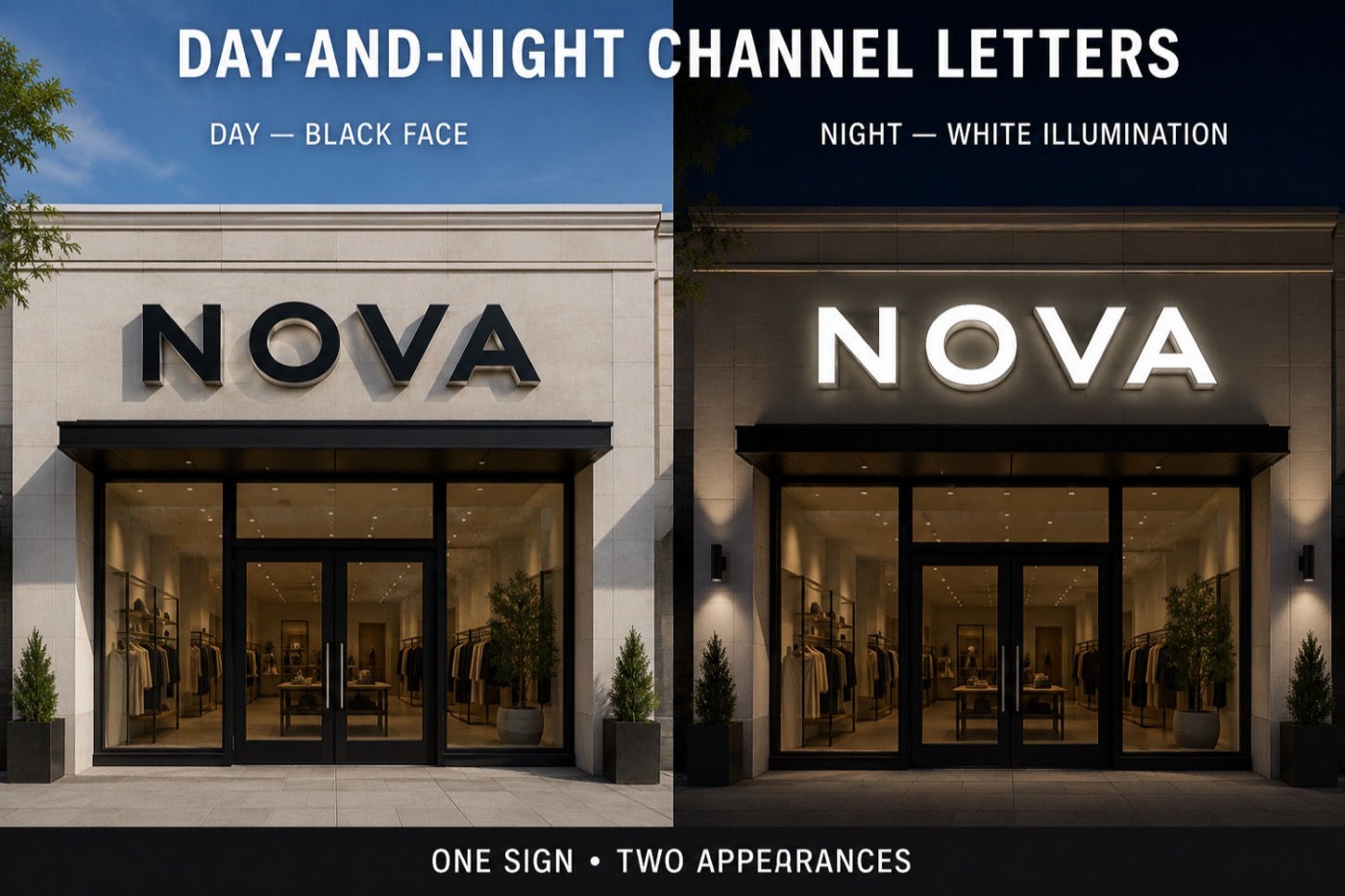
White acrylic, colored acrylic, polycarbonate, translucent vinyl, and day-and-night treatments all pass and diffuse light differently. A layout that looks fine behind a white face may not do the same behind a dark day-and-night face. Confirm the full face assembly before you approve the lighting layout, because special face-retention systems and trimless profiles can add their own depth requirements. Our comparison of polycarbonate and acrylic faces can help with that choice.
Trimless Letters: Depth Comes From the Profile
On a trimless channel letter, the return depth comes from the available extrusion profiles, so it isn't a free dimension. We offer profiles in 1.37, 2, 3, and 4 inches. Pick the profile that fits the letter size, the face assembly, the LED layout, and the finished projection you need.
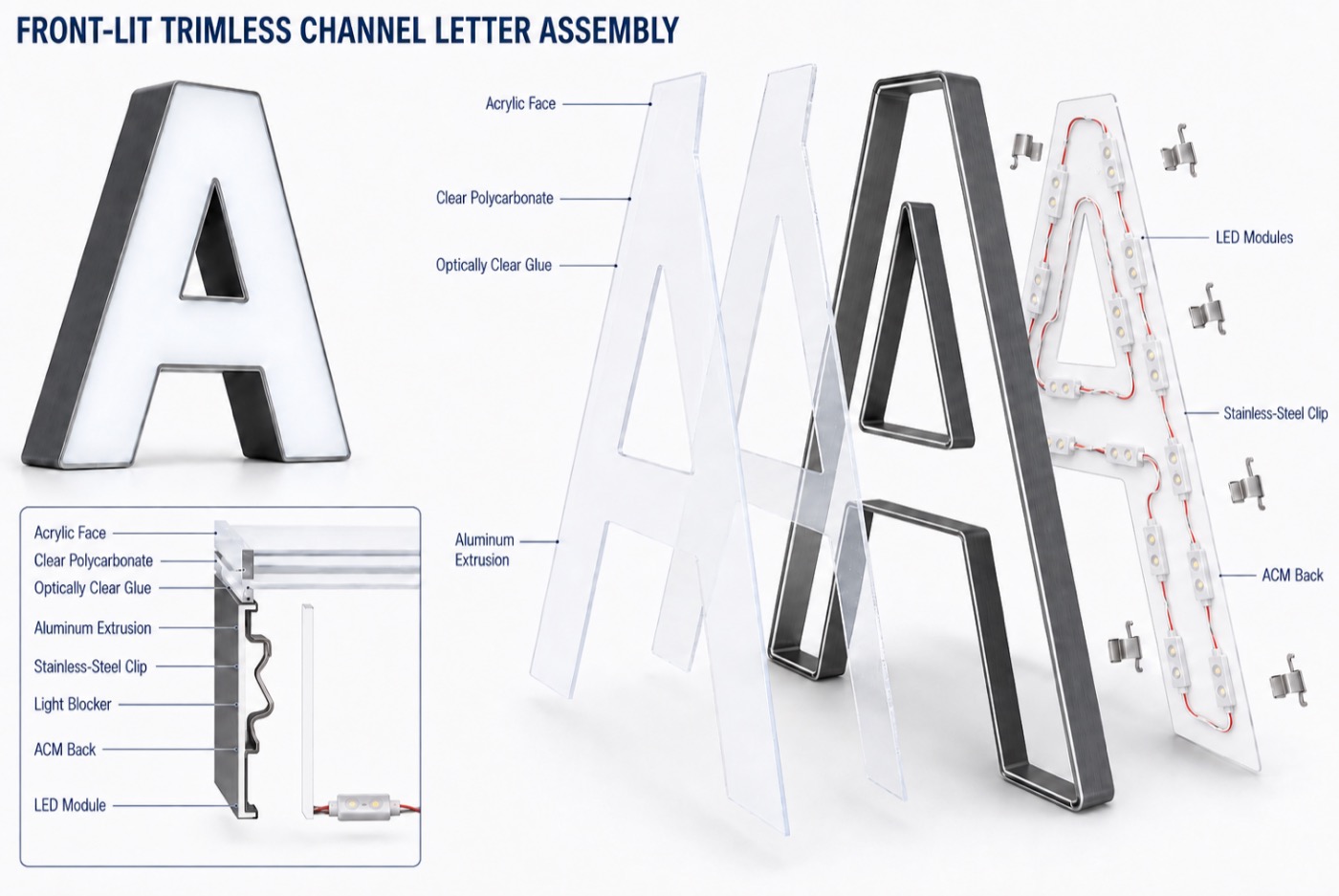
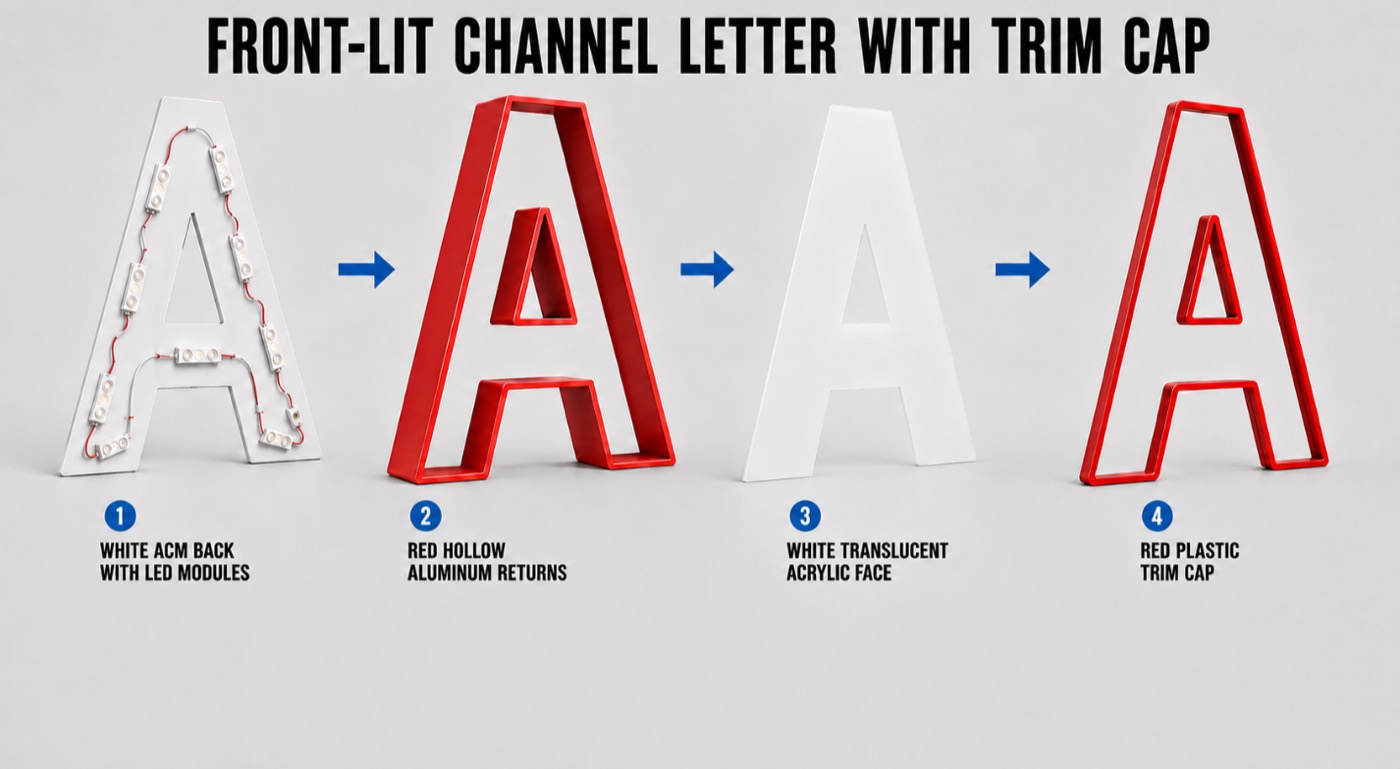
In the front-lit system, the extrusion forms the return. A clear polycarbonate layer is pinned to it, the acrylic face is bonded to that layer with optically clear adhesive, and the LEDs sit on an ACM back. Stainless-steel clips hold the back panel in place, so nothing has to be welded or glued to the return. The front-lit build uses an 8 mm (about 5/16 in.) clip, and other profile configurations use other clip sizes. Choose the clip and the panel thickness together from the assembly details. A clip dimension isn't a return height.
Two things are easy to overlook. First, the usable distance between the LEDs and the face inside the finished letter is what matters, not the nominal depth of the extrusion. Second, think about service early: confirm how the back panel comes off, so LEDs can be replaced later without cutting anything apart. Shallow profiles also deserve a lit sample before production. For more on how the two constructions compare, see trim cap vs. trimless channel letters.
Think About the Building and the Viewing Angle
Shallow letters have a restrained profile and often suit interiors or close viewing. Deeper returns show more sidewall and give a stronger three-dimensional look.
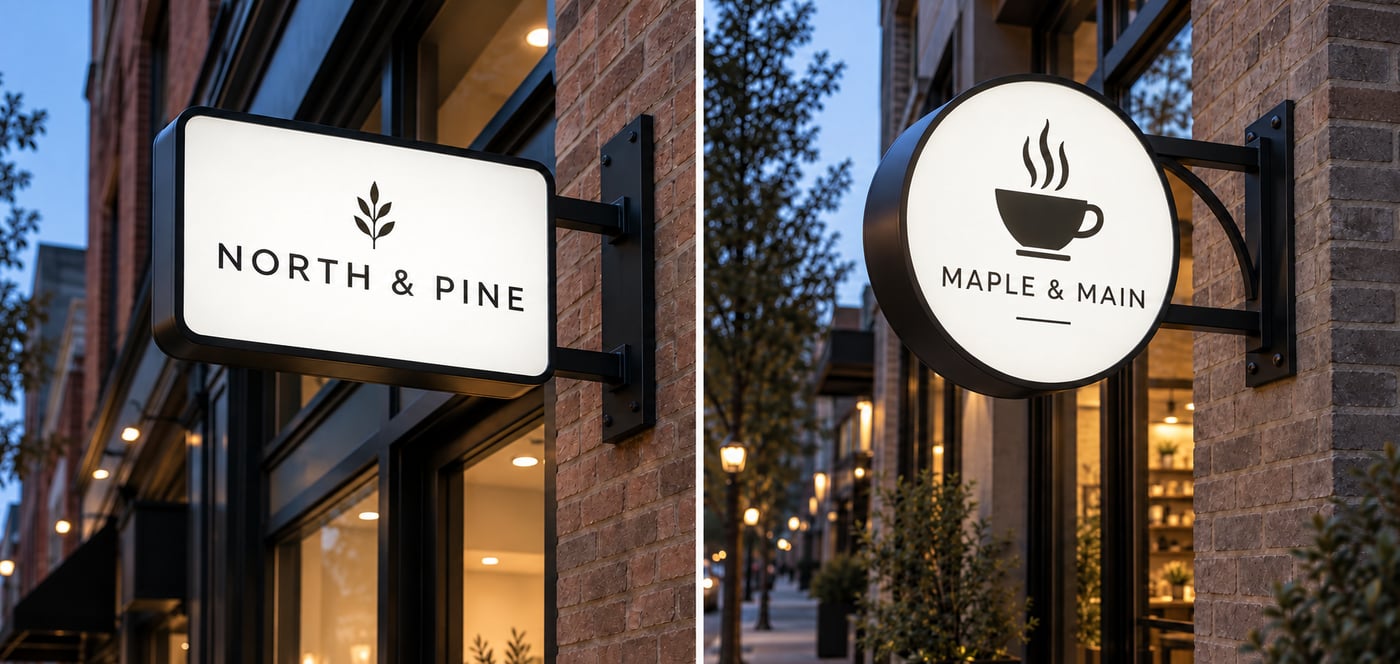
Check the side view, not just the straight-on elevation. Deep letters can hide parts of the characters next to them when seen at an angle, especially where the spacing is tight. Then check the landlord's criteria and the allowed projection before production. Overall projection can include the letter body, the wall standoff, a raceway, or a backer, so a return dimension by itself doesn't describe the installed sign. If the mounting method is still open, raceway vs. other channel letter mounting systems is worth a look.
Understand the Cost and Installation Effects
More depth means more sidewall material for the same letter outline, and it can affect fabrication, finishing, packaging, and handling. But a shallow design isn't automatically the cheaper one. Specialized LEDs, closer spacing, or a more involved assembly can erase the material savings.
Weight and mounting depend on the whole sign: letter size, materials, construction, and site conditions. Large or exposed signs need a proper structural review, and return depth alone isn't a basis for choosing anchors or material thickness. When you compare quotes, make sure each one uses the same face, the same lighting requirements, the same mounting scope, and the same finished appearance. Depth is only one line in the price. Our wholesale channel letter ordering checklist lists what else to specify.
Test the Combination Before Production
For shallow letters, narrow strokes, unusual faces, or strict brand requirements, ask for a representative lit sample. Make the sample from the hardest feature in the artwork, not just a wide, simple letter. Then judge brightness, evenness, color, and visible LEDs from the distance the sign will actually be seen. LED density guidelines are a good starting point, and a physical test confirms that the combination works.
What to Send With Your Quote Request
- Vector artwork, overall dimensions, individual letter heights, and the narrowest stroke widths
- The return depth you want, and whether that dimension is flexible
- Whether the sign is front-lit, halo-lit, front-and-back-lit, or another illumination type
- Face materials, films, finishes, and daytime and nighttime color expectations
- Building photographs, mounting method, wall standoff, and any projection limits
- Installation location, viewing distance, quantities, and any sample requirements
Choose Depth as Part of the Complete Sign
A well-chosen return height supports the letter's look, its lighting, and how it's built. Pick it together with the artwork, the face system, the LED layout, and the mounting conditions, not ahead of them.
Wholesale Sign Pro manufactures custom channel letters for sign companies across the United States and Canada. Send your artwork, dimensions, building photographs, and the lighting effect you want, and we'll review construction options that suit the project.
Channel Letter Depth FAQ
What is the difference between return height and letter height?
Letter height measures the character from top to bottom. Return height is the front-to-back depth of the sidewall. A 24-inch-tall letter can have a 3-inch or a 5-inch return, so always say which dimension you mean.
What depth should I use for a front-lit storefront letter?
Roughly 3 to 5 inches is a common range to start the conversation. The right number still depends on the face material, stroke width, LED optics, and design, so treat it as a starting point and not a rule.
Does a deeper return make a halo-lit letter glow wider?
Not by itself. For halo-lit letters, return depth and the standoff from the wall are separate dimensions. Both affect the glow, but adding depth doesn't automatically widen the halo.
Are shallow letters cheaper to build?
Not always. A shallow letter uses less sidewall material, but it can need specialized LEDs, closer spacing, or more complex assembly that cancels the savings. Compare full quotes with the same face, lighting, and mounting scope.