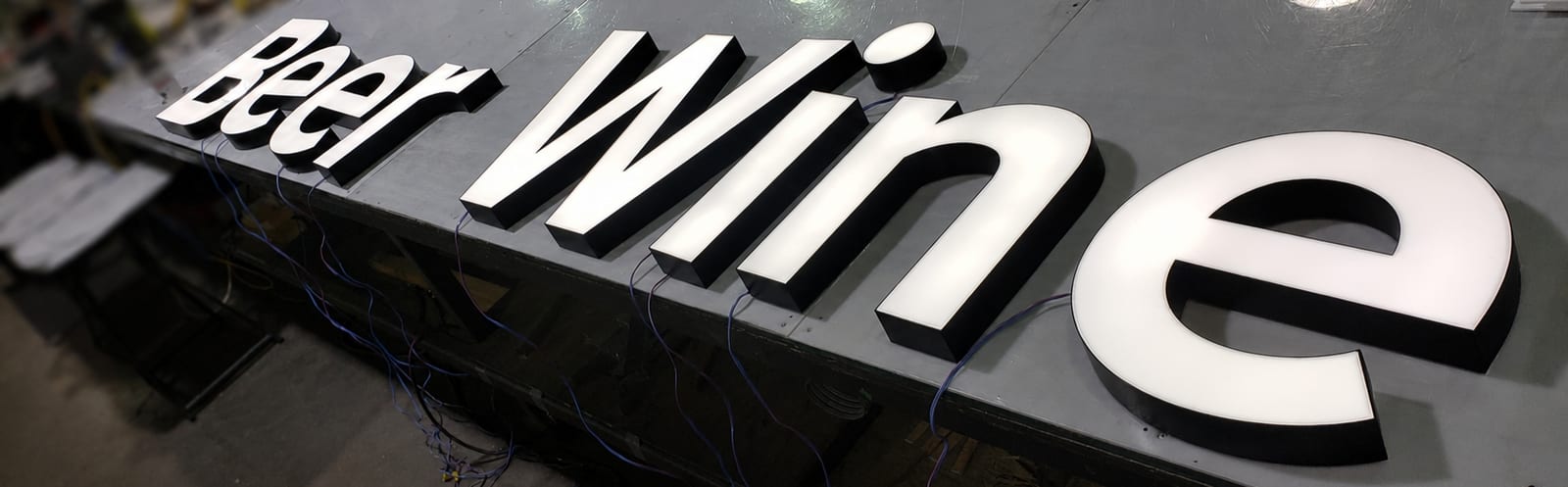
Most channel-letter faces are acrylic, and for a typical storefront that is the right call. Polycarbonate becomes useful when breakage is the bigger concern—low-mounted signs, exposed locations, or sites with a history of impact damage. The trade-off is that the tougher material does not behave exactly like acrylic over time.
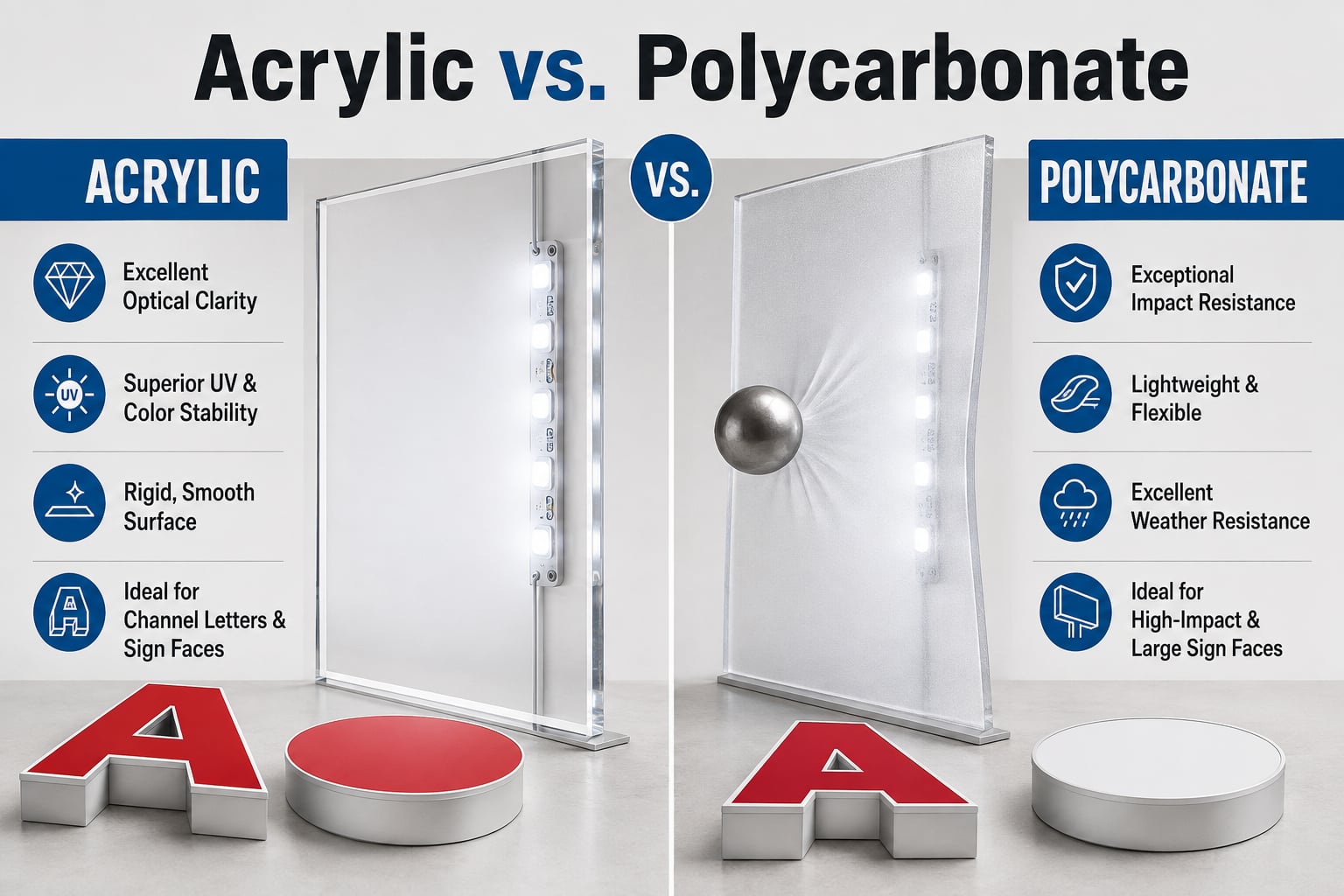
Acrylic vs. Polycarbonate: Feature Comparison
| Feature | Acrylic | Polycarbonate |
|---|---|---|
| Light transmission | Excellent; bright, crisp illumination | Very good, although some grades transmit slightly less light |
| Color appearance | Strong, consistent sign colors | Good selection, but generally fewer stocked colors |
| Impact resistance | Good, but can crack if struck or improperly fastened | Extremely high — much harder to break |
| UV/weather resistance | Excellent; usually maintains clarity and color longer | Must be UV-stabilized; lower-quality sheets may yellow |
| Scratch resistance | Better surface hardness | Scratches more easily |
| Heat resistance | Good for normal channel-letter applications | Better resistance to elevated temperatures |
| Forming | Easy to heat-form and vacuum-form | Can be formed, but requires careful drying and temperature control |
| Cutting | Excellent for CNC routing and CO₂ laser cutting | Best routed or saw-cut; CO₂ laser cutting can produce poor or hazardous fumes and is generally avoided |
| Flexibility | More rigid | More flexible and less likely to crack during installation |
| Cost | Usually less expensive | Usually more expensive |
| Typical use | Standard indoor and outdoor channel letters | High-impact or vandal-prone locations |
Choose Acrylic When
- Producing standard front-lit channel letters
- Brightness and accurate brand colors are important
- The sign is installed above normal reach
- Long-term outdoor color and clarity are priorities
- Cutting faces with a CO₂ laser
- Producing formed or embossed sign faces
- Cost efficiency is important
For most channel-letter projects, illuminated sign-grade acrylic around 3/16 inch is the usual starting point. Thickness should increase for unusually large faces.
Choose Polycarbonate When
- The sign is installed close to ground level
- Vandalism or accidental impact is a concern
- The location experiences hail or severe weather
- The faces may flex during transportation or installation
- The application requires exceptionally high breakage resistance
- Local specifications or architectural drawings require it
Use only UV-stabilized, sign-grade polycarbonate intended for illuminated outdoor signage.
Important Fabrication Difference
Acrylic faces can be cut cleanly with a CO₂ laser, producing polished edges. Polycarbonate should generally be CNC-routed because laser cutting can discolor the edge, create excessive fumes and damage the material.
Practical Recommendation
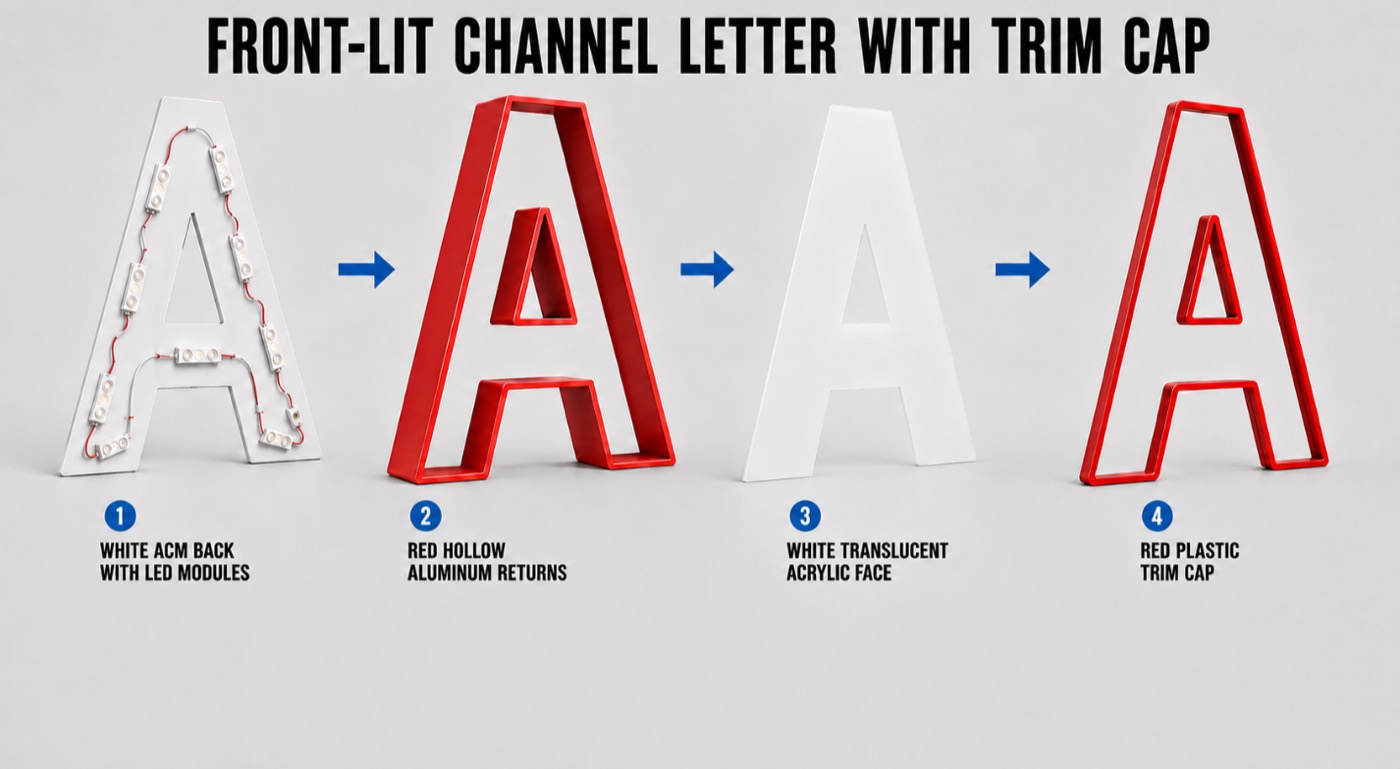
Use acrylic as the standard material for most channel-letter faces. Upgrade to polycarbonate when impact resistance is more important than scratch resistance, color selection, laser-cutting quality and cost. Always verify that the selected sheet is compatible with the trim cap, letter size, LED spacing, and applicable electrical sign requirements.
Light Transmission by Material and Color
Light transmission depends more on the color and diffusion grade than on whether the material is acrylic or polycarbonate.
| Channel-Letter Face Material | Typical Visible-Light Transmission |
|---|---|
| Clear acrylic | Approximately 92% |
| Clear polycarbonate | Approximately 86–90% |
| 7328 white acrylic | Approximately 25–30% |
| 2447 white acrylic | Approximately 45–50% |
| 2406 white acrylic | Approximately 55–65% |
| Red sign acrylic | Approximately 10–25% |
| Blue sign acrylic | Approximately 5–20% |
| Green sign acrylic | Approximately 10–25% |
| Yellow or orange acrylic | Approximately 20–50% |
| Black/white acrylic | Varies considerably by product and LED color |
For standard channel letters:
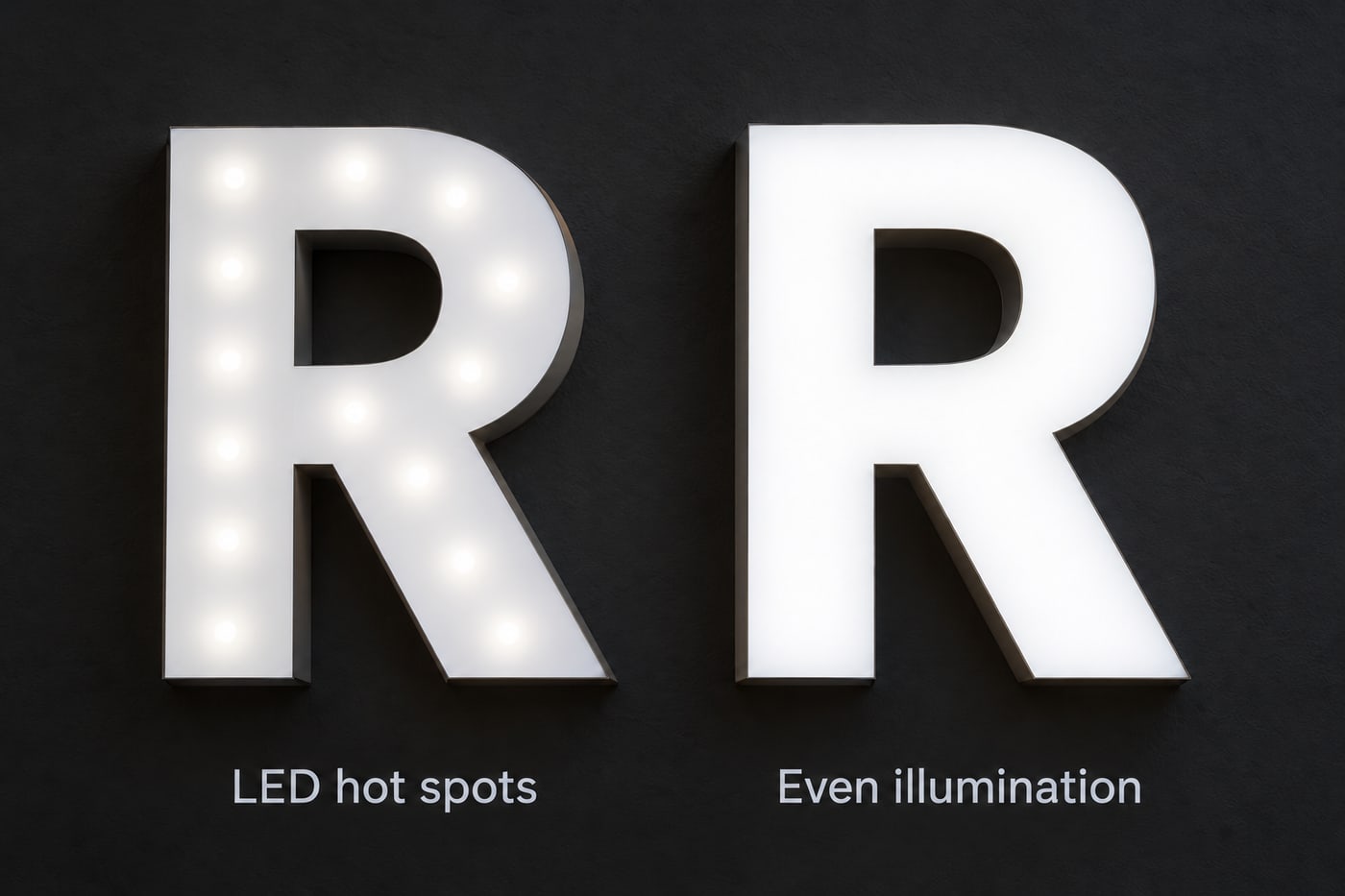
- 7328 white provides strong diffusion and hides LED hot spots well but produces lower brightness.
- 2447 white offers a good balance of brightness and diffusion and is a common choice.
- 2406 white provides higher brightness but may reveal LED hot spots unless the letter is sufficiently deep or uses closely spaced LEDs.
- Polycarbonate sign whites are commonly engineered around approximately 25–50%, depending on the diffusion grade.
Light transmission percentages from different manufacturers should not be compared without checking the test method, material thickness, and exact color number. For practical selection, evaluate both the published transmission percentage and the transmission of a full-size illuminated sample.
For a full rundown of everything else that goes into a finished sign — returns, backs, trim, illumination, and mounting — see Materials Used to Make Channel Letters.