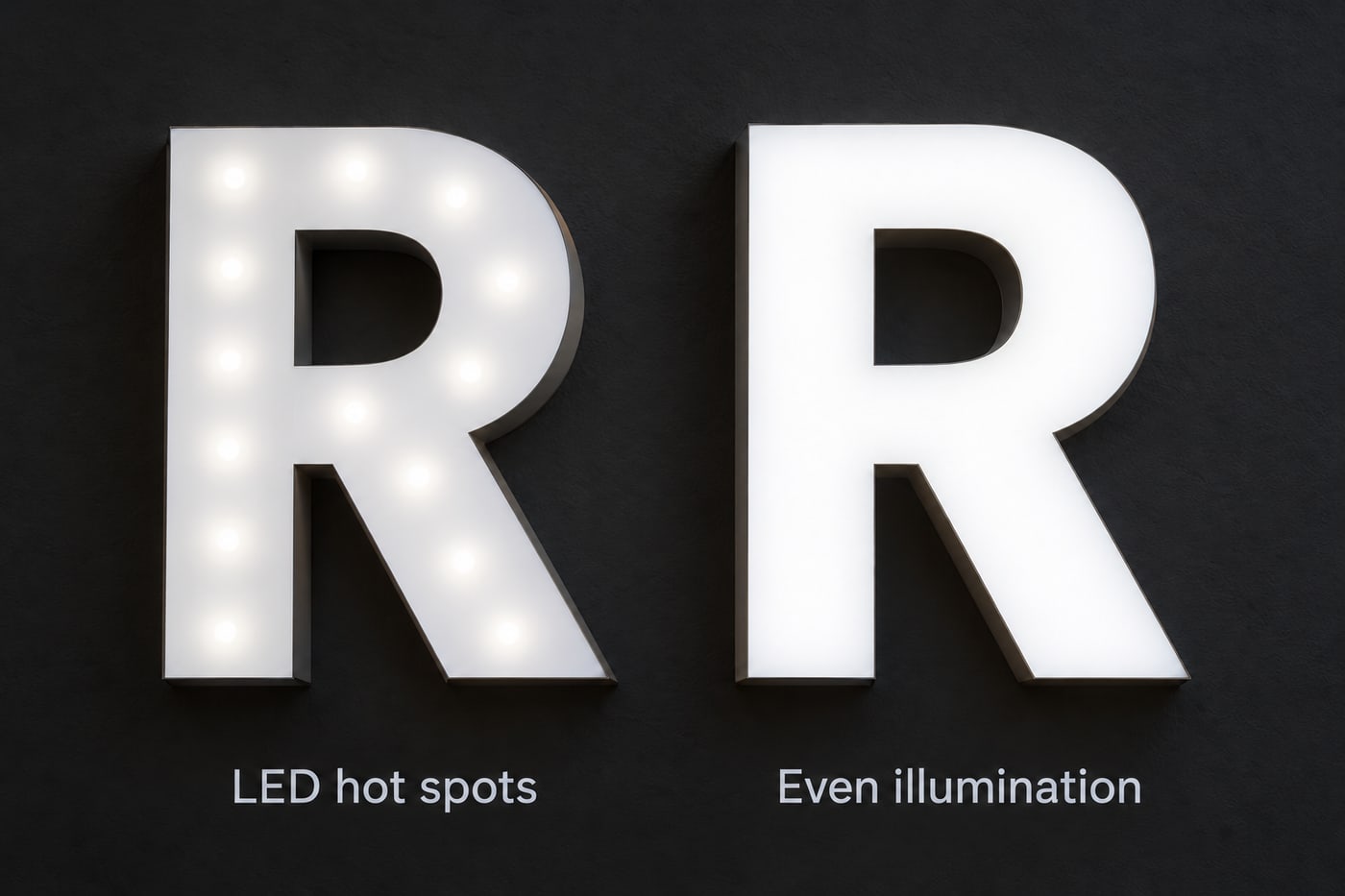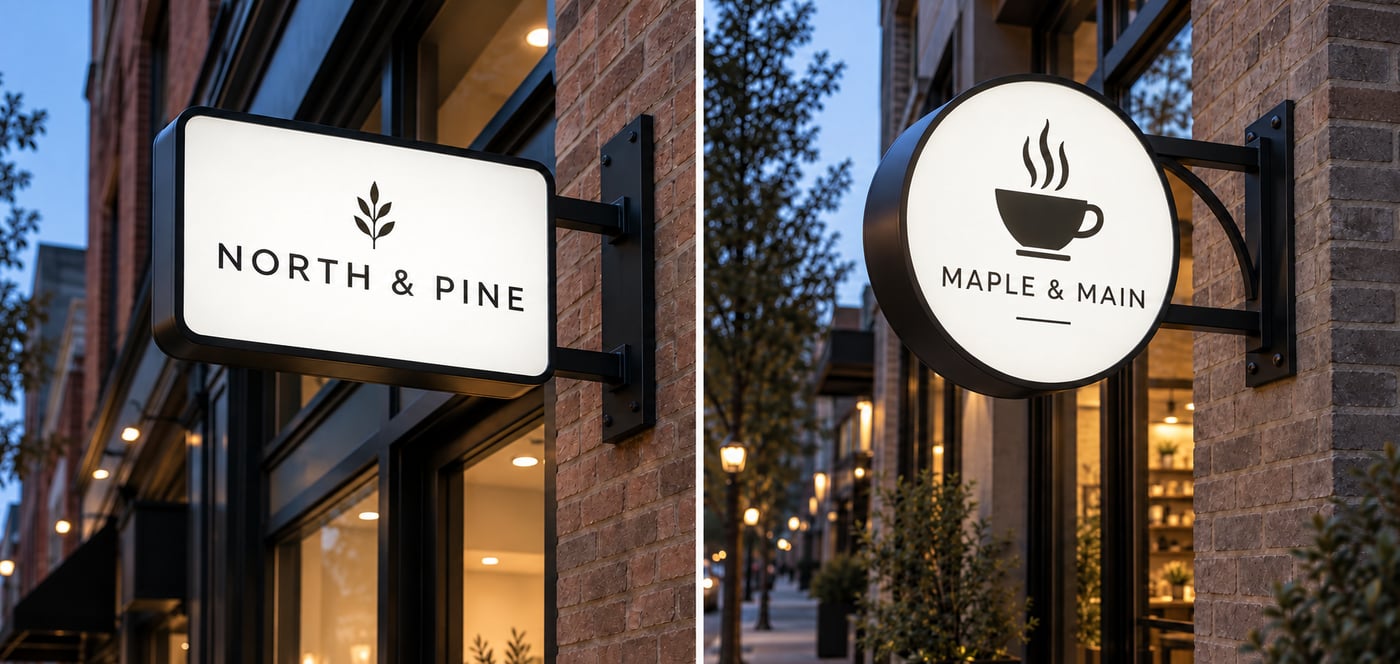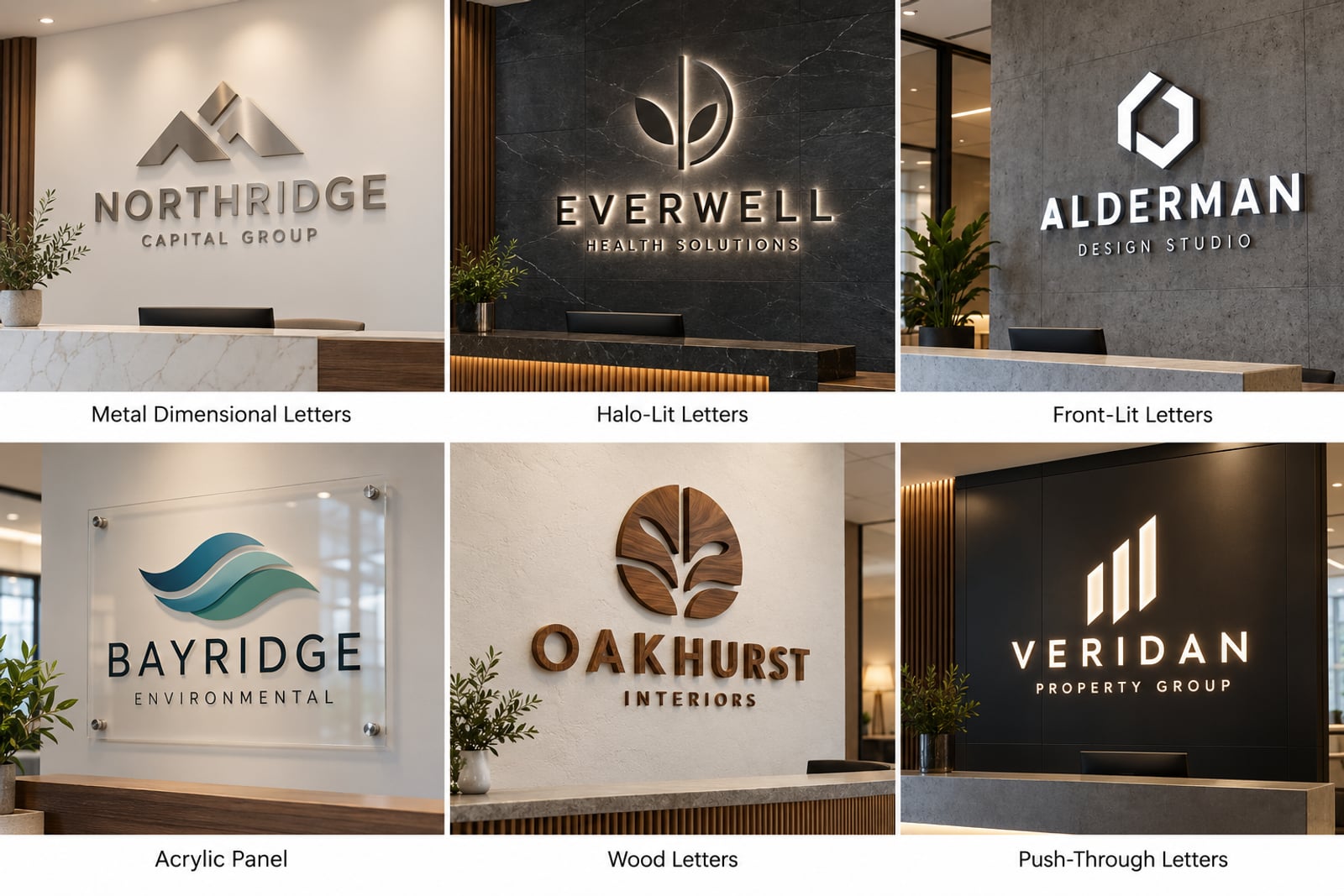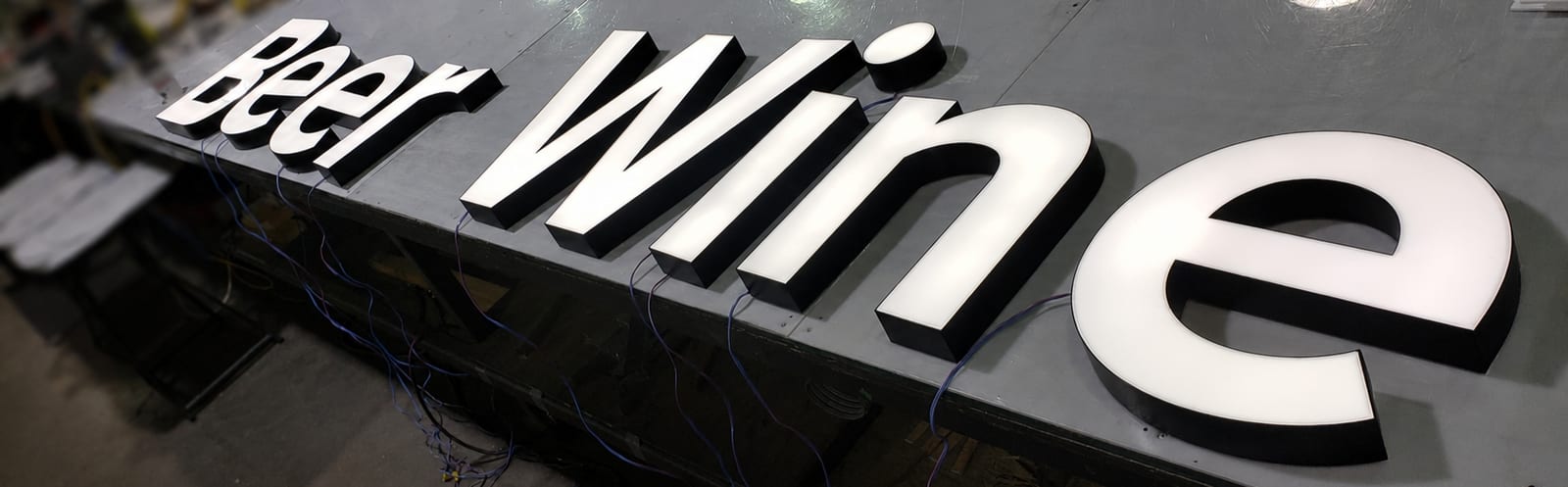
From the sidewalk, a channel letter looks simple: a shaped letter that lights up. On the bench, it is a system of faces, returns, backs, LEDs, power supplies, fasteners, and mounting hardware. Each part affects the appearance, service life, and approval of the finished sign. This guide explains what those parts do and where material choices matter.
1. Letter Faces
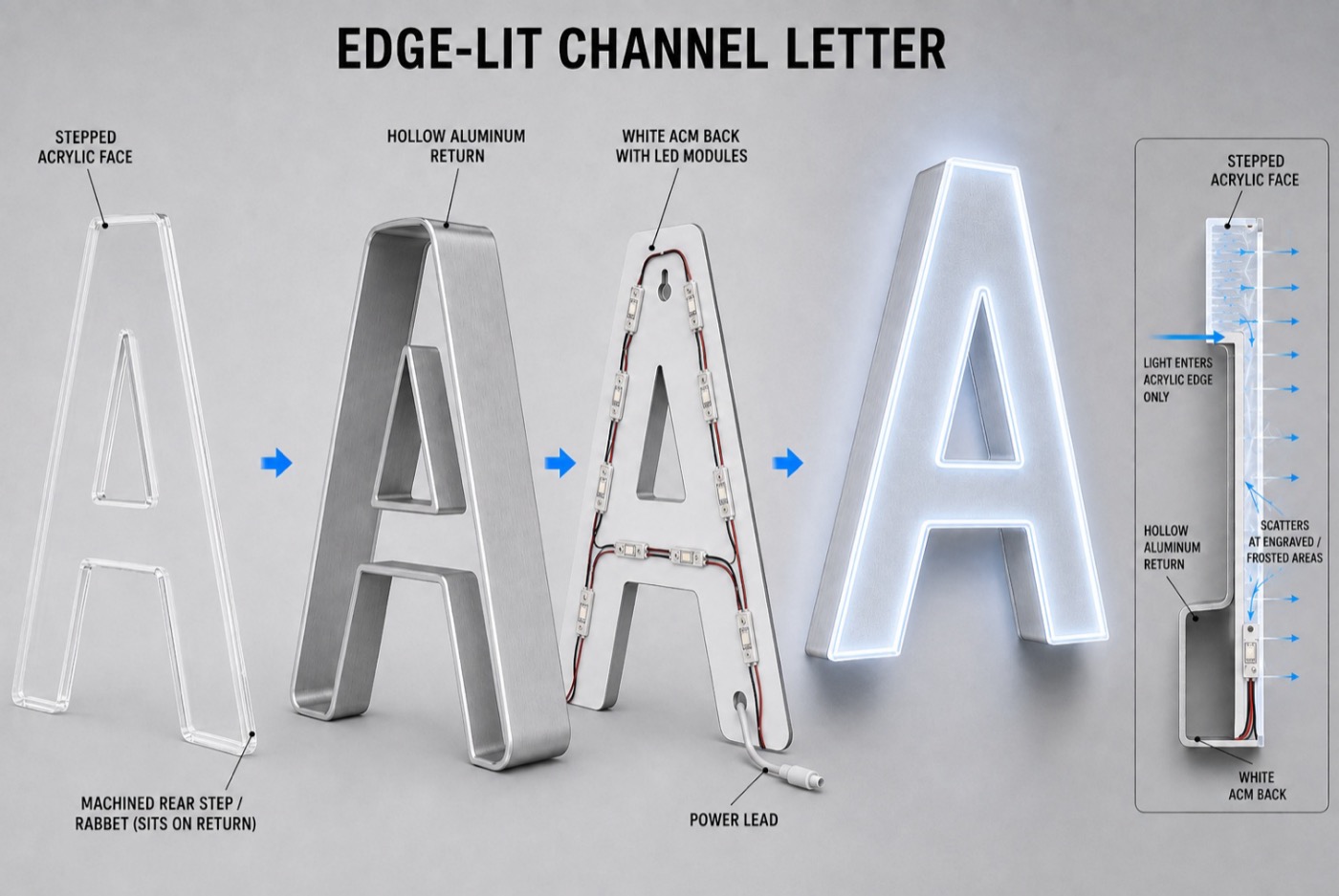
- Acrylic sheet — most common for illuminated faces
- Polycarbonate — more impact-resistant than acrylic
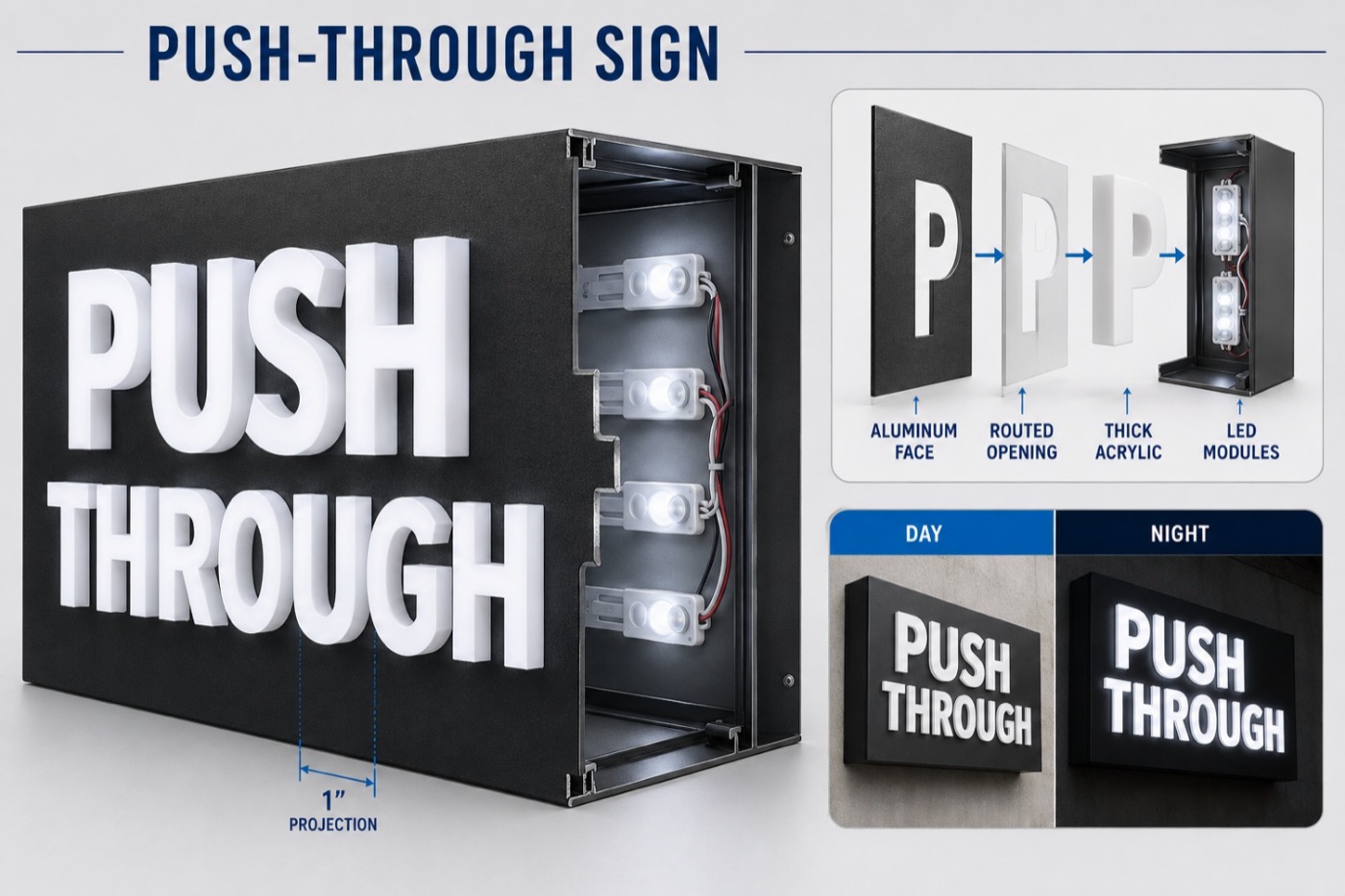
- Aluminum — used for non-illuminated or halo-lit letters
- Perforated aluminum with acrylic backing — creates daytime and nighttime color effects
- Flexible face material — used for very large letters or sign cabinets
2. Letter Returns (Sides)
- Pre-painted aluminum coil — typically 0.040″, 0.050″, or 0.063″
- Stainless steel — used for premium architectural letters
- Galvanized steel — often used for reverse/halo-lit letters
- Plastic return material — used for side-illuminated or specialty trimless letters
- Aluminum extrusion profiles — used to produce trimless and specialty channel letters
3. Letter Backs
- Aluminum sheet — commonly 0.040″, 0.063″, or 0.080″
- ACM panel — lightweight aluminum-composite material (UL)
- Clear acrylic — sometimes used for halo-lit letters (UL)
- Polycarbonate — used where additional impact resistance is required (UL)
- PVC or expanded plastic sheet — generally for indoor applications (UL)
4. Face-Retention Materials
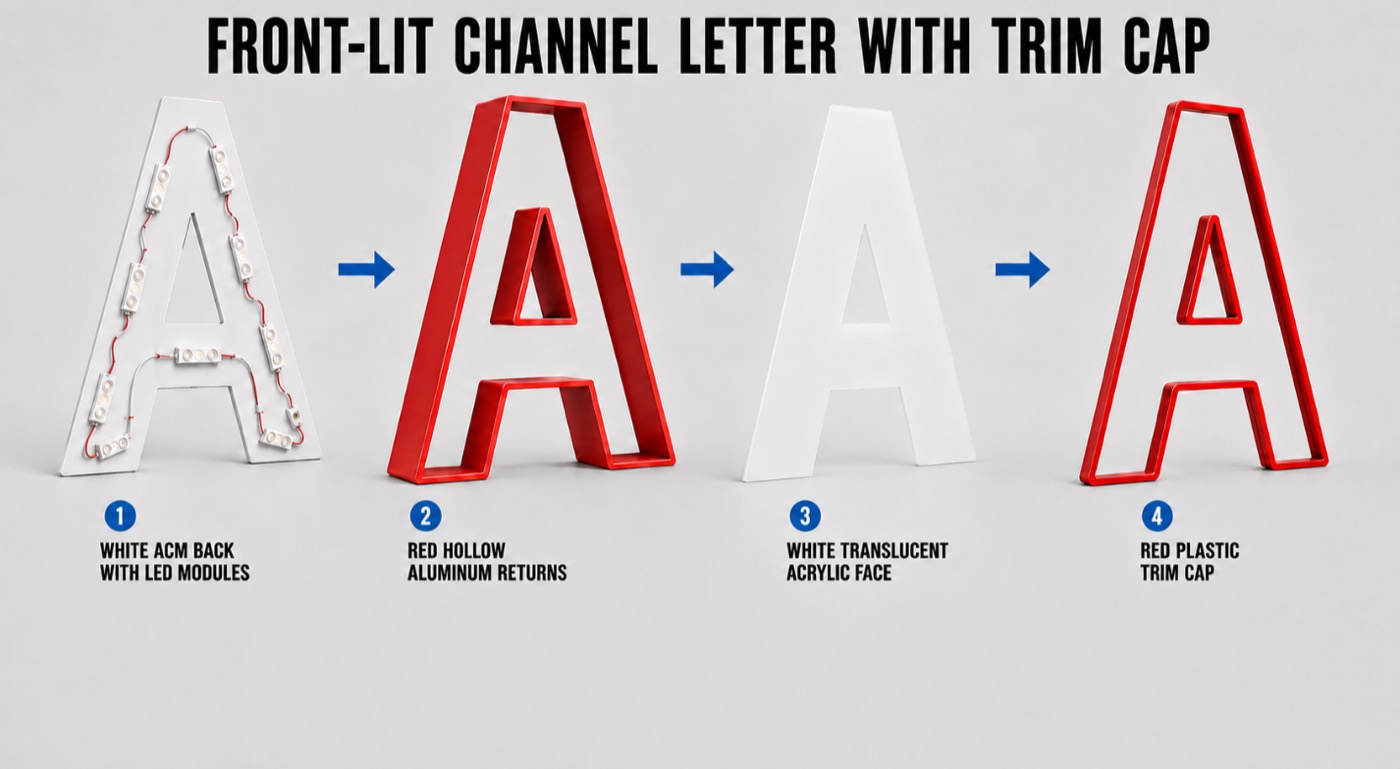
- Plastic trim cap — holds the acrylic face on traditional channel letters (UL)
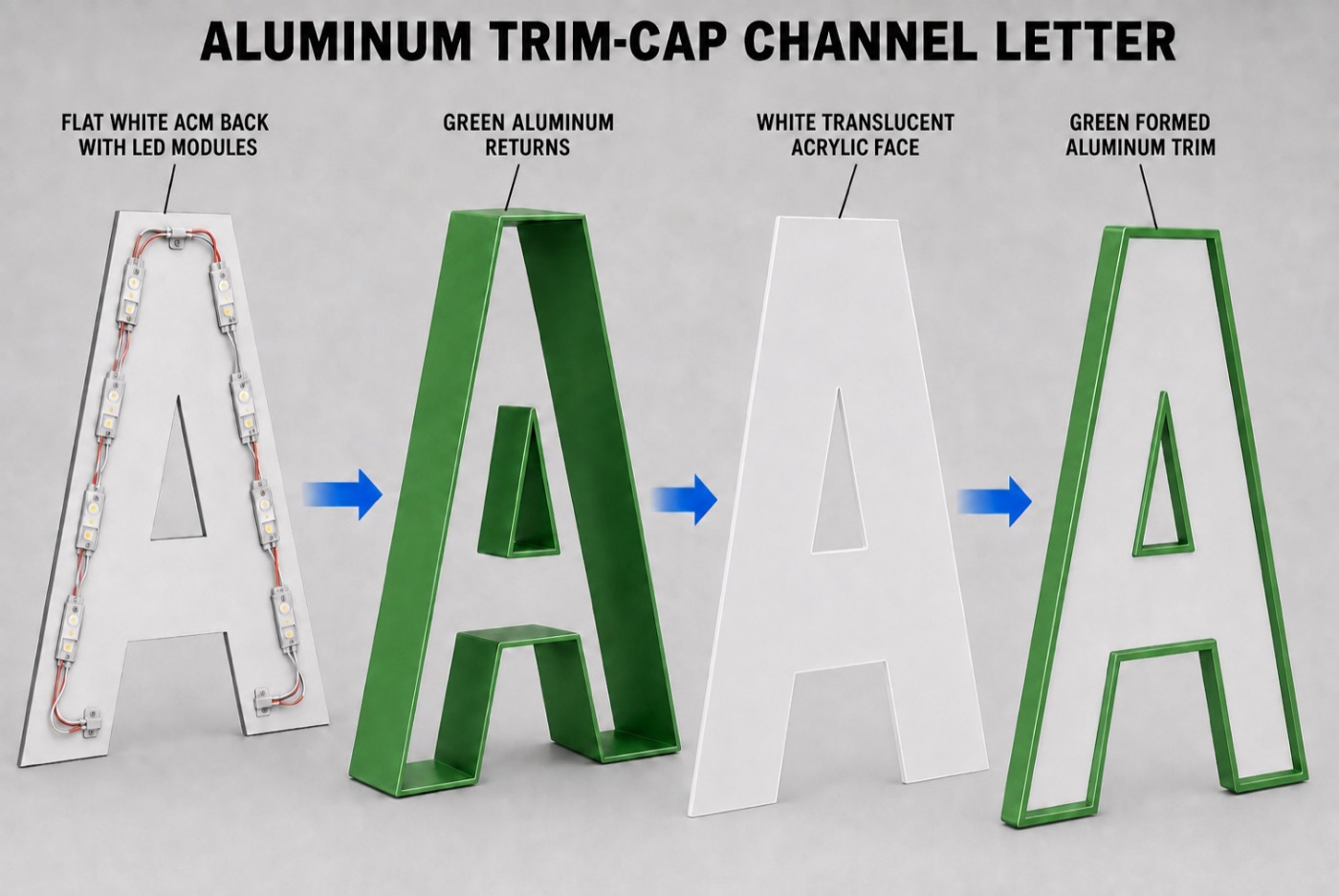
- Aluminum trim — provides a durable, premium appearance
- Trimless extrusion — creates a clean face without a visible trim cap (UL)
- Retainers, clips, screws, or adhesives — used depending on the construction method
5. Illumination and Electrical Components
- LED modules (UL and CSA)
- LED power supplies or drivers (UL and CSA)
- Low-voltage wire and connectors (UL)
- Disconnect switches (UL)
- Bushings and pass-through fittings
- Grounding wire and terminals
- Waterproof electrical connectors
- LED-neon tubing for open-face letters (UL)
6. Assembly Materials
- Aluminum rivets
- Stainless-steel screws
- Structural adhesive
- Acrylic adhesive
- Silicone sealant
- Welding wire or filler material
- Double-sided mounting tape
- Staples for stapled channel-letter construction
- Drain-hole plugs, spacers, and grommets
7. Mounting Materials
- Aluminum raceway or wireway
- Mounting clips and brackets
- Threaded rod and studs
- Concrete, masonry, or structural fasteners
- Spacers for halo-lit letters
- Aluminum mounting patterns
- Sealant for wall penetrations
8. Standard Colors
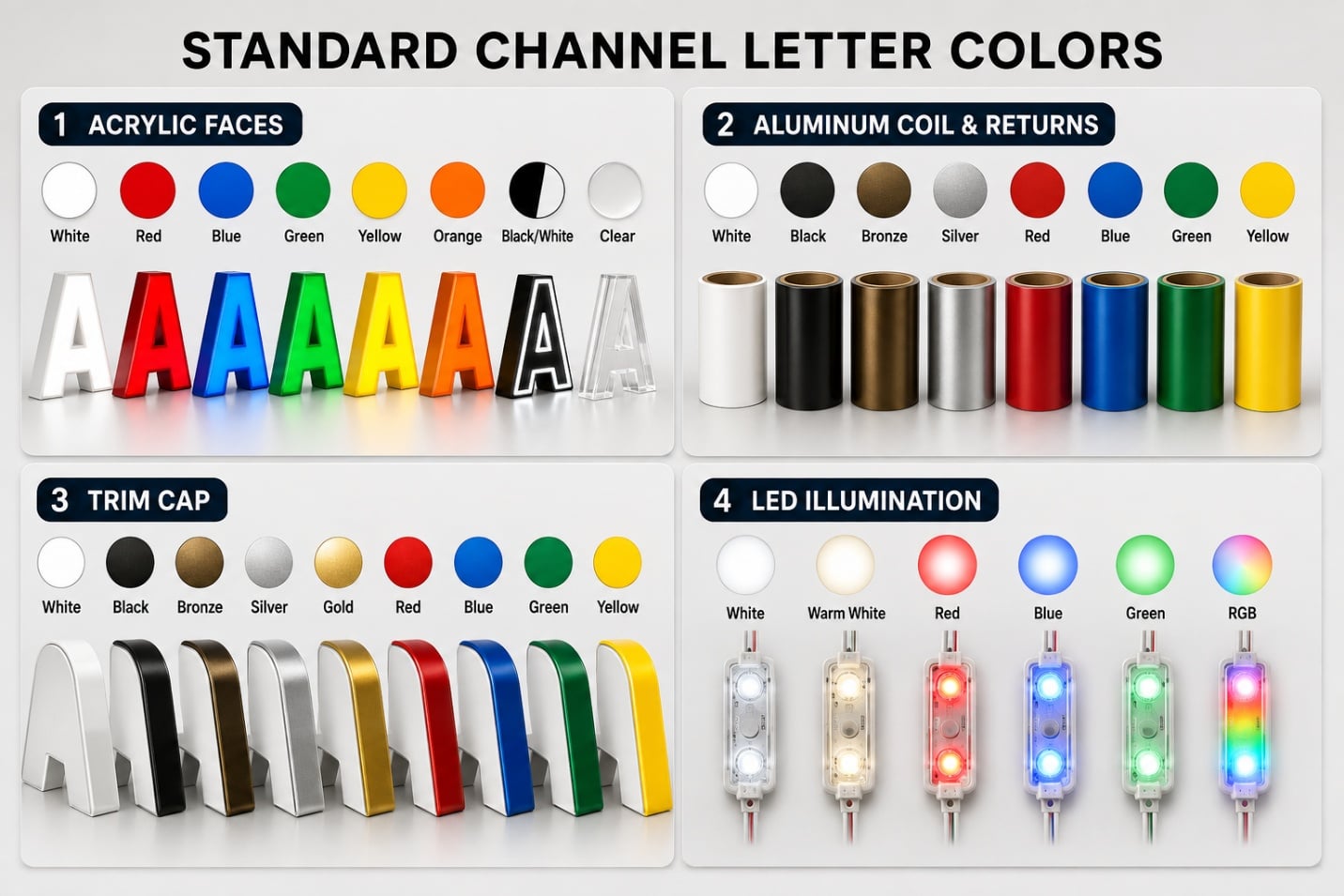
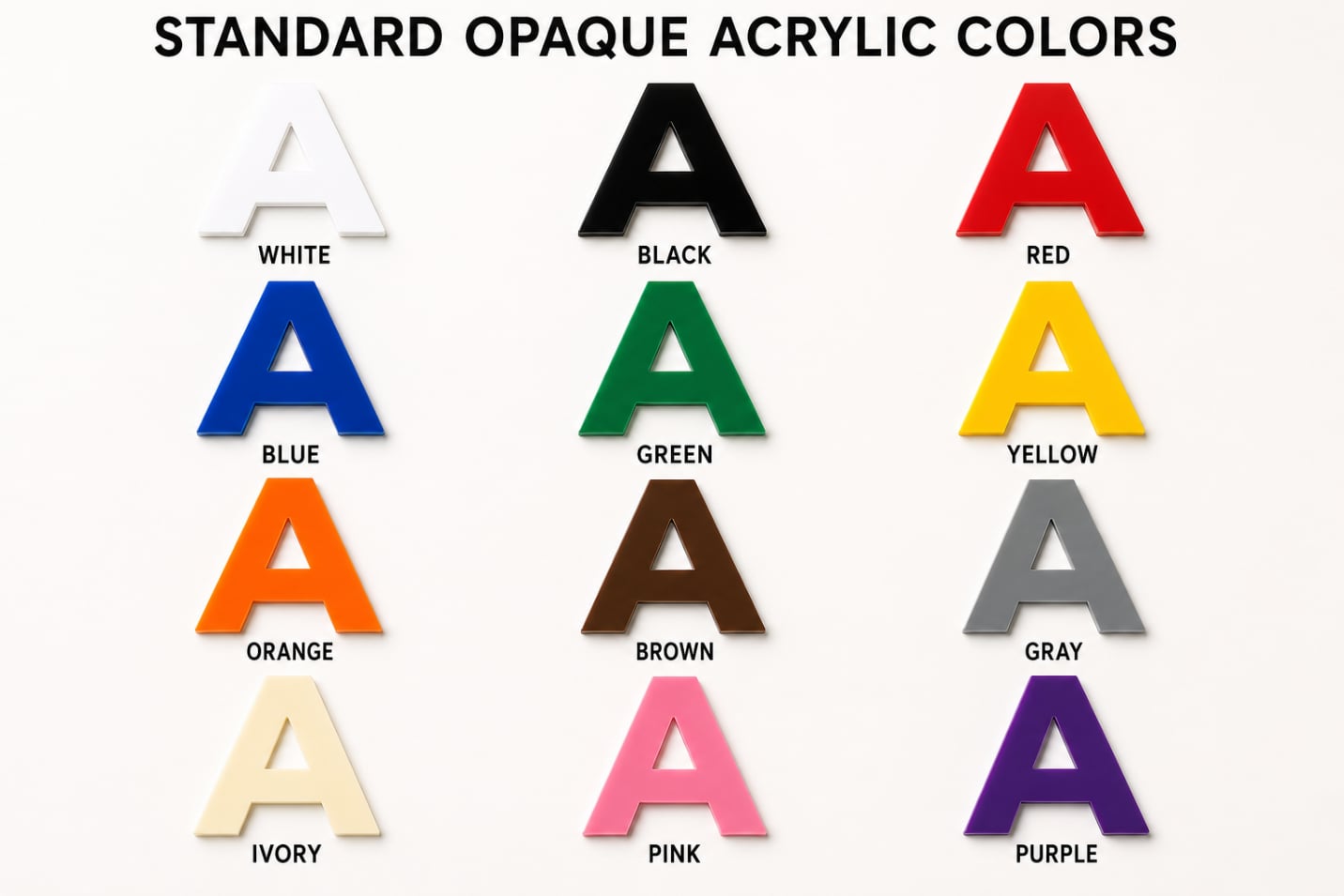
Standard colors: White, black, red, blue, green, yellow, orange, bronze, silver and gold. Custom PMS and brand-color matching are also available. Acrylic-face, return, trim-cap, and LED colors can be combined to create the required daytime and nighttime appearance.
Channel letters are available in almost any color, depending on the face, returns, trim cap, and illumination.
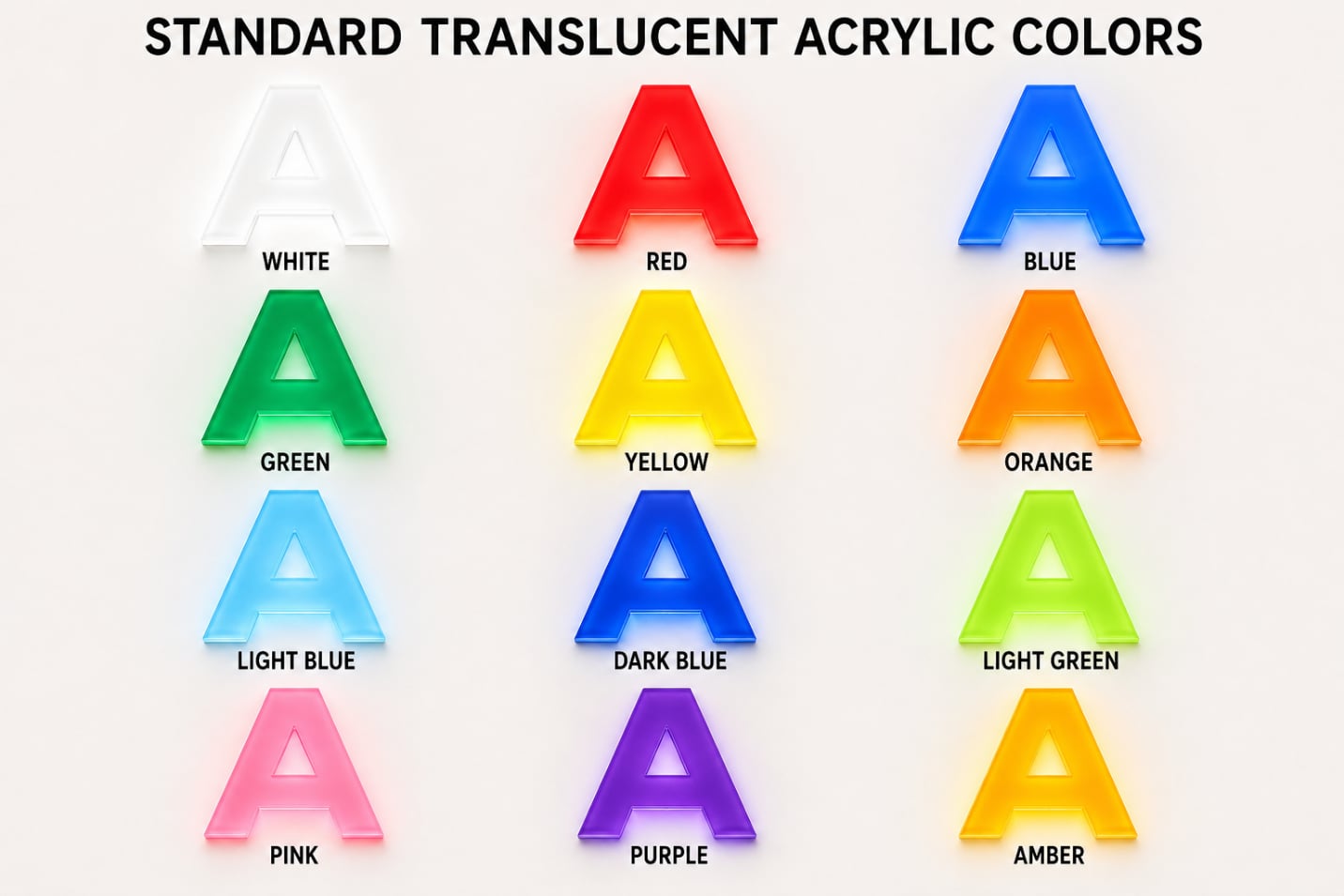
- Acrylic faces — white, red, blue, green, yellow, orange, black, translucent colors, and custom-printed vinyl colors
- Aluminum returns — standard white, black, bronze, silver, red, blue, and custom-painted colors
- Trim cap — common colors include white, black, bronze, red, blue, green, yellow, and silver
- Trimless letters — painted aluminum extrusion can be finished to match the customer's brand
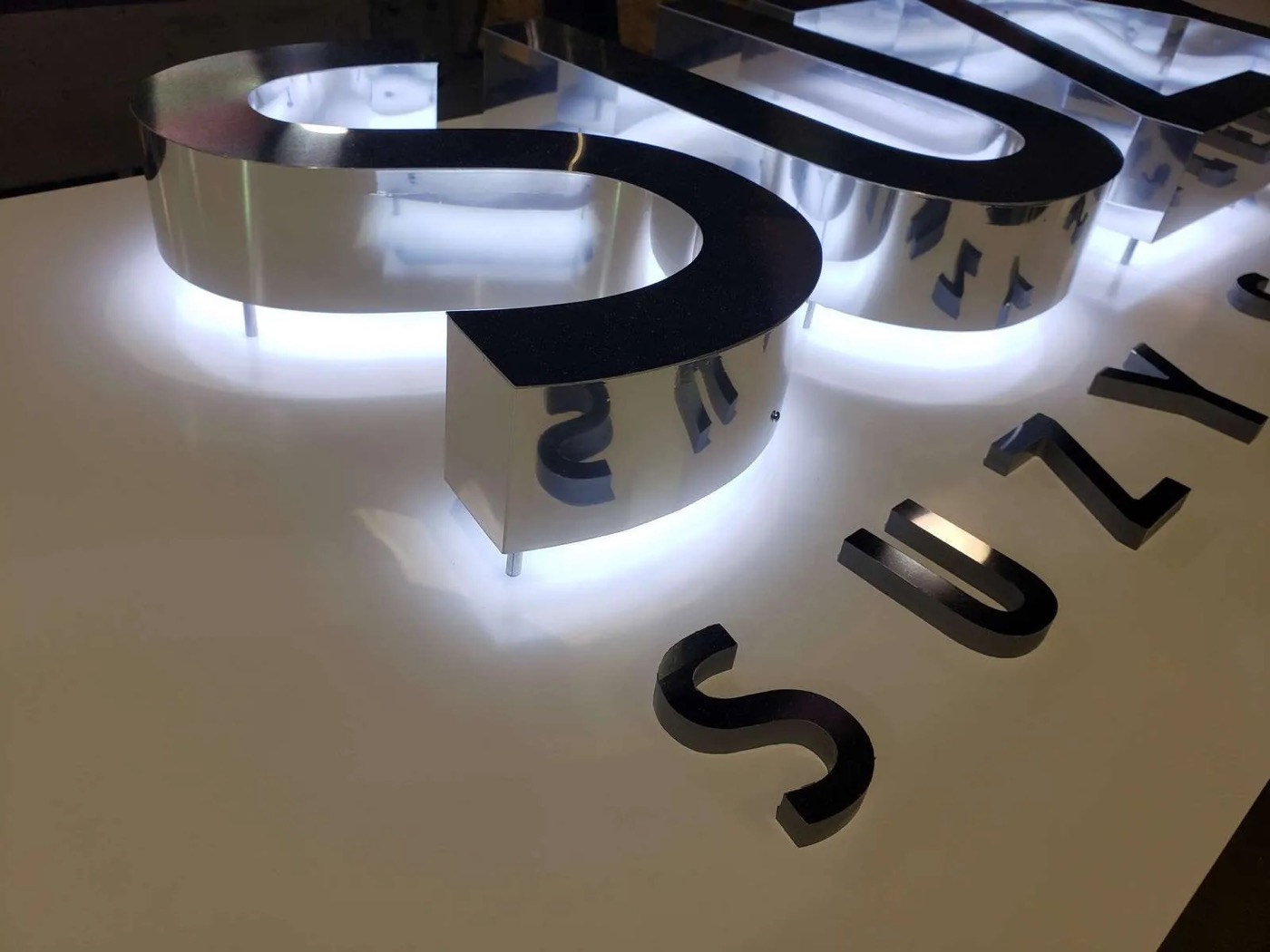
- Stainless steel — brushed silver, polished mirror, gold, rose gold, bronze, black, or custom titanium/PVD finishes
- Halo-lit letters — LED colors include white in different color temperatures, red, blue, green, and RGB color-changing
- Front-and-back-lit letters — the face and halo can use different colors
- Custom colors — PMS, RAL, or a physical paint sample can usually be matched
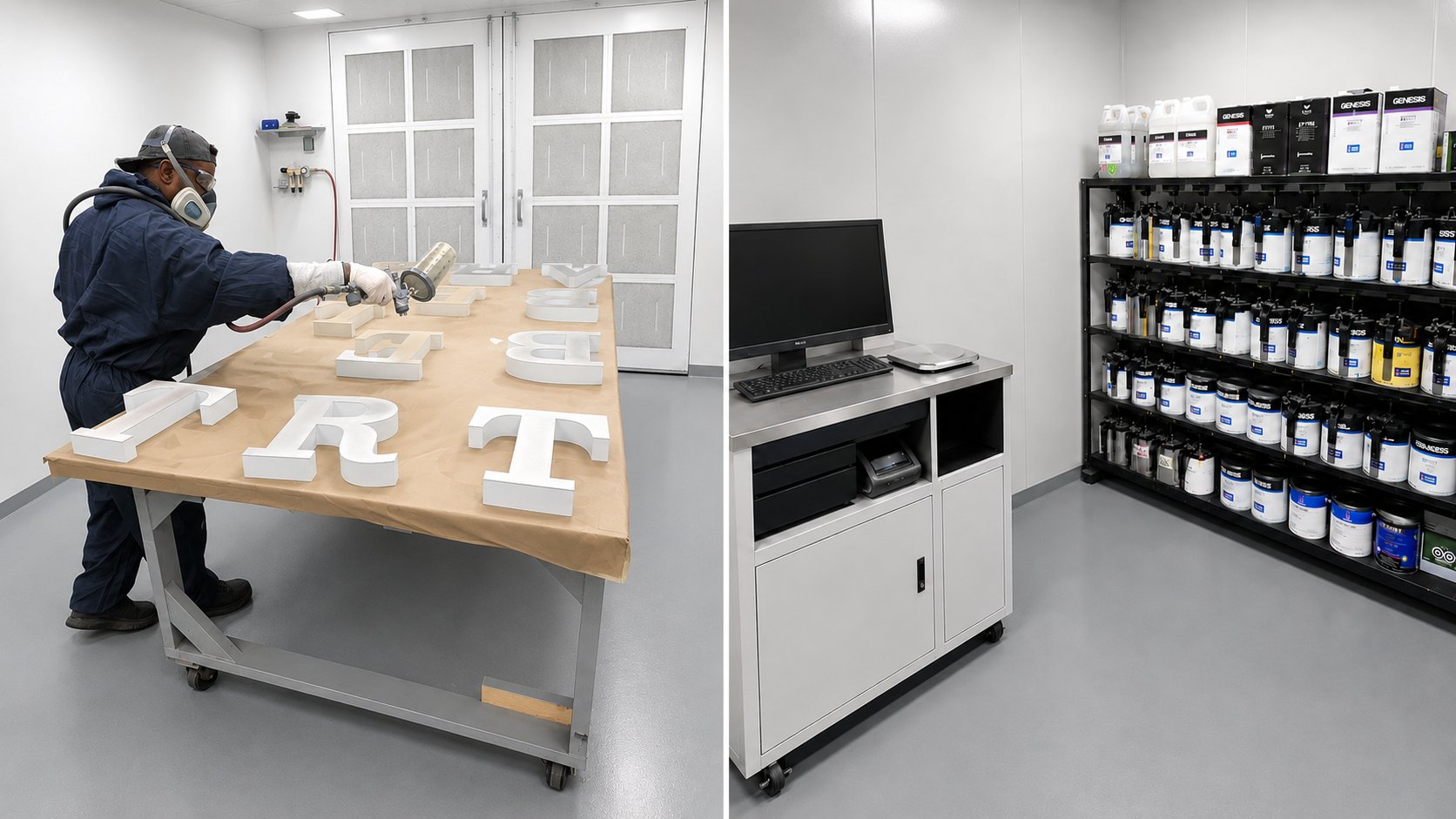
For outdoor channel letters, the selected acrylic, paint, vinyl, and trim should be UV-resistant and rated for exterior use. Exact standard colors depend on the acrylic, coil, trim-cap, and LED suppliers. For more on matching a color correctly and what causes a painted finish to fail outdoors, see Paint and Finish: What Sign Companies Should Know.
Standard Colors by Component
| Component | Standard Colors |
|---|---|
| Acrylic faces | White, red, blue, green, yellow, orange, black/white, clear |
| Aluminum coil/returns | White, black, bronze, silver/mill finish, red, blue, green, yellow |
| Trim cap | White, black, bronze, silver, gold, red, blue, green, yellow |
| LED modules | White, warm white, red, blue, green, and RGB color-changing |
Common illuminated acrylic color numbers include:
- White: 7328, 2447 and 2406
- Red: 2157, 2283 and 2793
- Blue: 2114, 2050 and 2051
- Green: 2108 and 7235
- Yellow: 2037 and 8197
- Orange: 2119
- Black/white: black during the day and illuminated white or another LED color at night
These are widely recognized sign-industry colors, but the exact color number, thickness, and availability vary by manufacturer.
The Most Common Build
The most common front-lit channel letter combines an acrylic face, plastic or aluminum trim, pre-painted aluminum returns, aluminum back, LED modules, and an LED power supply. All materials and electrical components should be selected for the installation environment and in accordance with applicable UL, CSA, NEC, CEC, and local requirements.
For more on what those certifications actually cover, see UL Requirements for Illuminated Signs in the United States and CSA Requirements for Illuminated Signs in Canada.