
We quote far more aluminum channel letters than stainless steel ones, and there is a practical reason for that: aluminum does the job well at a lower cost. Stainless steel earns its place when the finish is part of the design or the site is especially demanding. The right recommendation depends on the project, not on which material sounds more impressive.
The Core Difference
| Feature | Aluminum | Stainless Steel |
|---|---|---|
| Typical role | Standard letter returns and backs on most builds | Premium architectural finish — face, returns, or both |
| Common thickness | 0.040" for standard returns, 0.063" for larger or heavier-duty letters | Selected by construction method — thin for solid laser-cut, heavier for fabricated letters |
| Construction styles | Formed returns on standard front-lit, trimless, or halo-lit letters | Thin solid laser-cut letters, or deeper fabricated letters with laser-welded faces and returns |
| Corrosion resistance | Good for standard exterior use | Excellent — 316 grade recommended for coastal or salt-air environments |
| Finish options | Painted to any brand color | Brushed satin, polished mirror, titanium gold, rose gold, bronze, black, or custom-painted |
| Typical applications | Storefront, restaurant, and shopping center signage | Corporate headquarters, hotels, financial institutions, luxury retail, interior feature walls |
Aluminum: The Economical Standard
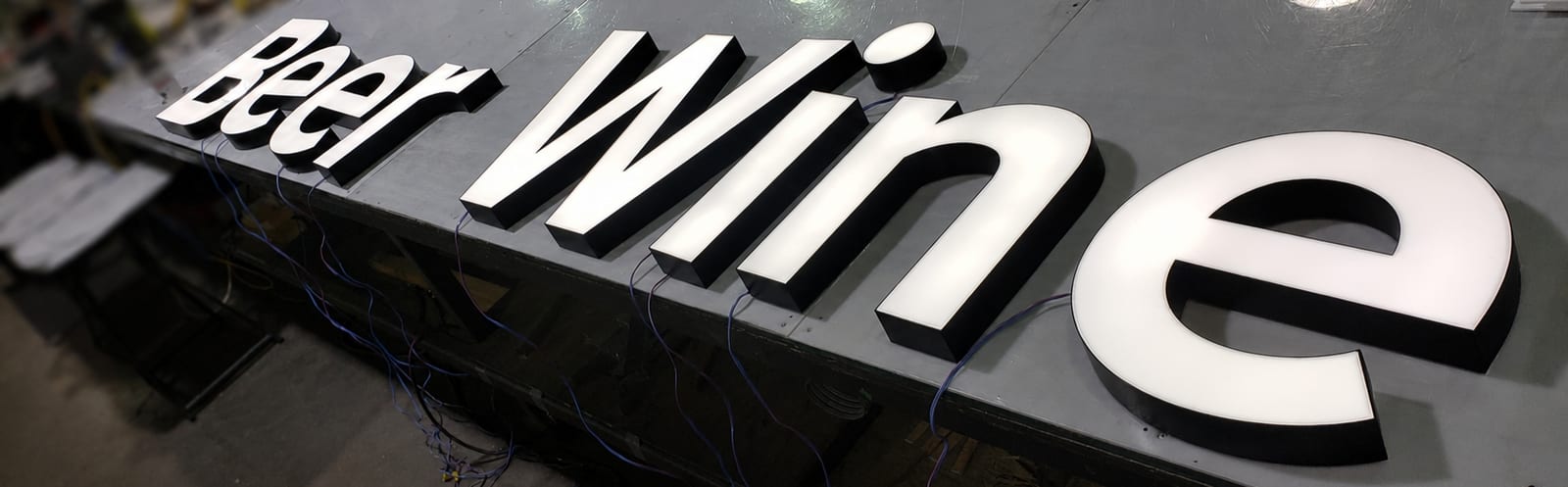
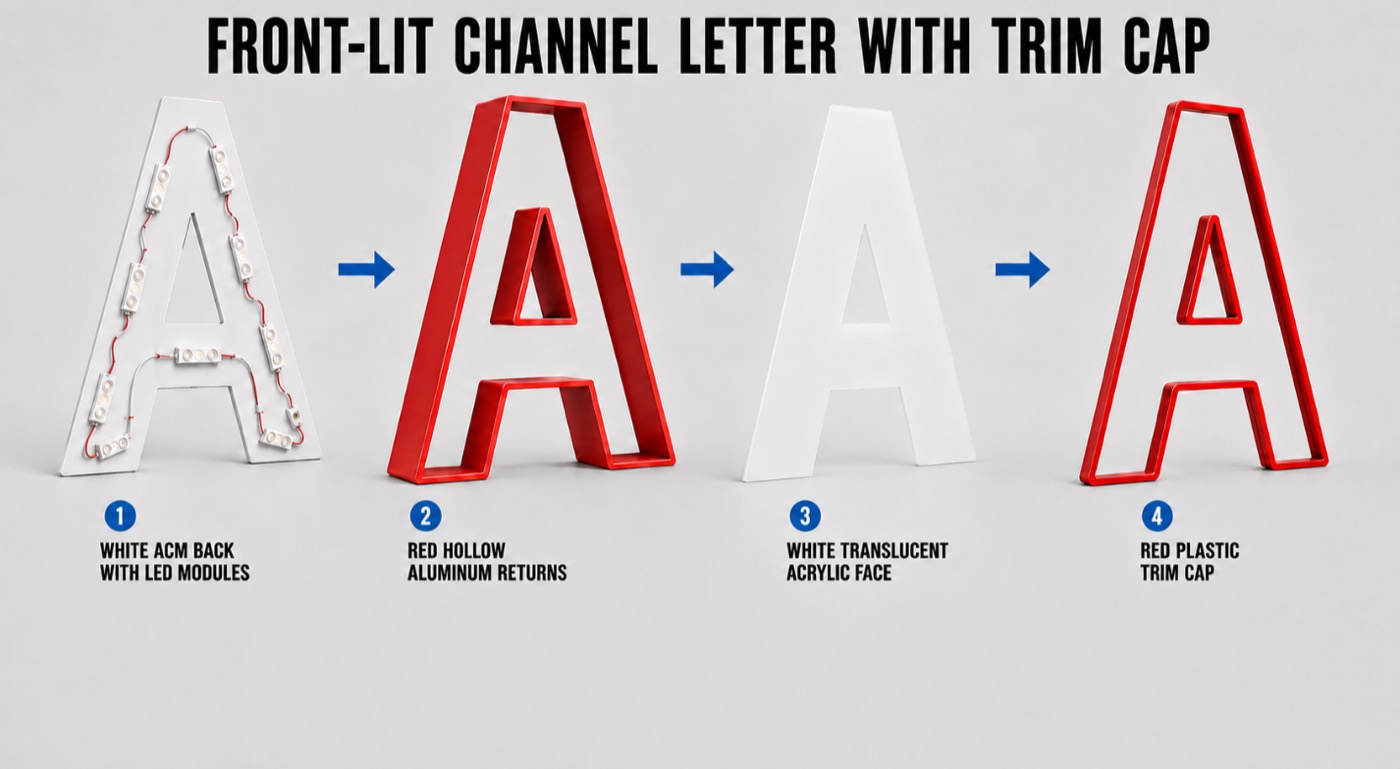
Most front-lit channel letters are built with aluminum backs and formed aluminum returns — typically 0.040" for standard letters and 0.063" for larger or heavier-duty construction, with thickness selected based on letter height, return depth, and wind exposure. Aluminum takes paint in any brand color, holds up well in standard exterior conditions, and is the material behind the majority of storefront, restaurant, and shopping center signage. It's the right default unless the project specifically calls for a metal face finish.
Stainless Steel: The Premium Architectural Upgrade
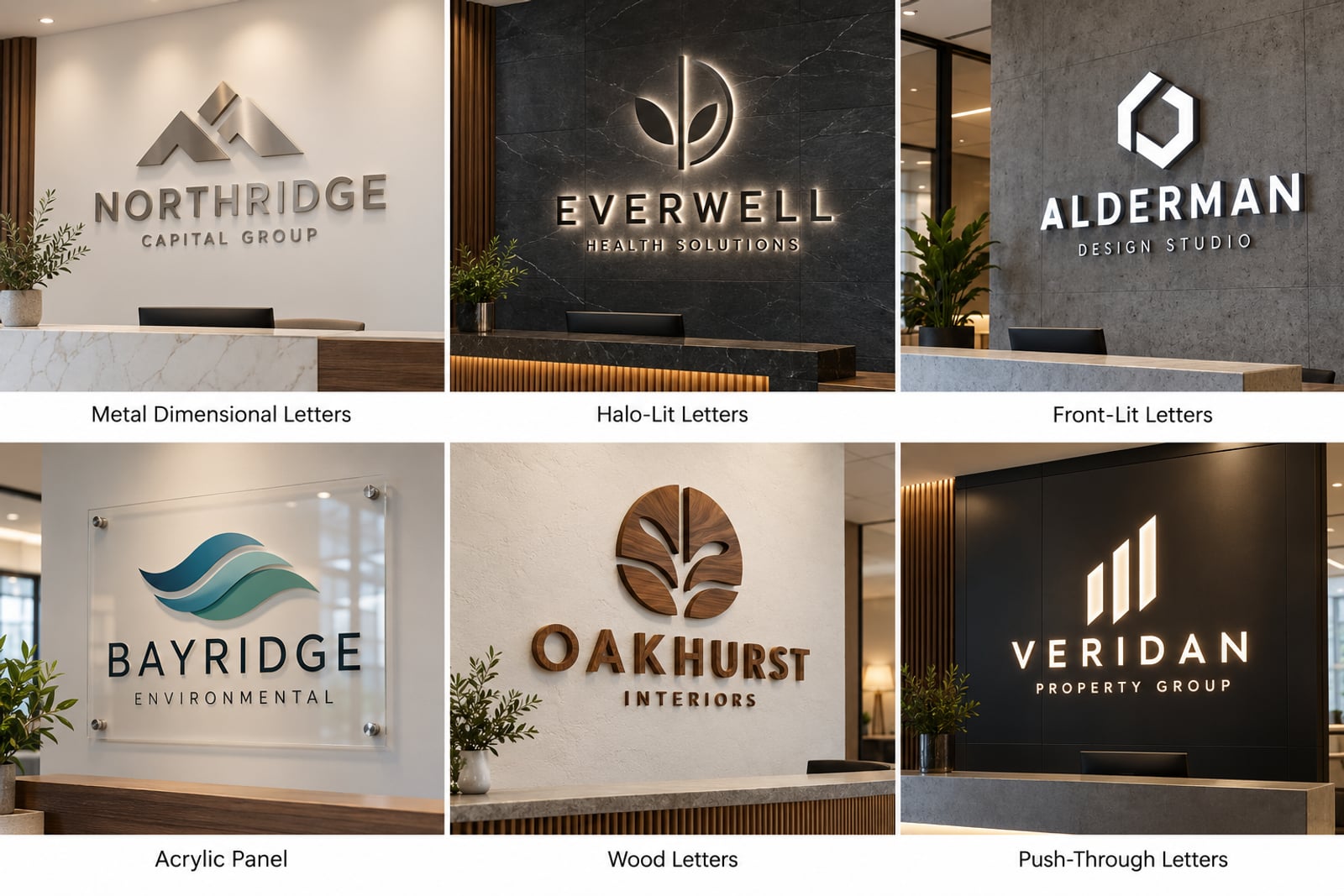
Stainless steel letters are specified when the finish itself needs to read as premium — brushed satin, polished mirror, titanium gold, rose gold, bronze, black, or a custom-painted surface. Two grades are available: 304 for most installations, and 316 for coastal or high-corrosion environments exposed to salt air. Construction ranges from thin, solid laser-cut letters for a sleek, modern look, to deeper fabricated letters with precision laser-welded faces and returns for more dimension — and fabricated stainless letters can be built with reverse halo lighting for an elegant glow behind the sign. This is the material of choice for corporate headquarters, hotels, financial institutions, luxury retail, and interior feature walls, where the metal finish itself is part of the brand statement.
Which One Should You Quote?
If the customer's brand doesn't require a visible metal finish, aluminum with a painted face delivers the same illuminated result at a lower cost — it's the standard for a reason. If the project is a flagship location, a corporate headquarters, or anywhere the sign needs to convey prestige through its material as much as its illumination, stainless steel is worth the upgrade. For coastal sites specifically, 316-grade stainless is worth flagging regardless of which look the customer prefers, given the corrosion-resistance gap versus standard aluminum.
Aluminum vs. Stainless-Steel Channel Letters FAQ
Is stainless steel more expensive than aluminum for channel letters?
Generally, yes — stainless steel construction, especially deeper fabricated letters with laser-welded faces and returns, costs more than standard aluminum. The difference reflects material cost, fabrication complexity, and the premium architectural finish stainless steel delivers.
What stainless steel grades are available?
304 and 316 grade are both available. 304 is the standard choice for most installations; 316 is recommended for coastal or high-corrosion environments exposed to salt air.
Can both materials be illuminated the same way?
Both support front-lit and reverse halo-lit construction. Fabricated stainless steel letters can incorporate reverse halo lighting for a soft glow behind the letters, in addition to standard front-lit or non-illuminated construction.