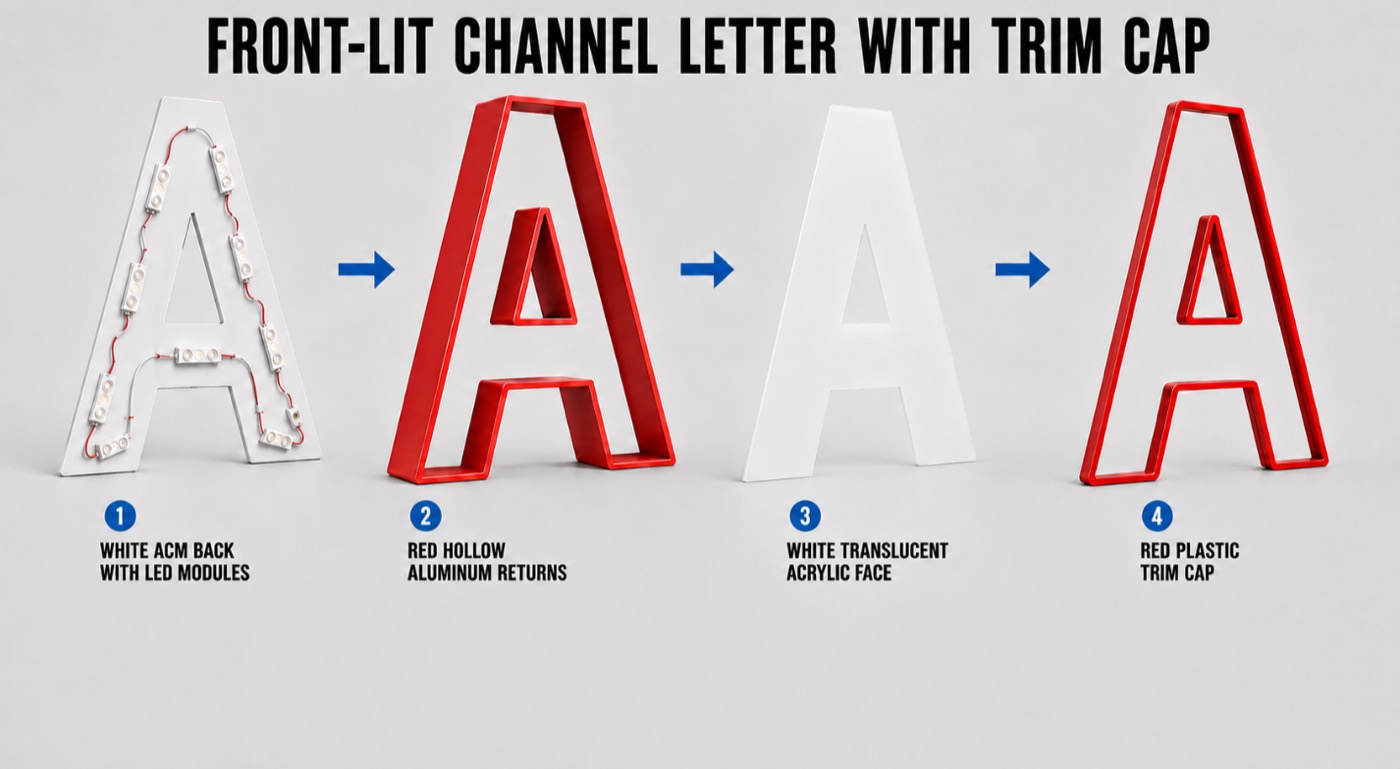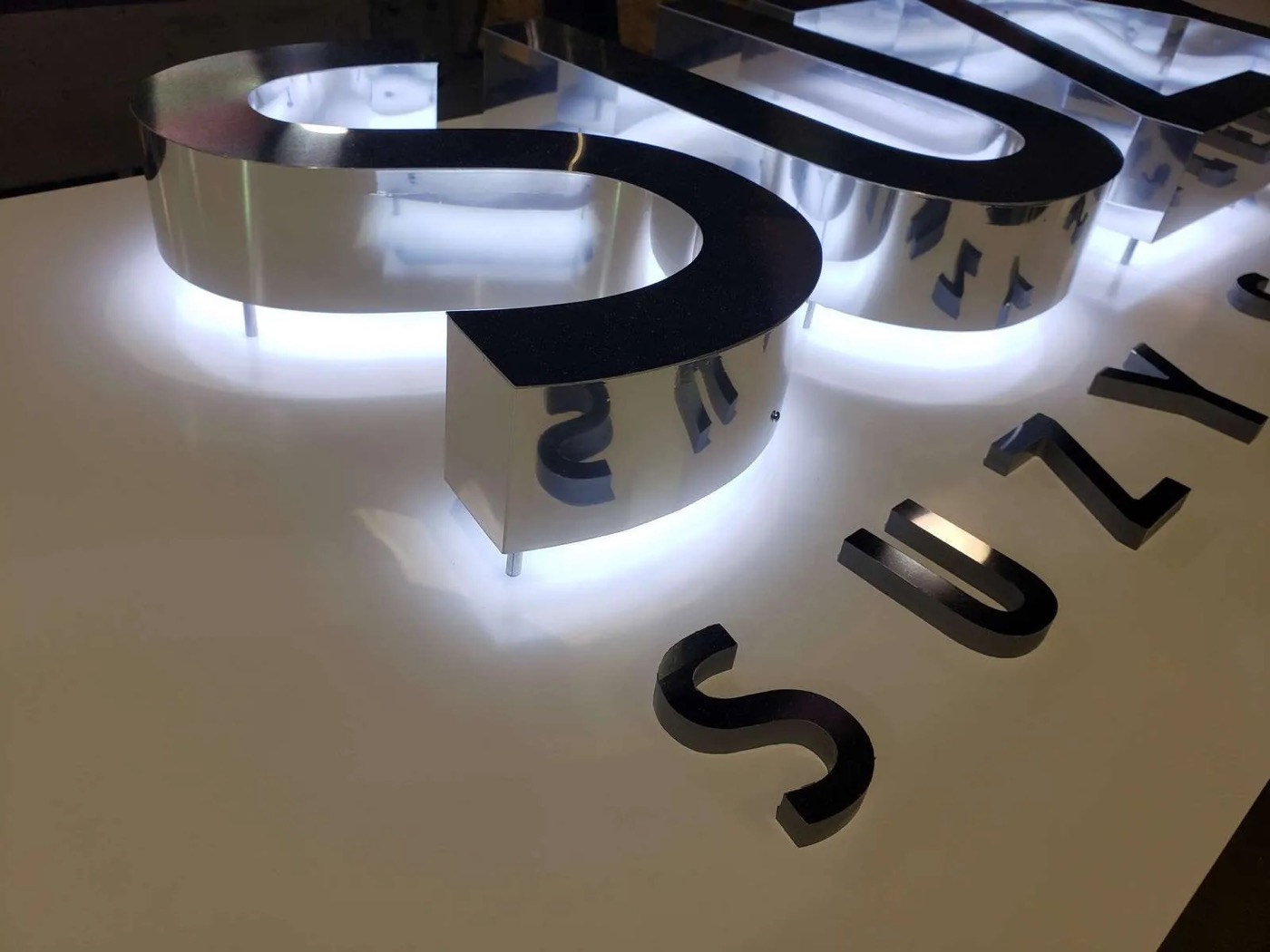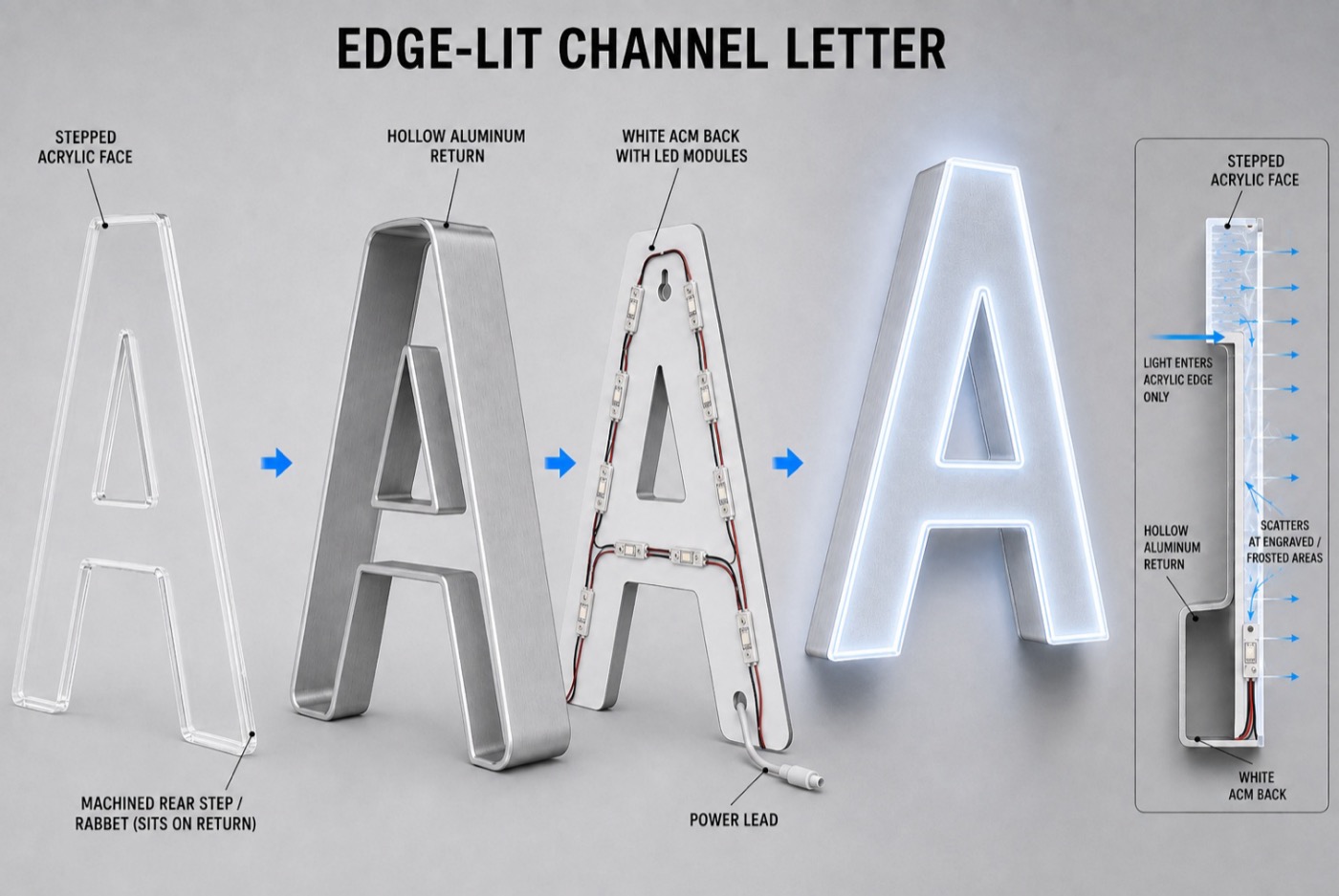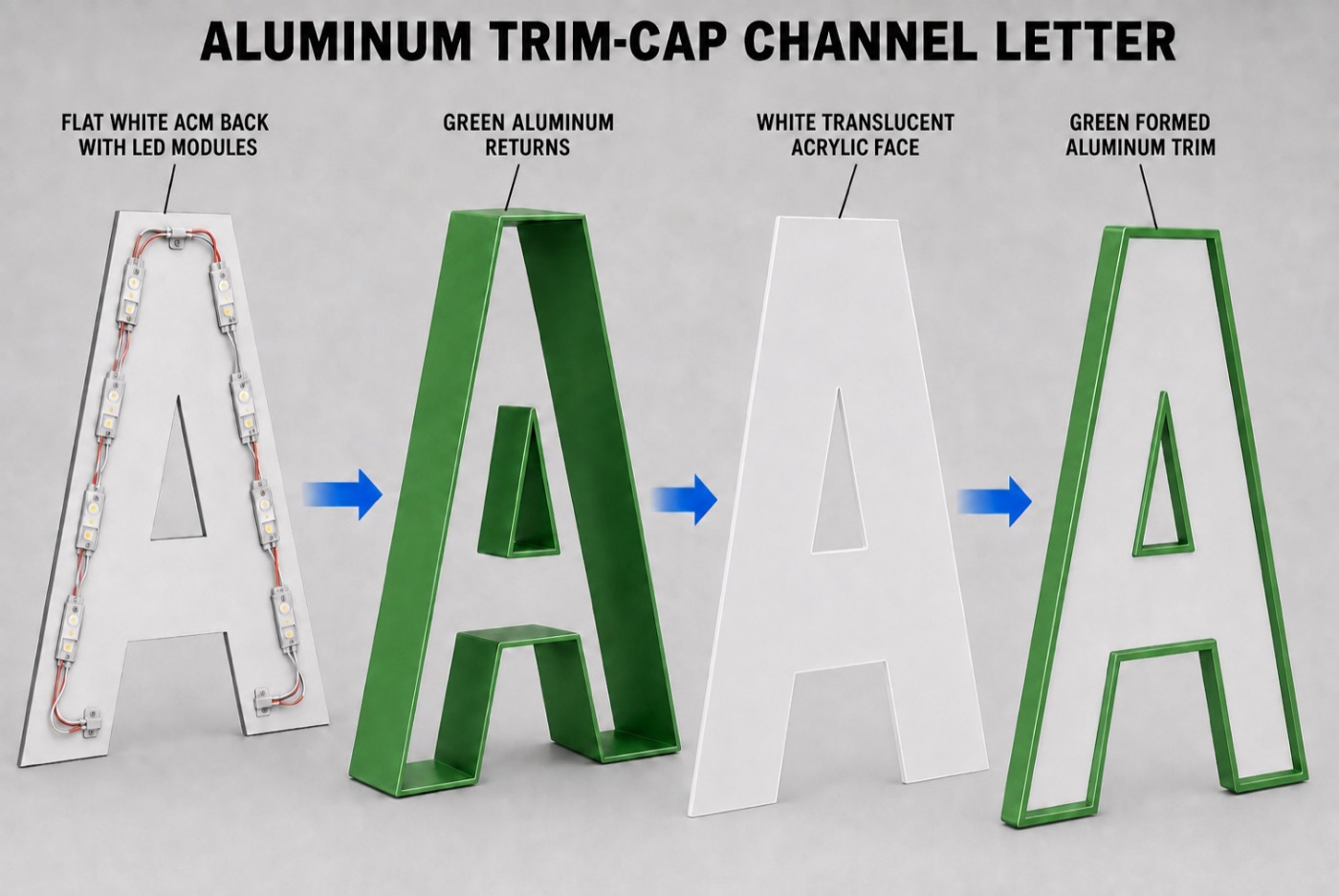

The right sign material depends on where the sign will be installed, how it should look, and how long it needs to last. A polished lobby sign and an outdoor storefront sign can share the same logo and still face very different conditions. Settling the material early keeps appearance, fabrication, installation, and long-term cost pointing in the same direction.
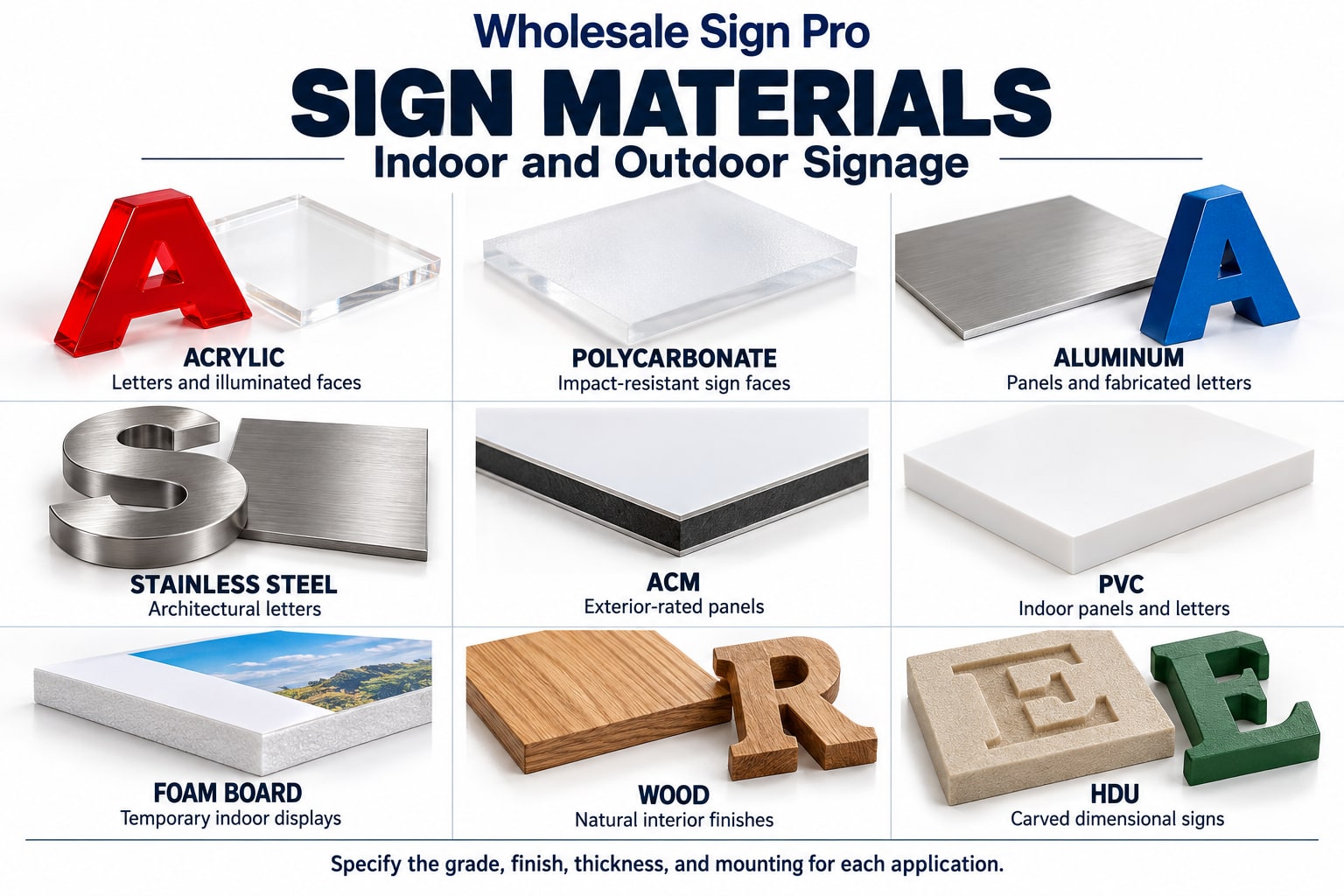
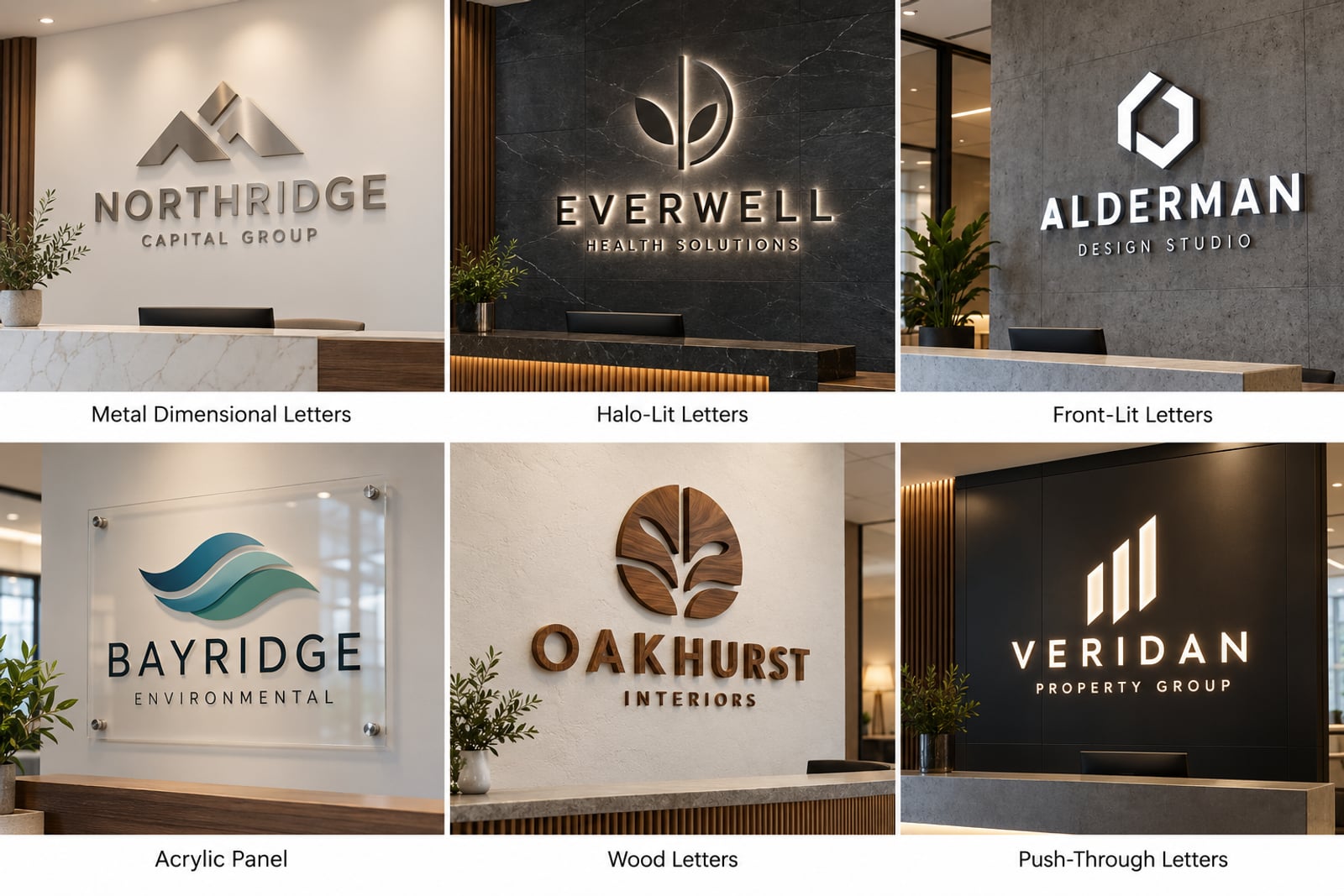
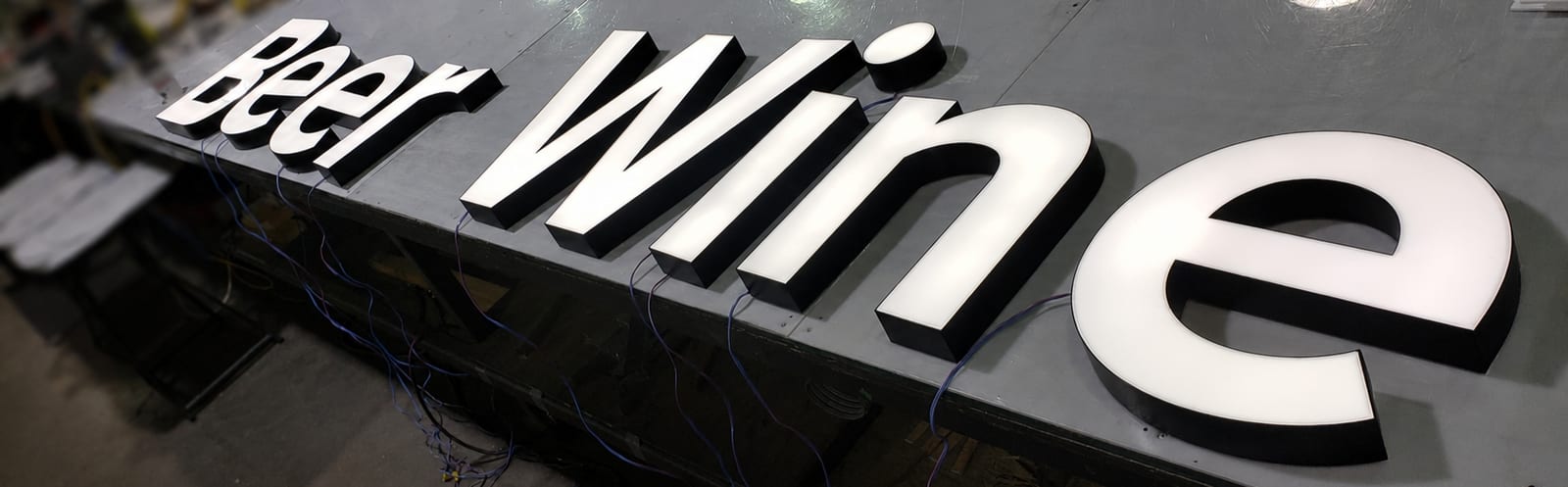
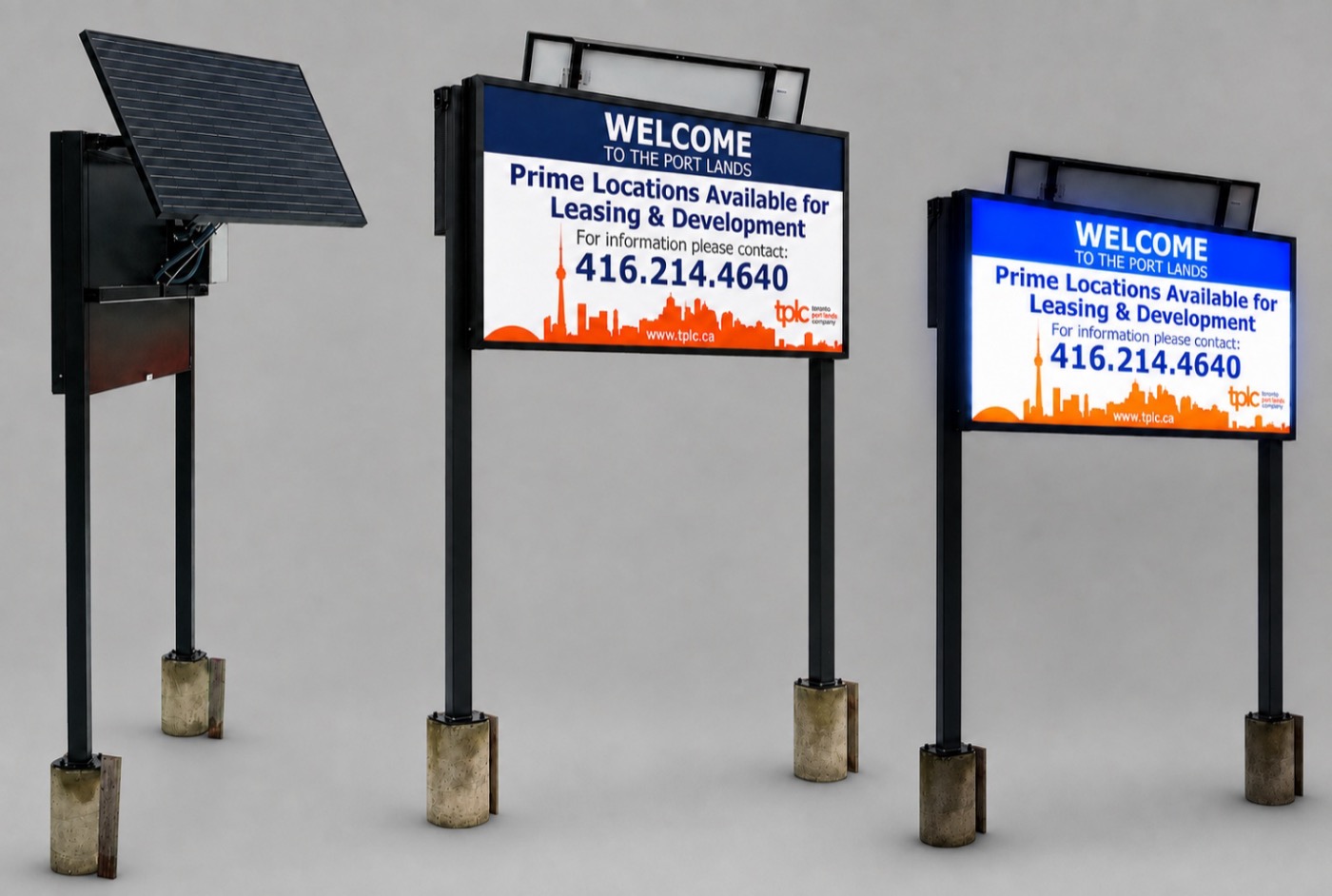
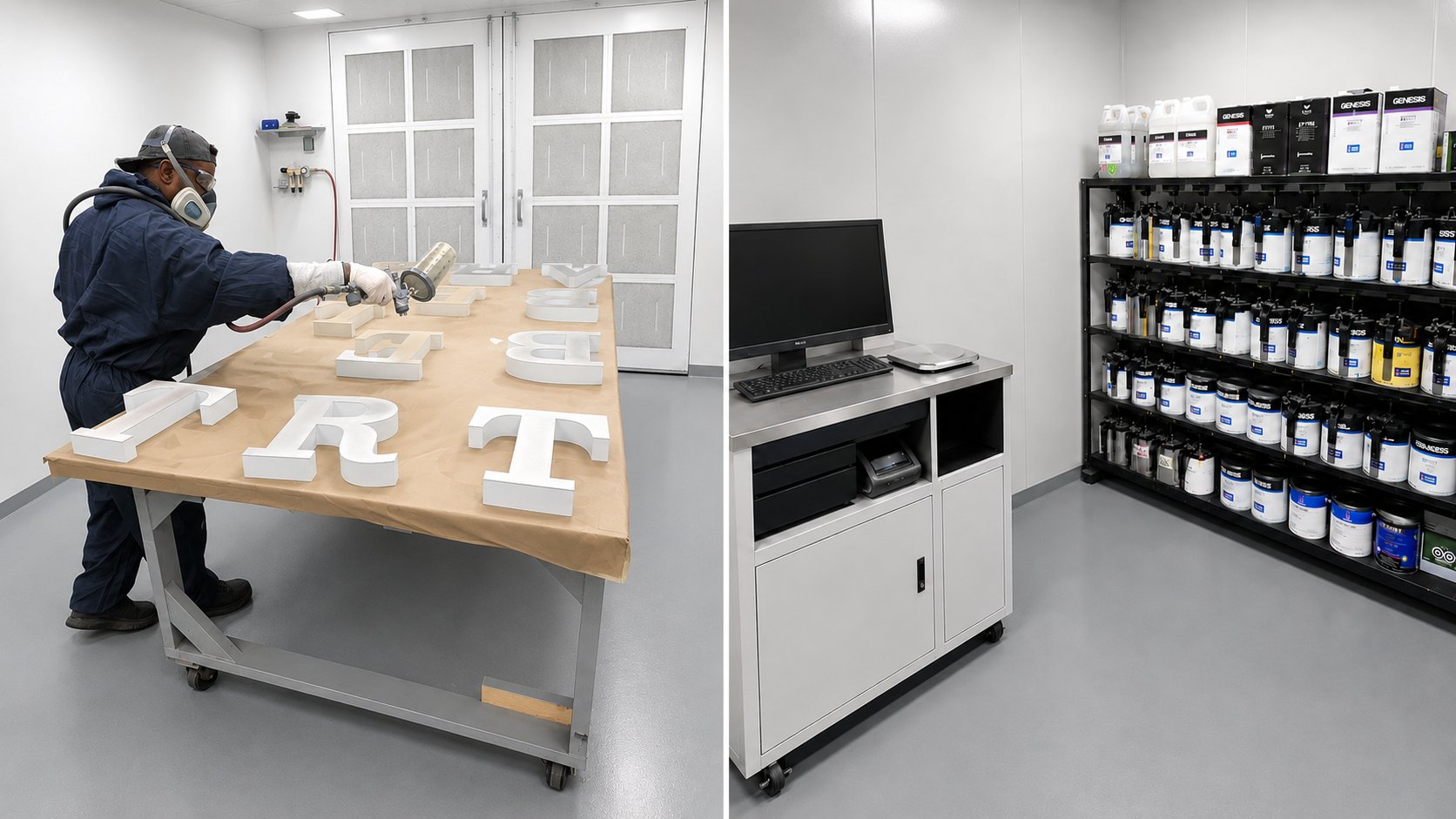
Common sign materials, indoor and outdoor. Specify the grade, finish, thickness, and mounting for each application.
Start With the Location and Purpose
Before choosing a material, think about sunlight, moisture, temperature swings, cleaning, and how likely the sign is to get hit. Indoors, appearance and finish usually lead the decision. Outdoors, the material, coating, graphics, supports, and attachment method all have to work together to survive exposure.
Decide on the service life, too. A short-term promotional display needs a different specification than permanent building identification. Sign size, viewing distance, illumination, mounting surface, and budget should be settled before production starts.
Materials for Indoor Signs
Acrylic
Acrylic gives a clean look in a wide range of colors, which is why it's so common for reception signs, dimensional letters, and illuminated faces. Match the thickness and the mounting method to the size and design.
Aluminum and Stainless Steel
Aluminum suits painted or metallic letters and panels. Stainless steel can give a premium brushed or polished look. Weigh the finish against weight, handling, and attachment requirements, not just the visual effect. Our comparison of aluminum and stainless steel goes deeper, and our indoor lobby signs show both in use.
PVC and Display Boards
PVC works for economical indoor panels and dimensional elements. Foam board and paper-based boards suit temporary displays where light weight and print quality matter. Specify the product for the environment it's going into, because boards that look alike don't all perform alike.
Wood
Wood brings a warm, natural look. Its finish and construction need to account for humidity, cleaning, and where it's installed, and getting consistent color and grain may mean approving samples first. Wood dimensional letters are one of our lobby sign styles.
Materials for Outdoor Signs
Aluminum
Aluminum is a common choice for outdoor panels and fabricated letters. Panel size, thickness, framing, and mounting have to be chosen together, and good surface preparation and finishing keep it looking the way it should. We cover that side in paint and finish for channel letters and signs.
Aluminum Composite Material (ACM)
Exterior-rated aluminum composite material, usually called ACM, gives a smooth surface for printed or applied graphics. Grades differ, so confirm that the one you're specifying is rated for exterior use, then choose the right support, edge treatment, and attachment.
Acrylic and Polycarbonate
Sign-grade acrylic is popular for its appearance and light transmission in illuminated signs. Polycarbonate is the usual candidate where impact resistance matters most. Specify an outdoor grade, with UV protection where required, and leave room for the material to expand. The full comparison is in acrylic vs. polycarbonate channel letter faces.
Stainless Steel
Stainless steel can give outdoor letters and signs an architectural finish. Choose the grade and finish for the exposure, especially near salt or other corrosive conditions. Design and maintenance affect the result too.
High-Density Urethane (HDU)
High-density urethane, or HDU, is used for carved and dimensional signs. A complete specification covers the coating system, any reinforcement or support, and the mounting details. The material alone doesn't determine how long the sign lasts.
Match the Material to the Application
These pairings are starting points. Material grade, thickness, construction, and installation still have to work together.
| Application | Materials to Consider | Selection Factors |
|---|---|---|
| Reception and lobby signs | Acrylic, aluminum, stainless steel | Finish, weight, dimensional appearance, mounting |
| Indoor directional signs | Acrylic, aluminum, PVC | Readability, cleaning, traffic, budget |
| Temporary indoor displays | Foam board or paper-based display board | Short service life, print quality, portability |
| Outdoor building panels | Aluminum or exterior-rated ACM | Weather exposure, panel size, support, graphics |
| Illuminated channel letter faces | Sign-grade acrylic or suitable polycarbonate | Light transmission, impact resistance, color |
| Reverse halo channel letters | Aluminum or stainless steel with a suitable light-transmitting back | Finish, mounting distance, halo appearance |
| Carved dimensional signs | HDU with an appropriate coating system | Detail, finish, mounting, exposure |
Illumination Changes the Specification
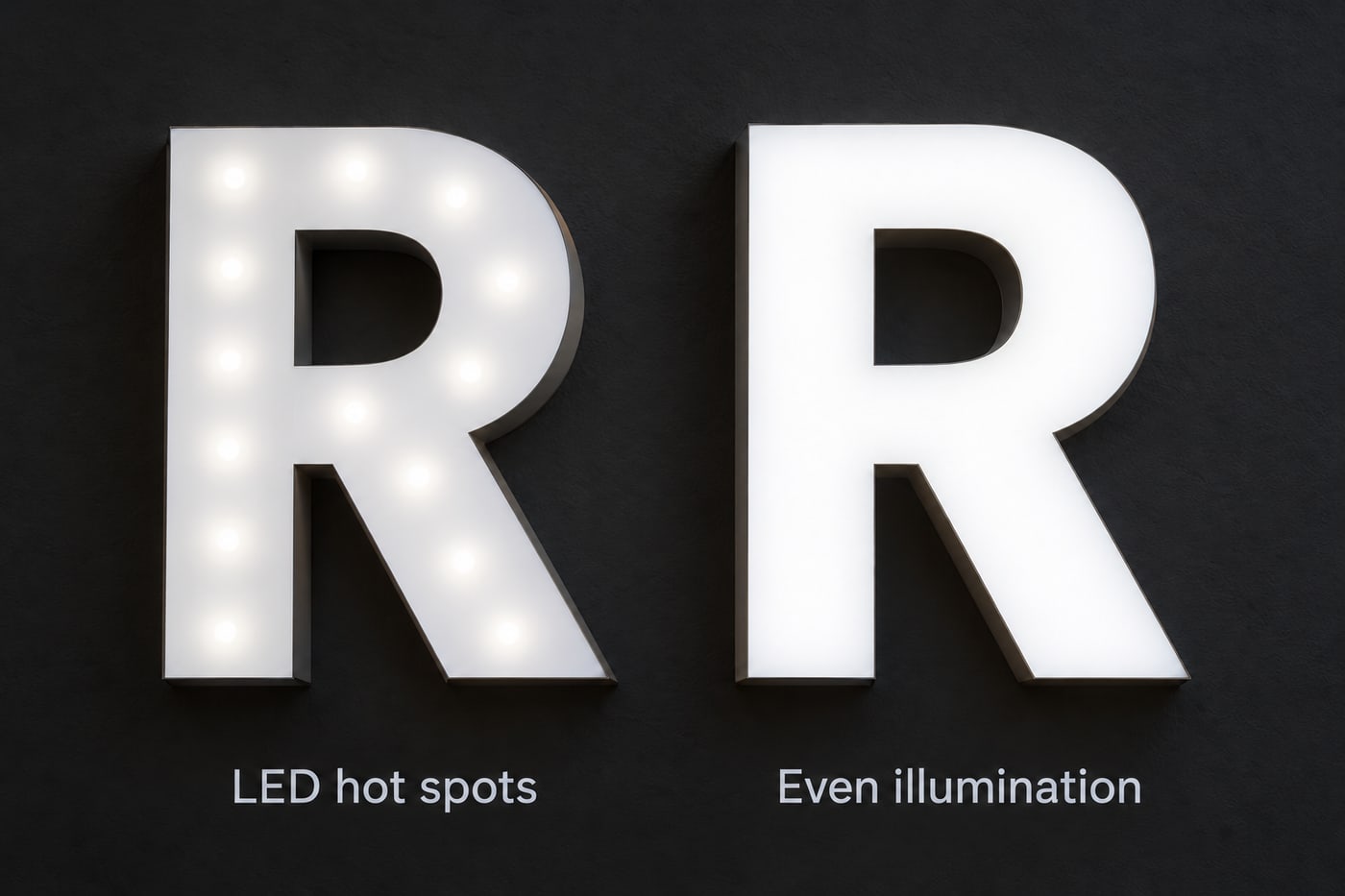
An illuminated face has to spread light evenly as well as show the right color. A sample that looks good in daylight can look quite different once it's lit. Face material, LED placement, letter depth, and the interior finish all affect the result. For tricky colors or unusual designs, an illuminated sample can show bright spots, shadows, and color shifts before production. If you're already seeing them, how to eliminate LED hot spots in channel letters walks through the fixes, and our guide to choosing the right LEDs covers the module side.
Finishes, Graphics, and Mounting Matter
A durable substrate can still end up as a disappointing sign if the finish, graphics, or installation are wrong for it. Match paints, films, adhesives, and coatings to the surface and the exposure. Allow for thermal movement and drainage where they apply, and confirm the wall construction and attachment method before anything is manufactured.
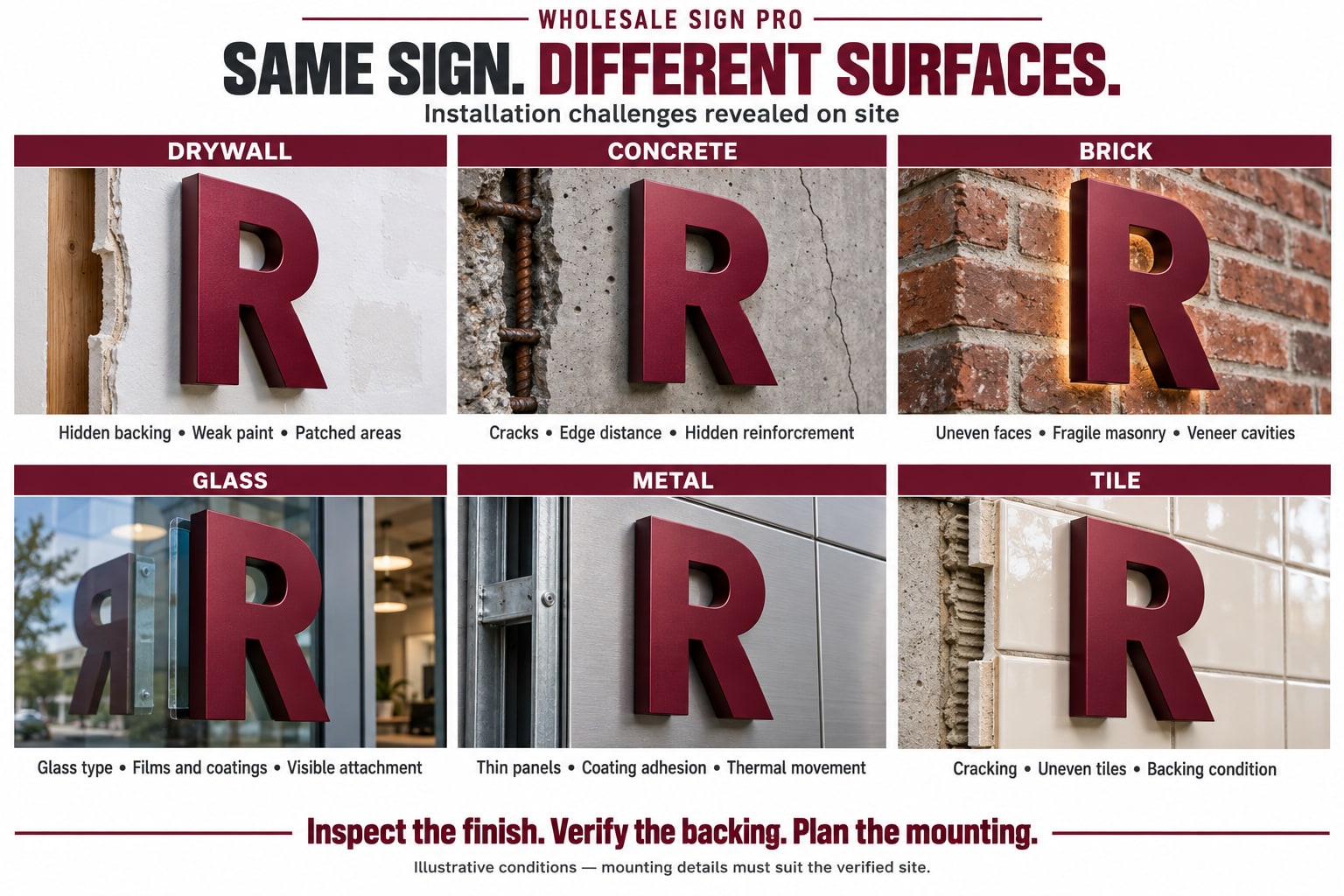
Drywall, concrete, brick, glass, metal, and tile all present different installation conditions. Photographs, wall details, and access information sent early save a lot of trouble in fabrication and on site, and our guide to sign installation challenges by wall surface shows what to look for on each.
Plan the Material Before You Finalize the Design
At Wholesale Sign Pro, choosing the material is part of turning a design into a sign we can build. When you're preparing a project, the details that help most are the artwork, dimensions, installation location, mounting surface, illumination requirements, colors and finishes, expected service life, and budget. Send those early and the material choice usually becomes straightforward. We can work with all of the materials covered here, and the final call is yours and your customer's. This guide is meant to help you talk through the options, not to steer anyone toward one of them. When you're ready, request a quote and tell us which materials you're considering.
For the materials inside a channel letter specifically, from faces and returns to trim and LEDs, see materials used to make channel letters.
Sign Materials FAQ
Can indoor sign materials be used outdoors?
Don't assume an indoor product is suitable outside because it resembles an exterior one. Foam board, paper-based boards, and some plastics can deteriorate when exposed to moisture, sunlight, or temperature changes. Verify the manufacturer's stated application and outdoor suitability.
Is a thicker sign material always better?
No. Thickness alone doesn't determine performance. Large panels may need framing or extra supports, while smaller letters may perform well in thinner material. Consider dimensions, mounting points, exposure, fabrication, and weight, because extra thickness can add cost without solving the actual problem.
How do I compare the value of different sign materials?
Compare the complete installed cost: fabrication, finishing, hardware, installation, maintenance, and replacement. Economical materials may suit temporary promotions, while permanent branding can justify a more durable construction over its intended service life.
What should I send before a material is chosen?
Artwork, dimensions, installation location, mounting surface, illumination requirements, colors and finishes, expected service life, and budget.