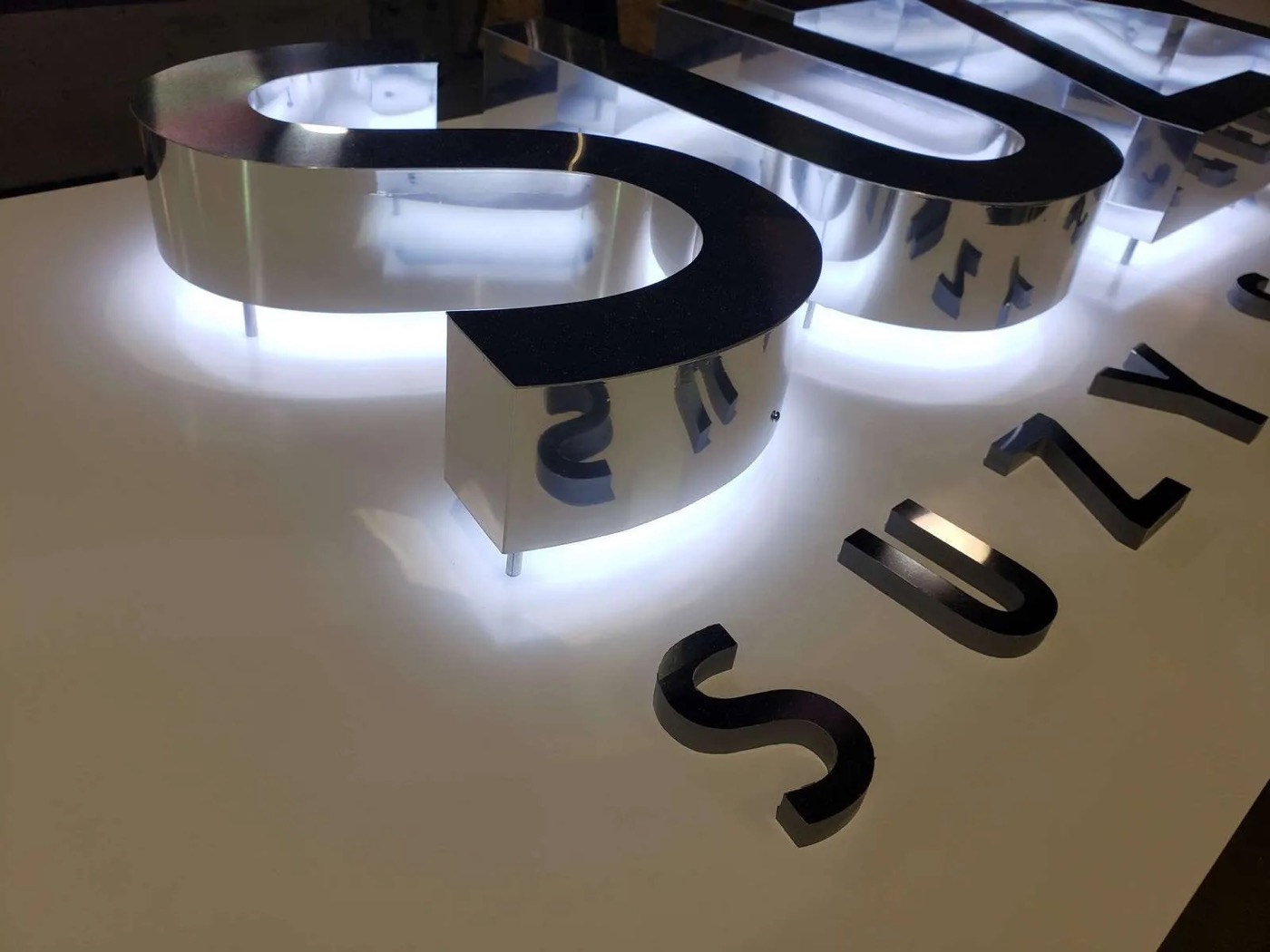

A client's brand team almost always checks color first. Paint, meanwhile, is usually the last thing anyone thinks about — until it fails. A mismatched return color, a chalky finish after one summer, a trim cap peeling at the seam: these are the problems that make a sign company's phone ring, not the manufacturer's. Here's what actually matters about paint and finish on a channel-letter or custom sign order, and what's worth asking your manufacturer before the job goes into production.
Paint Is Doing More Than Providing Color
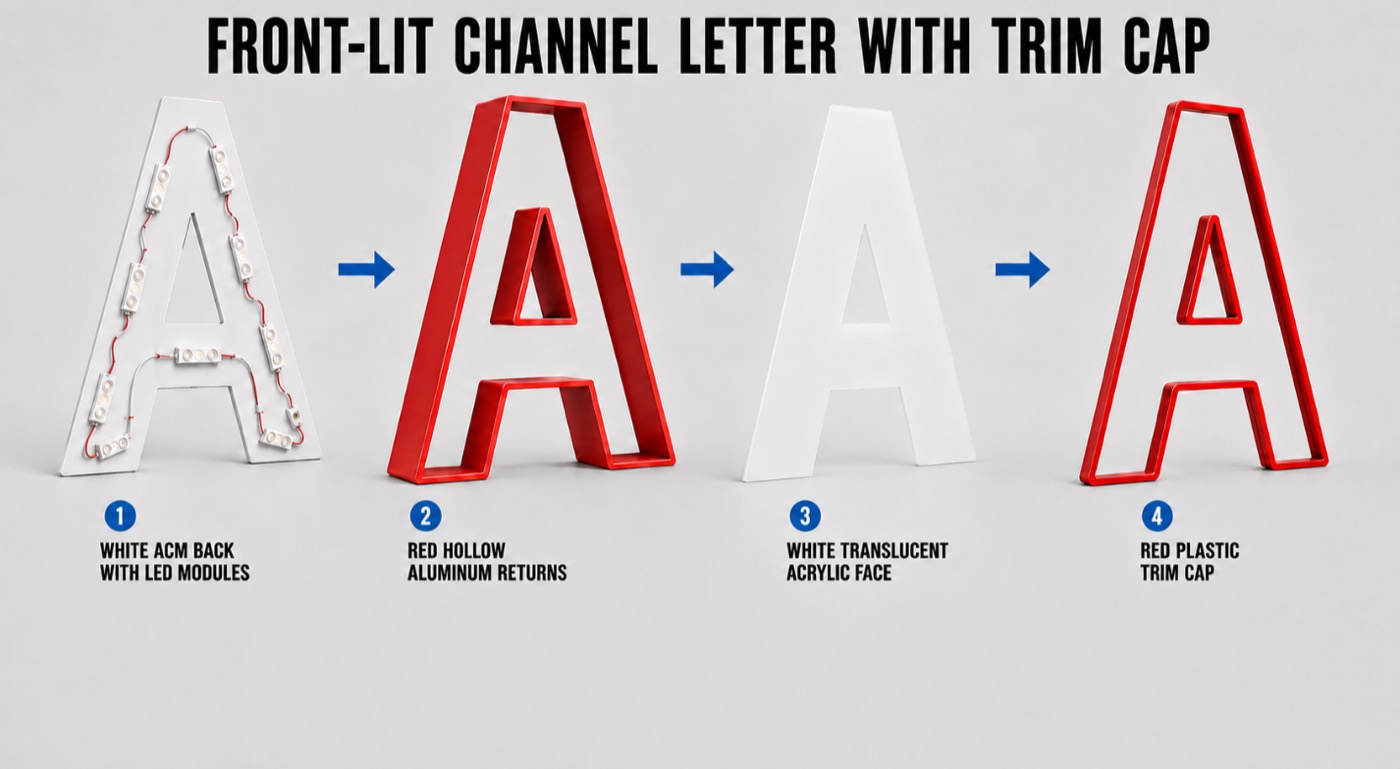
On a metal sign — aluminum returns, a formed aluminum trim cap, a sign cabinet — paint isn't just what the customer sees. It's also part of what keeps the metal underneath from corroding, breaking down under UV, and wearing out after years mounted outdoors. Applied without the right prep, or with a system that isn't rated for exterior exposure, paint can start failing well before anything else on the sign does. And it rarely fails as "wrong color." It fails as fading, chalking, or peeling — which turns a finished job into a service call instead of a repeat customer.
Matching a Brand Color Correctly the First Time
Most sign programs specify color one of three ways: a PMS number, a RAL code, or a physical paint chip the client already has in hand. All three can usually be matched, but they aren't interchangeable, and mixing them up is one of the more common ways a color ends up "close" instead of right. PMS and RAL are standardized, so a code should produce the same result no matter who's matching it. A physical sample depends more on how well it's matched by eye and machine, and can drift slightly between finishers. On a single sign, that might not even register. Across ten or fifty locations that all need to look identical, small drift between batches is exactly what gets noticed — and escalated.
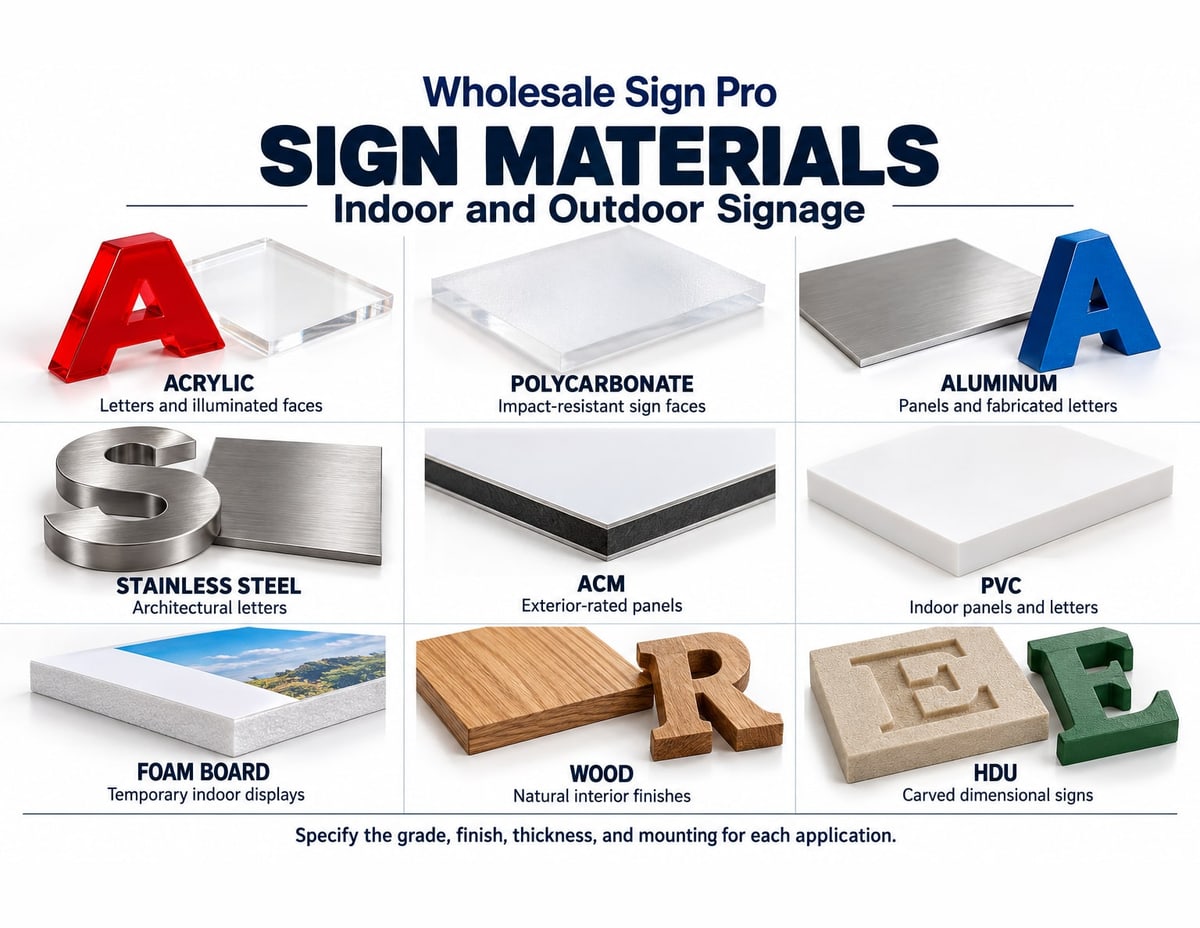
So specify the system you're actually working from, not just "match this." If the client's brand guideline gives a PMS or RAL number, pass that number along instead of a photo of their existing storefront. Lighting and camera color balance can shift a photographed color further from the real thing than most people expect. (See our materials guide for the standard color options each material ships in.)
Surface Prep Is the Part Nobody Sees but Everyone Notices
Paint adhesion depends on what happens before the paint goes on. Aluminum has to be properly cleaned and prepped so the finish actually bonds to the metal instead of sitting on top of it. Skip that step, or rush it, and the result shows up later — peeling, flaking, a finish that scratches off far more easily than it should. It's also one of the least visible parts of the process, which makes it one of the easiest places for a corner to get cut on a rushed job. If a quote seems unusually fast or unusually cheap on a large painted-metal order, this is a fair thing to ask about directly.
Gloss, Matte, or Something Else
Finish is its own decision, separate from color. Gloss, satin, matte, metallic, and textured finishes all read differently once a sign is mounted and lit, and the same color can look noticeably different across each one. Gloss shows fingerprints, dust, and installation scuffs more readily than matte does; matte can look flatter under strong daylight than it did on the sample chip. Metallic and specialty finishes usually cost more, take more planning, and aren't always a stocked option — they may need to be confirmed for adhesion and durability before a full run. Trim is part of this too: painted to match the returns, it reads as one continuous form; left in a contrasting color, it deliberately outlines the letter. Both are legitimate. Neither should be the default just because nobody thought to ask.
Weather and Exposure Change What "Durable" Means
A sign facing south in a hot climate takes far more UV over its life than one facing north in a milder one. Coastal installations deal with salt air that accelerates corrosion on anything painted metal. None of this means every sign needs the most expensive finish available — it means the finish and prep should match where the sign is actually going, not just what looks good on a sample. A sign headed for direct desert sun or a beachfront storefront has different real-world durability needs than the same design in a covered mall corridor, and that's worth raising with the client before the order is placed, not after.
What Failure Actually Looks Like
Fading shows up as color that visibly lightens or shifts, usually from UV exposure or a pigment that was never rated for exterior use in the first place. Chalking is the powdery residue that develops as the paint's binder breaks down — often the first visible sign that UV is winning. Peeling and flaking are almost always a surface-prep problem, not a paint-quality one. And sheen mismatch is the quieter failure: one batch reads glossier or flatter than another, which barely matters on a single sign and matters a great deal across a multi-letter set or a multi-location program.
What to Ask a Wholesale Manufacturer Before You Quote It
A few questions tend to separate a manufacturer who treats paint as a real production step from one who treats it as an afterthought:
- How is color matched — PMS, RAL, physical sample, or all three — and how is that documented so a repeat or multi-location order comes back consistent?
- What does surface prep actually look like before paint goes on, and is it done in-house or outsourced?
- Is the paint system rated for where the sign is actually going — coastal, high-UV, or otherwise?
- On a multi-unit order, how is color and sheen consistency checked across the whole batch, not just the first piece that got approved?
The Paint System We Use
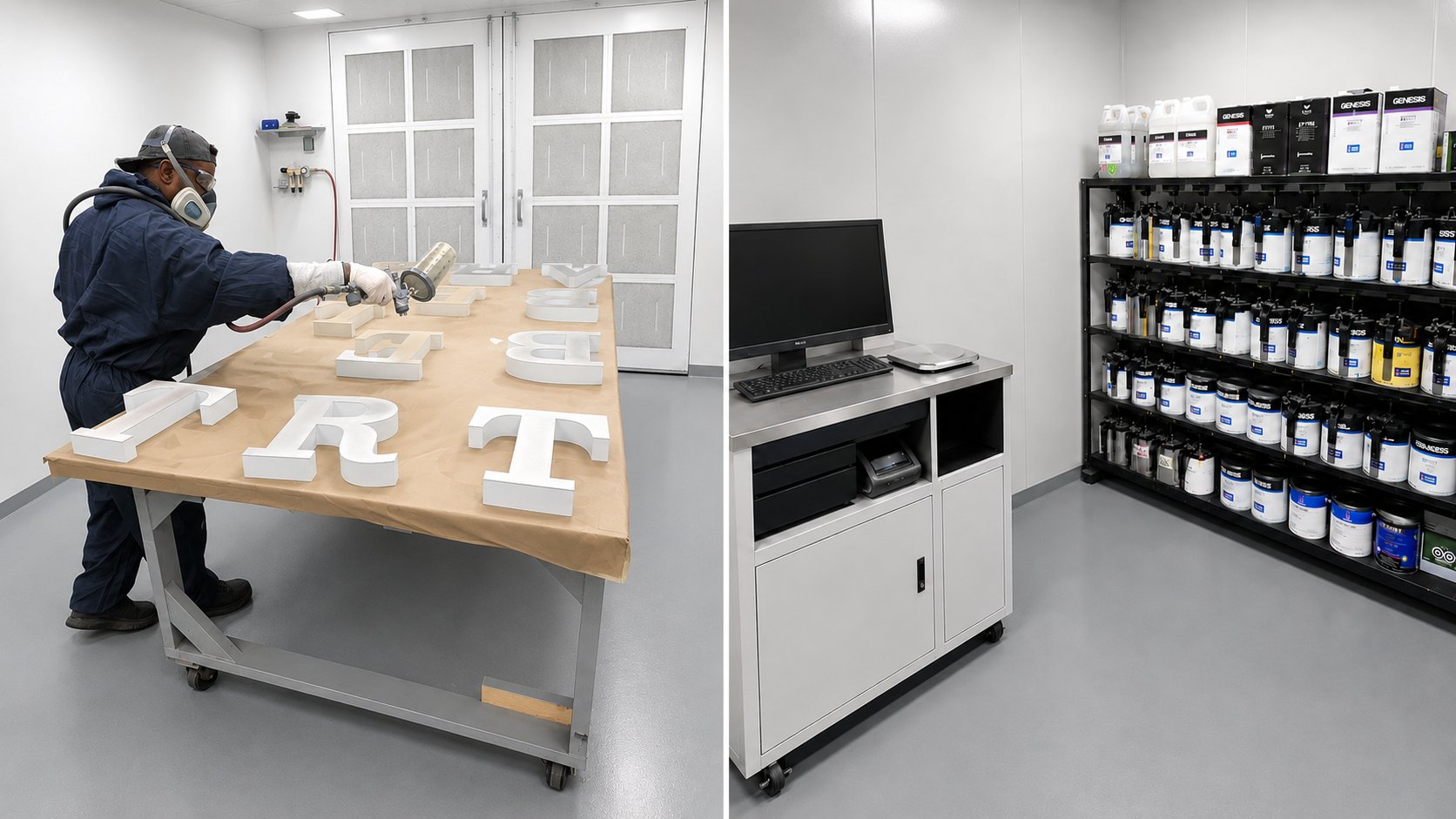
We finish signs in our own in-house spray booth, with automotive-grade refinish paint rather than a generic industrial coating. Dry and bake times are fast enough that they don't become the bottleneck in production, and the mixing system gives real gloss-level choice — flat through high gloss — from the same base color. The pigments are formulated for outdoor durability specifically, resisting fading, chalking, and stone-chip damage better than a coating that wasn't built for exterior use, and the system meets current low-VOC standards without giving up chemical or graffiti resistance.
Color is matched through tools like Formula Express, which pulls an exact formula for a corporate palette, a Pantone shade, or a custom hue on demand — the same formula every time a job repeats, which is what keeps a multi-location program looking identical from the first site to the fiftieth. It's a small part of the build by time, and one of the first things a client notices if it's wrong.
Paint and Finish FAQ
Why does paint matter beyond color on a channel letter or sign?
Paint isn't just the finish a customer sees — on aluminum returns, trim cap, or a sign cabinet, it's also part of what protects the metal underneath from corrosion, UV breakdown, and years of outdoor exposure. A paint system applied without the right prep, or one that isn't rated for exterior use, can start failing before the rest of the sign shows any wear.
What's the difference between matching a PMS number, a RAL code, and a physical paint sample?
PMS and RAL are standardized systems, so a code should produce the same result no matter who's matching it. A physical sample depends more on how well it's matched by eye and machine, and can drift slightly between finishers. That difference barely registers on a single sign, but across a multi-location rollout, small drift between batches is exactly what gets noticed.
What causes paint to fail on outdoor signage?
The most common failures are fading (color lightening or shifting from UV exposure), chalking (a powdery residue as the paint's binder breaks down), peeling or flaking (almost always a surface-prep problem, not a paint-quality one), and sheen mismatch between batches on a multi-letter set or multi-location program.
What paint system does Wholesale Sign Pro use?
We finish signs in our own in-house spray booth with automotive-grade refinish paint, matched through tools like Formula Express for corporate palettes, Pantone shades, and custom hues. It offers real gloss-level choice from flat through high gloss, pigments formulated for outdoor durability, fast dry and bake times, and low-VOC compliance without giving up chemical or graffiti resistance.