
Two situations bring this up more than any other: a customer wants the clean look of trimless letters but doesn't want to pay the premium for it, or an existing set's plastic trim cap has started fading or cracking and they're asking for something that won't. Aluminum trim is usually the answer worth walking them through in either case — it's covered below.
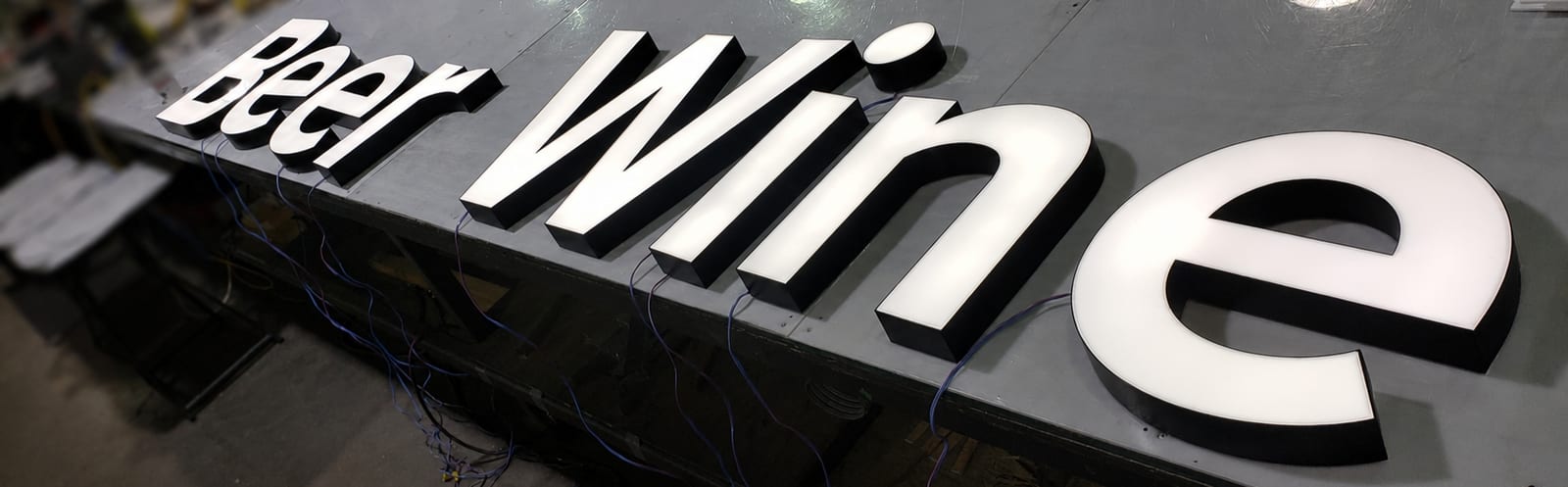
Stand a few feet back from two finished channel letters — one with plastic trim cap, one with aluminum trim — and the difference is often obvious before you can say why. The narrow band around the acrylic face does more than hold it in place: it shapes the letter's appearance, its durability, and its final cost. Here's how we walk sign companies through the choice.
What Plastic Trim Cap Is
Traditional trim cap is a preformed plastic profile applied around the edge of an acrylic channel-letter face. It creates a lip that overlaps the return and helps secure the removable face to the letter body. Because it's been the standard for decades, most fabricators already know the tooling, adhesives, handling, and repair process cold. It's especially convenient for routine front-lit letters, tight schedules, and jobs where a standard trim-cap look is what the customer expects — and it comes in common stocked colors that follow curves well when heated and handled correctly.
What Aluminum Trim Is
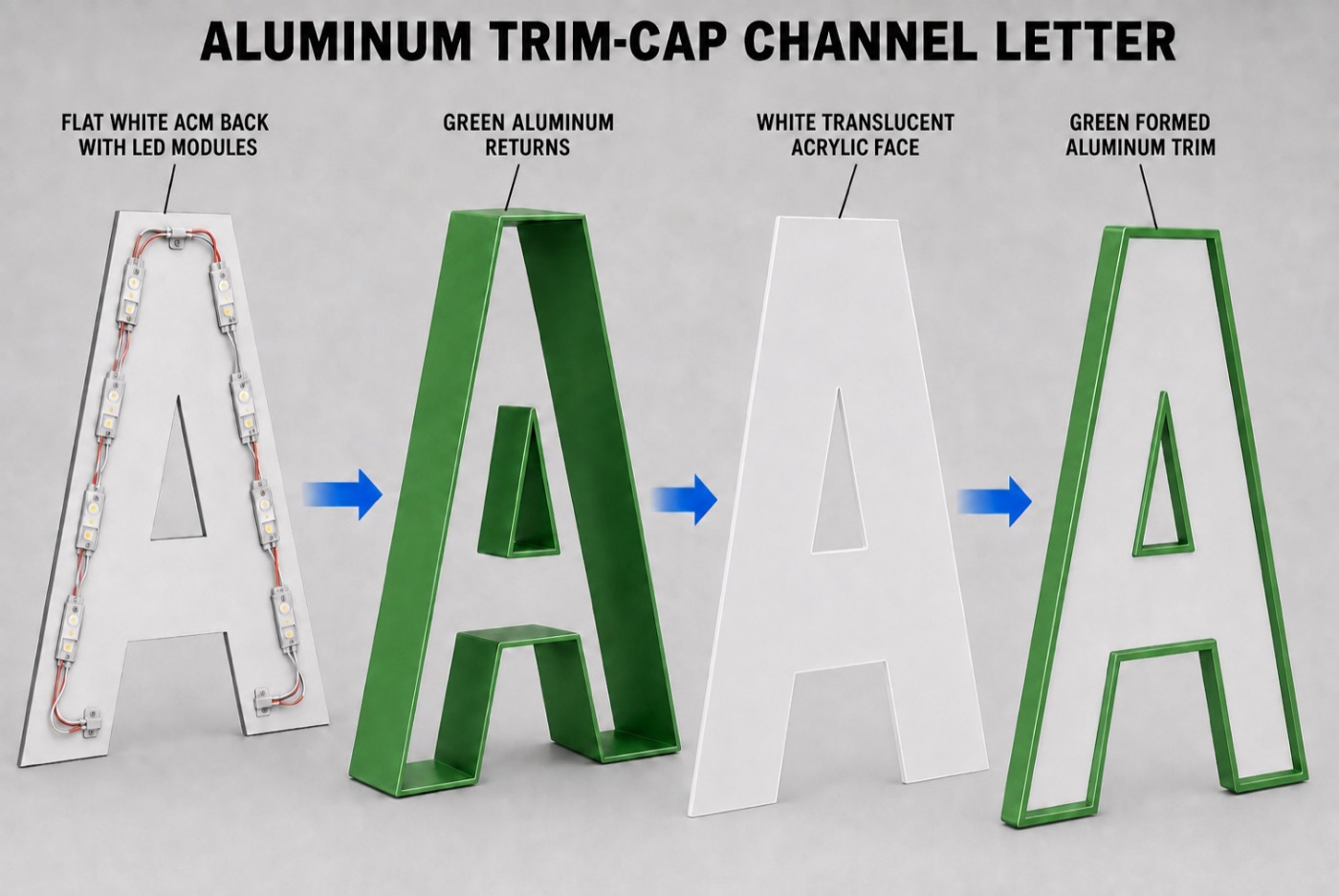
Aluminum trim starts as flat aluminum coil instead of a finished plastic profile. We shape the coil into a consistent trim profile, cut it to length, and form it around the acrylic face — typically in 1-inch or 2-inch widths. A PVC lining on the inside gives it a bondable surface, so the same trim adhesive used for plastic trim cap still applies. The result is a crisper metal edge without changing the basic face-building workflow your production team already knows.
The Practical Differences
1. Appearance
Aluminum trim reads straighter and more architectural, and its metal surface coordinates naturally with aluminum returns and modern storefront finishes. Plastic trim cap has a softer, more traditional channel-letter look. Neither is automatically better — aluminum tends to get chosen when the customer wants the sign to read as more upscale or less plastic-heavy.
2. Durability and Outdoor Performance
Aluminum is rigid, corrosion-resistant, and well suited to outdoor construction, and it's less prone to becoming brittle after long sun and weather exposure than some plastics. Plastic trim cap has a long track record outdoors too, but fading, surface aging, or cracking can show up over time depending on material quality, climate, and exposure.
3. Forming and Consistency
Plastic trim cap is applied manually, so the result depends heavily on the operator's technique — especially around corners and tight curves. Aluminum trim is mechanically formed from flat coil into a precise profile, which keeps width and shape consistent from one letter to the next. That matters most on multi-letter signs and repeat programs, where you want every letter to match.
4. How It Attaches to the Acrylic Face
This is more familiar than most fabricators expect. Plastic trim cap bonds to the acrylic face with standard trim adhesive. Aluminum trim uses the same general approach, because the inside of the formed profile is PVC-lined — you get a metal exterior without giving up a bonding method your team already trusts.
5. Material Cost
Plastic trim cap arrives as a finished profile, with the purchase price encompassing both material and manufacturing. Aluminum trim, formed in-house from specialized flat aluminum coil, often results in a final letter cost comparable to plastic trim. However, this isn't universally guaranteed. Actual pricing is influenced by coil costs, waste, labor, letter mix, and volume.
6. Color and Finish Options
Plastic trim cap is the easy choice when a standard stocked color matches the job. Aluminum trim can be painted to match the returns or finished in a contrasting color, and we stock black, white, and red as standard, with custom colors available on request. Special finishes just need a little more planning — confirm coating and adhesive compatibility before production starts.
Where Plastic Trim Cap Still Makes Sense
A newer option doesn't make the traditional one obsolete. Plastic trim cap remains the practical choice when:
- Your shop already has an efficient, proven manual trim-cap process
- The job uses a standard stocked color
- Production volume doesn't justify forming trim from coil
- The design includes curves your team is more comfortable finishing in plastic
- The customer specifically wants the familiar look of a conventional front-lit letter
When Aluminum Trim Is the Stronger Choice
Aluminum trim earns its keep on repeat work, premium retail signage, and larger letter sets where consistency matters most. It's also worth considering when the goal is reducing reliance on purchased plastic profiles, bringing more of the trim-making process in-house, or getting a cleaner visual connection between the face and the aluminum return. On a single small job, the difference may be mostly visual. Across hundreds of letters, better material utilization and a genuinely consistent edge start to affect both appearance and production cost.
How to Choose
Start with the job, not the material. What appearance does the customer expect? Where will the sign go? How many letters need to be produced, on what colors or finishes, and does the production volume justify forming aluminum trim efficiently? Choose plastic trim cap when familiarity, availability, and a conventional look are what matter most. Choose aluminum trim when the job calls for a crisper metal finish, strong outdoor durability, repeatable production across a large letter count, and the potential for material savings.
Sourcing Either One Wholesale
We manufacture both aluminum trim and standard plastic trim-cap channel letters — along with F-trim profiles and trimless construction — for sign companies across the United States and Canada. If you'd rather talk through the wholesale economics of switching a program over to aluminum trim, see our aluminum trim wholesale guide.
Aluminum Trim vs. Plastic Trim Cap FAQ
Is aluminum trim a drop-in replacement for plastic trim cap?
In terms of assembly, yes. The formed aluminum profile has a PVC lining on the inside, so it bonds to the acrylic face with the same trim adhesive used for plastic trim cap. Your production team doesn't need a different assembly method to switch.
How does aluminum trim pricing compare to plastic trim cap?
Aluminum trim, formed in-house from specialized flat aluminum coil, often results in a final letter cost comparable to plastic trim — but that isn't universally guaranteed. Actual pricing is influenced by coil costs, waste, labor, letter mix, and volume, so run the numbers on your own jobs before assuming either direction.
When does plastic trim cap still make more sense than aluminum?
When your shop already has an efficient manual trim-cap process, the job uses a standard stocked color, the volume doesn't justify forming trim from coil, the design has curves your team is more comfortable finishing in plastic, or the customer specifically wants the conventional trim-cap look.