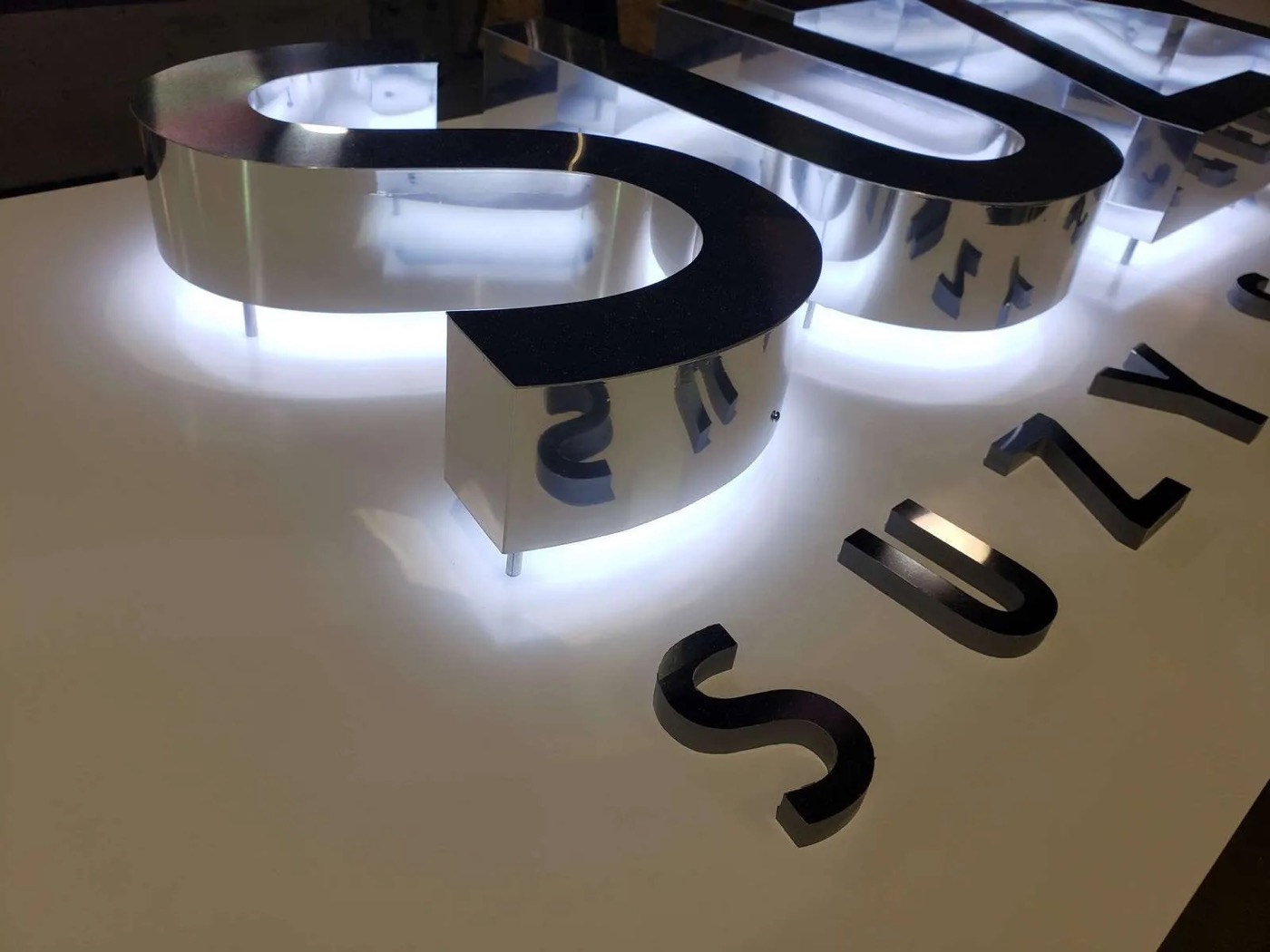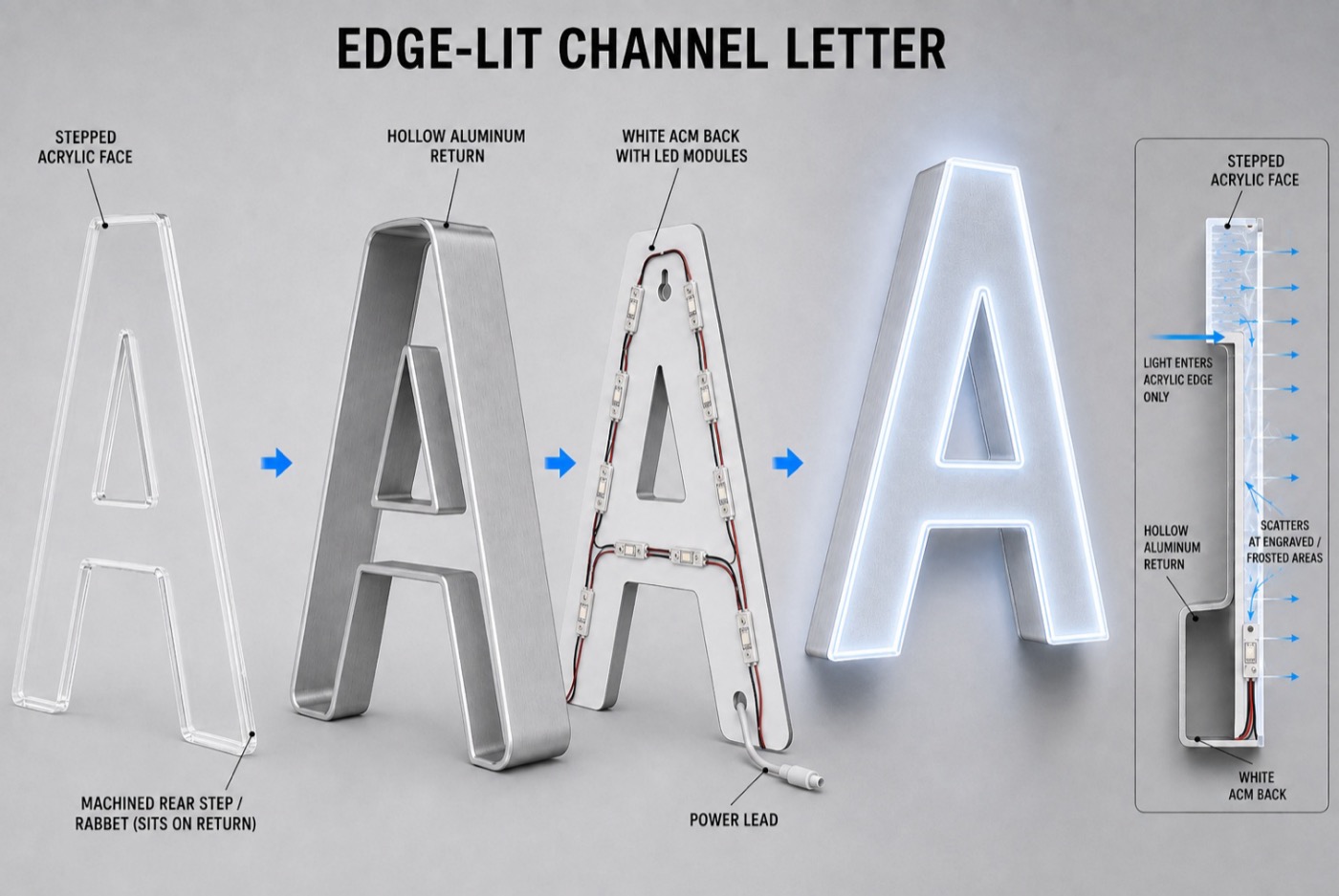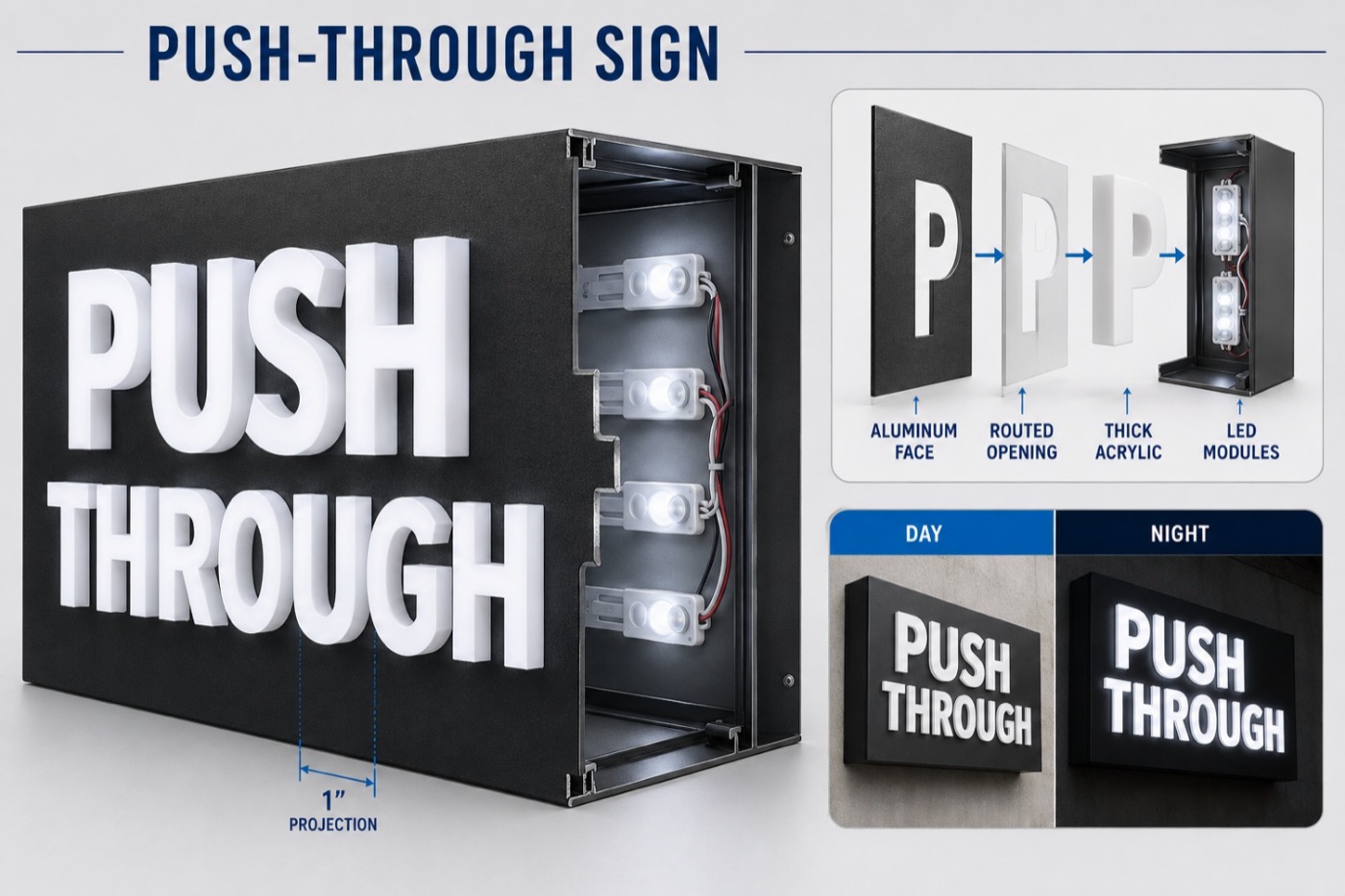

The border around a channel-letter face may look like a small design detail, but it changes the construction, cost, and finished appearance of the whole set. The three common choices are plastic trim cap, formed aluminum trim, and trimless aluminum extrusion. All secure the face; they do it with different materials and produce noticeably different results.
1. Traditional Trim-Cap vs. Trim-less Channel Letters
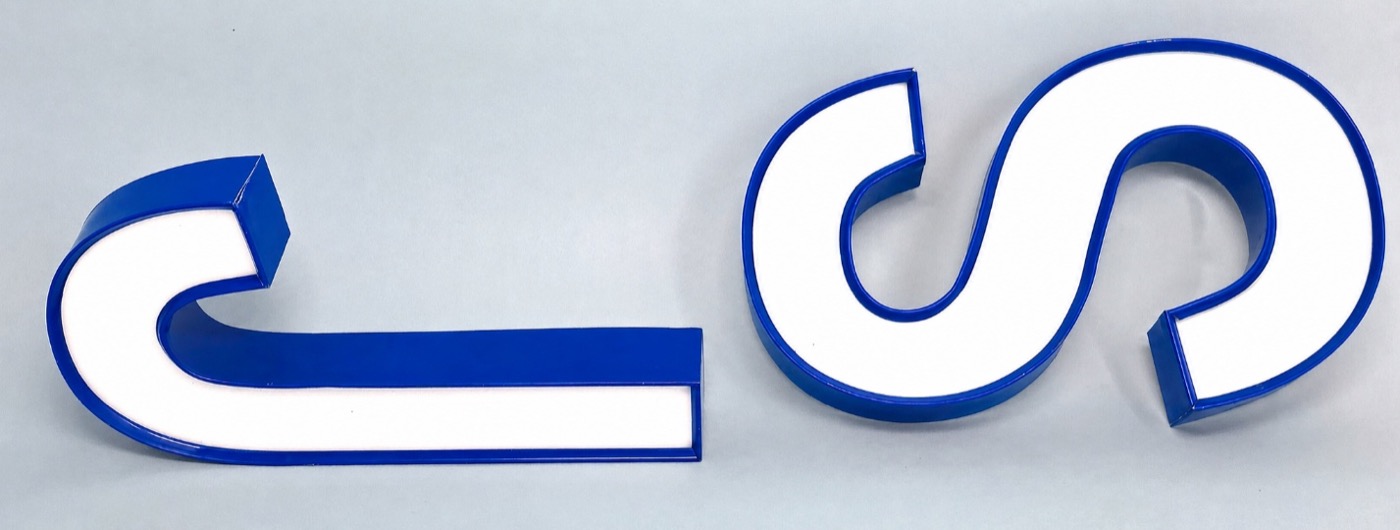
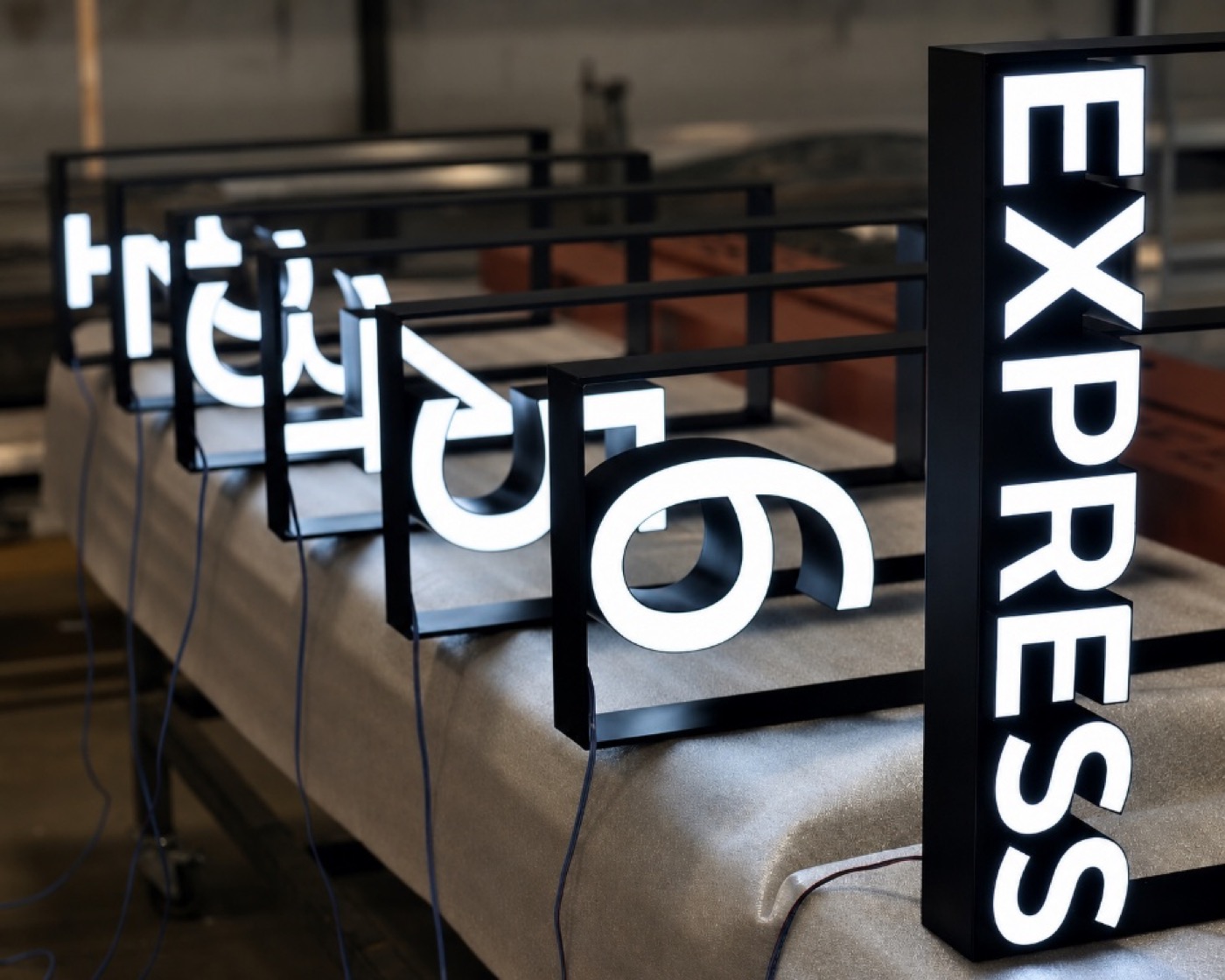
| Feature | Traditional Trim-Cap Letters | Trimless Letters — Extrusions |
|---|---|---|
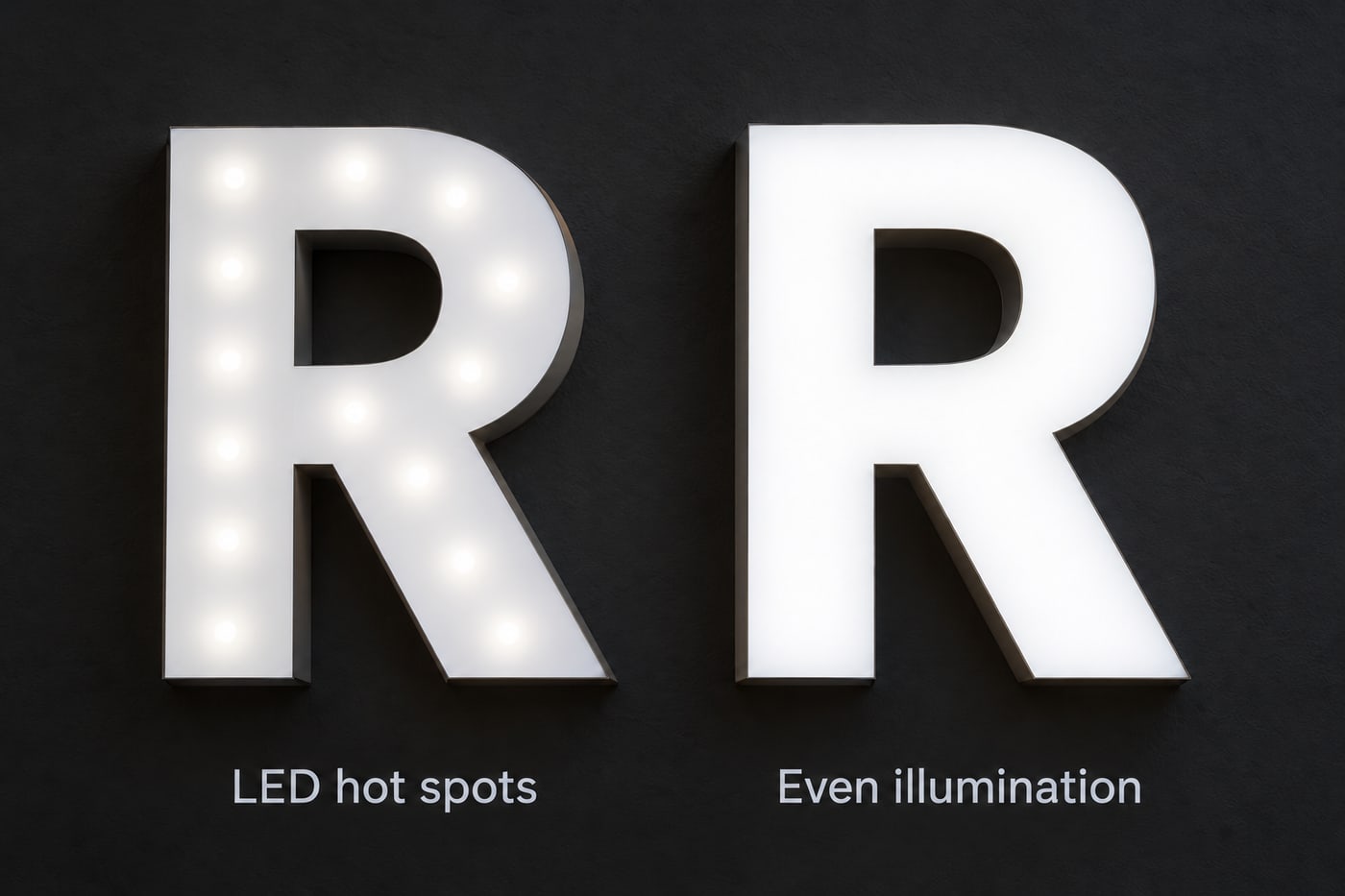
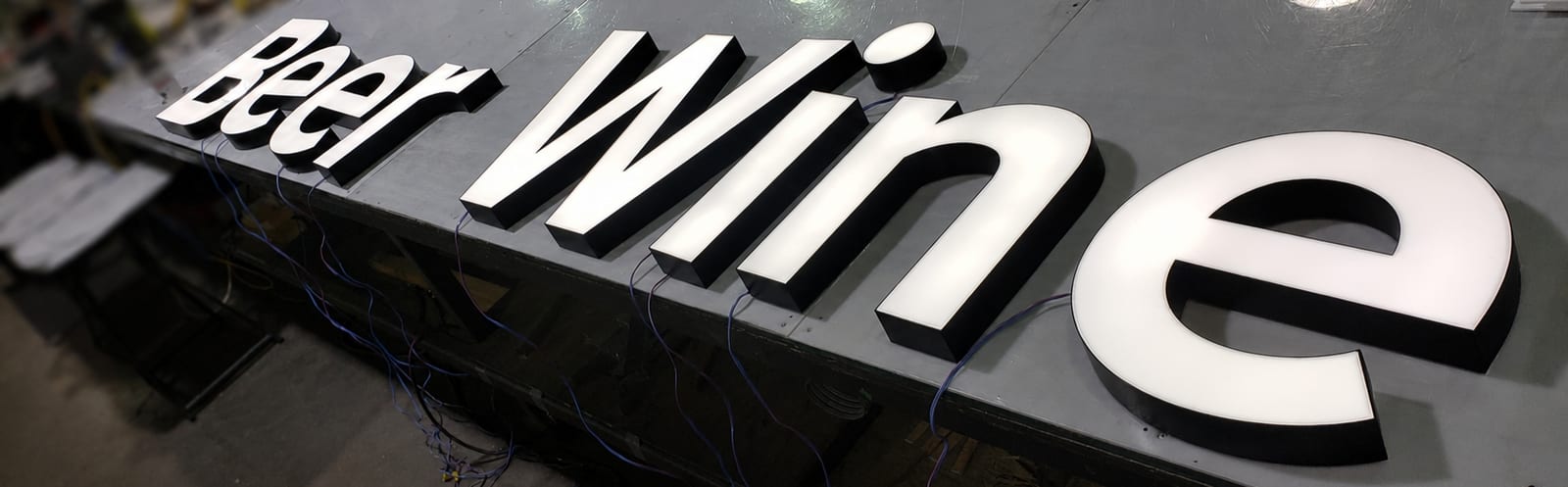
| Face appearance | Visible plastic border around the acrylic face | Clean, nearly borderless illuminated face |
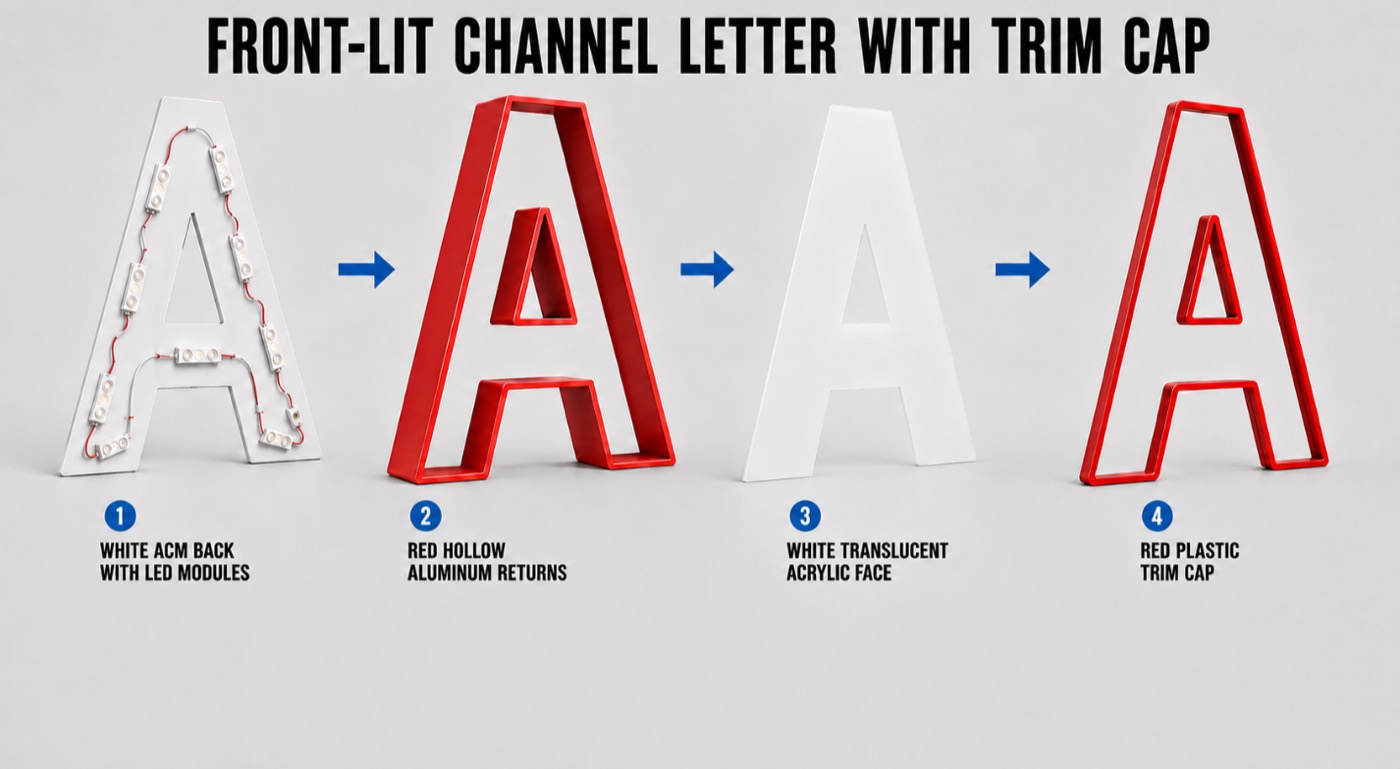
| Construction | Acrylic face fitted with a flexible plastic trim cap | Acrylic face secured within a formed aluminum extrusion profile |
| Visual style | Traditional commercial channel letter | Modern, architectural, and premium appearance |
| Face illumination | Trim slightly reduces the visible illuminated area | Illumination extends closer to the letter edge with minimal border |
| Assembly | Trim heated, bent, fitted, and bonded to the face | Extrusion shaped by the CNC bender and assembled with stainless-steel nails — no adhesive or magnetic table required |
| Adhesive | Bonding adhesive normally required | Initial assembly does not depend on adhesive |
| Operator skill | Experience required to form tight corners cleanly | CNC-controlled profile bending improves consistency and repeatability |
| Small letters and detail | Difficult around very tight curves and small radii | Better suited to small letters, detailed fonts, and complex logos |
| Material consistency | Flexible plastic can stretch or distort during forming | Aluminum extrusion maintains a consistent metal profile |
| Long-term appearance | Plastic trim may age or discolor differently than painted metal | Metal profile provides a consistent architectural finish over time |
| Typical application | Standard storefront and value-oriented projects | Premium retail, hospitality, automotive, and architectural branding |
| Equipment | Conventional channel letter bender or manual fabrication | 4AS CNC channel letter bending machine |
| Certification | Depends on the complete listed sign system | The trim-less extrusion is listed for UL 48-compliant electric signs — indoor and outdoor channel letters up to 66 inches in height |
Traditional trim-cap letters remain an economical and dependable choice for everyday storefront signage. They are familiar to fabricators, widely accepted, and available in many standard colors.
Trim-less channel letters are selected when appearance and brand presentation matter more than achieving the lowest initial price. Eliminating the visible plastic border creates a cleaner face with a more refined transition between the acrylic and the metal return — a difference that is consistently preferred for premium retail, automotive, and hospitality sign programs.
How the Trim-less Extrusion System Works
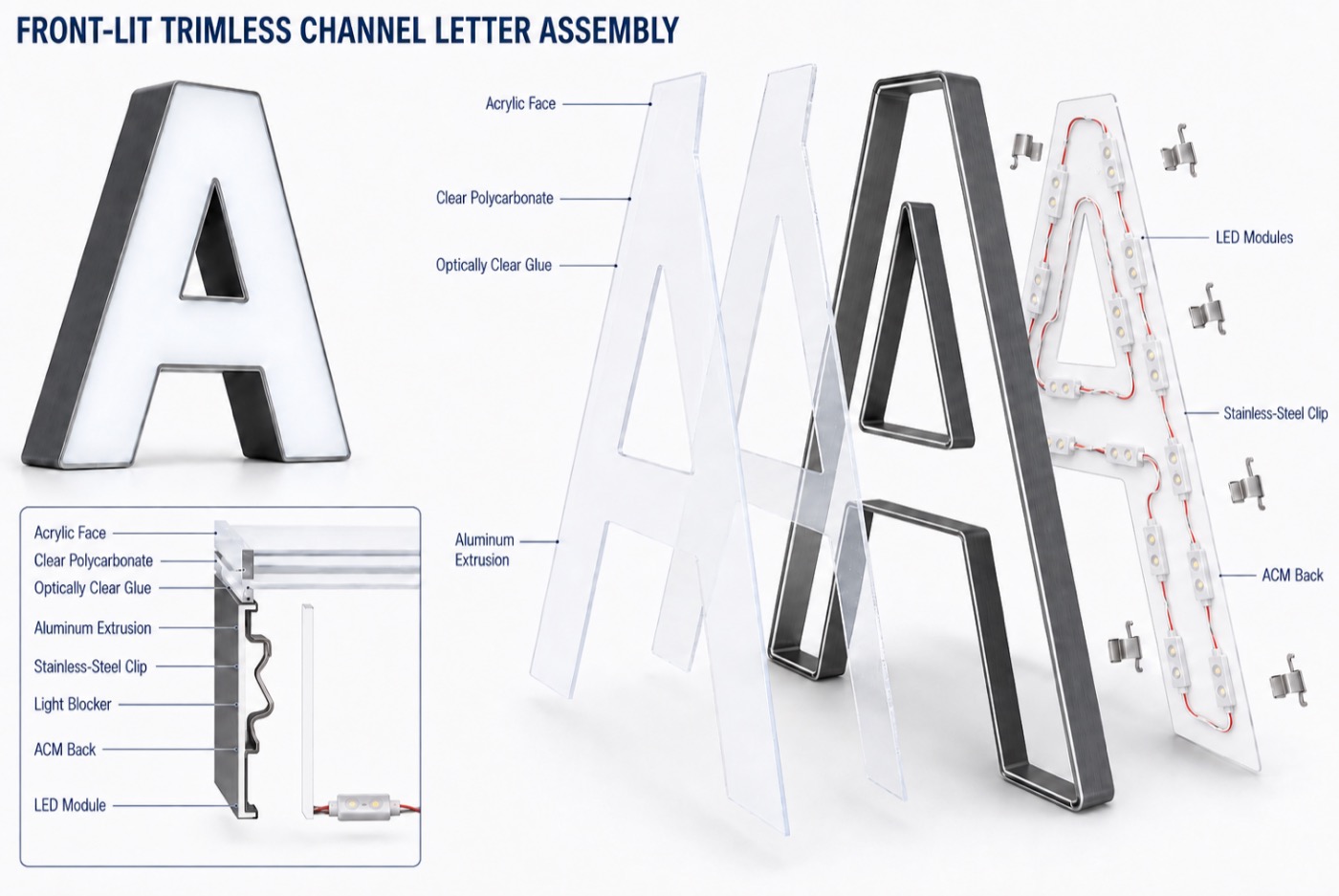
The CNC channel letter bending machine forms aluminum extrusion profiles into the required letter or logo shape. Profiles are available in 1.37″, 2″, 3″, and 4-inch return depths to cover the full range of channel letter sizes.
The formed extrusion is initially assembled using a pneumatic gun and small stainless-steel nails. This eliminates reliance on the glue-and-magnetic-table method required during conventional trim-cap assembly. The extrusion is supplied with a white epoxy primer finish that can be installed as-is, painted to match the letter returns, or used as a primer base for a custom color.
When to Choose Each Construction
Choose traditional plastic trim-cap when:
- The project is price-sensitive
- A conventional bordered appearance is acceptable or specified
- The letters are large and use relatively simple fonts
- The customer wants a standard storefront channel-letter system
- No CNC extrusion bending equipment is available
Choose trim-less extrusions when:
- The customer wants a premium, contemporary appearance
- The illuminated face should extend close to the outside edge
- The design contains small letters, tight curves, or detailed logos
- Production consistency and reduced manual labor are priorities
- The project is a premium retail, hospitality, automotive, or multi-location brand program
- The shop wants to offer a higher-value architectural sign product
2. Jewelite Plastic Trim Cap vs. Formed Aluminum Trim
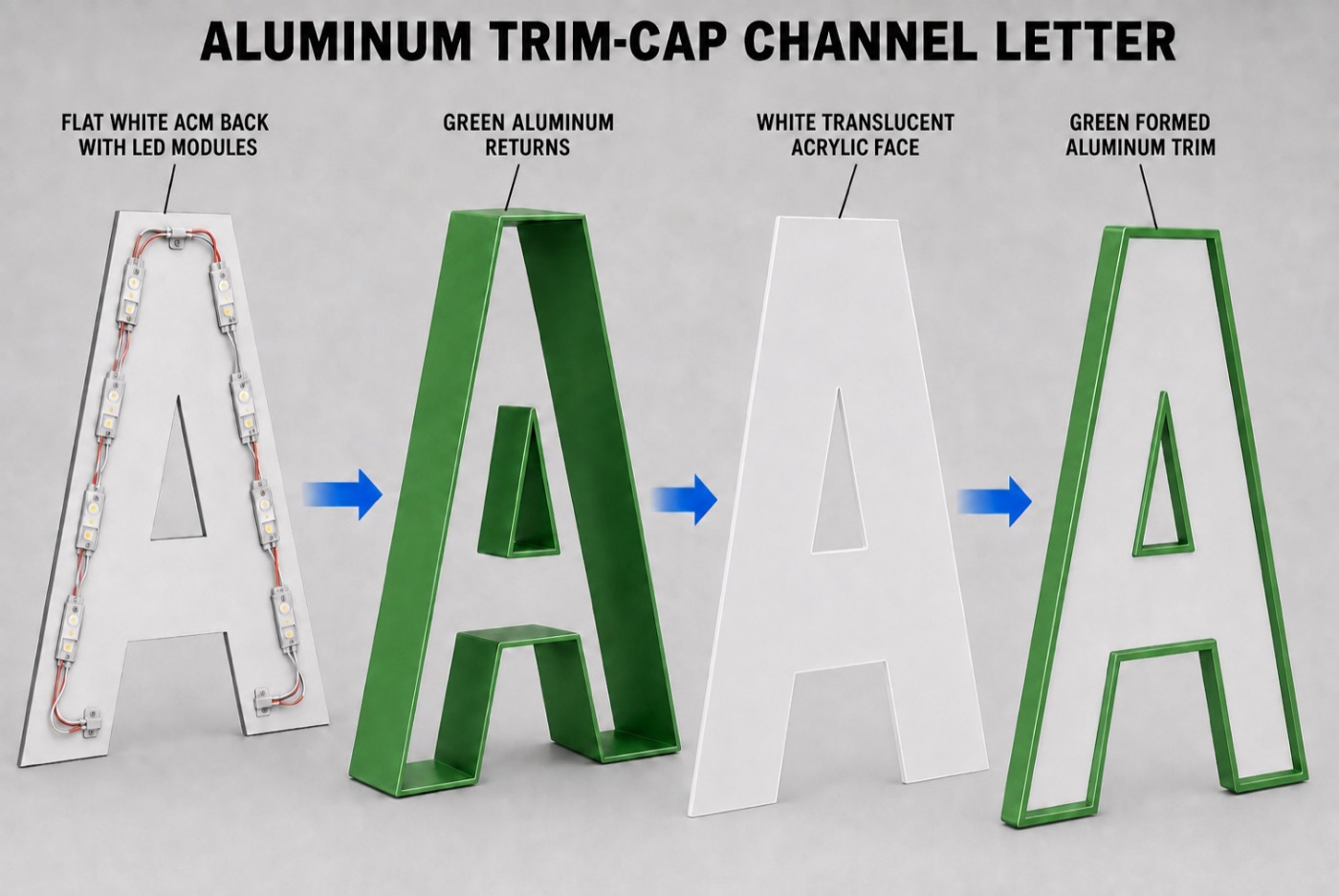
This comparison covers the two options for channel letters that use a visible face border — Jewelite-style plastic trim cap and formed aluminum trim. Both produce a traditional bordered channel letter; the difference is the material and manufacturing method used for the trim border itself.
| Feature | Jewelite Plastic Trim Cap | Formed Aluminum Trim |
|---|---|---|
| Construction | Flexible plastic exterior with an embedded metal strip | Trim formed from flat aluminum coil on a trim-bending machine |
| Appearance | Familiar plastic trim-cap border | Metal edge with a refined, architectural finish |
| Flexibility | Very flexible — easy to form around curves by hand | More rigid — requires accurate forming equipment |
| Tight corners | Generally easier to form manually | Best produced with automated equipment such as the TMB3 |
| Color selection | Broad standard color range in stock sizes | Painted, coated, or metallic finishes including brushed and polished |
| UV performance | Quality products designed for exterior UV exposure | Coated aluminum offers strong outdoor durability |
| Impact behavior | Flexible during handling and transit | More rigid and resistant to deformation once installed |
| Thermal movement | Plastic and acrylic may expand at different rates | Aluminum trim is dimensionally more stable — requires correct face allowance during assembly |
| Repair familiarity | Familiar process for most sign technicians | May require sourcing or fabricating matching aluminum trim for repairs |
| Production method | Manually formed or processed with a conventional trim machine | Formed from flat aluminum coil using a machine such as the TMB3 |
| Best application | Standard, high-volume channel letters; shops with no trim-forming equipment | Premium conventional letters; shops reducing plastic use or producing matched metal finishes |
Advantages of Jewelite-Style Plastic Trim Cap
- Easy to bend around curves and tight detail by hand
- Available in many standard colors in stock widths
- Familiar fabrication and repair process for most sign technicians
- Absorbs minor dimensional inconsistencies during assembly
- Suitable for conventional, price-sensitive channel letters
- Does not require specialized aluminum trim-forming equipment
Quality flexible trim-cap products bond to acrylic and polycarbonate, are UV-stable, and are available in numerous colors and widths.
Limitations of Plastic Trim Cap
- Produces a visibly plastic border that reads as less premium than metal
- Requires careful adhesive surface preparation and application
- Tight corners can wrinkle, open, or distort if improperly heated or formed
- Different production lots and colors may age differently over time
- Material cost per foot is typically higher than aluminum trim formed from flat coil
Advantages of Aluminum Trim
- Provides a stronger, more refined metal appearance than plastic
- Can be painted to match the channel-letter returns for a unified metal finish
- Supports metallic, brushed, and specialty finishes that plastic cannot replicate convincingly
- Maintains a consistent, crisp profile without the flexibility variations of plastic
- Reduces dependence on purchased plastic trim-cap rolls
- Can lower trim-material cost when formed efficiently from flat aluminum coil
- Reduces the amount of plastic in the completed sign
- Does not crack or degrade the way plastic can under extended UV and thermal cycling
Final Recommendation: Three-Level Product Ladder
There is no single construction that is best for every channel letter project. The right choice depends on the customer's appearance requirements, budget, and the sign's application.
- Traditional plastic trim cap — best for economical, conventional channel letters and shops forming trim by hand
- Formed aluminum trim — best when the customer wants a familiar bordered construction with a stronger, more premium metal finish
- Trim-less extrusion — best when the objective is a clean, contemporary illuminated face without any visible trim border