Reverse halo letters look simple when they are done well: a solid letter face with an even pool of light behind it. Getting that result depends on the wall surface, stand-off distance, LED color, letter depth, and finish. Those choices should be discussed together rather than picked one at a time from a catalog.
What Are Reverse Halo Letters?
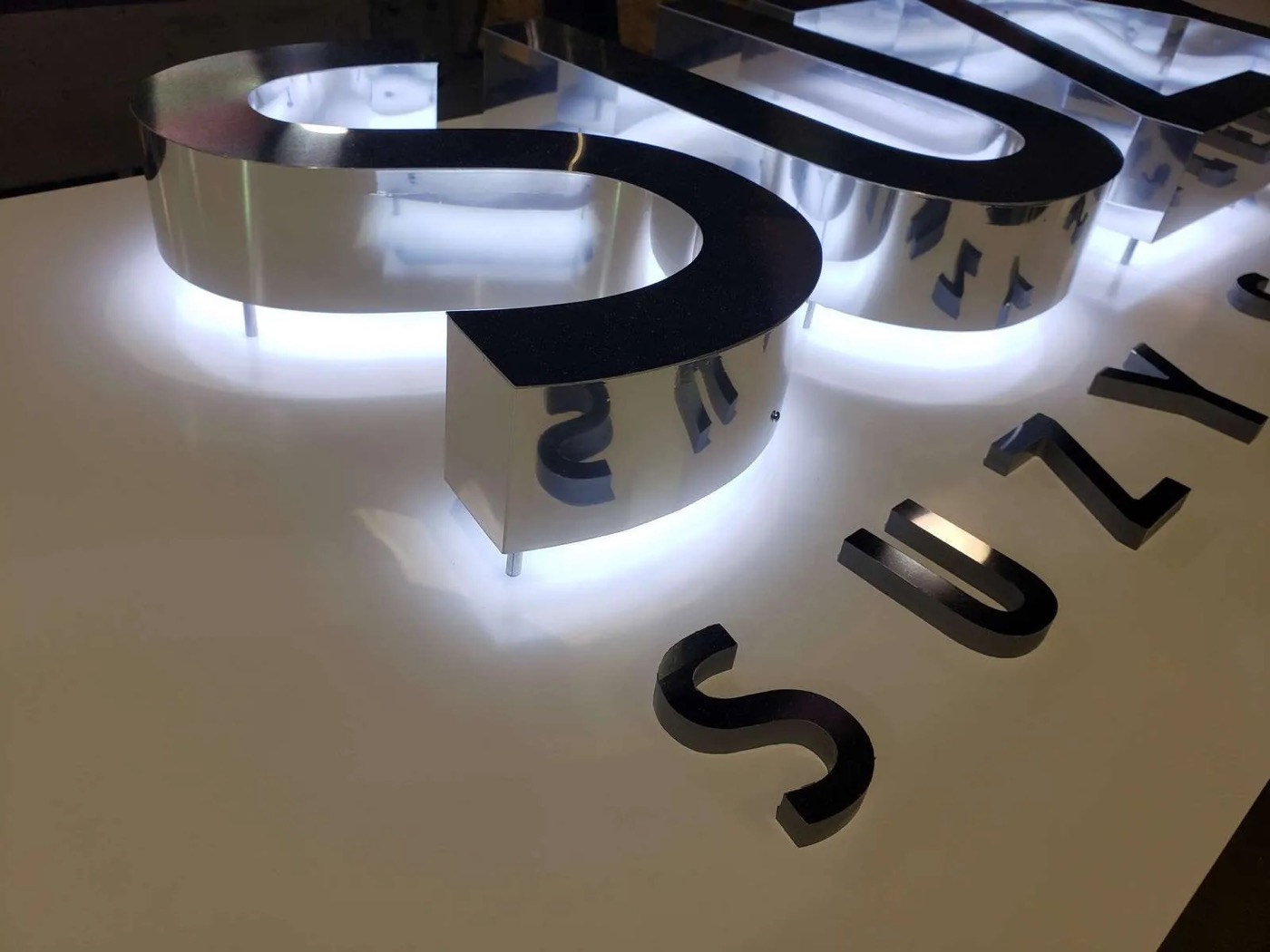
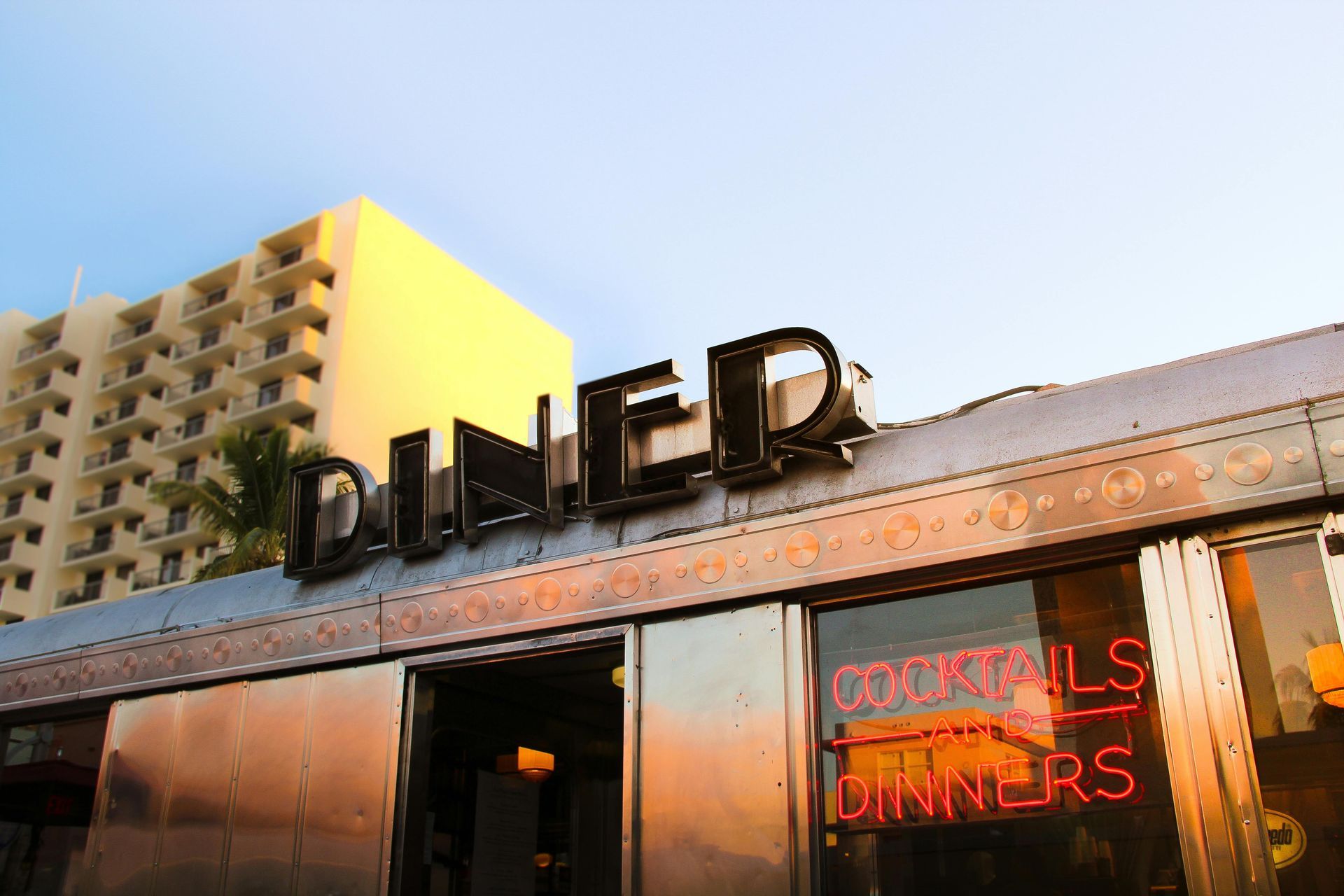
Reverse halo letters (also called back-lit channel letters) use opaque metal faces — typically stainless steel or powder-coated aluminum — with LEDs mounted inside and directed at the wall rather than out through the face. Light reflects around the letter's perimeter, creating a gentle halo. The face stays crisp and dark, so the typography reads cleanly without glare.
- A different visual register: a softer, more elegant glow than a direct-lit face — reads as higher-end and contemporary
- Comfortable visibility: effective on patios and glass façades where a bright face-lit sign can feel like too much
- Photo-friendly silhouette: the clean outline reads well on phones, which matters for a client's social and map listings
When to Recommend Reverse Halo Over the Alternatives
- Choose reverse halo when the brief calls for a premium, understated look and the metal face itself (not the glow) should read as the primary material
- Choose face-lit when maximum brightness and read-distance matter more than subtlety
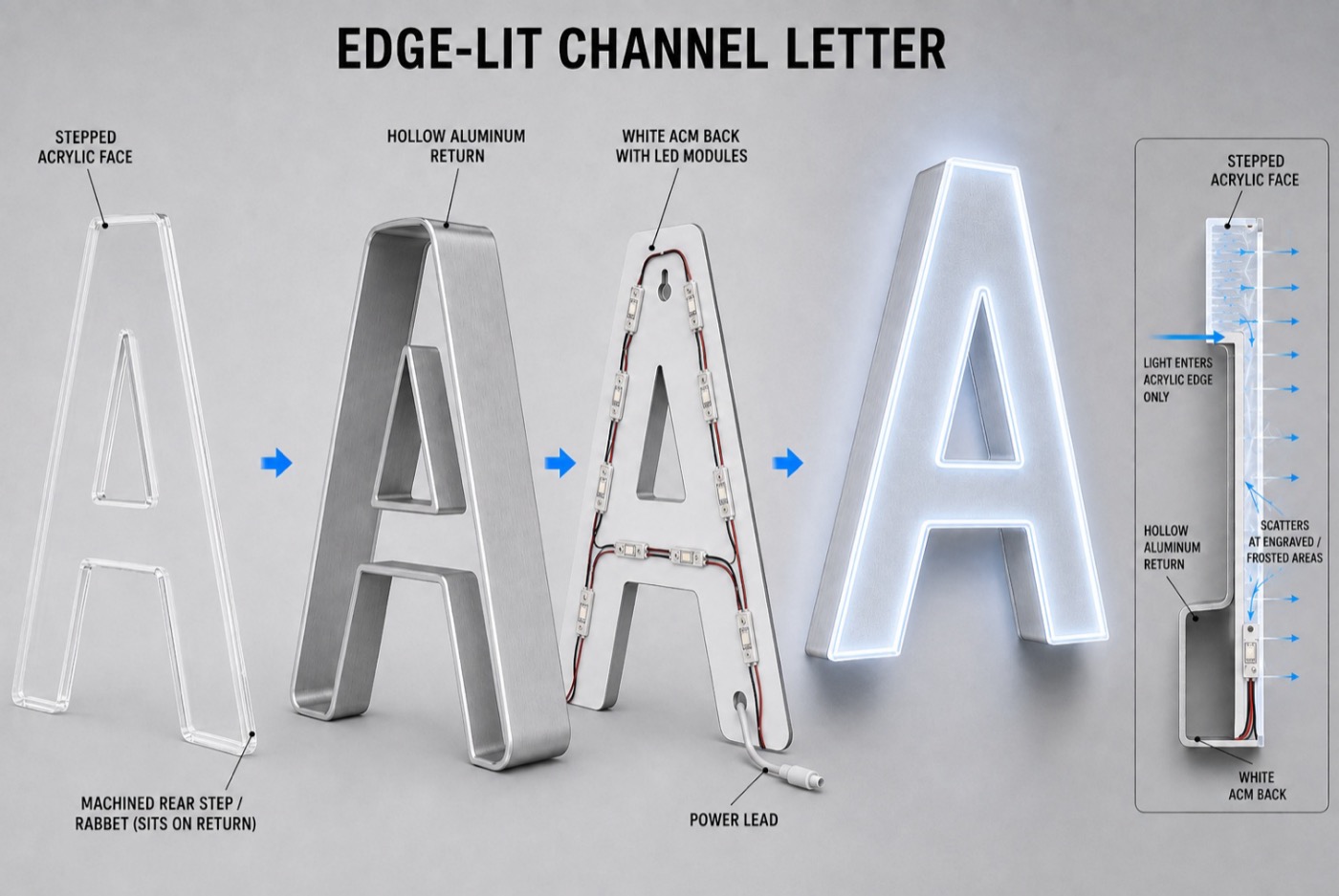
- Choose edge-lit when the client wants an illuminated outline effect rather than a wall-wash glow
- Combine methods — reverse halo letters paired with a face-lit or edge-lit logo element is a common way to add contrast to a multi-element sign
Fabrication Specs to Confirm
A clean halo isn't an accident — it comes down to a handful of specs nailed down before fabrication starts.
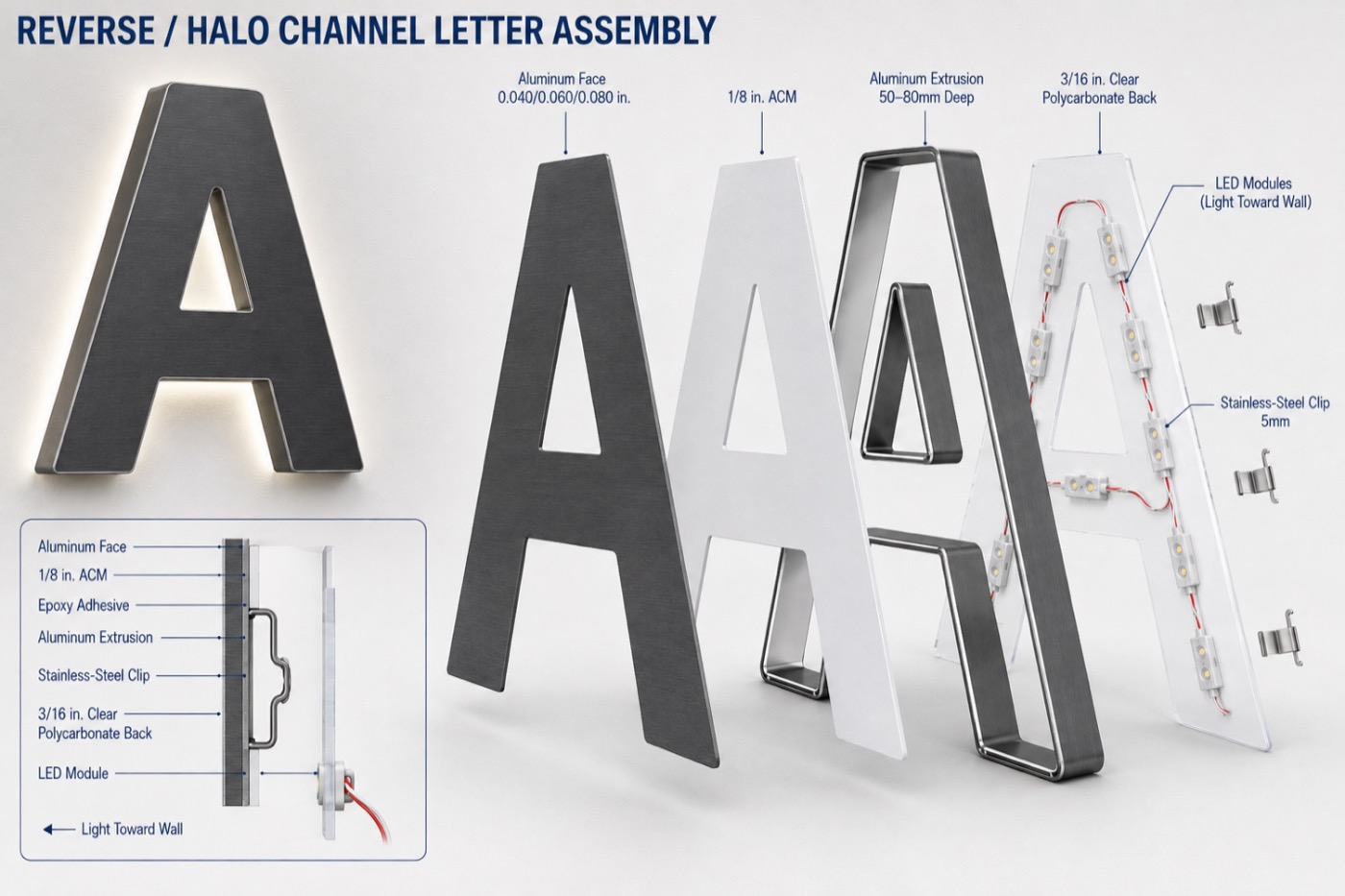
Materials
- Stainless steel (304/316) — 316 for coastal or high-salt environments, 304 for standard applications
- Powder-coated aluminum — well suited to freeze–thaw cycles and cold-climate installations
Depth & Standoffs
- Letter depth: 1.5–3" spreads the light evenly across the return
- Standoff gap: roughly 19–38 mm off the wall produces a soft, consistent glow — too tight and the halo reads as a hot ring rather than a wash
LED Color Temperature
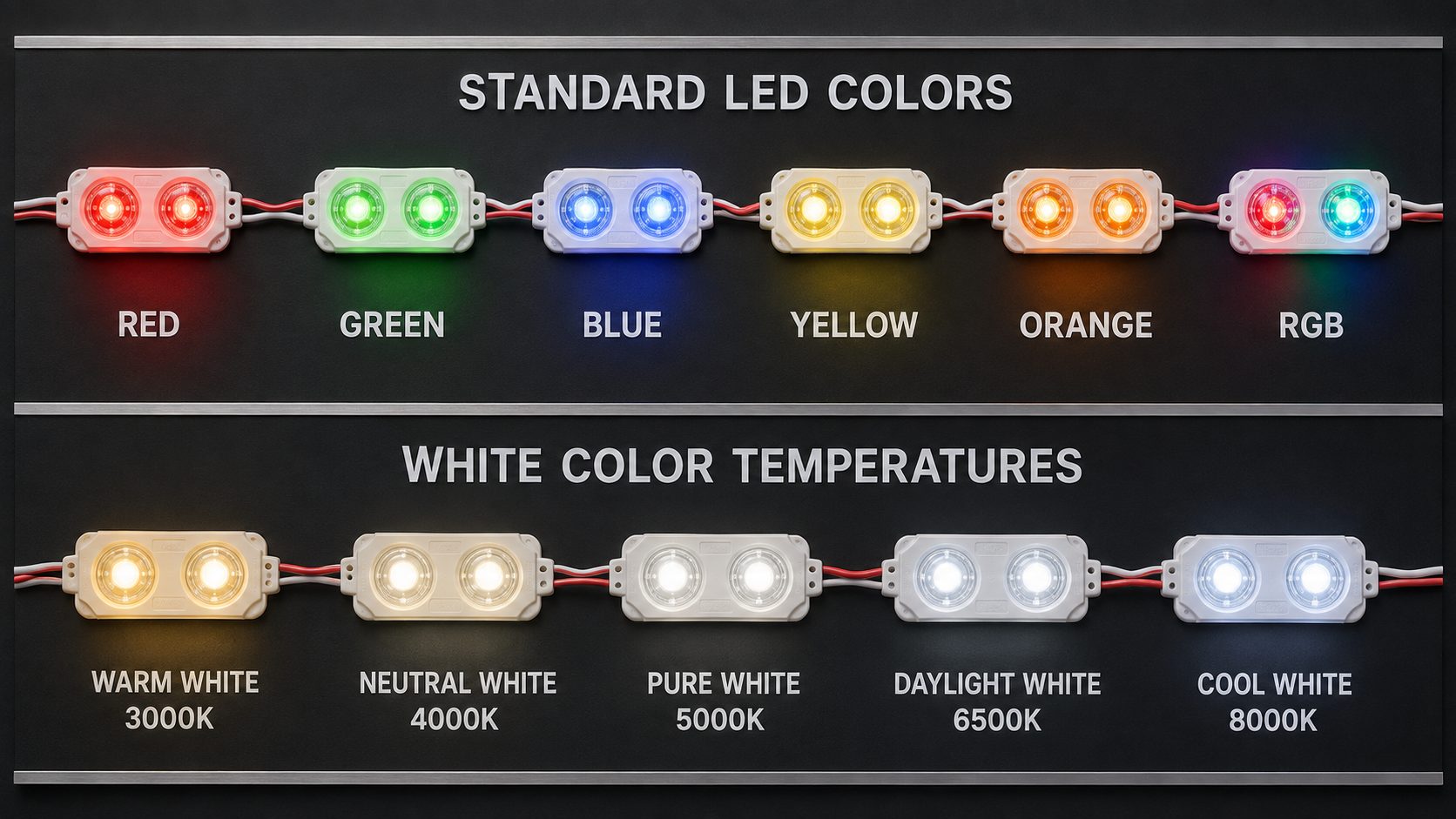
- 2700–3000K — warm, boutique feel
- 3500–4000K — balanced, suits clinics and professional offices
- 5000–6500K — crisp, modern tone for tech and fitness brands
Specify one Kelvin target for the entire set — even a small mismatch between letters is visible at night.
Wall Surface
Rough or textured substrates (brick, stone) scatter the light unevenly; a thin backer plate behind the letters can smooth the wash. Flag the wall material to your fabricator at the quote stage, not after the letters arrive.
Construction Quality That Separates a Clean Halo From a Sloppy One
- LED binning: tight binning keeps color consistent letter to letter across the set
- Diffusers: frosted acrylic or polycarbonate backs reduce visible hot spots from individual LEDs
- Seals & drains: gaskets and drain paths manage moisture and thaw-cycle condensation
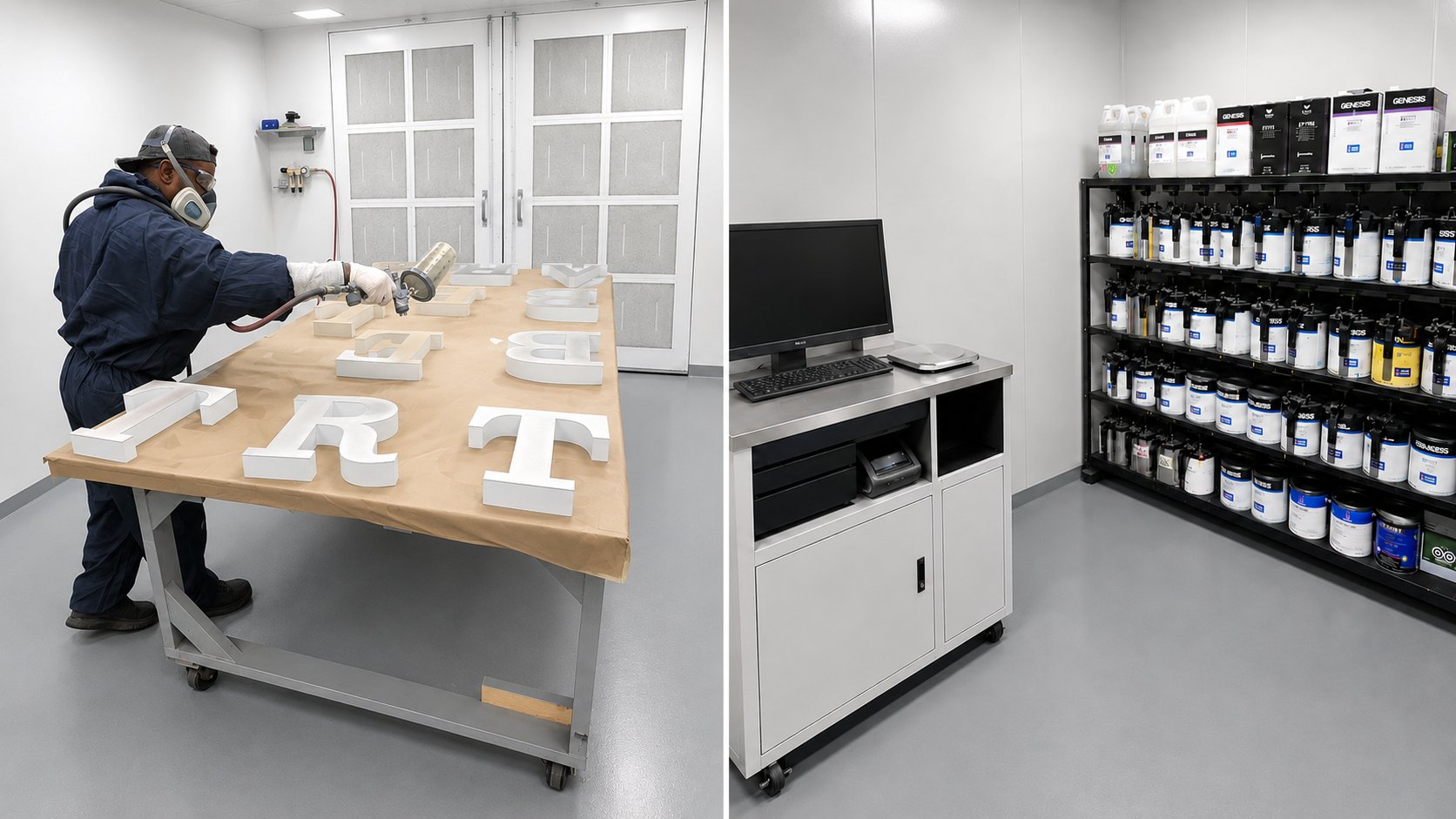
- Finish: consistent brush direction and a dust-free powder coat — inconsistent finish is one of the most common visible defects on a rush order
- Serviceability: plug-and-play harnesses and labeled connectors make field service faster
When ordering, ask for a small sample or cutaway before full production on brand-critical or multi-location programs.
Installation Notes for the Field
- Use full-size patterns to mark penetrations and standoff locations
- Keep standoff spacing consistent to control the halo evenly across the set
- Route wiring to remote power supplies for accessible servicing
- Seal penetrations with architectural-grade sealant, particularly in cold climates
- Do a dusk check after install to confirm even spill, alignment, and brightness before calling the job complete
Cost & Timeline Expectations
Reverse halo letters typically cost more than face-lit sets — the premium covers metal faces, precision welding, quality LEDs, and diffusers. The payoff is durability: the face doesn't fade the way printed or vinyl-faced signage can.
- Budget: a premium over standard face-lit channel letters
- Lead time: drawings, approval, fabrication, and shipping as distinct milestones
- Operating costs: efficient LEDs keep ongoing power draw modest
- Maintenance: occasional cleaning and simple checks, faster with labeled harnesses
For multi-location programs, a published, reliable production schedule matters more than a marginally lower unit price when a client's opening date is fixed.
Ordering Reverse Halo Letters Wholesale
Confirm the following when placing an order:
- Return depth, metal type, and gauge (0.040″–0.063″ aluminum, or 304/316 stainless)
- LED color and Kelvin temperature, consistent across the full set
- Standoff distance and mounting method (direct, raceway, or standoff studs)
- Face and return finish, with an exact PMS or paint code — not a color name
- UL 48 (US) or CSA C22.2 No. 207 (Canada) certification for the installation jurisdiction
- Packaging and shipping requirements, especially for cold-climate or long-distance routes
Wholesale Sign Pro manufactures reverse halo letters in-house — stainless and aluminum fabrication, LED assembly, and finishing all under one roof — alongside face-lit, edge-lit, and front-and-back-lit construction, for sign companies, agencies, and franchise programs across the United States and Canada.
FAQ
Is reverse halo more expensive than standard face-lit letters?
Generally yes. The metal face, precision welding, and diffuser work add cost relative to a standard face-lit acrylic set, though less than fully custom fabricated letters.
Can reverse halo letters be used outdoors?
Yes, with outdoor-rated LED modules, drivers, and weather-resistant construction, plus proper drainage — the same environmental requirements as any illuminated exterior sign.
Does reverse halo construction need different certification than face-lit?
No. The same UL 48 (US) or CSA C22.2 No. 207 (Canada) requirements apply to the completed sign regardless of which lighting method is used.