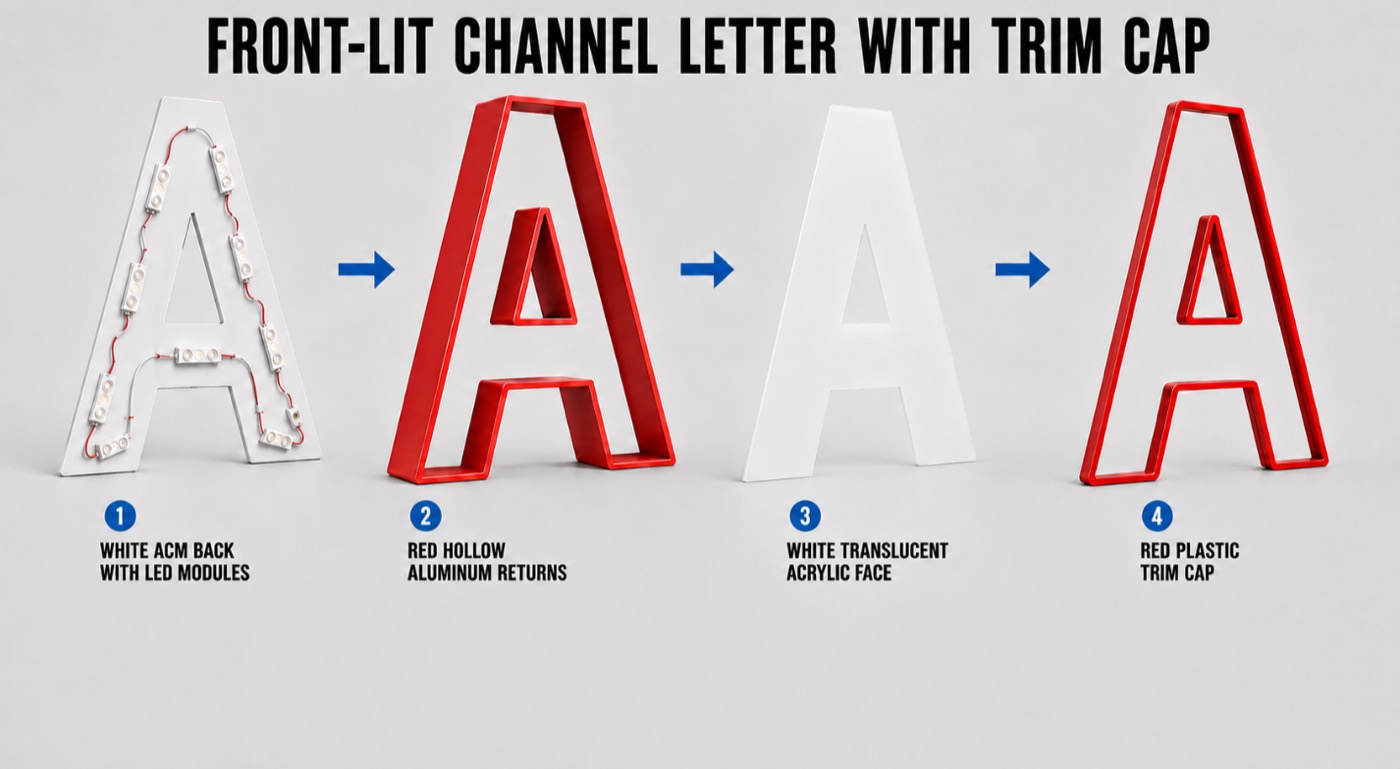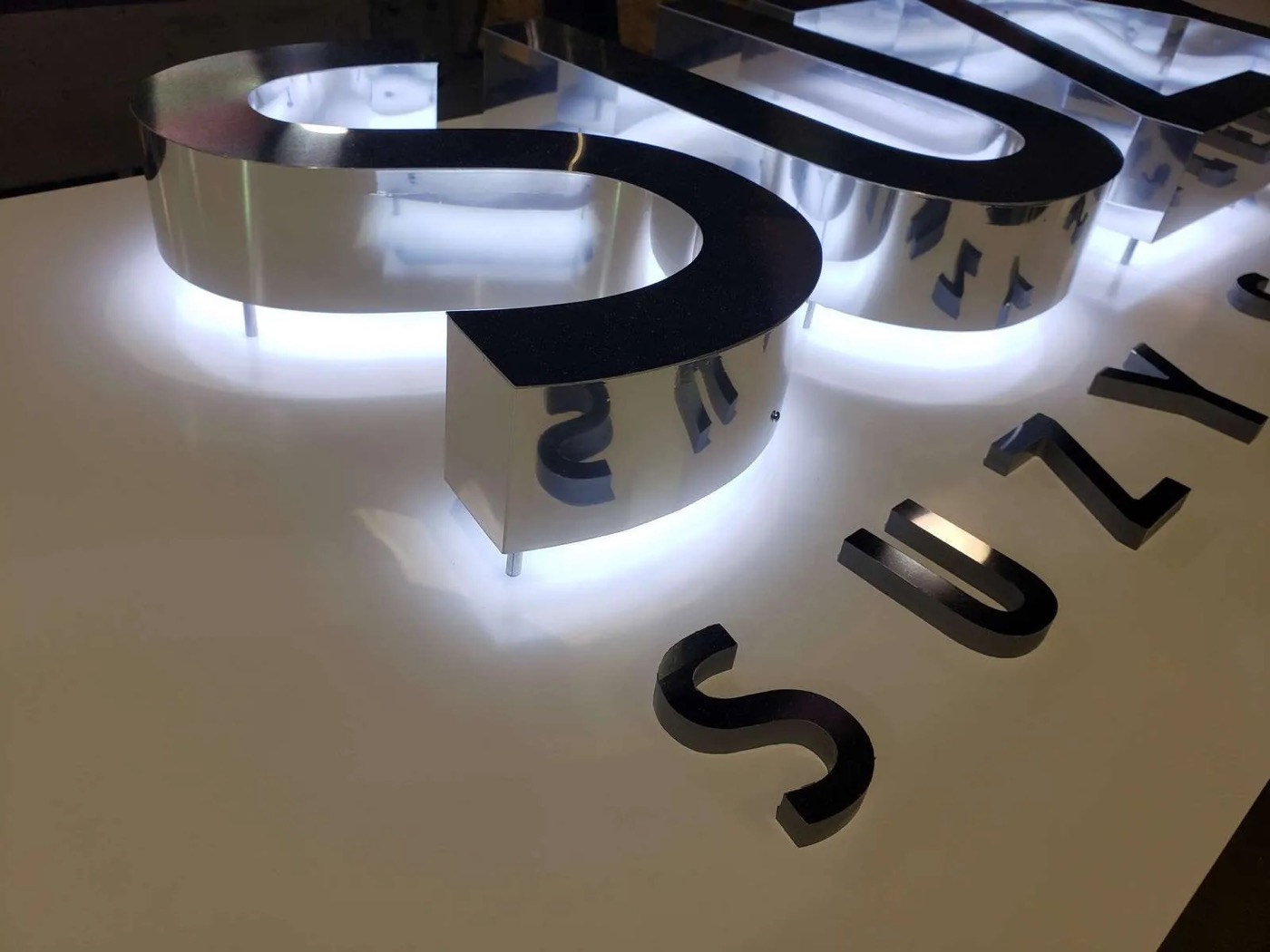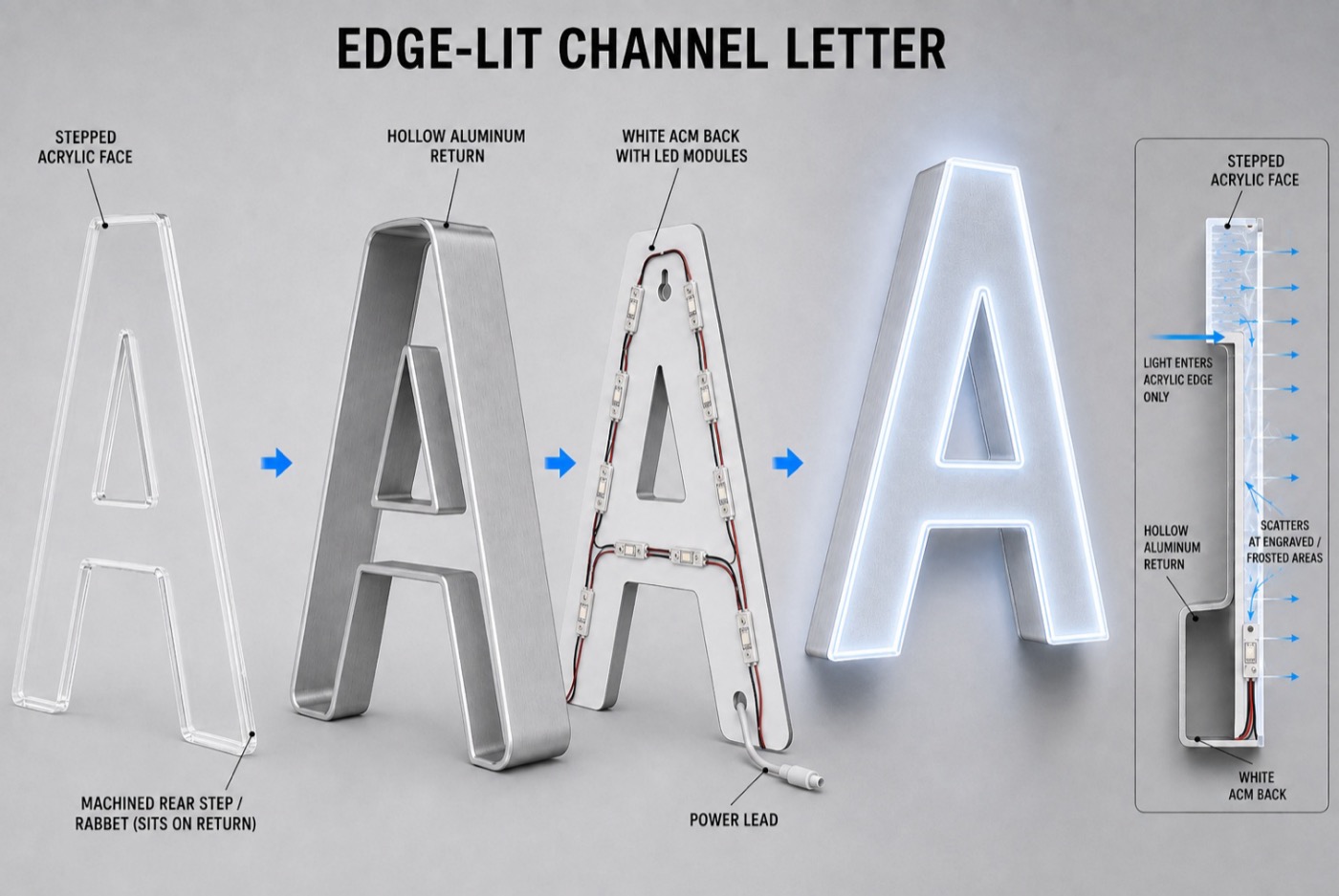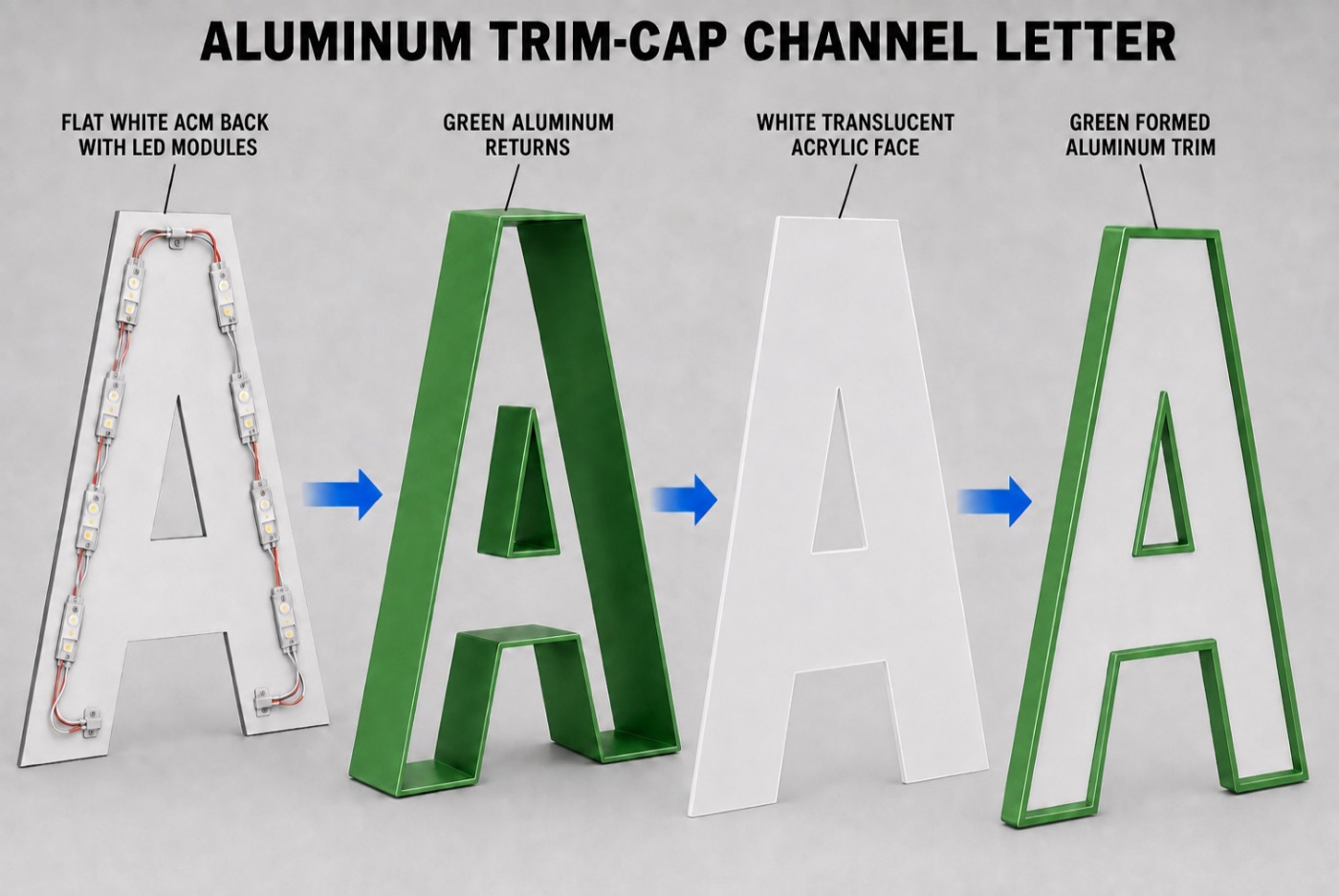
Ask around a sign shop what “UL” means and the quick answer is usually “certified.” The trouble is that a complete Listed product and a Recognized Component are not certified in the same way. That distinction matters whenever components are assembled into an illuminated sign.
They are not the same mark, they don't mean the same thing, and mixing them up is how a shop ends up shipping a sign that looks compliant but isn't.
The Short Version
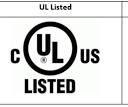
- UL Listed applies to a complete, standalone product evaluated for a defined use — a full LED power supply, a disconnect switch, or a complete electric sign.
- UL Recognized applies to a component meant to be built into something else — an LED module, a connector, an internal power supply — and it comes with conditions on how that component may be used.
- Buying Recognized parts does not make the finished sign Listed. The assembled sign still has to be evaluated as its own product under UL 48.
Everything below unpacks why that matters and where shops actually get tripped up.
What "UL Listed" Actually Certifies
A Listed product has gone through evaluation as a complete, end-use item — meaning UL (or another NRTL) looked at the whole thing as it will actually be used, not just its individual parts. Common examples in the sign world:
- A complete LED power supply, sold and installed as-is
- A disconnect switch
- A complete, finished electric sign
- A sign retrofit kit intended to convert an existing sign
If a customer asks "is this Listed," they're asking about something that was tested and approved as a finished, usable product on its own.
What "UL Recognized" Actually Certifies
A Recognized Component is different in kind, not just in degree. It's evaluated on the assumption that it will be installed inside something else that gets its own separate evaluation. The Recognized mark comes with a defined set of conditions — voltage range, enclosure requirements, temperature limits, mounting orientation, wiring method — and the certification only holds if the component is used within those conditions.
Components you'll commonly see with a Recognized mark rather than a Listed mark:
- LED modules
- Internal connectors
- Power supplies intended for integration into a larger assembly
- Insulating materials
- Component-level wiring
- Certain polymeric parts used inside an enclosure
A Recognized mark on an LED module tells you the module itself was evaluated — it does not tell you anything about whether the sign you build around it has been.
Why This Trips Up Sign Shops Specifically
Channel letters and illuminated cabinets are assembled products almost by definition: a shop buys Recognized LEDs, a Recognized (or Listed) driver, wire, connectors, and enclosure materials, then builds something new out of them. It's an easy — and wrong — leap to assume that because every individual part carries a UL mark, the finished sign inherits that certification automatically.
It doesn't. UL 48 evaluates the complete sign as its own product, including things no individual component certification can speak to:
- How the components were combined
- Whether the power supply is loaded within its rated limits
- Wiring methods and wire protection between components
- Grounding and bonding of the assembled unit
- Spacing between electrical parts
- Heat dissipation across the whole enclosure
- The sign's environmental rating (dry, damp, or wet location) as built
- Drainage and accessibility of the finished product
- The labels and installation instructions that ship with it
A driver that's Recognized for use "inside a suitable enclosure, below a stated maximum load, with specified clearances, protected from water, within an approved ambient-temperature range" is only compliant when the finished sign actually meets every one of those conditions. Exceed the load, skip the clearance, or mount it somewhere wetter than its rating allows, and the sign is out of compliance — even though the driver itself still carries a valid mark.
A Concrete Example
Say a shop builds a set of front-lit channel letters using:
- LED modules — Recognized
- An LED driver — Recognized, rated for a specific maximum load and a dry or damp location
- Connectors and wire — Recognized
Every part in the letter carries a UL mark. But the finished, assembled sign has not, by itself, been evaluated — not unless the shop is operating under an accepted certification program (such as UL's General Coverage program for custom sign shops) that covers exactly this kind of assembly, or the completed sign goes through its own listing or field evaluation.
If that same shop mounts the driver outdoors without confirming its location rating, or wires two letter sections together in a way the driver's conditions of acceptability don't cover, the sign can be noncompliant on day one — regardless of what any individual component's label says.
What Actually Makes a Finished Sign Compliant
In practice, a sign is treated as properly certified when one of the following is true:
- It's built under an accepted factory certification program (like UL's General Coverage program), where a participating shop works within documented construction rules, uses approved components within their conditions, and undergoes ongoing production surveillance — with the label applied to signs that stay inside that program's scope.
- It's evaluated and listed as a complete unit by UL or another recognized NRTL.
- It receives a field evaluation for the specific unit in question, when it wasn't built under a listing program — though a field-evaluation label covers only the unit inspected, not future production.
None of these paths are satisfied just by sourcing good parts. All three require the finished sign to be the thing that's actually evaluated.
A Quick Self-Check for Sign Shops
Before treating a sign as compliant, it's worth confirming:
- Are the individual components Listed, Recognized, or unmarked — and do you know which?
- If a component is Recognized, do you know its specific conditions of acceptability (load, location rating, clearances, mounting)?
- Does the finished sign actually meet those conditions as built and installed — not just as designed?
- Is the shop operating under an accepted certification program that covers this type of sign, or does the completed unit need its own listing or field evaluation?
- Is the certification label on the sign itself — not just present on a component data sheet somewhere in the build file?
If the honest answer to any of these is "not sure," that's the moment to check with the certification body or the shop's UL program representative — before the sign ships, not after an inspector asks.
FAQ
If every component in my sign is UL Recognized, is the sign UL Listed?
No. Recognized components are evaluated for use inside another certified product — they don't certify the assembled sign on their own. The finished sign needs its own evaluation, whether through a factory certification program, a full listing, or a field evaluation.
Can a Listed component be used incorrectly and still be compliant?
No. A Listed or Recognized mark is only valid when the product is used within the conditions its certification specifies — voltage, load, location rating, mounting, and wiring method among them. Using it outside those conditions can make the finished sign noncompliant even though the component's mark is genuine.
What's the difference between UL Listed and UL Recognized?
UL Listed applies to a complete, standalone product evaluated for a defined use, such as a full LED power supply or a complete electric sign. UL Recognized applies to a component meant to be built into something else, like an LED module or connector, and comes with conditions on how it may be used. Buying Recognized parts does not make the finished sign Listed.
Where can I read the full compliance picture, not just this one distinction?
See UL Requirements for Illuminated Signs in the United States for the complete rundown of UL 48, NEC Article 600, labeling, and field evaluation. Building for Canada instead? See CSA Requirements for Illuminated Signs in Canada.
Working With a Manufacturer That Handles This Correctly
This is exactly the kind of detail that's easy to get wrong when a sign is assembled without a documented, audited construction program behind it. Wholesale Sign Pro manufactures wholesale channel letters and custom illuminated signs for sign companies, installers, and designers across the United States, with component selection and assembly controlled to the applicable certification program.
This article provides general industry information and is not a substitute for the applicable code, certification requirements, or professional advice. Confirm specific conditions of acceptability and program scope with the certification body and the Authority Having Jurisdiction.