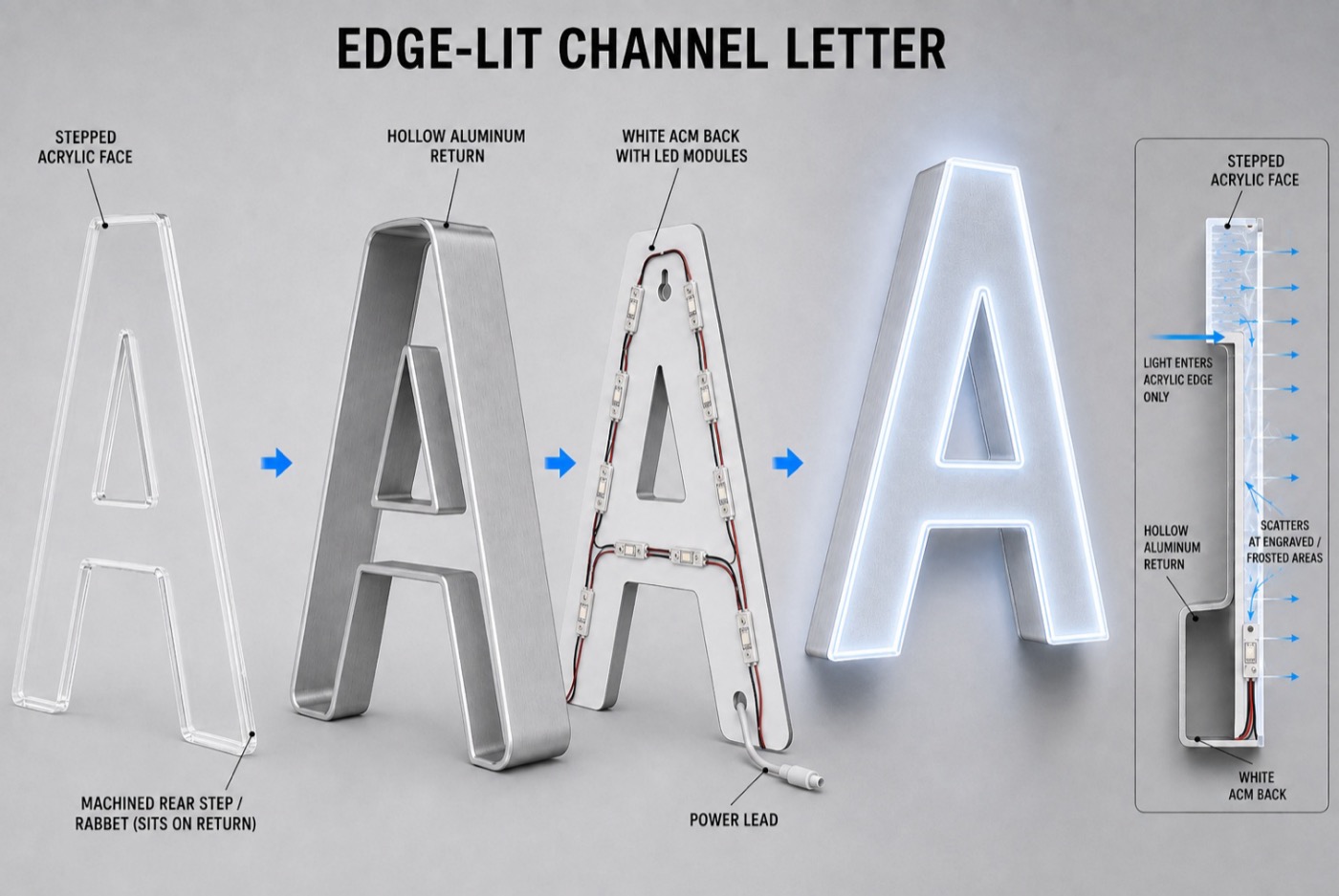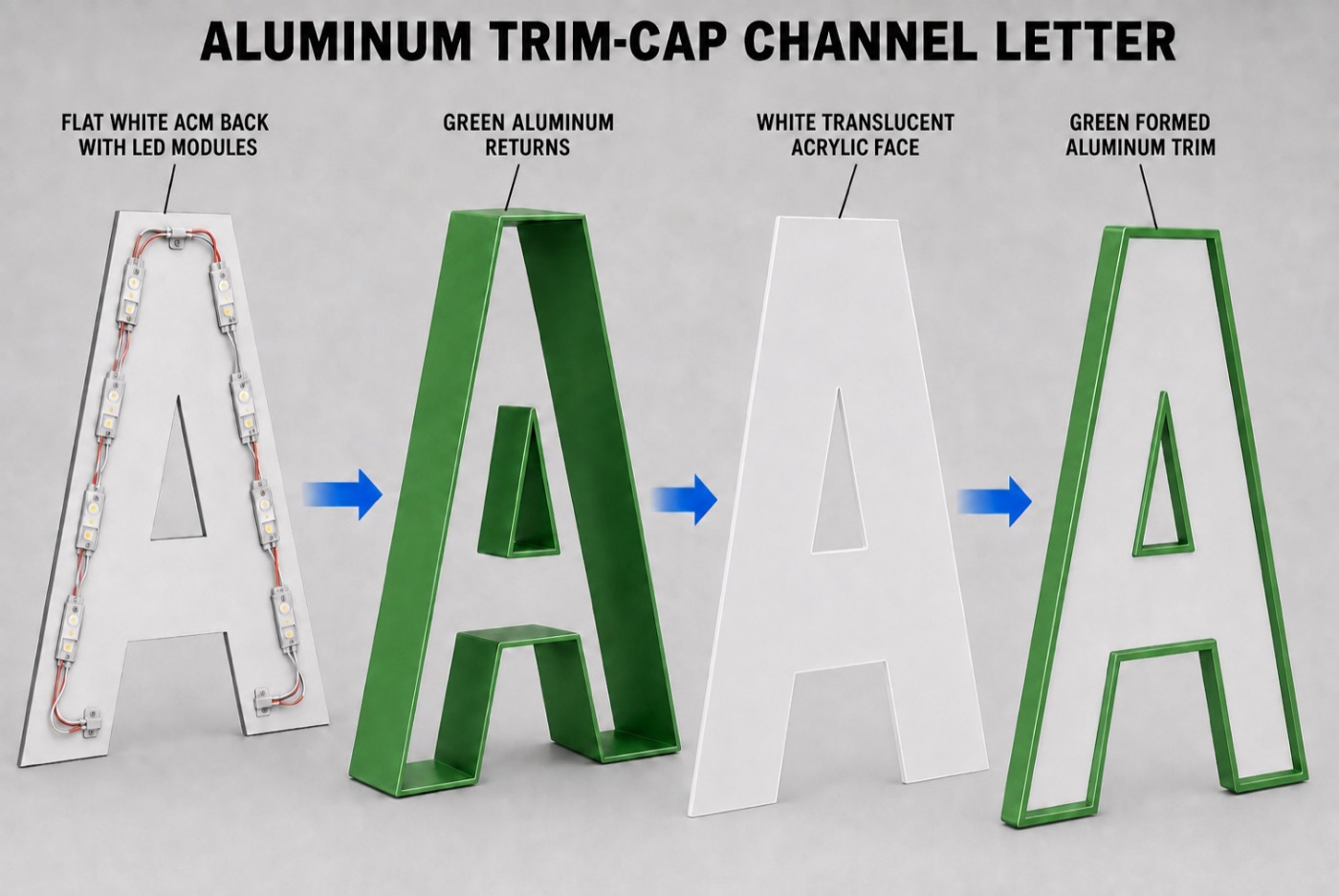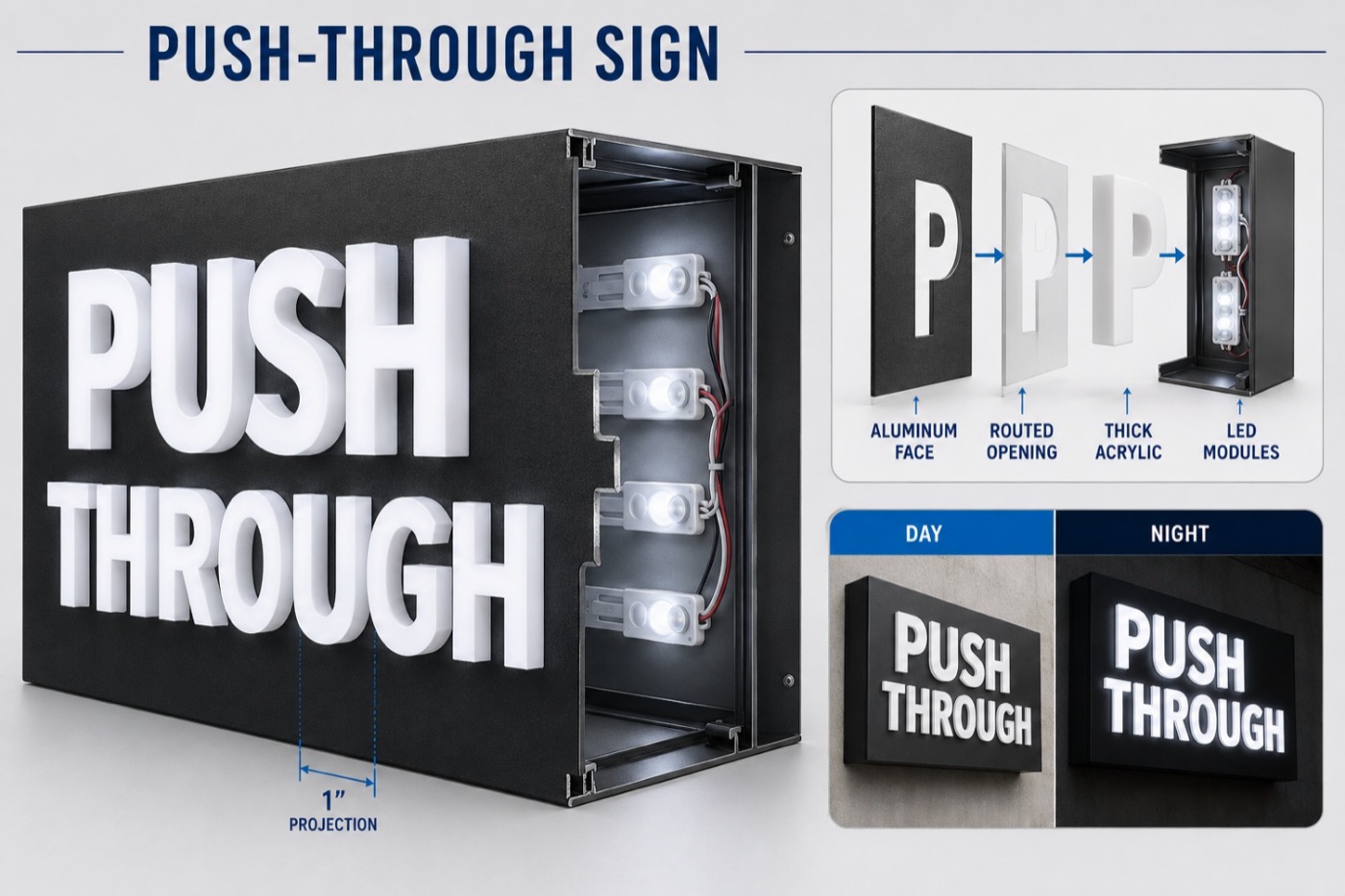

This is not an all-or-nothing decision. A shop can build routine letters in-house and send out a large stainless set, a certified cross-border job, or the overflow that would otherwise miss its install date. The useful question is not “Should we outsource?” but “Which work makes sense to keep this month?”
In-house production provides greater control and faster turnaround when a shop has the right equipment, trained employees, sufficient floor space, and consistent monthly order volume. Wholesale manufacturing is more cost-effective when a project requires specialized fabrication, additional production capacity, UL 48 or CSA C22.2 No. 207 certification, or capabilities that are not available internally.
Many successful sign companies use a hybrid model — manufacturing routine projects internally while outsourcing specialized, certified, or high-volume work to a wholesale channel-letter manufacturer.
When In-House Channel-Letter Manufacturing Makes Sense
1. You Have Consistent Production Volume
Owning channel-letter equipment becomes easier to justify when your company produces enough letters every month to keep the machinery and employees productive.
In-house production may be suitable when you have:
- Predictable monthly channel-letter orders
- Enough projects to keep trained production staff consistently occupied
- Adequate space for fabrication, assembly, and finishing
- Reliable access to aluminum coil, acrylic sheet, LED modules, power supplies, trim, paint, and hardware
- Sufficient cash flow for equipment financing, maintenance, inventory, and labor
Low or inconsistent production volume raises the cost per letter significantly — fixed equipment payments and employee wages continue whether the machinery is running or not.
2. You Need Direct Control Over Scheduling
Producing channel letters internally gives your company direct control over production priorities. Rush orders, replacement letters, and last-minute specification changes do not require an external approval step or a position in a wholesale production queue.
This is particularly valuable for companies serving:
- National retail accounts
- Shopping centers and property-management companies
- Franchise programs with tight rollout schedules
- Emergency service and repair contracts
This scheduling advantage depends on having available labor and machine capacity. An overloaded in-house department may actually produce longer lead times than a dedicated wholesale channel-letter manufacturer.
3. You Already Have the Required Equipment
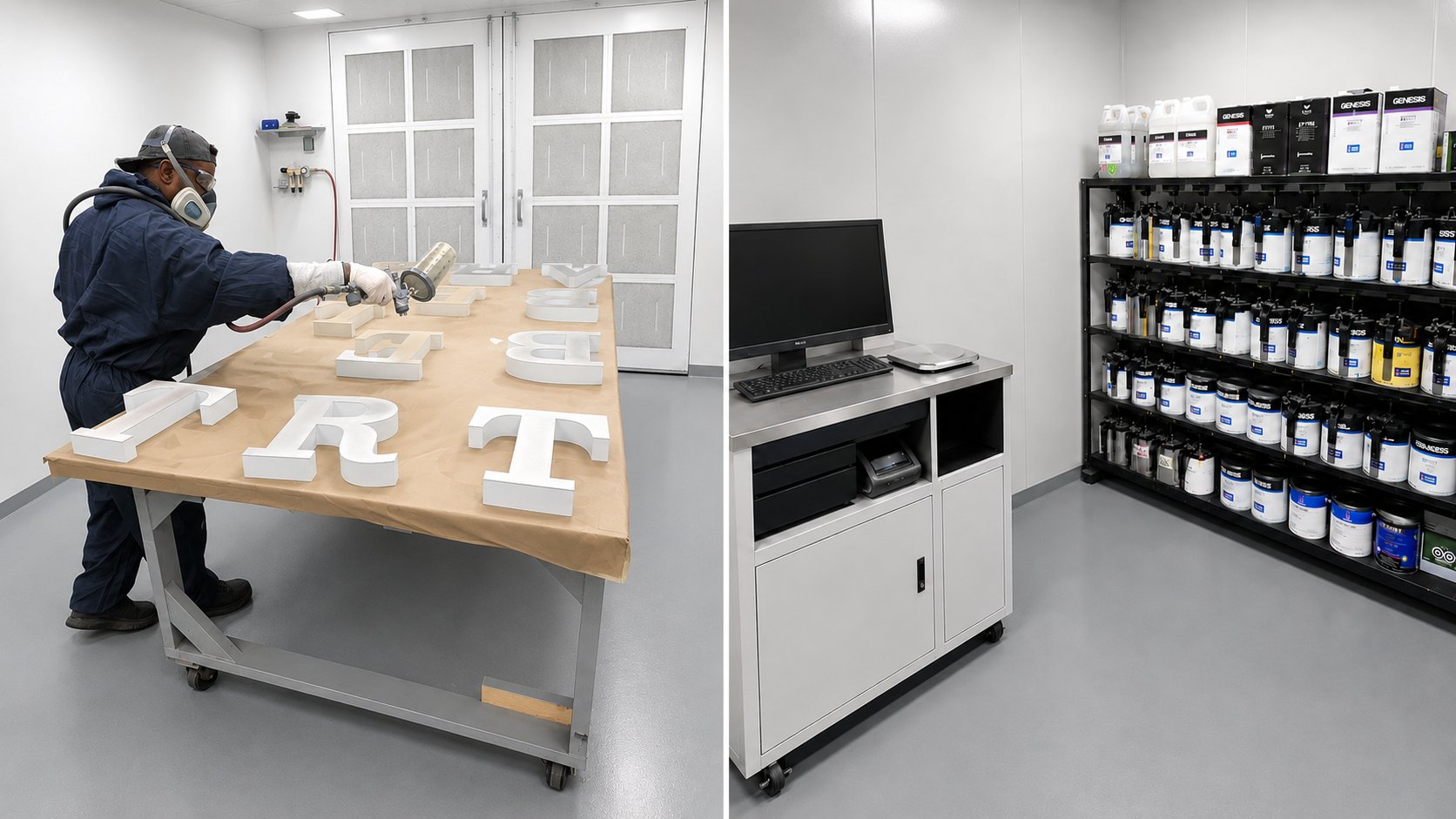
A complete channel-letter production department may require:
- CNC channel-letter bending machine
- CNC router or laser cutter for faces and backs
- Aluminum and acrylic fabrication tools
- Welding or mechanical fastening equipment
- LED assembly stations
- Paint facilities and spray booth
- Electrical testing equipment
- Packaging and crating capabilities
If these resources are already operating at productive capacity, manufacturing standard front-lit letters in-house may produce better margins than outsourcing.
4. The Work Is Repetitive and Standardized
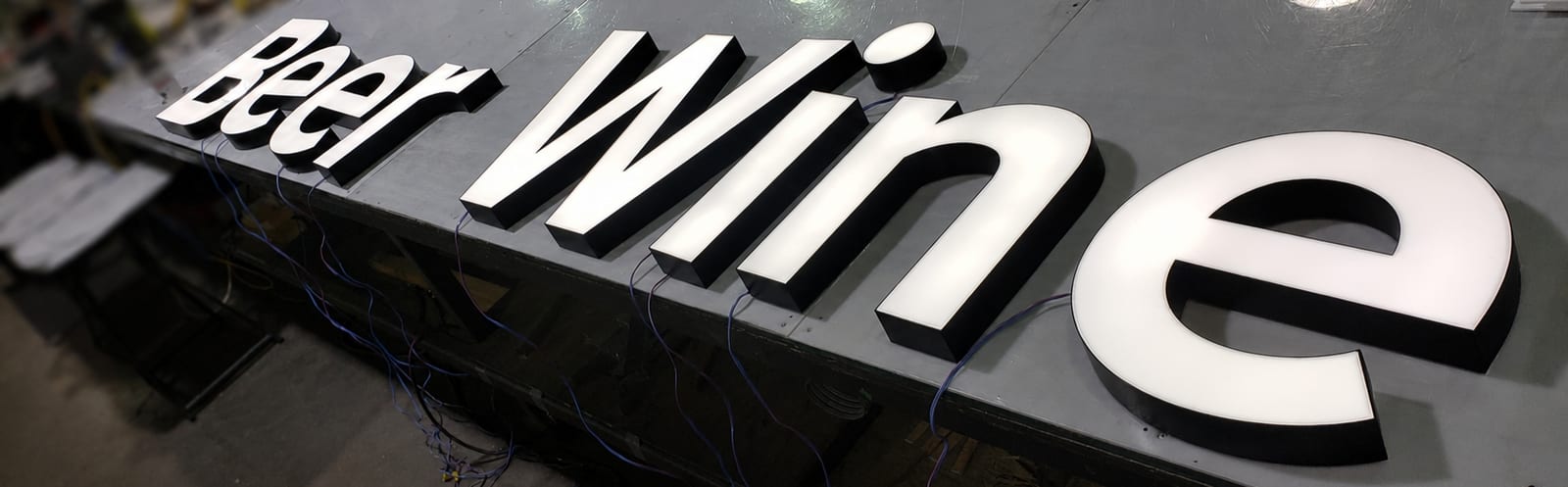
Straightforward front-lit channel letters, standard raceway-mounted sets, and repeat programs with established specifications are well-suited to in-house production.
Standardized production reduces:
- Engineering time per order
- Material waste from setup and first-article runs
- Machine setup time
- Employee training requirements
- Quality inconsistencies between repeat orders
When Wholesale Channel-Letter Manufacturing Makes Sense
1. Your Production Department Is at Capacity
Outsourcing to a wholesale channel-letter manufacturer prevents a temporary surge in orders from disrupting regular production. A wholesale partner provides additional fabrication capacity without requiring immediate investment in equipment, floor space, or permanent employees.
This is especially useful during:
- Seasonal demand peaks
- Large rebranding programs
- Multi-location rollouts
- Unexpected employee absences
- Tight construction deadlines
- Simultaneous large projects that exceed current machine capacity
Wholesale manufacturing converts fixed production overhead into a variable project cost — the sign company pays only for what it orders, without carrying the fixed costs of idle equipment and employees during slow periods.
2. The Project Requires Specialized Fabrication
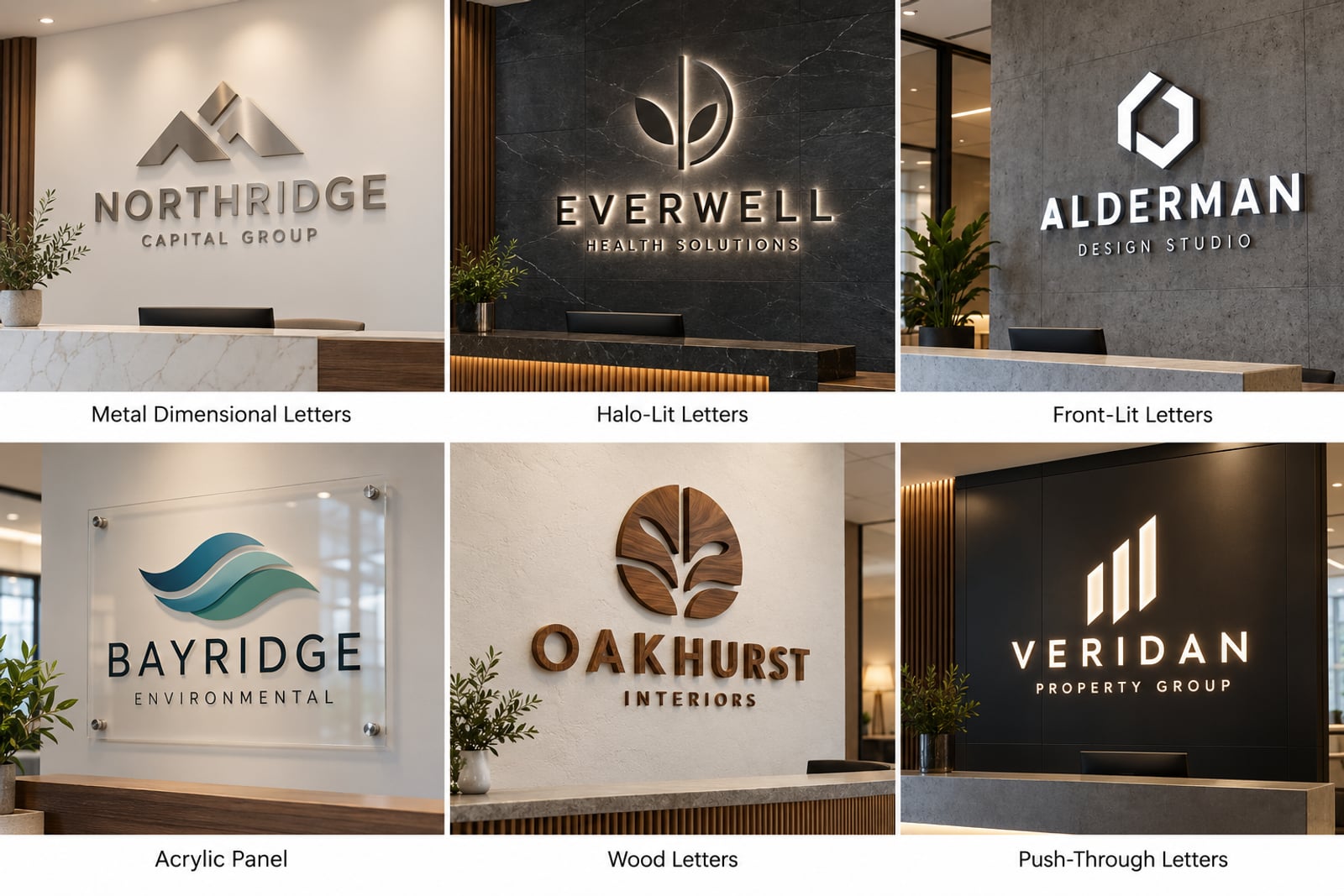
Some channel-letter types require equipment or expertise that may not be available in every sign shop:
- Trim-less channel letters (requires a CNC extrusion bending system)
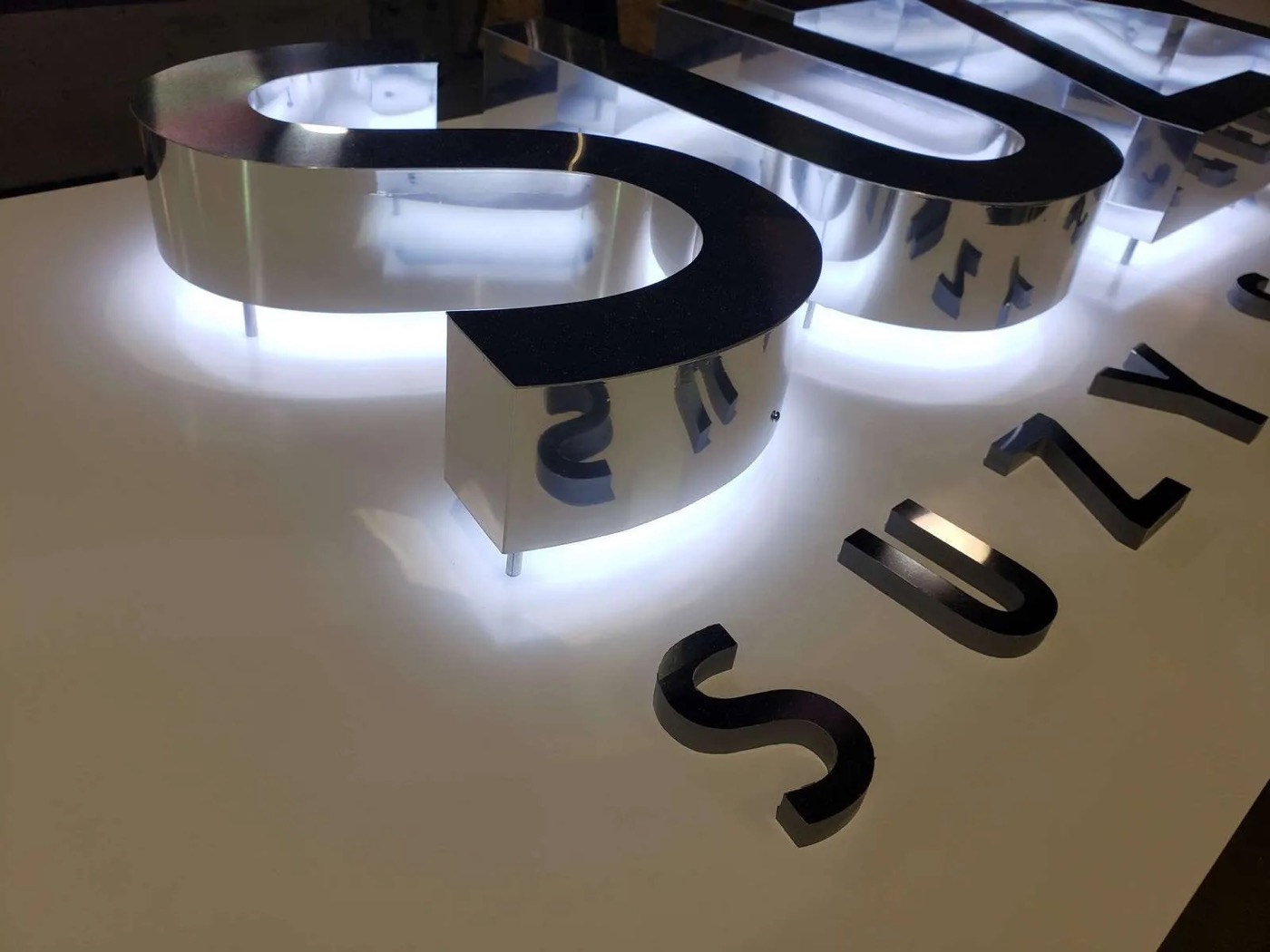
- Reverse or halo-lit letters
- Front-and-back-lit letters
- Stainless-steel fabricated letters
- Large contour logos and complex shapes
- Deep or oversized letters
- Push-through acrylic signs
- Edge-lit letters
- Formed aluminum trim systems
- Custom-painted or architectural finishes
Outsourcing specialized products can be more economical than purchasing equipment that will be used on an occasional basis.
3. You Do Not Have Enough Volume to Justify Equipment
The cost of manufacturing channel letters in-house involves more than the purchase price of a bender. A complete cost analysis must include:
- Equipment financing payments
- Operator wages and payroll burden
- Training
- Maintenance and tooling
- Production software
- Material inventory
- Material waste
- Electrical testing
- Quality control
- Floor space
- Insurance
- Packaging and crating
When channel-letter orders are occasional or unpredictable, wholesale purchasing converts these fixed expenses into a predictable, project-based cost.
4. Certification Is Required
Illuminated signs installed in the United States may require UL 48 certification. Signs installed in Canada may require CSA C22.2 No. 207 certification. Requirements vary by jurisdiction and should be confirmed with the local Authority Having Jurisdiction (AHJ) before production begins.
A qualified wholesale channel-letter manufacturer can supply certified signs when the ordering sign company does not maintain the required certification program.
Before ordering, confirm:
- Which standard applies — UL 48 (USA) or CSA C22.2 No. 207 (Canada)
- Whether the finished sign will carry the required certification label
- Whether the certification covers the proposed construction and LED components
- Whether the installation method affects compliance
- Whether local electrical inspection requires additional documentation
Certification must be specified at the quotation stage. A sign cannot be assumed to carry a required certification unless it is explicitly included in the quotation and confirmed on the order.
5. You Need More Predictable Project Costing
A wholesale quotation establishes the manufacturing cost before the sign company submits its final price to the customer — eliminating the risk of underestimating fabrication labor, material consumption, or production time.
A complete wholesale quotation may include:
- Channel-letter fabrication
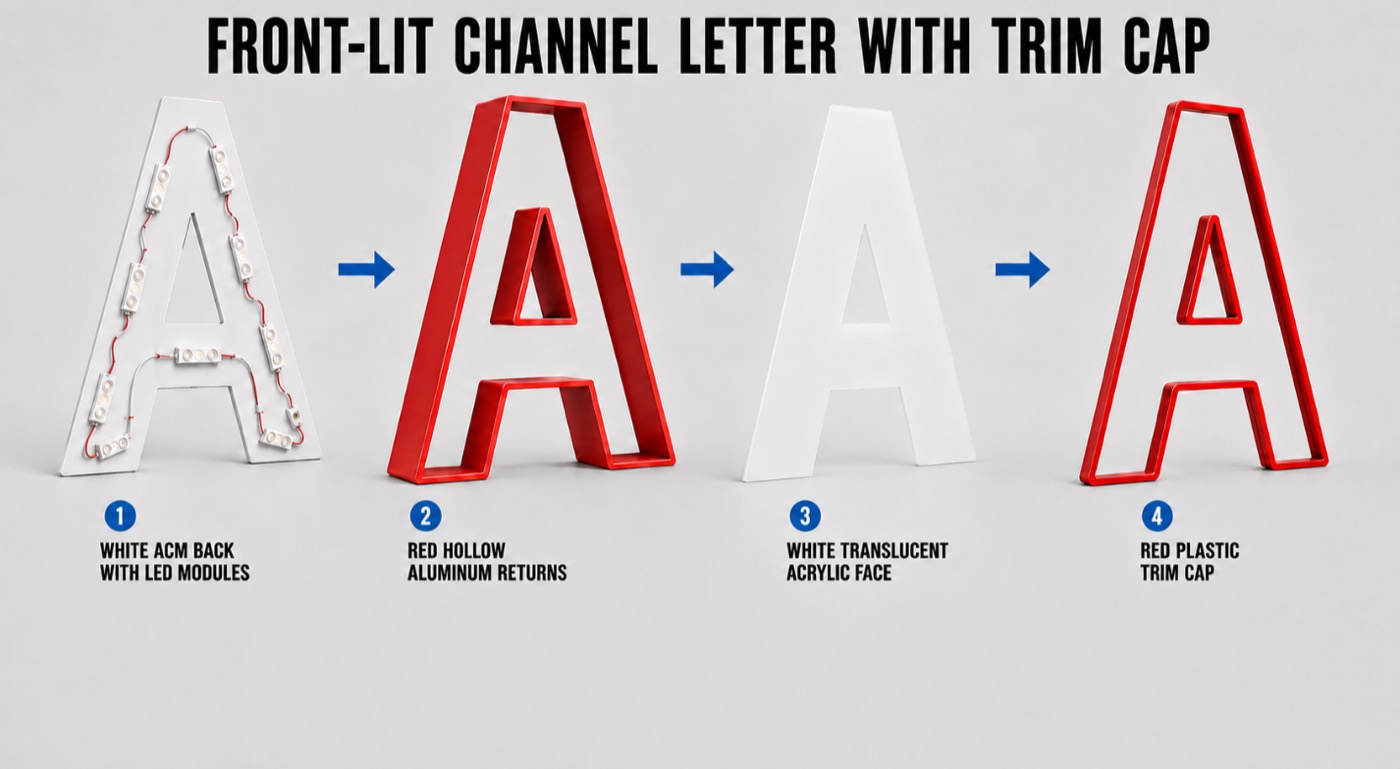
- Acrylic faces
- Aluminum returns and backs
- LED modules and power supplies
- Raceway or wireway
- Mounting hardware
- Full-size installation patterns
- Shop drawings
- Certification labeling
- Packaging and crating
- Freight
6. Your Employees Are More Valuable Elsewhere
Fabrication is one part of a sign project. Skilled employees may generate more revenue by concentrating on:
- Sales and estimating
- Site surveys and field measurements
- Permit applications and code research
- Project management
- Graphic design and artwork
- Sign installation
- Service and maintenance contracts
- Customer relationship management
Outsourcing channel-letter manufacturing to a wholesale supplier allows a sign company to focus on the parts of the project where it has the strongest competitive advantage.
7. The Project Is Outside Your Normal Service Area
For installations in distant markets, a wholesale channel-letter manufacturer that ships nationally can reduce freight costs and delivery time compared with shipping from your own facility.
This is useful for:
- National sign programs
- Cross-border projects requiring US or Canadian certification
- Multi-state or multi-province rollouts
- Installations outside your regular service territory
Comparing In-House and Wholesale Production
| Consideration | In-House Manufacturing | Wholesale Manufacturing |
|---|---|---|
| Initial investment | High — equipment, tooling, training, and facility | Minimal — pay per project |
| Fixed overhead | Higher — equipment, staff, and space ongoing | Lower — no ongoing fixed fabrication cost |
| Production control | Direct | Coordinated with the wholesale supplier |
| Best production volume | Consistent and predictable | Variable or occasional |
| Specialized products | Requires equipment, expertise, and setup | Available through a qualified wholesale fabricator |
| Capacity expansion | Requires additional labor and equipment | Available by outsourcing additional orders |
| UL 48 / CSA C22.2 No. 207 | Must maintain the required certification program | May be supplied by a certified wholesale manufacturer |
| Cost structure | Fixed plus variable costs | Primarily project-based |
| Rush replacements | Potentially faster with available capacity | Depends on supplier lead time and stocking |
| Complex projects | May disrupt regular production workflow | Can be assigned to a specialist fabricator |
| Quality control | Managed internally | Depends on supplier selection and QC process |
| Geographic reach | Limited by in-house shipping capability | Supports broader national and cross-border markets |
The Hybrid Manufacturing Model
For many sign companies, the most profitable approach combines in-house production with selective outsourcing to a wholesale channel-letter manufacturer.
A sign company might manufacture in-house:
- Standard front-lit channel letters
- Simple raceway-mounted sets
- Small replacement letters
- Repeat local projects with established specifications
The same company might outsource to a wholesale manufacturer:
- Trim-less channel letters
- Large, fabricated logos and complex contour shapes
- Stainless-steel letters
- Halo-lit and front-and-back-lit signs
- High-volume rollout programs
- Signs requiring UL 48 or CSA C22.2 No. 207 certification
- Projects that exceed current production capacity or scheduling
This approach keeps internal equipment productive on familiar work while giving the company access to additional capabilities and capacity for specialized or overflow orders.
How to Calculate the True In-House Cost
A fair comparison between in-house fabrication and wholesale purchasing must include more than raw materials and direct labor. A simplified formula:
True manufacturing cost = materials + direct labor + payroll burden + equipment cost + floor-space cost + consumables + waste + rework + quality control + packaging
For example: a project that uses $2,000 in materials and $1,500 in direct labor does not cost $3,500 to produce. Equipment financing, supervision time, electrical testing, damaged materials, employee benefits, shop overhead, and packaging must also be assigned to the order.
Compare the true internal cost against the complete wholesale quotation — including shop drawings, installation patterns, certification, packaging, and freight — not only the supplier's fabrication price.
Questions to Ask a Wholesale Channel-Letter Manufacturer
Before selecting a manufacturing partner:
- What types of channel letters do you manufacture?
- Can you produce trim-less, halo-lit, and front-and-back-lit letters?
- Do you manufacture illuminated signs to UL 48 (USA) and CSA C22.2 No. 207 (Canada) certification standards?
- What aluminum thicknesses, acrylic materials, and return depths are standard?
- Which LED and power-supply brands are available?
- Can you match custom paint colors and acrylic colors?
- Are shop drawings and full-size installation patterns included?
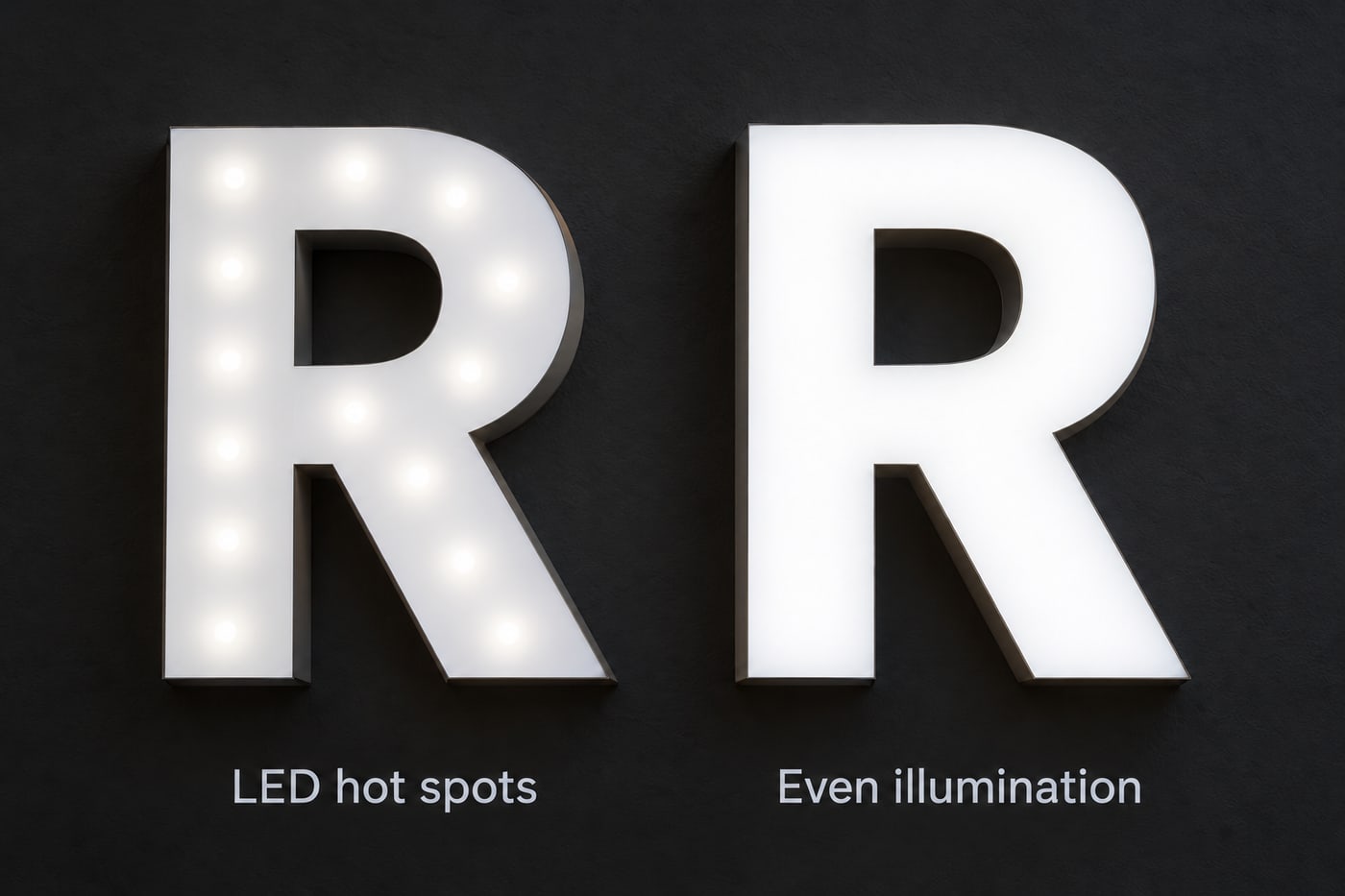
- How is LED illumination uniformity tested before shipment?
- What is the standard production lead time?
- How are finished letters packaged and protected for freight?
- Can you ship directly to the installation site?
- How are shortages, freight damage, and warranty claims handled?
- Do you protect our company and customer information?
- Can you support multi-location and repeat programs?
Warning Signs When Evaluating a Wholesale Supplier
The lowest quotation is not always the lowest total cost. Evaluate any supplier carefully when it:
- Provides an incomplete or vaguely itemized quotation
- Uses unidentified LED modules or power supplies
- Cannot explain its UL 48 or CSA C22.2 No. 207 certification capabilities
- Does not provide shop drawings for customer approval before production
- Frequently changes delivery dates or cannot provide a confirmed lead time
- Uses inadequate packaging that results in transit damage
- Has no documented quality-control or pre-shipment testing process
- Contacts your customer directly without authorization
- Offers no clear warranty or freight-damage claim procedure
A reliable wholesale channel-letter manufacturer operates as an extension of your production department — not as a competitor for your customer relationship.
Making the Final Decision
Keep channel-letter manufacturing in-house when:
- Monthly order volume is consistent and predictable
- Trained production employees and available machine capacity exist
- Required equipment is already operating at productive efficiency
- Standard letter types represent the majority of your project mix
- Your true in-house cost per letter is competitive with wholesale pricing
Use a wholesale channel-letter manufacturer when:
- Your production department is at or near capacity
- The required equipment or expertise is not available in-house
- The project requires trimless, stainless, or other specialized construction
- UL 48 or CSA C22.2 No. 207 certification is required
- Monthly channel-letter order volume is inconsistent
- A large rollout or franchise program exceeds your production capacity
- Outsourcing produces a better total project cost
- Your team generates more revenue through sales, installation, and project management than through fabrication
The right decision is based on capacity, capability, risk, lead time, and total cost — not simply the quoted fabrication price.
The Bottom Line
Wholesale channel-letter manufacturing does not replace an in-house production department — it extends it. Used strategically, a wholesale partner expands your manufacturing capabilities, stabilizes project costs, protects delivery schedules, and allows your company to accept larger or more specialized contracts without adding permanent overhead.
The most capable sign companies understand which work they manufacture most efficiently — and maintain reliable wholesale manufacturing partners for the rest.
Wholesale Sign Pro manufactures custom channel letters to UL 48 (USA) and CSA C22.2 No. 207 (Canada) certification standards for sign companies, installers, designers, and contractors across the United States and Canada. Front-lit, reverse halo-lit, trimless, stainless steel, contour, fabricated, and 3D-printed channel letter types are all produced in-house. Shop drawings, full-size installation patterns, LED light meter testing, and automated protective packaging are included on every order. No fabrication is subcontracted.