
An outdoor digital sign is not just a screen in a weatherproof box. Pixel pitch, viewing distance, brightness, cabinet construction, access for service, and the local approval process all affect whether the installation works. We manufacture outdoor digital LED signs for trade customers across the United States and Canada, and these are the details we discuss before a quote is finalized.
Our full-color programmable LED signs help businesses communicate promotions, announcements, public information, schedules, safety messages, emergency notifications, and branding in bright, attention-grabbing color. Every display is configured for its intended location, viewing distance, content requirements, environmental conditions, and control needs.
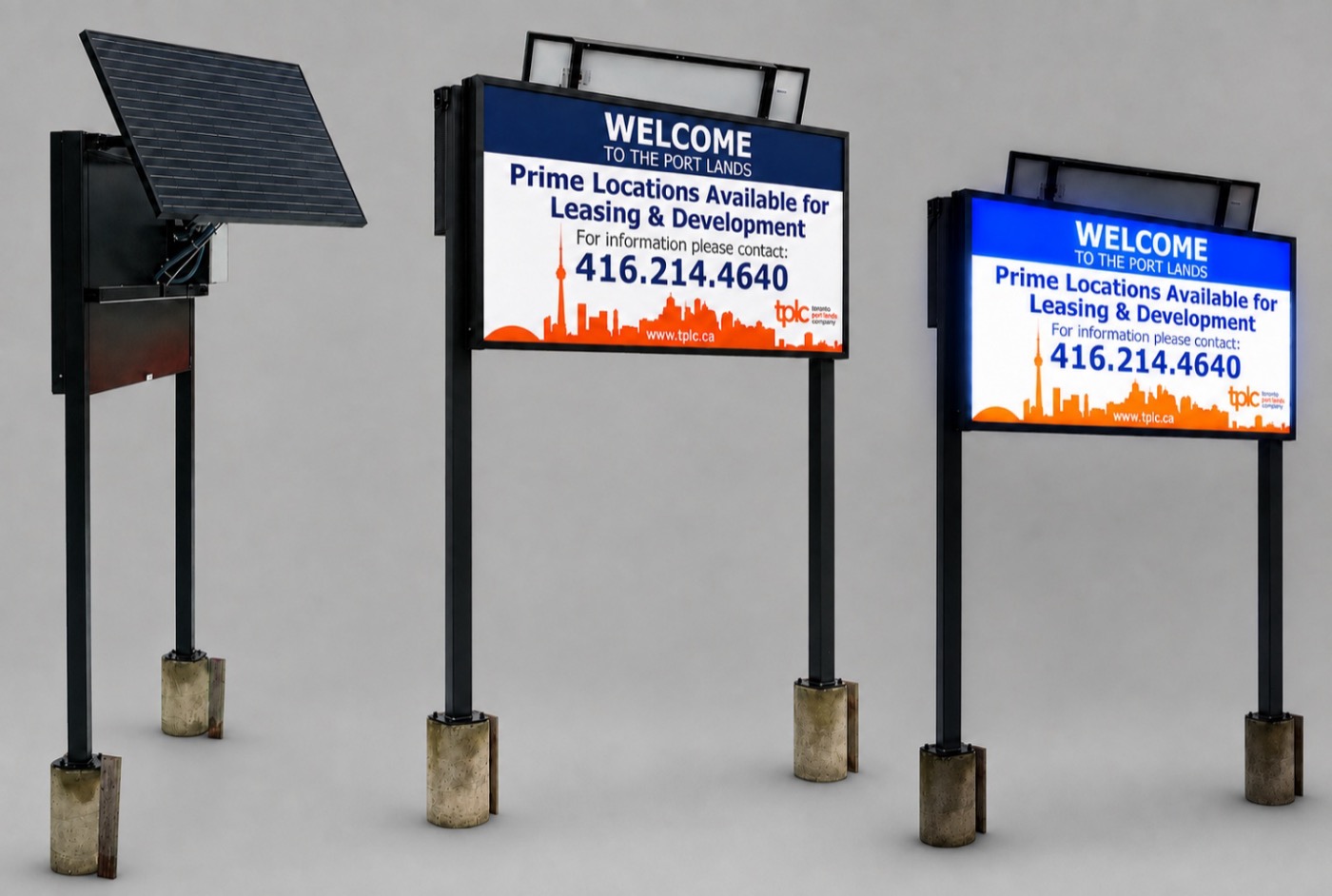
Displays are available as standalone units or integrated into custom monument, pylon, and pole signs, as well as outdoor sign cabinets. We support single-sided and double-sided configurations and can provide a complete digital sign solution under your company's brand.
Outdoor Digital LED Sign Applications
Outdoor electronic message centers are designed for high visibility in changing weather and lighting conditions. Common applications include:
- Monument and pylon signs
- Roadside and pole signs
- Schools, churches, and community centers
- Automotive dealerships
- Shopping centers and retail properties
- Municipal and institutional facilities
- Industrial and commercial properties
- New or existing sign structures
Full-color LED signs can display text, logos, photographs, graphics, animations, pricing, schedules, and promotional content. Authorized users can prepare content in advance, schedule it for selected dates and times, and update it through a compatible control system.
Display capabilities depend on the pixel pitch, physical dimensions, controller, software, communication method, and selected system configuration.
Choosing the Correct Pixel Pitch
Pixel pitch is the distance, measured in millimeters, between the centers of adjacent LED pixels. It affects pixel density, image detail, recommended viewing distance, and display cost.
A smaller pixel pitch places the pixels closer together, producing greater image detail on a display of the same physical size. A larger pixel pitch is generally more economical and can be effective when the sign is viewed from farther away.
The correct specification should be based on:
- Minimum and typical viewing distance
- Display dimensions
- Traffic speed
- Content type and text size
- Viewing angle
- Installation height
- Project budget
- Local sign regulations
P6 vs. P8 Outdoor LED Displays
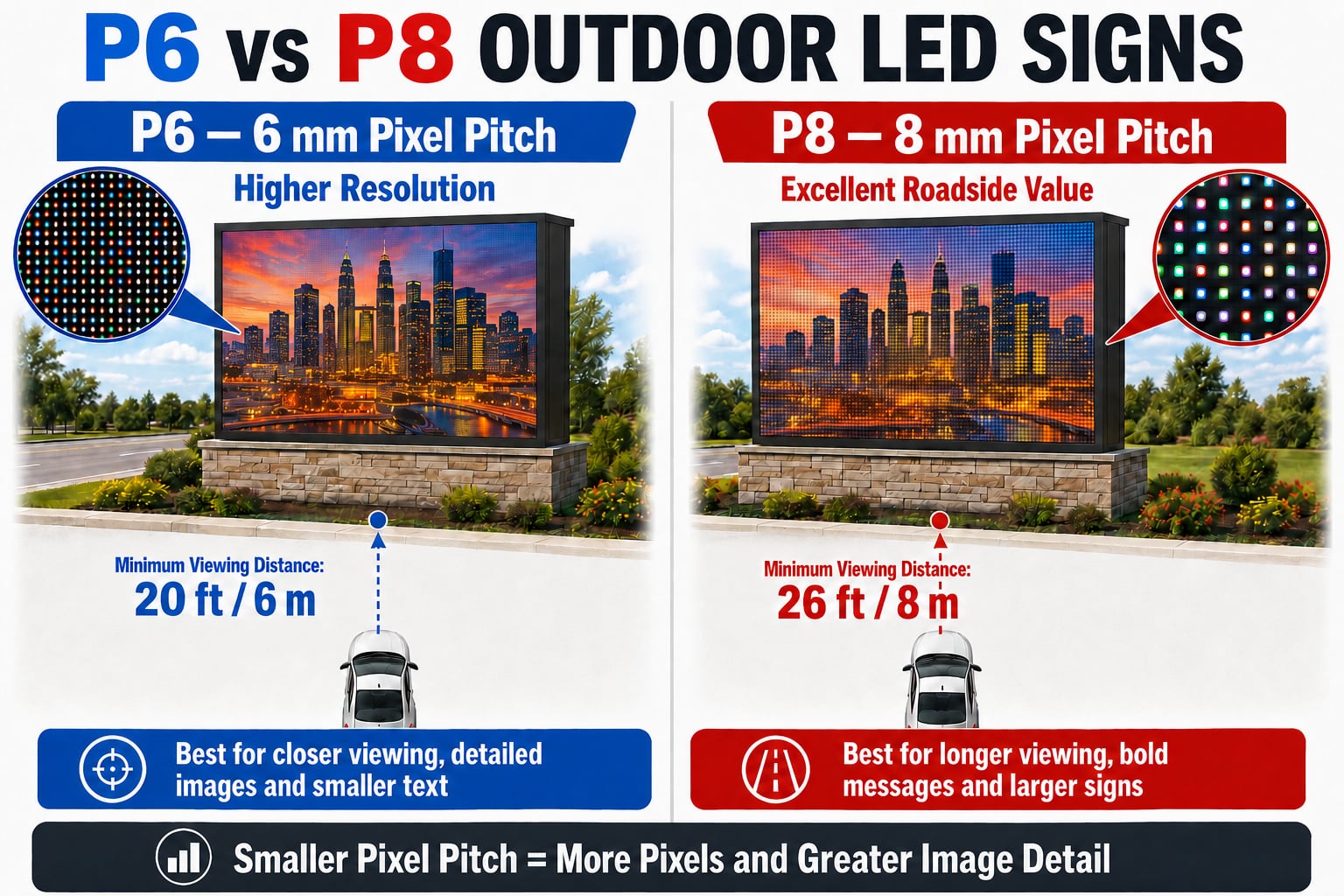
| Feature | P6 LED Display | P8 LED Display |
|---|---|---|
| Pixel spacing | 6 mm | 8 mm |
| Approximate pixels per square meter | 27,778 | 15,625 |
| Image resolution at the same display size | Higher | Standard outdoor resolution |
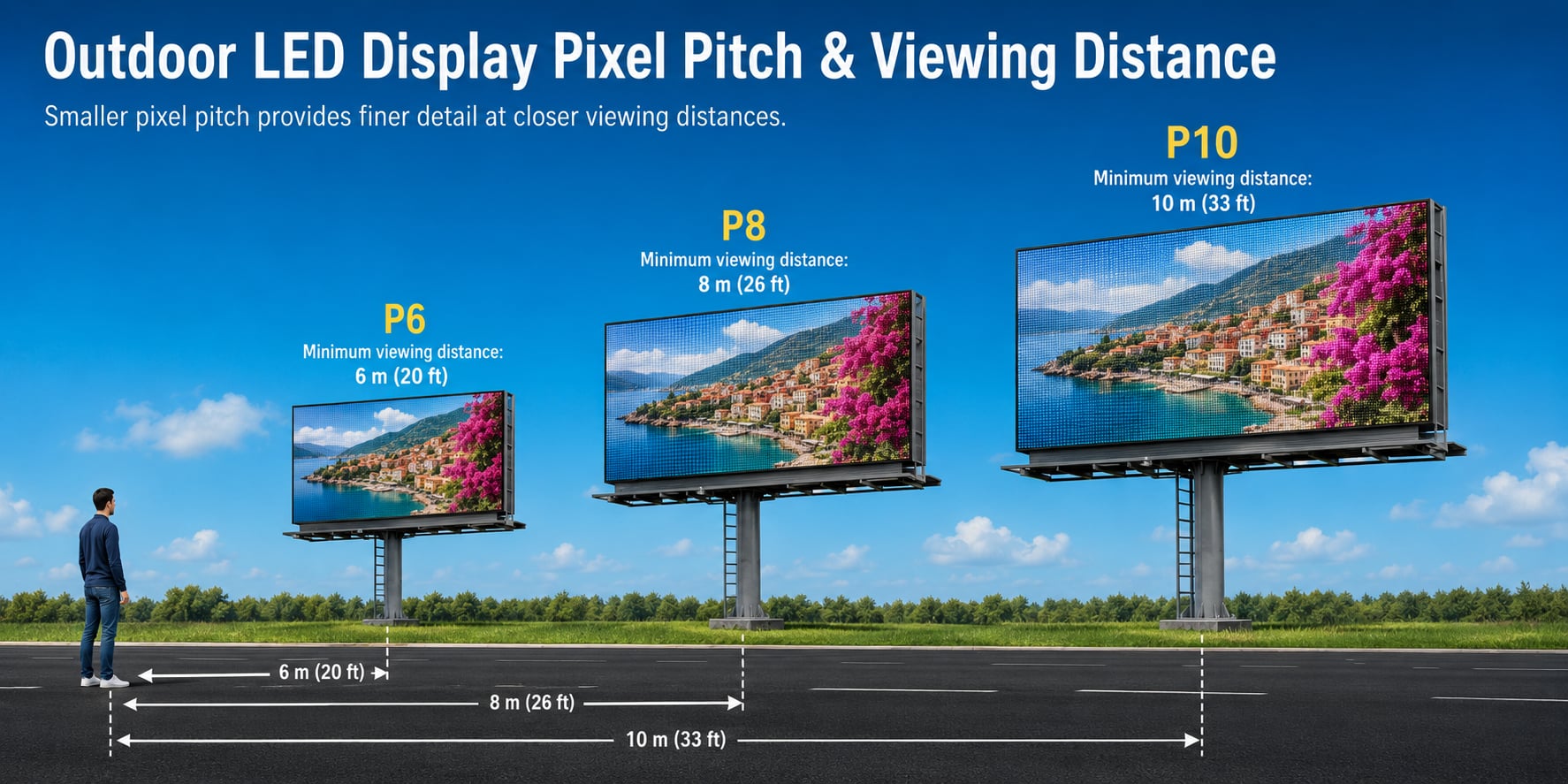
| Approximate minimum practical viewing distance | 6 m / 20 ft | 8 m / 26 ft |
| Best suited for | Detailed content and closer viewing | Roadside messages and longer viewing distances |
| Relative equipment cost | Higher | More economical |
| Typical content | Text, logos, graphics, and detailed images | Text, logos, promotions, and simple graphics |
Actual viewing quality depends on display dimensions, content design, viewing angle, traffic speed, brightness, and installation location.
P6 Outdoor LED Signs
A P6 display has a 6 mm pixel pitch. Its closely spaced pixels produce more image detail than a P8 display of the same physical size.
P6 is generally the preferred option when:
- Pedestrians or slow-moving traffic will be relatively close to the sign
- Detailed logos, photographs, or smaller text will be displayed
- The display is relatively compact
- The customer wants premium outdoor image quality
- Visual detail is more important than minimizing initial cost
P8 Outdoor LED Signs
A P8 display has an 8 mm pixel pitch. It provides strong outdoor visibility and excellent value for displays viewed from moderate or longer distances.
P8 is generally the preferred option when:
- The audience mainly consists of passing motorists
- Messages use large text and bold graphics
- The display will be installed on a pylon or large monument sign
- The customer wants a practical balance of visibility and cost
- Viewers will normally be at least approximately 8 m / 26 ft away
Neither pixel pitch is automatically better for every project. Wholesale Sign Pro can help evaluate the application and recommend an appropriate configuration.
How Display Size Affects Resolution
Pixel pitch should always be considered together with the display's physical dimensions. A P6 display contains more pixels than a P8 display of the same size, allowing it to reproduce finer details and more information.
For example, a display measuring approximately 8 ft wide by 4 ft high may provide:
- P6: approximately 406 × 203 pixels
- P8: approximately 305 × 152 pixels
The final active dimensions and exact pixel resolution depend on the selected module configuration. A larger P8 display can produce an excellent roadside image, while a smaller P6 display may be more appropriate for close viewing and detailed content.
Single-Sided and Double-Sided Displays
Single-sided LED displays are suitable for wall-mounted signs, building façades, and locations where traffic approaches from one primary direction.
Double-sided LED displays provide visibility from two directions and are commonly incorporated into freestanding monument, pylon, and pole signs. Depending on the selected controller, both faces may show synchronized content or be managed independently.
Custom Digital Sign Cabinets
A reliable digital LED sign requires more than display modules. The cabinet, internal structure, ventilation, electrical components, service access, and exterior finish must function as one complete assembly.
Wholesale Sign Pro can provide:
- Custom-fabricated aluminum sign cabinets
- Project-specific dimensions
- Single-sided and double-sided construction
- Front- or rear-service access
- Ventilation and thermal-management provisions
- Corrosion-resistant construction
- Durable custom paint colors and finishes
- Decorative architectural elements
- Identification panels and illuminated logos
- Integration with monument and pylon structures
- Installation drawings and mounting details, when included
Outdoor Visibility and Brightness Control
Outdoor LED displays require high brightness to remain visible in daylight. Available configurations may include automatic light-sensing brightness controls, daytime and nighttime brightness schedules, wide viewing angles, high-contrast modules, and full-color image reproduction.
Proper brightness management maintains daytime visibility while preventing the sign from appearing excessively bright at night. Local regulations may establish maximum brightness levels, operating hours, message duration, animation, and transition requirements.
Weather-Resistant Outdoor Construction
Outdoor digital signs must be configured to withstand rain, snow, wind, dust, temperature fluctuations, and direct sunlight. Project options may include:
- Exterior-rated LED modules
- Weather-resistant cabinets
- Corrosion-resistant aluminum construction
- Protected electrical components
- Thermal-management and ventilation systems
- Front- or rear-service access
- Durable exterior finishes
- Project-specific mounting systems
The final construction should reflect the installation location, climate, service requirements, supporting structure, electrical requirements, and applicable codes.
Outdoor LED Sign Control Options
The correct communication system depends on the distance between the building and sign, available network infrastructure, site conditions, and whether the customer requires local or remote access.
Local Wi-Fi
Wi-Fi allows an authorized user to connect wirelessly from a nearby computer, tablet, or compatible mobile device. It is best suited to signs located close to the building where a dependable signal is available. Distance, walls, trees, vehicles, and wireless interference can reduce performance.
Point-to-Point Wireless
A point-to-point wireless bridge uses two dedicated devices to connect the building network with the sign. It can provide a stable data link across a parking lot or large property without installing a communication cable between the two locations. Suitable equipment placement and a clear or mostly clear line of sight are important.
Hardwired Ethernet
Ethernet provides a stable, direct network connection and fast content transfer. Standard Ethernet has distance limitations; longer runs may require fiber-optic cable, network extenders, or another communication method. Outdoor and underground installations require appropriate cable, conduit, grounding, and surge protection.
Fiber-Optic Communication
Fiber-optic cable is suitable for long-distance, high-reliability installations and applications requiring electrical isolation between the building and the sign. It resists electromagnetic interference and is often selected for commercial, institutional, municipal, and industrial properties.
Internet and Cloud-Based Control
Compatible internet or cloud-based platforms can allow authorized users to:
- Update content from approved off-site locations
- Upload text, photographs, logos, and graphics
- Create and schedule playlists
- Manage one display or multiple locations
- Assign different user-access levels
- Review display status
- Publish emergency or time-sensitive messages
The sign requires a dependable internet connection, which may be provided through the building network, Ethernet, fiber, point-to-point wireless, Wi-Fi, or a compatible cellular service. Software functions, subscriptions, monitoring, and storage capacity depend on the selected platform.
Control-System Comparison
| Control method | Best application | Main advantage | Important consideration |
|---|---|---|---|
| Local Wi-Fi | Sign close to the building | Simple wireless access | Signal strength and interference |
| Point-to-point wireless | Sign across a parking lot or away from the building | Dedicated long-range wireless link | Equipment placement and line of sight |
| Ethernet cable | Sign within practical cable distance | Stable direct connection | Cable distance and installation requirements |
| Fiber-optic cable | Long-distance or high-reliability installations | Long range and electrical isolation | Higher installation cost |
| Internet/cloud control | Remote or multi-location management | Access from approved off-site locations | Reliable internet service may be required |
Some projects use more than one method. For example, a point-to-point bridge may connect the sign to the building while the building's internet service provides remote cloud access.
Communication and Network Security
Before selecting a control system, consider the distance to the sign, line of sight, internet availability, existing network equipment, underground conduit, update frequency, number of users and locations, remote-access requirements, cellular coverage, security policies, and future expansion.
Recommended security practices include:
- Change all factory-default passwords
- Create individual user accounts
- Limit administrative permissions
- Restrict access to authorized devices and users
- Keep controller software and firmware updated
- Protect outdoor network equipment from weather
- Use appropriate grounding and surge protection
- Back up approved sign content
- Coordinate access with the customer's IT department
Final network connections, internet service, underground cabling, and site installation should be completed by qualified local professionals.
Our Digital LED Sign Process
1. Project Review
Send us the desired display dimensions, installation location, site photographs, viewing distance, sign concept, and customer specifications.
2. Display Configuration
We evaluate the application and help determine the display size, pixel pitch, brightness, viewing angle, service access, cabinet construction, and control requirements.
3. Wholesale Quotation
You receive a quotation based on the selected display, cabinet, finish, accessories, drawings, packaging, and delivery requirements.
4. Design and Approval
Project drawings and specifications are prepared when included in the order. Production begins after the required information and approvals are received.
5. Manufacturing and Integration
The cabinet and supporting components are fabricated, finished, assembled, and integrated with the digital display system.
6. Inspection and Testing
The completed sign is inspected and function-tested. Testing may include display operation, communication, content playback, and general assembly inspection.
7. Packaging and Delivery
The system is packaged for transportation, and delivery is coordinated to your shop or project site.
Outdoor Digital LED Signs FAQ
What is an electronic message center?
An electronic message center, or EMC, is a programmable digital sign that displays changing commercial or public messages using LED technology.
What do P6 and P8 mean?
P6 has 6 mm spacing between pixel centers, while P8 has 8 mm spacing. P6 provides higher pixel density and finer detail; P8 is generally more economical and well suited to longer viewing distances.
How far away should P6 and P8 signs be viewed?
A practical minimum is approximately 6 m (20 ft) for P6 and 8 m (26 ft) for P8. The ideal viewing distance also depends on display size, content design, installation height, and traffic speed.
Can you manufacture a double-sided LED sign?
Yes. P6 and P8 displays can be integrated into single-sided or double-sided outdoor cabinets.
Can you manufacture the surrounding monument or pylon sign?
Yes. We can fabricate the display cabinet and integrate it with custom monument or pylon components, identification panels, illuminated logos, and architectural finishes.
Can customers change messages remotely?
Yes. Compatible control systems enable authorized users to create, schedule, and update content via Wi-Fi, a local network, or an internet connection. Available features depend on the selected controller and software.
Is a monthly subscription required?
Some systems use locally installed software without a monthly fee, while cloud-based platforms may require a subscription. This is confirmed when the controller and software are selected.
What happens if the internet connection is interrupted?
The display can normally continue playing content stored in its controller, but new remote updates cannot be transmitted until communication is restored. Exact offline operation depends on the selected system.
Do outdoor digital signs require permits?
Most projects require local sign, zoning, building, and electrical approvals. Regulations may restrict display size, brightness, animation, message duration, transitions, and operating hours. The sign company, property owner, and qualified local professionals should confirm requirements before manufacturing.
Do you sell directly to the public?
Wholesale Sign Pro specializes in supporting sign companies and industry professionals. Contact us to discuss your project and confirm wholesale eligibility.
Request a Wholesale Quote
Send Wholesale Sign Pro the proposed display dimensions, installation location, minimum viewing distance, single- or double-sided requirement, cabinet concept, preferred control method, site photographs, and delivery destination. Request a quote and we'll help you select a practical P6 or P8 outdoor LED display configuration for the project.