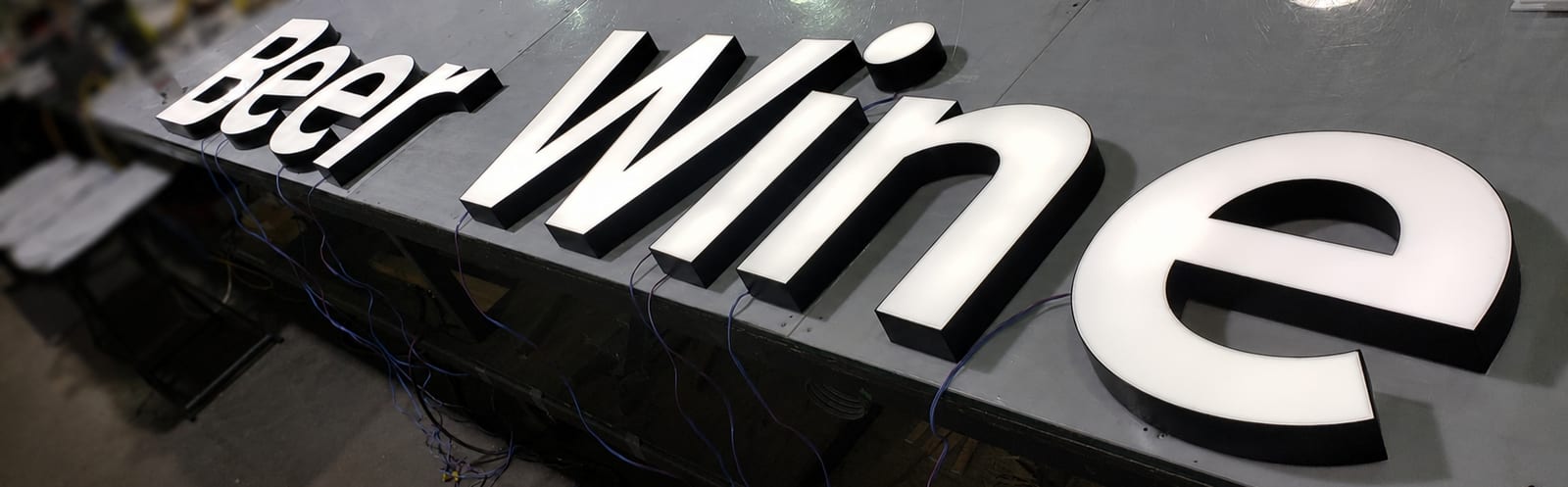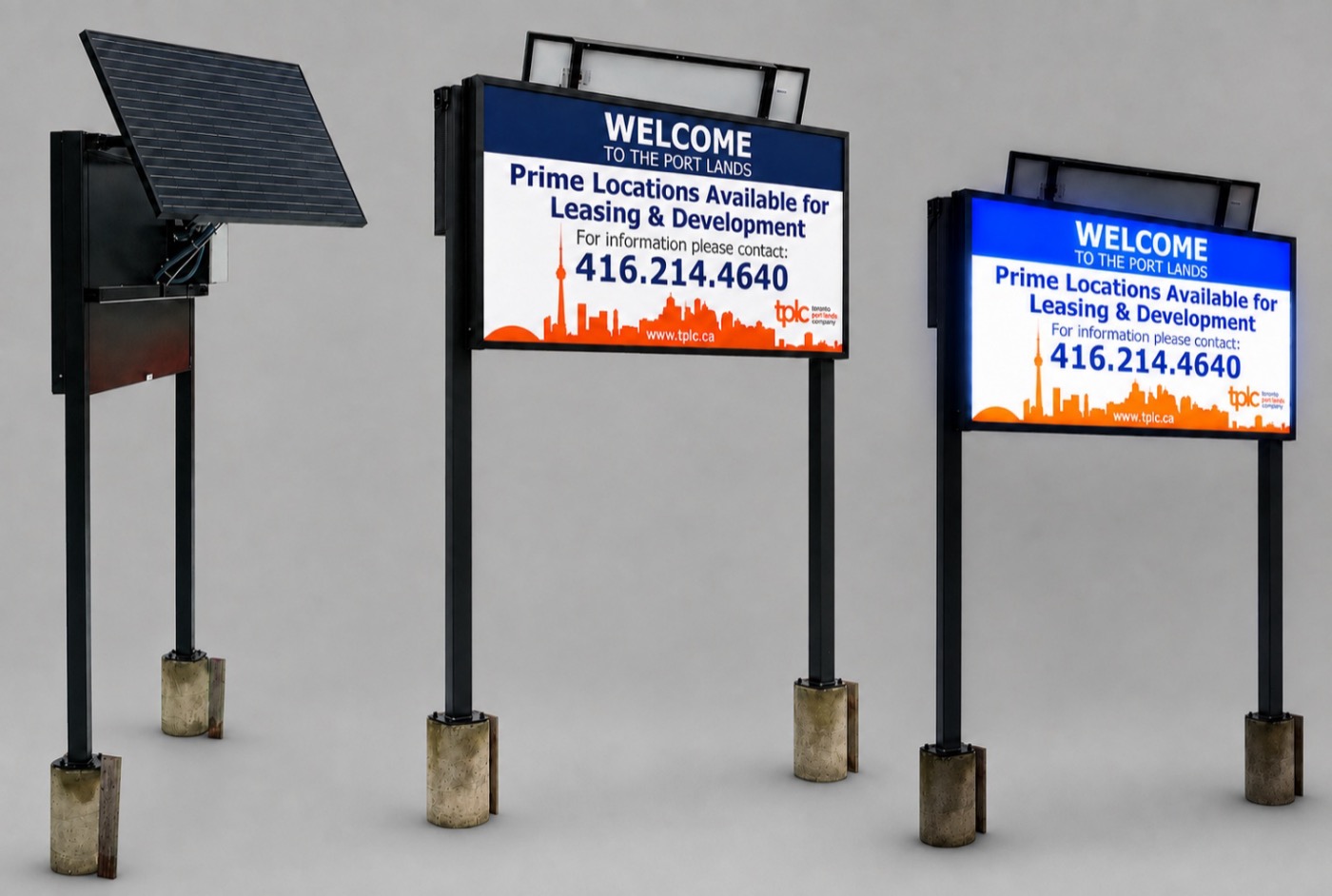

A set of channel letters can leave the shop looking perfect and still create a problem for your customer. The mounting pattern is missing. The hardware is in an unmarked box. The sign arrives after the lift has already been booked. Each one costs the installation crew time.
For a wholesale sign company, a job is successful when the sign arrives ready for the retail sign company to install as planned. That takes more than a production schedule. It takes a clear handoff at every stage, from the first quote to the final shipment.
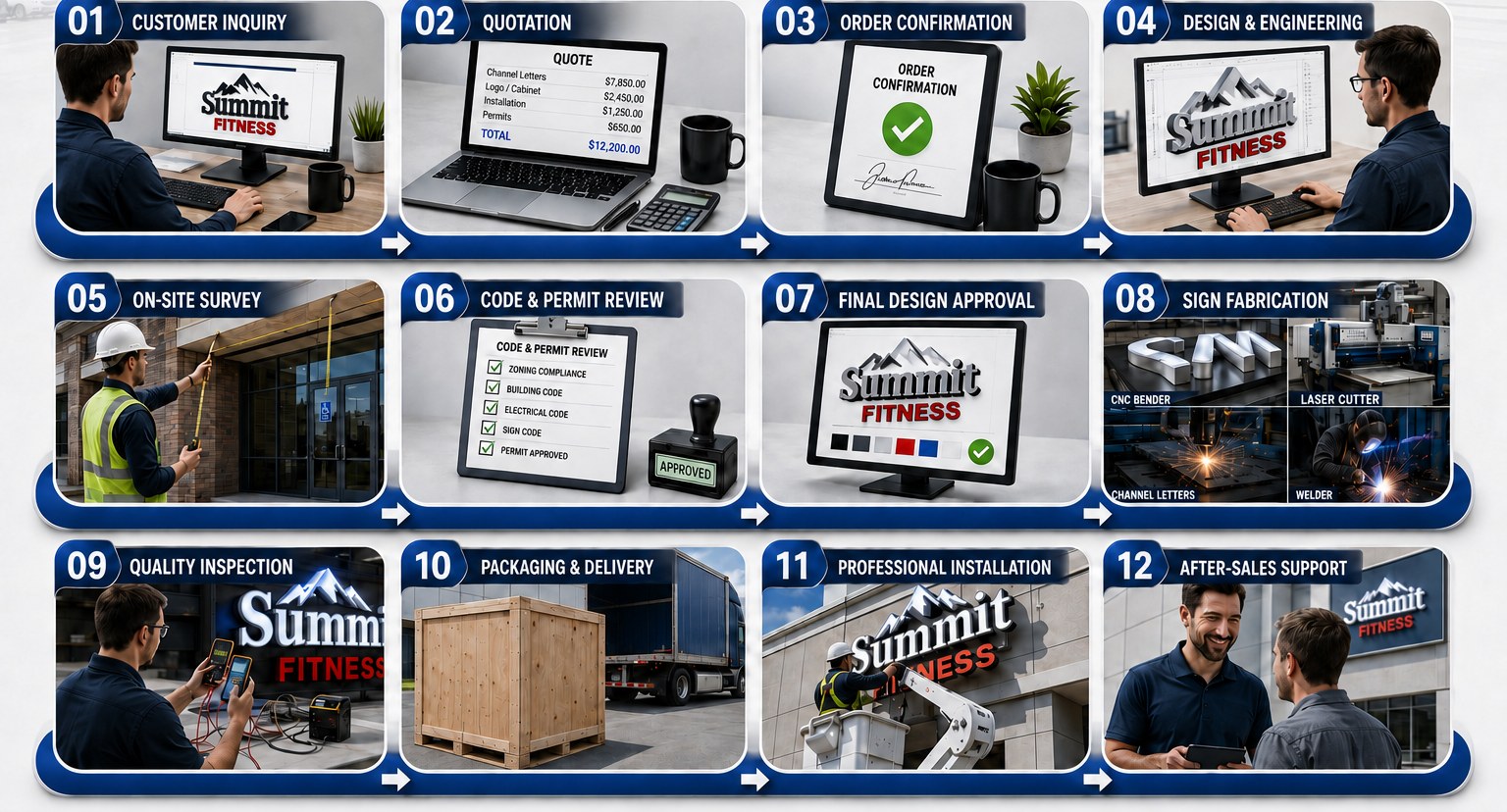
Our 12-step process from inquiry to installation. The full description of each step is on our sign manufacturing process page.
Start With a Quote the Shop Can Build From
A good quote spells out what your customer expects to receive. For a channel letter job, that can include overall dimensions, letter depth, face and return materials, finish, illumination, the mounting method, and whether the mounting pattern and hardware are included. For a cabinet or push-through sign, it may also mean confirming the cabinet depth, the face construction, and how the installer will reach the electrical components.
The project manager should also ask which date matters. A customer may say they need the sign on Friday, but that could mean a Friday ship date, a Friday delivery, or a Friday morning installation. Those are three different schedules. If you've already booked a crew or a lift, tell us the appointment, and we'll work backward from it, allowing for packing, transit, and receiving.
| Project Stage | What to Confirm Before Moving Forward |
|---|---|
| Quoting | Scope, materials, mounting method, and target delivery date |
| Drawing approval | Approved revision, dimensions, colors, illumination, and mounting details |
| Production release | Materials available, approved files ready, and shop capacity reserved |
| Final inspection | The sign matches the approved drawing and all installation components are accounted for |
| Shipping | Crate contents, labels, receiving instructions, and tracking |
Our wholesale channel letter ordering checklist lists the details that make a quote accurate the first time.
Use the Approved Drawing to Control Changes
Sign projects rarely move in a straight line. A landlord asks for smaller letters. A brand manager changes the paint color. An installer needs the wire exits moved after surveying the site. Each change can affect the price, the schedule, or work that's already done.
The way to handle it is to keep one current approved revision tied to the job. When a change comes in, confirm what it affects, then update the drawing, the work order, and the production files together. Say a halo-lit letter set changes from flush mounting to standoffs after the backs have been cut. The project manager has to check whether those backs can still be used, whether different hardware is needed, and whether the mounting pattern has to be revised. And you should know the cost and timing before the shop goes ahead. For halo-lit work, our guide to reverse halo letters explains how the standoff affects the build.
Schedule Around the Work That Can Hold the Job Up
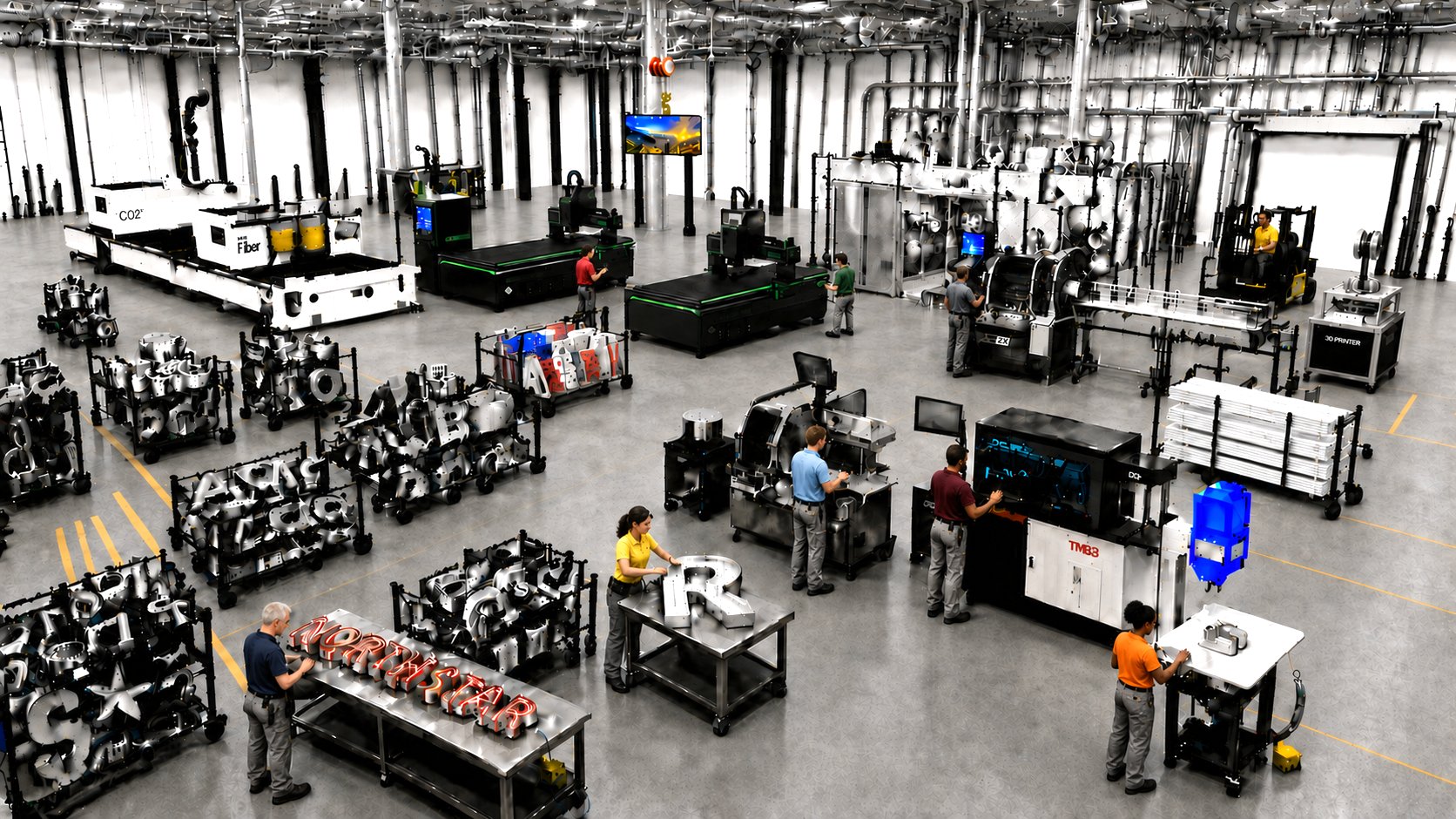
A sign may pass through routing, bending, welding, painting, LED assembly, testing, and crating, and the order matters. A shop can win back an hour at the bender and still miss its ship date if the paint department is backed up or a specialty finish arrives late. Our guide to paint and finish covers why finishes so often set the pace.
A short daily review helps the project manager and the shop lead see those problems while there's still time to act. The questions are simple. What is due to ship next? Which jobs are ready for the next operation? What's waiting on approval, material, or rework? Each blocker should have an owner who can resolve it and a decision date. On a multi-location rollout, track every site separately so one late approval doesn't hide the status of the others. We cover that side in choosing a wholesale partner for multi-location rollouts.
Inspect and Pack With the Installer in Mind
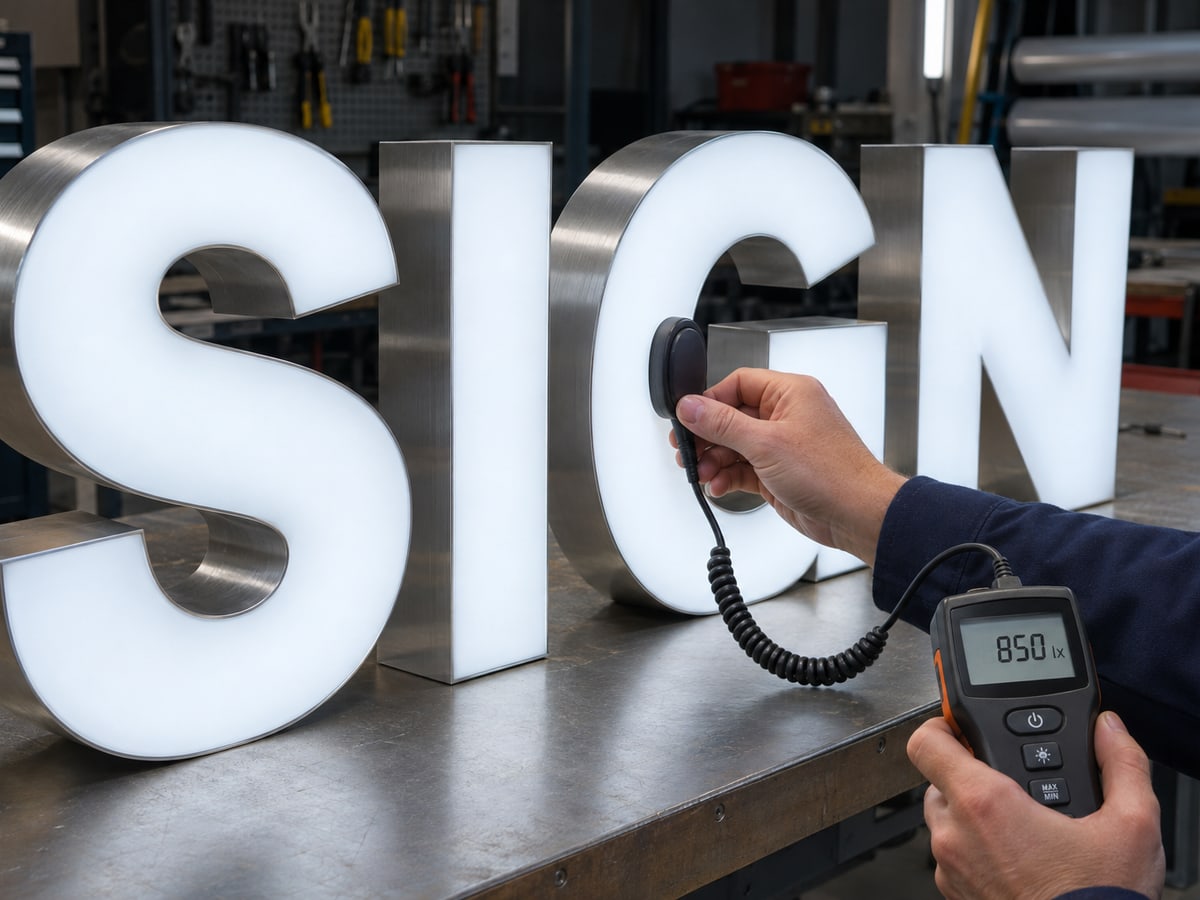
Final inspection should follow the approved drawing and the installation package. Check the dimensions, finish, illumination, mounting points, and wire exits as they apply. Then make sure the pattern, hardware, power supplies, and any other included items are packed and clearly identified.
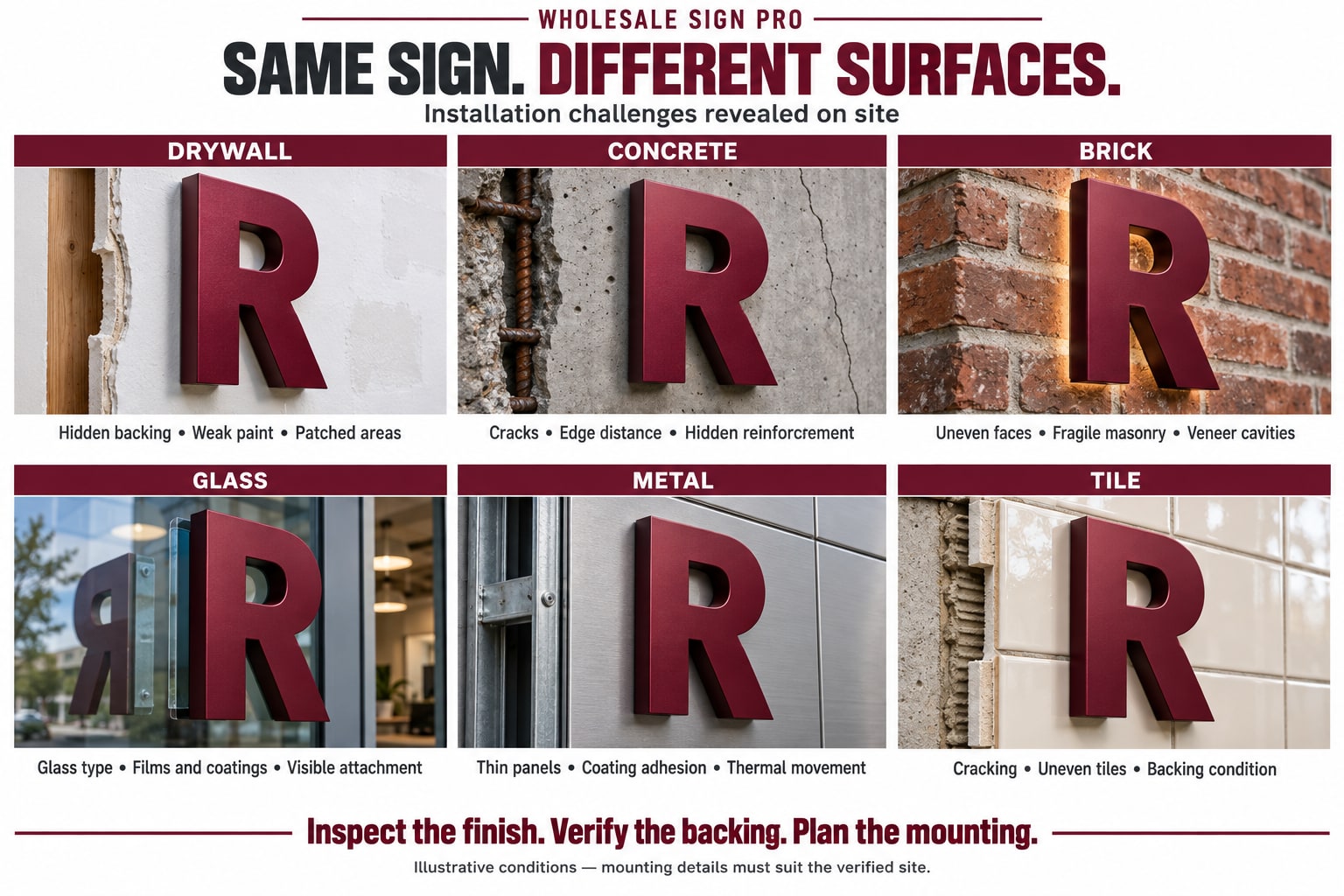
Picture the installer opening the crates on site. If a job has two elevations or several locations, can the crew tell which letters, patterns, and hardware belong together? Labels by location or elevation and a packing list make that handoff easier, and photos of the finished sign and the packed crates can help too. Tracking and receiving instructions should go to the person who will actually receive the shipment. For what installers run into once the crates are open, see sign installation challenges by wall surface.
Communicate Early When the Schedule Changes
A retail sign company is coordinating its own customer, installation crew, and site access. A delay reported early may give you time to move a lift reservation or reschedule a crew. The same delay reported on the promised ship date can leave everyone scrambling.
Good updates are specific. For example: "The letters are fabricated. The approved paint is due Wednesday, and we expect to ship Friday. I'll confirm the ship date Wednesday afternoon once the paint arrives." That tells you what's complete, what could still affect the date, and when you'll hear again.
Use Completed Jobs to Improve the Next One
A few measures are worth tracking because a team can act on them: on-time shipments against the committed date, rework by cause, and repeat shipments for missing or damaged items. If mounting patterns are often left out, add them to the packing checklist and assign someone to verify them. If jobs keep missing their dates while waiting for drawing approval, revisit how quote lead times are communicated and when production slots are reserved.
For a wholesale sign company like Wholesale Sign Pro, the real test comes after the crate leaves the shop. Our retail sign partners should know when the shipment will arrive, what's in each crate, and whether the crew has everything it needs to install the sign. Good project management answers those questions before anyone has to ask.
Wholesale Sign Pro manufactures signs for sign companies across the United States and Canada. Request a quote and tell us your dates, your installation plan, and what the finished sign needs to do.
Wholesale Project Management FAQ
Which date should I give my wholesale manufacturer?
Say which date matters: a ship date, a delivery date, or an installation date. They're three different schedules. If you've already booked a crew or a lift, give the appointment and work backward, allowing for packing, transit, and receiving.
What happens when my customer changes something after drawing approval?
Each change can affect price, schedule, or work already done. A good process keeps one current approved revision, checks the impact of the change, and updates the drawing, work order, and production files together. You should hear about the cost and timing before the shop goes ahead.
What should be in the crate besides the sign?
Whatever the installer needs: the mounting pattern, the hardware, the power supplies, and any other included items, clearly identified. For jobs with several elevations or locations, labels and a packing list should make it obvious which pieces go together.
How early should a schedule change be reported?
As soon as it's known. An early heads-up can give you time to move a lift reservation or reschedule a crew, while the same news on the promised ship date leaves everyone scrambling.